A sharp rally built on factory expectations
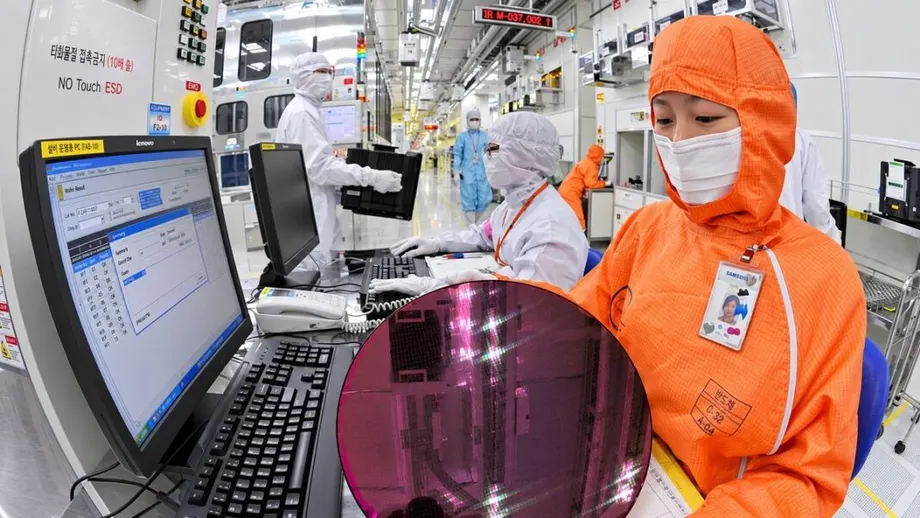
South Korean robotics stocks surged on November 27, 2026, as investors seized on Samsung Electronics plans to put more robots inside semiconductor plants. At 10:48 a.m., Cosmo Robotics and Daesung Hi-Tech were trading at their daily upper limits. N Robotics jumped 28.22 percent, Clobot gained 23.56 percent, AL Robot rose 15.94 percent and Eugene Robot added 13.3 percent. Rainbow Robotics climbed 11.99 percent, Korea PIM advanced 11.15 percent, Robotis gained 7.31 percent, Wonik Holdings rose 5.65 percent and KH Vatec added 2.65 percent.
Contents
- A sharp rally built on factory expectations
- Which chip factory jobs are still done by people?
- New fabs are being designed with room for robots
- Samsung has an official destination for its factory strategy
- Why CES 2027 matters for the humanoid story
- Promotions reveal the importance of robotics inside Samsung
- Which supplier relationships are actually visible?
- The commercial test is orders, production and revenue
- Safety rules are being written for a much larger robot population
- What happens next for investors and manufacturers
- What to Know
Genix Robotics separately reached 8,020 won in the morning session, up 29.98 percent from the previous close, while SP Systems also traded near its upper limit. The immediate attraction was the possibility that Samsung, one of the world's largest manufacturers, could become a major buyer of factory robots rather than simply a developer of experimental machines.
Samsung's Device Solutions division has established a team called Robotics Team 585 under its Global Manufacturing and Infrastructure organization, according to industry accounts. Vice President Lee Seok-won leads the team, which is responsible for developing robot technology for chip plants and introducing it into production. The reported roadmap calls for external partners to be selected by the end of 2026, technical evaluations in 2027 and deployment at production sites from 2028.
The rally therefore ran ahead of the commercial evidence. Partner selections, purchase volumes and prices have not been announced. For suppliers, the difference between joining a test and receiving a production order will determine whether the excitement becomes lasting revenue.
Which chip factory jobs are still done by people?
Semiconductor plants are already highly automated, but important gaps remain. Industry estimates put automation at about 90 percent for front end processes, where semiconductor devices are formed, and 80 percent for back end processes such as packaging. People still handle equipment maintenance, consumable replacement, parts delivery and facility management.
Wafer movement illustrates the distinction. An overhead hoist transport system, known as OHT, carries wafers along ceiling rails. It does not cover every movement between machines or production zones. Samsung is considering automated guided vehicles, autonomous mobile robots and robot arms for the work that remains on the factory floor. A guided vehicle generally follows a fixed route, while an autonomous mobile robot, or AMR, uses sensors to understand its surroundings and choose a path.
The potential benefits are concrete. Robots could deliver maintenance parts without waiting for a worker, shorten equipment stoppages and reduce human exposure to hazardous materials or difficult environments. An industry official explained that OHT systems automated wafer transportation, whereas guided vehicles and AMRs could carry the parts and production materials needed to keep equipment running.
Lam Research offered a useful example when it introduced its Dextro maintenance robot in 2024. Dextro replaces consumables, tightens precision bolts and removes process residue from etching equipment. One robot can handle 50 to 100 chambers that require maintenance each month. Samsung has also filed a United States patent for technology that removes accumulated material from inside pipes at semiconductor facilities, and it is developing inspection robots that use monitoring based on artificial intelligence to reduce risks to workers.
New fabs are being designed with room for robots
Samsung and SK hynix are considering wider internal logistics corridors in new memory plants planned for 2027 and 2028. Existing fabs were largely designed around the space needed by employees. In some older corridors, two people pulling carts can barely pass each other, leaving insufficient room for robots to operate safely alongside people.
The new designs would retain ceiling transport for wafers while opening floor level logistics to AMRs. Samsung is building its P5 plant at the Pyeongtaek campus. SK hynix plans four fabs at its Yongin semiconductor cluster, which covers about 4.15 million square metres. Larger plants and more floor space available for automation could increase the number of mobile robots required at each site.
Movement alone will not win a factory contract. Chip companies want robots that can open heavy doors, load wafers into equipment and retrieve them without damaging delicate materials. The mechanical arm must perform consistently, while the machine must generate extremely few particles that could contaminate a cleanroom. A T-Robotics representative described the current stage as sampling and joint development with customers whose names could not be disclosed.
We are supplying samples to customers for the introduction of AMRs in fabs, and customers are participating in development based on their own requirements.
Genix Robotics has delivered more than 700 guided vehicles and autonomous mobile robots. Its combined revenue from those machines reached 3.24 billion won through the third quarter, exceeding the 2.73 billion won generated by that business during all of the previous year. Its total order backlog was about 48 billion won when it filed its report for the third quarter. In August, Genix also filed a patent for a mobile robot with two arms that uses vision and touch sensing to handle precision objects.
Samsung has an official destination for its factory strategy
The reported chip plant roadmap fits within a broader commitment that Samsung has made publicly. The company intends to convert its domestic and overseas production plants into AI autonomous factories by 2030. Its 2030 factory plan covers the entire manufacturing process, from receiving materials to production and shipment.
A central tool is the digital twin, a virtual representation of a factory that allows engineers to simulate changes before applying them to real equipment. Samsung plans to combine these simulations with AI agents for quality, production and logistics. In this context, an agent is software that can analyse data, make a plan and take action toward a goal rather than merely repeat a fixed instruction.
Samsung intends to introduce manufacturing robots in stages. Operating bots would manage production lines and equipment, logistics bots would carry materials and assembly bots would perform assembly work. Environmental safety bots using digital twins would be assigned to infrastructure facilities where heat, noise or other conditions make work difficult for people. The company also wants the software to detect hazards early and help prevent accidents.
Lee Young-soo, a Samsung vice president and head of its Production Technology Research Institute, said the goal extended beyond conventional automation.
The future of manufacturing innovation lies in building autonomous manufacturing sites where AI understands the field and executes optimal decisions on its own, going beyond simple automation. We will become the center of global manufacturing innovation combined with AI.
The announcement also connected manufacturing with Samsung's industrial AI strategy and its work on governance, meaning the rules and safeguards that control what autonomous systems may do. Samsung said those safeguards should be built in from the design stage. It has separately announced cooperation with Nvidia on a semiconductor AI factory, including plans to deploy more than 50,000 graphics processors and use the Omniverse platform for digital twins.
Why CES 2027 matters for the humanoid story
Investors are also watching Las Vegas. Analysts expect Samsung to present progress on a humanoid developed internally at CES 2027 in January, possibly including a basic HR model and a more capable HE model. Yang Seung-yoon of Eugene Investment and Securities interpreted the possibility of two versions as a sign of business planning rather than a single research demonstration. Samsung has not officially confirmed its CES exhibition plan, final specifications, production schedule or date for external sales.
The reported design places particular importance on the hands. Samsung is said to be developing dexterous hands with 20 motors in each hand, or 40 across both. A dexterous hand is built to manipulate objects with fine control, potentially extending a robot's work from carrying boxes to precise tasks such as smartphone assembly.
The hands are expected to use direct drive, placing an actuator at each joint. This approach can provide accuracy and durability, although it increases weight and cost. Cable systems used in designs such as Tesla Optimus can produce thinner and lighter hands, but their durability can become a limitation during extended use.
Other reported features include a Samsung Display OLED panel that would express eyes and a mouth on the robot's face, hinge technology derived from foldable phones and motors that directly drive joints. KH Vatec has attracted attention because of its hinge component experience. Wonik Holdings, Tesollo and Robotis are among the companies associated with robotic hand technology, while Daesung Hi-Tech has invested in Tesollo and is pursuing cooperation on precision parts. These connections identify relevant capabilities, not confirmed orders for the Samsung humanoid.
Promotions reveal the importance of robotics inside Samsung
Samsung's executive reshuffle for 2027 promoted 131 employees, including 39 executive vice presidents, 78 vice presidents, two fellows and 12 masters. The total was 30 fewer than the 161 promotions a year earlier, a decline of 18.6 percent, even though the semiconductor business had produced record earnings.
Robotics specialists were among those advanced. Hyung Seung-yong led hardware development for next generation manufacturing robots and humanoids, while Koo Dong-han led work on humanoid walking and full body control at the Robotics eXperience office. Mathieu Apotheker, who led negotiations on acquisitions and investments involving AI and robotics, was promoted to executive vice president. Samsung has also recruited robotics specialists in the United States with annual salaries exceeding 100 million won.
President Roh Tae-moon relinquished his concurrent leadership of the mobile business but retained responsibility for the robotics office, allowing him to concentrate on future growth areas including robotics. Chairman Lee Jae-yong also reviewed humanoid development at the Seoul research and development campus in late October. Samsung still had organizational restructuring and executive assignments to announce after the promotions.
Which supplier relationships are actually visible?
Lee Sang-soo of iM Securities sees room for unfamiliar companies to enter Samsung's supply chain. His reasoning is that Hyundai Motor Group can draw on established automotive parts vendors, while Samsung has fewer existing suppliers with experience directly relevant to humanoids. Samsung may design hands and actuators itself without manufacturing every smaller component.
The clearest confirmed relationship remains indirect: SPG supplies reducers to Rainbow Robotics, a Samsung subsidiary. A reducer controls the speed and force transmitted to a robot joint. That supply arrangement does not establish SPG as a supplier to Samsung's own humanoid. Rainbow's commercial connection is nevertheless substantial. Its sales to Samsung Electronics reached 6.12 billion won in the third quarter, representing 44 percent of Rainbow's total revenue for the period. Lee expects Rainbow's role in the humanoid programme to resemble joint development more closely than simple product supply.
Rainbow has also signed a series of memorandums of understanding, or MOUs. These agreements define areas of cooperation but do not guarantee purchases. Its 2026 agreements include:
- SFA agreed on September 30 to cooperate on autonomous manufacturing based on AI, robot technology and joint marketing.
- Daedong agreed on August 22 to jointly develop an agricultural humanoid called Agroid. A first prototype combines Rainbow's upper platform with Daedong's lower drive unit and has been used in work including tomato harvesting.
- Bigwave Robotics agreed on August 20 to develop an integrated robot solution for the United States, combining Rainbow hardware with Bigwave software for robot control and data management.
- CMES Robotics agreed on June 22 to develop and commercialize a robot with two arms using physical AI, a term for AI that perceives and acts in the physical world. Rainbow would handle hardware and control systems, while CMES would develop AI software and applications.
Rainbow signed an earlier logistics automation agreement with T-Robotics in 2025. T-Robotics plans to present its own humanoid for manufacturing environments at CES 2027. Yuanta Securities also identified SFA, Daedong, Bigwave, CMES and T-Robotics as companies worth monitoring because of these relationships.
The commercial test is orders, production and revenue
Several component and materials companies are already trying to turn robot technology into measurable businesses. Daesung Hi-Tech made a strategic investment in Tesollo in May and subsequently received an initial order for production and inspection automation equipment. It plans to increase annual production of autonomous mobile robots from more than 100 units in 2026 to more than 300 in 2027. The company forecasts that its revenue from robots will grow by more than 300 percent next year.
ICH has supplied polyurethane foam for humanoid hand joints to a global electric vehicle company since August. The material absorbs shock and vibration around fingers and wrists while helping joints withstand repeated movement. Unichem signed a definitive agreement in October to acquire all of Lumia Technologies for up to $6.3 million, targeting completion in January 2027. Lumia's flexible sensing technology uses 131 detection points across fingertips, palms and joints to identify contact location and pressure distribution in real time, helping a robot adjust its grip on fragile objects.
Unichem's acquisition terms include performance compensation connected to annual mass production orders covering 1,000 robot units. That condition reflects the central issue across the sector: technical cooperation must eventually become repeatable manufacturing business.
Genix illustrates the gap most sharply. Its delivery record and backlog attracted investors, but no new supply contract with Samsung or SK hynix had been disclosed that directly explained its share price surge on November 27. Similar caution applies to companies whose names have surfaced because of patents, samples, investments or MOUs rather than purchase contracts.
Safety rules are being written for a much larger robot population
Material presented by the SEMI Robotics Safety Task Force suggests that Samsung's semiconductor division could operate more than 10,000 robots by 2030, compared with about 100 in 2026. That would be roughly a hundredfold expansion. The figures are a projection of potential use, not a confirmed Samsung purchasing commitment.
More robots would create risks that general industrial standards do not fully address. Semiconductor plants combine expensive precision equipment, dense concentrations of workers, special gases and hazardous chemicals. A robot collision or fall could damage equipment or contribute to a fire or chemical release. Maintenance machines, inspection robots, cleaning robots, drones and humanoids also present different hazards.
SEMI's Korea environment, health and safety technology committee launched the robot safety task force in March, led by Samsung and SK hynix. Its work includes classifying robots and risk levels, setting safety requirements when employees and robots share space, and addressing structural and environmental hazards specific to chip plants. In July, the task force submitted a proposal for a new safety guideline covering AMRs used in semiconductor manufacturing. Its target is a first draft standard in March 2027.
The employment effects remain undecided. Robots could reduce demand for repetitive transport and maintenance work while increasing the need for people skilled in robot operation, precision control and AI system management. No specific Samsung staffing reduction plan has been confirmed.
What happens next for investors and manufacturers
Choi Geon of Korea Investment and Securities pointed to a seasonal pattern: over the past six years, major robotics companies outperformed the broader market from late November through late February, when industry events were concentrated. That history helps explain the timing of the rally, but it does not remove the need to assess individual orders.
Kim Hye-bin of IBK Investment and Securities expects humanoids from Samsung and LG Electronics to be a major focus at CES 2027. Her watchlist includes Robotis and Samhyeon for their production capacity expansion, DKT for the visibility of module orders, Korea PIM for miniature reducer technology and SBB Tech. Yuanta judged a direct Samsung role for Robotis less likely because LG Electronics owns a stake in that company.
Eugene Investment and Securities projects global humanoid installations of 130,000 units in 2030, 1.7 million in 2035 and 7.87 million in 2040. Those are projections for the distant future, and adoption could be slower. Yang Seung-yoon expects attention to move toward robot manufacturers that demonstrate performance at working sites. Among parts suppliers, he recommends watching companies that provide bottleneck components, meaning scarce parts that can hold up an entire production programme.
The next checkpoints provide a practical schedule:
- By the end of 2026: Samsung is expected to select external robot partners under its reported semiconductor roadmap.
- January 2027: CES 2027 could reveal Samsung's humanoid progress, while Unichem aims to complete its Lumia acquisition.
- March 2027: The SEMI task force aims to prepare its first draft AMR safety standard.
- During 2027: Samsung plans technical evaluations, while new memory fabs designed for greater AMR use approach their 2027 and 2028 schedules.
- From 2028: Samsung is considering deployment at semiconductor production sites.
- By 2030: Samsung aims to complete its AI autonomous factory conversion, and the SEMI presentation points to a possible semiconductor robot population above 10,000.
For factory workers, the immediate change would be fewer repetitive journeys, less exposure to dangerous maintenance conditions and more interaction with machines that require supervision. For investors, the decisive evidence will be partner selection, disclosed contracts, production volumes and the point at which robot revenue appears in earnings.
What to Know
- Korean robot stocks surged on November 27, with several hitting daily limits or posting gains above 10 percent.
- Samsung's reported chip plant roadmap targets partner selection in 2026, technical evaluation in 2027 and deployment from 2028.
- Samsung officially aims to convert its domestic and overseas factories into AI autonomous factories by 2030.
- A Samsung humanoid is expected at CES 2027, but its exhibition plan, final specifications and sales schedule are not official.
- SPG's reducer supply to Rainbow Robotics is confirmed, while many other potential beneficiaries remain at the agreement or testing stage.
- SEMI material points to more than 10,000 Samsung semiconductor robots by 2030, compared with about 100 in 2026, without committing Samsung to that purchase volume.
- A draft semiconductor AMR safety standard is targeted for March 2027, and disclosed orders will be the main test of the stock rally.