What TPG Wants From Kakao
Kakao disclosed on Nov. 23, 2026 that two TPG investment vehicles, Khaki Holdings and Mobility Co-Invest, had started arbitration against Kakao and Kakao Mobility. The claim centers on a plan to list Kakao Mobility in the United States through American depositary receipts, or ADRs. TPG says Kakao broke promises in a shareholder agreement by blocking that listing. Kakao denies the claim.
Contents
- What TPG Wants From Kakao
- Why a Taxi Platform Became a Courtroom Issue
- The Exit Attempts That Came Before the Arbitration
- What Kakao and TPG Each Say Happened
- How the Arbitration Could End
- Why the 1.5 Trillion Won Figure Shook the Market
- What the Split of Kakao Could Change
- Which Other Investors May Be Pulled In
- What This Means for Korean Listed Companies
- Key Points
The filing puts the value of the claims at more than 1.5 trillion won, about 1.1 billion dollars. That equals 9.85 percent of Kakao's 15.2249 trillion won equity capital at the end of last year. TPG asked for performance of contractual duties, contractual penalties (money the contract sets for a breach) and damages. The dispute was filed with the ICC International Court of Arbitration, seated in Hong Kong, on Oct. 29, according to Kakao's disclosure. Kakao received the request on Nov. 10 and notified the market on Nov. 23.
The headline number is not a final damages award. TPG gave the figure to the ICC Secretariat on Nov. 20 to help calculate the arbitration deposit, an advance payment for the cost of the case, including claims that are not purely financial. TPG reserved the right to revise or add to its claims. An arbitration tribunal will decide any payment.
An ADR is a certificate traded in the United States that represents shares in a foreign company. In this case, TPG wanted to use shares it already held in Kakao Mobility as the base for ADRs, giving it a way to sell its investment in the US market.
Why a Taxi Platform Became a Courtroom Issue
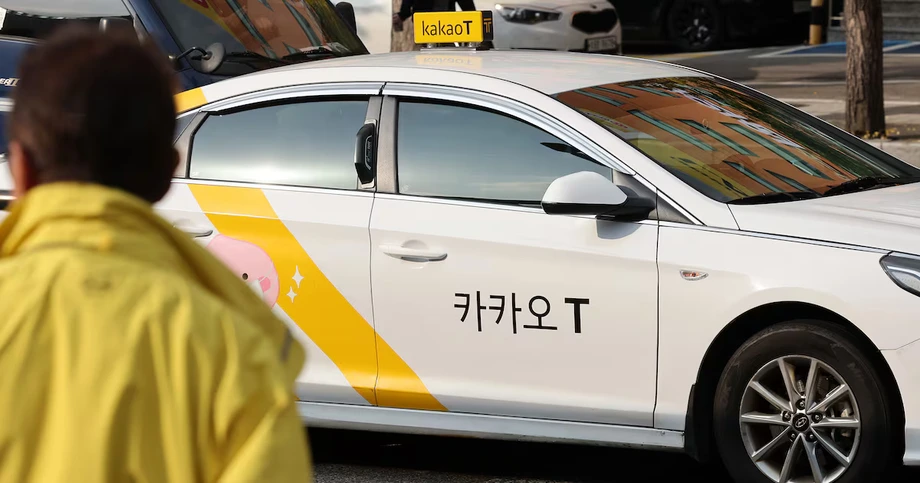
Kakao Mobility is the transport unit of Kakao, best known in South Korea for taxi calls. TPG first invested in 2017 and added money in 2021, putting about 590 billion won into the company. TPG is described as holding about 27 percent of Kakao Mobility, with figures cited from 27.9 percent to about 29 percent. It is the second largest shareholder after Kakao.
The 2017 deal required Kakao to cooperate with a listing and gave TPG priority to recover its money at an exit. It also set a 2022 listing target and named Hong Kong as the place for dispute resolution. TPG says the later ADR plan was covered by those promises. Kakao says the current plan did not meet the agreement and did not serve shareholders fairly.
Korea's rules on duplicate listings are part of the setting. A duplicate listing happens when an already listed parent company lists a subsidiary. Regulators and investors worry that this can spread investor attention across two companies and widen the discount at which the parent trades compared with the value of its holdings. The finance authorities tightened review of such listings this year. The case is described as South Korea's first duplicate listing dispute to reach international arbitration.
The Exit Attempts That Came Before the Arbitration
TPG did not turn to arbitration while other exits were still open. Kakao Mobility's domestic listing was delayed amid public controversy over effects on small neighbourhood businesses and allegations that calls were routed to affiliated taxi services. A sale of management control to MBK Partners in 2022 was blocked by employee and union resistance. Talks to sell a stake to VIG Partners last year broke down.
By 2026, TPG was looking at a US listing as its last practical route. Kakao Mobility filed a confidential Form F-1 with the US Securities and Exchange Commission on July 2. A Form F-1 is the registration statement a foreign company uses when it seeks to register securities for a public offering in the United States.
The main dates in the dispute are:
- 2017: TPG made its first investment in Kakao Mobility and signed the shareholder agreement.
- 2021: TPG invested again, bringing total investment to about 590 billion won.
- 2022: The shareholder agreement's listing target passed without a listing.
- July 2, 2026: Kakao Mobility filed the confidential Form F-1 with the SEC.
- Sept. 22, 2026: Kakao's board voted against the ADR structure.
- Oct. 29, 2026: TPG filed the arbitration request, according to Kakao's disclosure.
- Nov. 10, 2026: Kakao received the request from the ICC Secretariat.
- Nov. 20, 2026: TPG valued the total claims at more than 1.5 trillion won for the deposit calculation.
- Nov. 23, 2026: Kakao disclosed the case.
Kakao's board resolution had no legal force by itself, yet it worked like a veto. Overseas investors considering the public offering stepped back, and the listing lost its practical path forward.
What Kakao and TPG Each Say Happened
Kakao, the parent company and a respondent in the case, put its position in the filing in direct terms. It said the claim amount came from TPG alone and that it would fight both the claim and the number.
We are contesting the validity of the claims and the amounts, and deny them in their entirely.
Kakao also said it would use the arbitration to argue that TPG's position lacks merit. In another statement carried in the filing, it said it would respond actively. The company says it is not against a US listing in principle. Its objection is to a structure in which proceeds from ADR sales would mainly go to TPG, while Kakao and ordinary shareholders would receive limited benefit and carry more risk.
We plan to actively respond in the arbitration proceedings by arguing that TPG's claims are without merit.
TPG's argument runs in the other direction. It says Kakao promised in 2017 to support a listing and failed to do so when the ADR plan arrived. TPG also says the parent company put regulatory concerns and minority shareholder protection ahead of a contract that had been in place for nine years. The board opposed the ADR plan in part because a two listing structure could widen Kakao's net asset value discount. That discount is the gap between the market value of Kakao and the value of the stakes it owns. Kakao also pointed to split investor demand and more responsibility under US securities law, which sets strict disclosure rules for companies selling securities to American investors.
A shareholder value committee formed at Kakao Mobility in April adds another layer. TPG held two of the three seats, giving it strong influence over listing work. The parties disagree over the committee's reach. One reading limits it to block sales, large sales of existing shares to institutions. Another reading includes a listing route that could raise money through ADR sales.
How the Arbitration Could End
Kakao's disclosure identifies the arbitration as being brought under ICC rules, seated in Hong Kong. An international arbitration works like a private court chosen by contract. Each side presents evidence to arbitrators, who issue an award. In most cases the award is final, with no ordinary appeal.
ICC statistics cited in the case put the average time from request to final award at 27 months. For comparison, the Kyobo Life and Affinity consortium put option dispute entered ICC arbitration in 2019 and ended after six years. A put option is a right to sell shares at an agreed price, often used by investors to exit a private company.
The public timetable also contains a different procedural description. A market timetable names the Hong Kong International Arbitration Centre, gives Oct. 30 as the request date and says Kakao's answer is due Nov. 30. It also cites an average final award period of about 17 months for HKIAC cases. Kakao's disclosure names the ICC, Oct. 29 and Nov. 10. It is not yet clear whether both descriptions refer to the same procedural record. No tribunal members, hearing date or final award date have been announced.
Enforcement is one reason the case matters. South Korea is a party to the New York Convention, a treaty that helps courts recognise and enforce arbitration awards from other countries. If TPG wins in Hong Kong, it can ask a Korean court to enforce the award. A Korean court would handle enforcement rather than rehear the merits of the case.
Why the 1.5 Trillion Won Figure Shook the Market
Kakao shares fell 7.9 percent to 28,550 won at 11:27 a.m. on Nov. 23 as the arbitration became public. The scale of the claim explains part of the reaction. At 1.5 trillion won, TPG's estimate is almost one tenth of Kakao's year end equity capital and more than twice the about 590 billion won TPG says it invested in Kakao Mobility.
Investors were not simply looking at a bill already due. They were looking at a possible cost, legal fees and a dispute that could slow any sale, public offering or restructure involving Kakao Mobility. In finance, a possible future payment tied to a legal case is called a contingent liability. Companies do not always pay it, but markets track it because it can affect cash, plans and the price investors are willing to pay for shares.
The claim can also pressure Kakao's valuation. Kakao has warned that a two listing structure could deepen the gap between its market value and the value of the companies it owns. While the arbitration stays open, investors may assume that a new listing plan, asset sale or other exit will take longer to agree.
What the Split of Kakao Could Change
Kakao plans to carry out a human split in February 2027, creating KakaoAI and KakaoX. A human split gives existing shareholders shares in the new companies in proportion to what they already hold. Kakao Mobility's stake is expected to sit with KakaoX, while KakaoAI would be separate.
The arbitration could follow both companies. Under South Korea's Commercial Act, debts that existed before a split are generally shared by the companies created by the split, unless another arrangement is made. KakaoAI could carry part of the risk from a dispute over Kakao Mobility even if the mobility stake moves to KakaoX.
That possibility complicates the relisting process. When a listed company splits, the resulting companies need approval from the Korea Exchange to trade again. A large unresolved dispute can make that approval harder. Kyobo Life faced criticism from the exchange about listing suitability while its own dispute continued.
KakaoAI shareholders would be left holding a company linked to a dispute involving more than 1 trillion won through the split structure. The timing matters because the arbitration is likely to run for many months, while the split is planned for early next year.
Which Other Investors May Be Pulled In
TPG is not the only financial investor waiting for Kakao Mobility to give its money back. Carlyle, Google, GS and LG also hold investments in the unit. Financial investors buy stakes with the aim of selling later, rather than running the business day to day. When a listing or sale is delayed, their capital stays tied up.
Kakao Entertainment, another group company, has foreign investors including Anchor Equity Partners, Saudi Arabia's Public Investment Fund and Singapore's Government of Singapore Investment Corporation. They are also waiting to recover money.
People in the investment banking industry expect more legal action if no exit route opens. They say financial investors could join TPG in separate arbitration or lawsuits to recover funds. No additional filing involving those investors has been announced, and no claim amounts for them have been given.
What This Means for Korean Listed Companies
The case reaches beyond Kakao Mobility because it puts a shareholder contract against a regulatory duty in public view. Kakao was a listed parent deciding whether to help a foreign fund sell a large stake through a United States listing. It chose the concerns raised by duplicate listing rules, its own valuation and other shareholders. TPG says that choice broke a deal signed years earlier.
For other listed Korean groups, the practical effect is clear. Any promise to support a subsidiary listing may later collide with market rules, political scrutiny or the interests of minority shareholders. Contracts that name a foreign seat for arbitration make those disputes easier to bring across borders. Foreign investors can pursue a neutral forum instead of relying only on Korean courts.
The dispute also shows how an exit that looks private can become public. TPG wanted a route to sell its old shares. The board's objection stopped the deal, and the attempted route became the evidence for a billion dollar claim. For ordinary shareholders, the result can be a lower share price, a harder path to relisting and a company tied up in a case whose outcome may take years.
Key Points
- TPG investment vehicles claim Kakao and Kakao Mobility breached shareholder agreements over a blocked US ADR listing.
- The claim value is more than 1.5 trillion won, about 1.1 billion dollars, but it is an estimate for arbitration costs and not a final damages award.
- Kakao says it does not oppose a US listing in principle, but it opposed the current structure and denies the claims.
- TPG invested about 590 billion won in 2017 and 2021 and holds roughly 27 percent to 29 percent of Kakao Mobility.
- The case is linked to Korea's tighter review of duplicate listings and could affect Kakao's planned February 2027 split.
- No tribunal, hearing date or final award date has been announced.