A Korean certification resets the electric sedan race
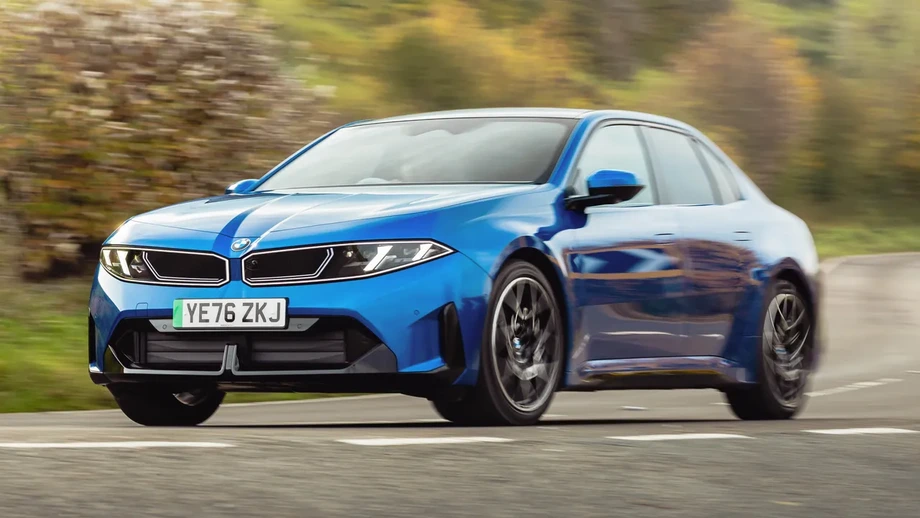
The BMW i3 50 xDrive has become the first sedan certified in South Korea to travel more than 700 km on one charge. An entry completed on 26 November 2026 in KENCIS, the vehicle emissions and noise certification system run by the Ministry of Climate, Energy and Environment, gives a combined range of 702 km at normal temperatures. The separate city and highway results are 735 km and 662 km.
Contents
- A Korean certification resets the electric sedan race
- Why winter range widens BMW's advantage
- The battery and computers behind the numbers
- How quickly can it charge outside a laboratory?
- Driver assistance will depend on Korean approval
- What early driving tests reveal
- Korean pricing, subsidies and running costs
- A second certification broadens BMW's Korean rollout
- From Munich to Mexico: the production timeline
- Why China's longer i3 follows a different formula
- What Korean buyers should watch next
- What to Know
The cold weather figures are almost as striking. BMW's sedan recorded a combined 652 km at low temperatures, comprising 629 km in the city and 681 km on the highway. That is 50 km, or about 7.1%, below its normal temperature result. Winter testing matters because cabin heating and a cold battery can sharply reduce the distance an electric car covers.
Only two larger vehicles sit above it in the Korean certification rankings: the Cadillac Escalade IQ at 739 km and the Escalade IQL at 710 km. The BMW reaches 702 km with a usable battery capacity of 108.7 kWh, approximately 53% of the 205 kWh listed for the Escalade IQ. A kilowatt hour, shortened to kWh, measures stored electrical energy, so this comparison shows how much distance BMW has extracted from a considerably smaller energy reserve.
BMW Korea is considering a domestic launch early in the first half of 2027. Certification is a necessary step towards selling the car, but the company has yet to confirm its price, final equipment list, order date or delivery schedule.
Why winter range widens BMW's advantage
The Tesla Model 3 Premium Long Range RWD is certified in Korea for 551 km at normal temperatures and 419 km at low temperatures. The i3 therefore leads by 151 km in the first test and 233 km in the second. Against the recently introduced Mercedes-Benz CLA 250+ Electric, certified at 474 km and 374 km respectively, BMW's advantages grow to 228 km and 278 km.
Those comparisons use the same Korean certification framework, making them more useful to local buyers than placing figures from different national tests side by side. Actual journeys will still vary with speed, heating, battery temperature, tyres and wheels. The i3's official European WLTP rating reaches 912 km, but WLTP is a different laboratory procedure. BMW's broad technical tables list 729 to 912 km depending on configuration, while one European market specification gives 814 to 912 km.
Drivers also rarely empty a battery completely on a long journey. Applying an illustrative 90% to 10% usage window to the Korean figures gives about 562 km at normal temperatures and 522 km at low temperatures. Planning to arrive with 20% remaining after starting at 80% reduces those planning figures to roughly 421 km and 391 km. These are calculations for journey planning, not measurements from road tests.
The battery and computers behind the numbers
The i3 is the sedan counterpart to the iX3 and the second production model on BMW's Neue Klasse electric architecture. Its sixth generation battery uses cylindrical cells installed directly in the pack rather than grouped into separate modules. This saves weight and packaging space, while the battery housing contributes to the rigidity of the body. The 50 xDrive has 108.7 kWh of usable capacity and operates an electrical system at 800 volts, providing the foundation for very rapid charging.
Korean certification records list a front motor producing 167 horsepower and a rear motor producing 326 horsepower. BMW quotes a combined system output of 345 kW, or 469 horsepower, because the peak outputs of individual motors cannot simply be added together. Maximum torque is 645 Nm, a measure of rotational pulling force. The car accelerates from rest to 100 km/h in 4.7 seconds, has an electronically limited top speed of 200 km/h and weighs 2,280 kg without passengers or cargo.
Four central computers replace many separate controllers. The unit called Heart of Joy coordinates the drivetrain, braking, energy recovery and steering, while the other three manage areas including driver assistance and infotainment. BMW says the system provides up to 20 times the computing capacity of its previous arrangement and requires 600 metres less wiring. Software functions can subsequently be revised through wireless updates.
How quickly can it charge outside a laboratory?
A compatible 400 kW direct current charger can take the i3 50 xDrive from 10% to 80% in about 21 minutes under suitable conditions. BMW also claims between 320 and 423 km of additional WLTP range after 10 minutes at the highest charging rate. The less powerful i3 40 xDrive accepts up to 300 kW. Standard alternating current charging is rated at 11 kW, with 22 kW available as an option in some markets.
A real charging session illustrates why the charger's rating matters. On a 200 kW unit, one test car went from 53% to 87% in 20 minutes and received 40.4 kWh without battery preconditioning. It peaked at 151 kW and averaged 120 kW. Charging speed changes with the station, battery temperature and existing charge, while the car does not sustain its maximum rate throughout a session.
BMW's carefully planned drive of approximately 5,887 km from North Cape in Norway to Tarifa in Spain required just 2 hours, 45 minutes and 54 seconds of rapid charging, with an average charging rate of 275 kW during the stops. The battery can also supply power outwards. Vehicle to load capability is rated at 3.7 kW, while vehicle to home and vehicle to grid functions can reach 11 kW with compatible equipment. Approval varies by country; only vehicle to load had been approved in Belgium at the time of one European test.
Driver assistance will depend on Korean approval
The planned Korean specification includes the sensors and computing hardware for Motorway and City Assistant from the point of delivery. The intended functions cover assisted driving on highways and in urban areas, described as Level 2++. Despite the elaborate name, this remains driver assistance rather than autonomous motoring: the person at the wheel retains responsibility for supervising the car.
The hardware strategy allows BMW to activate functions through a wireless update after obtaining the necessary Korean regulatory approval. No local activation date has been given. Overseas availability shows why the timing can differ by market. France has already approved Highway Assistant for operation at speeds up to 130 km/h, offered there at €1,100 for four years, while the UK has approved Motorway Assistant for highway driving in which the driver may remove both hands under the permitted conditions.
What early driving tests reveal
Several road tests describe a car that combines quiet highway cruising with agile cornering. One test lasting four days and covering roughly 250 miles of city, highway and mountain driving returned 21.8 kWh per 100 km, equivalent to a theoretical range of nearly 500 km under those conditions. A separate British test achieved 3.8 miles per kWh and an estimated 415 miles, or about 668 km, in temperatures in the low double digits Celsius. The results reflect different routes and driving styles rather than a single guaranteed everyday figure.
The braking system includes a feature called Soft Stop. Regenerative braking initially slows the car firmly, then eases immediately before a halt to avoid a abrupt final movement. Testers also praised the balance of the standard steel suspension, although some found the higher seating position and upward angled steering column less familiar than those of a conventional 3 Series.
Driver and content creator Misha Charoudin also took the 50 xDrive onto the Nürburgring Nordschleife. His demanding lap used 14 percentage points of battery, falling from 79% to 65% over approximately 20 km. Subsequent driving brought the total to four laps, or roughly 80 km, with 20% charge remaining. A high battery temperature warning appeared near the end of Charoudin's lap, without a clearly identified loss of performance. No official lap time was released.
Inside, a Panoramic Vision display projects information across the base of the windscreen, accompanied by a central touchscreen measuring 17.9 inches. Some testers found the display easy to read; others considered its information repetitive or said the steering wheel obscured parts of the screen. Other criticisms concerned touchscreen controls for the vents and climate system, hard plastics low in the cabin, and a raised rear floor that leaves passengers sitting with their knees more bent than in the combustion 3 Series.
Korean pricing, subsidies and running costs
Korean estimates place the basic i3 50 xDrive in the middle to upper part of the 70 million won range, with an M Sport version in the low 80 million won range. These are forecasts rather than BMW Korea prices. In Germany, the standard 50 xDrive starts at €65,900, which is €5,000 less than the €70,900 iX3 sharing its platform and battery. French pricing starts at €59,900 for the 40 xDrive and €65,400 for the 50 xDrive, while UK prices begin at £47,925 and £53,425 respectively.
A BMW Korea representative said that certification should not be read as confirmation of the final sales programme.
The specific launch schedule and detailed specifications have not yet been decided, but we are strongly considering a launch early in the first half of 2027.
Electric vehicle subsidies remain another variable. Support depends on the rules for the actual purchase year, the approved Korean trim, its selling price and local government budgets. The eligibility and amount for a Korean i3 delivered in 2027 have not been settled, so buyers cannot yet subtract a definite subsidy from the estimated price.
Charging costs are easier to illustrate with assumptions. Driving 1,500 km a month at 6 km per kWh would require 250 kWh. At assumed rates of 250, 350 and 450 won per kWh, the respective monthly bills would be 62,500, 87,500 and 112,500 won. Those figures exclude options, insurance, registration expenses and parking, and use example tariffs rather than a quotation from a charging operator.
A second certification broadens BMW's Korean rollout
BMW Korea completed certification for the iX3 40 xDrive on the same day as the i3. With an 82.6 kWh usable battery, the new entry version records 472 km at normal temperatures, split between 500 km in the city and 439 km on the highway. Its low temperature results are 444 km combined, 436 km in the city and 455 km on the highway.
The iX3 50 xDrive is rated at 615 km and 568 km in normal and cold conditions, while the 50 xDrive SE reaches 653 km and 606 km. Dividing normal temperature range by usable battery capacity gives approximate figures of 5.71 km per kWh for the 40 xDrive, 5.66 for the 50 xDrive and 6.01 for the SE. The same arithmetic produces about 6.46 km per kWh for the i3 sedan, helping explain its longer reach. Korean prices and exact sales dates for the iX3 40 xDrive also remain unannounced, although the first half of 2027 is expected.
From Munich to Mexico: the production timeline
The Korean certification arrives during a rapid international rollout. BMW is manufacturing the standard wheelbase sedan in Munich, while the related iX3 is built in Debrecen, Hungary.
- September 2023: BMW previewed the design and technology with the Vision Neue Klasse concept.
- March 2026: The production i3 sedan was presented.
- 18 June 2026: BMW brought forward European advance orders for the First Edition, priced at €75,340 in Germany.
- 6 August 2026: Series production began in Munich with the 50 xDrive, the sole launch version.
- Autumn 2026: European customer deliveries began, with the First Edition taking priority. Orders for the standard €65,900 German model opened at the end of September.
- 26 and 27 November 2026: Korean certification was completed, followed by the Chinese launch of the Long Wheelbase edition.
- January 2027: Chinese deliveries of the Long Wheelbase edition are scheduled to begin.
Mexican production at San Luis Potosí is planned from 2027, and the first US shipments are not expected until later that year. Munich is scheduled to switch entirely to electric vehicle production in 2027. An M60 xDrive, a Touring estate and an electric M3 have also been announced or scheduled for 2027. BMW expects the electric i3 to generate two thirds of 3 Series sales in Europe.
Why China's longer i3 follows a different formula
China's i3 Long Wheelbase edition launched on 27 November at the Guangzhou Auto Show. It measures 4,864 mm long, 104 mm more than the European sedan, and its wheelbase grows from 2,897 to 3,005 mm. Most of the additional length therefore sits between the axles. Unlike the two motor European xDrive models, the Chinese range uses one motor and offers three batteries.
- The i3 30L costs 249,900 yuan and combines a 77 kWh lithium iron phosphate battery from CATL with a CLTC range of 708 km.
- The i3 40L costs 279,900 yuan and uses an 86.9 kWh ternary lithium battery from CATL for 802 km.
- The i3 50L costs 319,900 yuan and uses a 113.4 kWh ternary lithium battery from Eve Energy for 1,028 km.
China's official specification lists outputs of 265, 320 and 326 horsepower respectively, with all three producing 500 Nm and limited to 200 km/h. Local technology includes a driver assistance system developed with Momenta and navigation using Amap technology to provide directions for individual lanes.
The headline 1,028 km figure uses China's CLTC procedure, which gives greater prominence to slow speed driving and tends to produce higher electric vehicle range values than WLTP. It also comes from a longer car with different motors and batteries. The Chinese figure, Europe's maximum 912 km WLTP rating and Korea's 702 km certification therefore describe three distinct test and vehicle combinations.
What Korean buyers should watch next
For shoppers comparing the i3 with a Model 3 or CLA, the Korean normal and cold weather figures provide the clearest like for like range comparison. The final wheel and tyre choice still matters because equipment can change the official result. Buyers should also check which assistance functions are enabled locally, the battery warranty and whether their regular charging locations can supply enough power to make full use of the car.
Four dates deserve separate attention: the sales launch, the opening of orders, customer deliveries and the arrival of demonstration cars. BMW Korea has discussed only a probable launch window. No Korean order or delivery date has been announced, leaving drivers whose leases end early in 2027 with a reason to keep their existing transport plans flexible.
What to Know
- Korean certification gives the i3 50 xDrive 702 km at normal temperatures and 652 km at low temperatures.
- It is the first sedan to exceed 700 km in Korean certification, using a 108.7 kWh usable battery.
- Its low temperature advantage is 233 km over the comparable Tesla Model 3 and 278 km over the Mercedes CLA 250+ Electric.
- The 469 horsepower sedan reaches 100 km/h in 4.7 seconds and supports charging at up to 400 kW.
- BMW Korea is considering a launch early in the first half of 2027, but prices, specifications, orders and deliveries remain unconfirmed.
- The iX3 40 xDrive received Korean certification on the same day, with ranges of 472 km and 444 km.
- China receives a separate Long Wheelbase range, led by a 1,028 km CLTC version, with deliveries scheduled from January 2027.