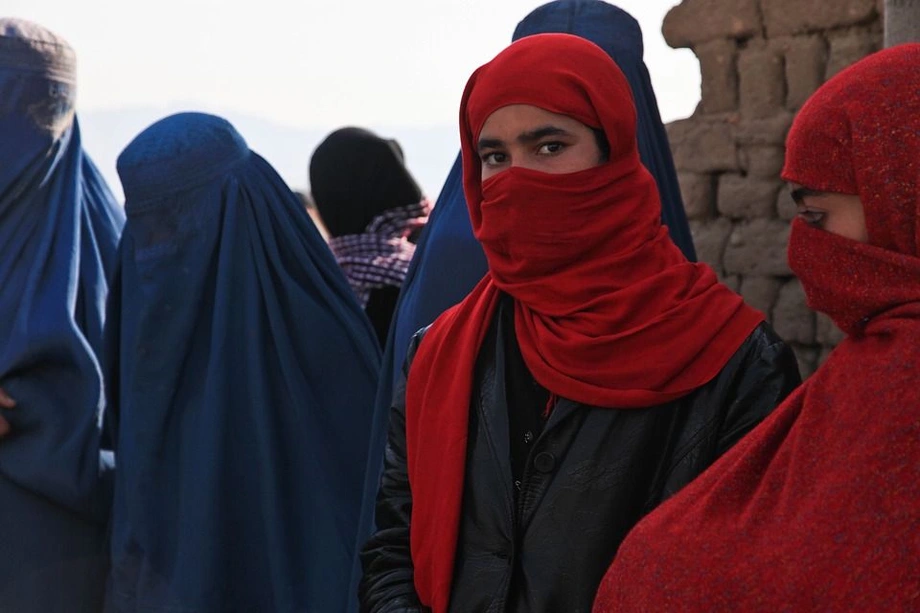
A single label for thousands of different women
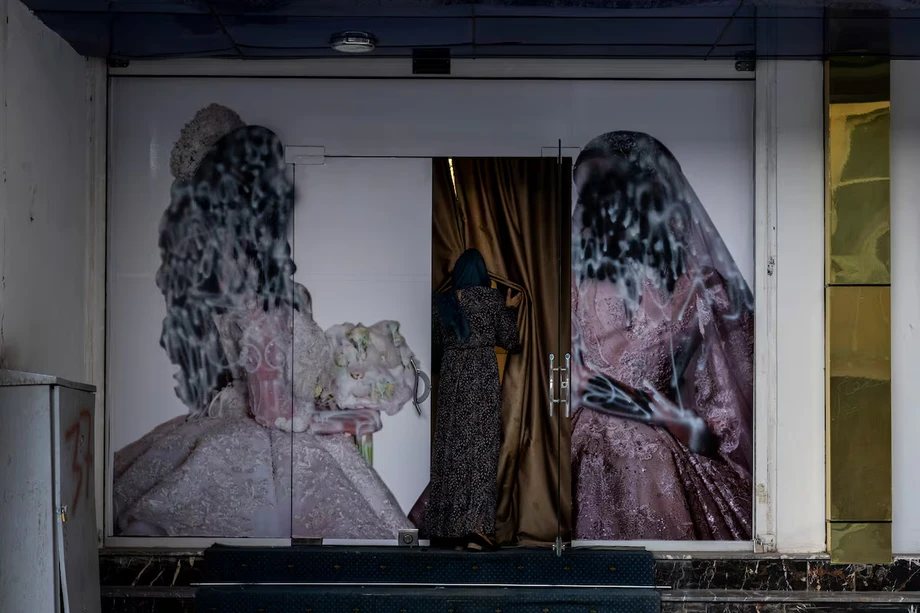
Taliban morality officials in Afghanistan's northern Balkh province have instructed hospitals, clinics and government offices to stop recording women's given names, replacing them with the single label "Bibi" on medical files, prescriptions and administrative paperwork. The instruction was communicated as early as May 2026 and became widely known in late November.
Contents
- A single label for thousands of different women
- What remains unverified about the directive
- Why identical names make hospitals less safe
- Treatment was already slipping out of reach
- A shrinking supply of female health workers
- When paperwork cannot prove motherhood
- The campaign that briefly restored recognition
- An old custom becomes an administrative rule
- Why a provincial order carries national weight
- Work and education continue in hidden rooms
- Key Points
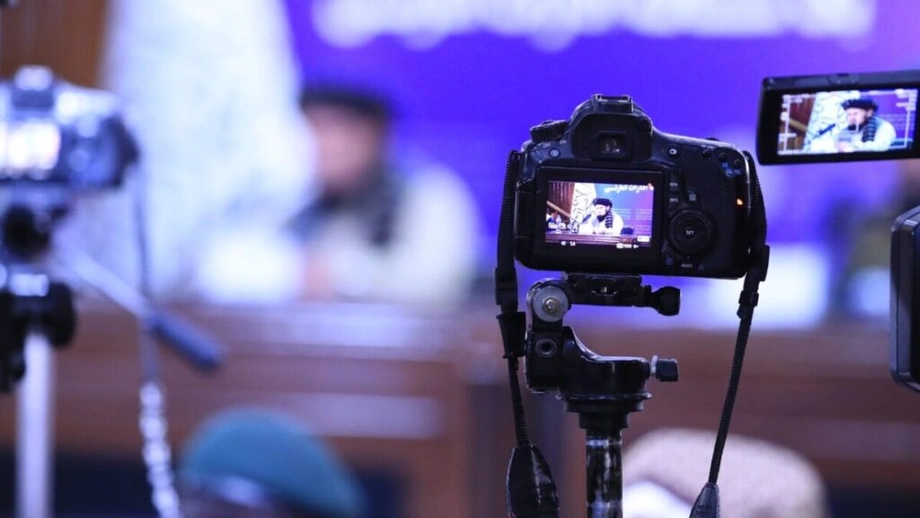
The Ministry for the Propagation of Virtue and the Prevention of Vice directed health workers and civil servants to avoid writing or speaking the names of female patients, according to accounts from women, medical staff and activists. Public hospitals, private clinics, doctors' offices and government facilities were included in descriptions of the order.
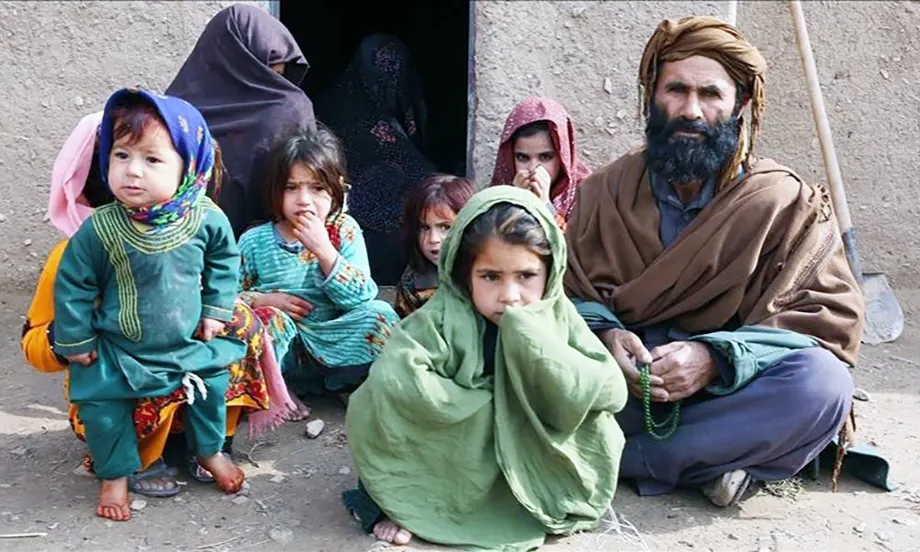
Bibi is an honorific used in Dari and Pashto. It can be a courteous form of address for women of different ages, but it traditionally refers to a grandmother or an elderly woman. Its compulsory use for every woman would remove the distinction between a young patient, an elderly patient and every other woman whose records are kept by the same institution.
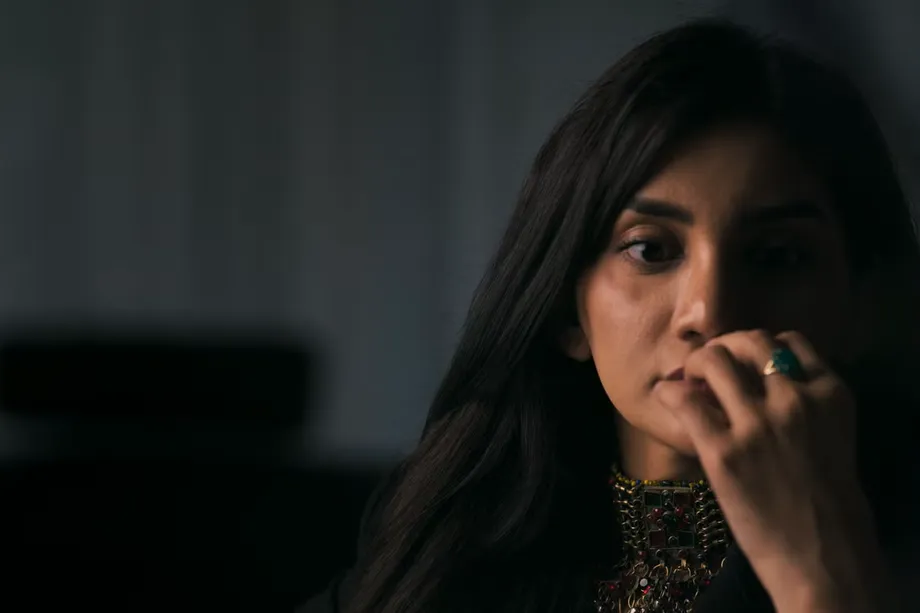
Lalah Osmany, an Afghan rights activist based in Germany and the founder of the #WhereIsMyName movement, described the measure as an institutional assault on human dignity. She has called a name "a face, a voice, a story" and explained why she regards its removal as more than an administrative change.
The first step to dehumanising a person is to take away their name."
"This is a systematic process of dehumanisation.
What remains unverified about the directive
The available accounts do not establish whether the Balkh instruction was issued as a formal written decree or communicated through local officials. How consistently it is being enforced is also unclear. An Afghan activist speaking under a pseudonym said the order had been issued but had so far been ignored, while activists in Kabul described enforcement of Taliban restrictions as varying from one locality to another.
Osmany has gathered testimony from women, doctors and civil society activists indicating that some women have also been addressed as "goat" or "cow." She argues that replacing a personal name with an animal label reduces a woman to a biological object or a man's possession. No written Taliban order requiring those animal terms has been independently confirmed, distinguishing those testimonies from the reported instruction to use Bibi.
The measure has not been confirmed as a nationwide rule. Its fullest description covers medical records, prescriptions and paperwork handled by government institutions in Balkh, but it is uncertain whether every category of official document is affected. No public date has been announced for a review, further clarification or a decision on extending the measure to other provinces.
Why identical names make hospitals less safe
A patient's name is normally one of the basic checks connecting a person to the correct medical history. Staff use it alongside other details to confirm allergies, previous operations, chronic illnesses, test results and medicines. When dozens of women are filed under Bibi, or under arbitrary numbers, staff lose a straightforward way to distinguish one person from another.
- Clinical histories can be mixed, interrupting treatment for allergies, chronic conditions or earlier surgery.
- Prescriptions and dosages can be given to the wrong patient.
- Laboratory results and diagnoses can be attached to the wrong file, delaying urgent care.
Osmany warned that identical names on numerous prescriptions and records create huge opportunities for medical error. The danger is practical as well as symbolic: a woman may receive another patient's medicine, while her own results remain buried in a file that staff cannot reliably identify.
These risks arrive within a wider healthcare emergency. A United Nations report included the account of a woman in Kunar province who suffered several miscarriages without access to medical help. Restrictions on movement, treatment and training mean that a paperwork error can become one more obstacle for a patient who already struggled to reach a clinic.
Treatment was already slipping out of reach
Male doctors in many provinces have received Taliban instructions not to examine or treat female patients, sometimes allowing exceptions involving a male guardian or female medical staff. A mahram is a close male relative who acts as a guardian or escort under the rules. There has been no public announcement of a single written national prohibition, but patients and health workers describe enforcement through inspections, warnings and pressure from security personnel.
Farida, a 37 year old woman in Herat, was receiving dental treatment when her clinic stopped the work before she could obtain implants. She said the clinic attributed the decision to an order from the virtue and vice ministry preventing male dentists from treating women. Three months later, her treatment remained unfinished and pain made eating and drinking extremely difficult.
Samim, a surgeon with 15 years of experience at a public hospital in northern Afghanistan, said he was not permitted to examine women directly because he was not their mahram. He described the restriction as applying regardless of how simple the procedure was or how critical the patient's condition had become.
Nargis, an assistant at a dental clinic in Jalalabad, said some doctors posted lookouts outside their rooms while treating women. Such accounts conflict with a position expressed in February by Hamdullah Nomani, the Taliban minister of Communications, who said male doctors should be considered mahram when treating women. Patients and health workers instead described controls that continued to prevent or interrupt care.
A shrinking supply of female health workers
Healthcare had remained one of the few professional fields open to Afghan women, making female doctors, nurses and midwives essential when male practitioners could not treat women. In December 2024, the Ministry of Public Health directed private medical training institutes to stop women from studying nursing, midwifery and other health sciences. The decision closed one of the last educational routes available after the university ban imposed in December 2022.
Health ministry estimates cited at the time put the number of women in training affected by the prohibition at about 35,000. Hospitals have also described restrictions on hiring female staff. The combined effect reduces both the number of women available to provide care now and the number preparing to enter the profession.
UNICEF has called this a "dual crisis." Experienced female health workers are retiring or leaving Afghanistan, while younger women are prevented from training to replace them. As the supply of female practitioners contracts and male doctors face restrictions on treating women, some patients could eventually find that no professional is permitted or available to treat them. The Balkh naming rule adds the possibility of mistaken identity to that narrowing access.
When paperwork cannot prove motherhood
Civil documents were already difficult for many Afghan women to obtain before the Balkh directive. A 2024 United Nations report found that women generally needed a male chaperone when applying for documents for themselves or their children. The paperwork is commonly required for healthcare, education, humanitarian assistance and bank accounts.
Some male relatives were reluctant to accompany applicants because lengthy procedures meant lost earnings, travel involved long distances, or they believed women who could not work had little need for documents. Households led by women faced an additional barrier when no man was available to act as an escort.
The experience of Khadija Amin, an exiled Afghan journalist living in Spain, shows how an omitted name can affect a family across borders. Her name did not appear on the Afghan birth certificates of her three children because of traditional marriage practices. After her former husband took the children to Germany in 2024, German police initially could not process her custody complaint because she lacked documents establishing that she was their mother.
A legal delay lasting two years followed as she tried to prove maternity. During that time, her former husband returned to Afghanistan with the children, leaving her unable to reach them. Her case demonstrates why recording the names of mothers is not merely a courtesy: without that evidence, a woman may struggle to assert parental rights even before authorities in another country.
The campaign that briefly restored recognition
Osmany founded #WhereIsMyName in 2017 to demand that Afghan mothers be identified in official records, including their children's birth certificates. The campaign challenged a practice in which women appeared only as the wife or daughter of a named man, leaving their own identities absent from family documentation.
She continued despite death threats and intimidation. Among the threats she received was a photograph of a woman who had been skinned by extremists. Activism nevertheless produced a legal opening in September 2020, when the government approved the voluntary inclusion of the names of mothers on children's birth certificates.
During the government supported by the United States, social taboos remained powerful, but there was no legal prohibition on using women's names. Women could have their names printed in passports, work in public institutions under their own identities and campaign openly for expanded rights. The Taliban's return to power in August 2021 ended that period of legal and political expansion.
Osmany connects legal recognition to the most basic abilities of citizenship and memory. She has continued campaigning from Germany while collecting accounts from inside Afghanistan.
A nameless person cannot dream, cannot own property, cannot claim justice, nor be remembered in history.
An old custom becomes an administrative rule
The avoidance of women's given names did not begin with the Taliban. In some communities, publicly pronouncing a woman's name has been treated as an affront to male family honour. Women are introduced as someone's wife or daughter, while their names may be absent from wedding invitations and even their own gravestones.
Osmany recounted the experience of an Afghan man who never knew his mother's first name because nobody in his household used it. He discovered it only after her death. Such examples show how a social custom can erase a person from family memory as well as from public documents.
Activists also reject the suggestion that Islam itself requires the practice. They point out that Surah 19 of the Quran is titled Maryam, referring to Mary, and that her name appears more than 30 times in the chapter. Their argument distinguishes tribal tradition from religious obligation.
The reported Balkh directive changes the scale of the practice by placing it within government procedure. A courtesy title traditionally used for an older woman becomes a compulsory administrative identifier, enforced by institutions that issue prescriptions, maintain records and control access to services.
Why a provincial order carries national weight
Femena, a women's rights organization, has counted more than 144 Taliban decrees restricting Afghan women since August 2021. Girls have been barred from studying beyond the age of 12, women have been excluded from most professions, and an August 2024 law restricted the use of women's voices in public spaces. Other measures have limited employment in nongovernmental organizations and restricted windows in new homes that allow views into areas used by women in neighbouring residences.
Zubaida Akbar, director of the Afghanistan programme at Femena, fears that Balkh could provide a model for other provinces. She pointed to earlier restrictions that began locally before being applied across Afghanistan.
The Taliban are very creative when it comes to imposing bans on women.
Education policy illustrates how extensive the campaign has become. In September 2025, authorities removed 679 books from university curricula, including 140 titles written by women, and declared that works authored by women could not be taught. Women have also been removed from parks and faced limits on their voices in radio and television broadcasts.
- 2017: Osmany launched #WhereIsMyName to seek recognition of Afghan mothers in official documents.
- September 2020: The government allowed the voluntary inclusion of the names of mothers on children's birth certificates.
- August 2021: The Taliban returned to power as the previous government collapsed during the United States military withdrawal.
- December 2024: Women were barred from training in nursing, midwifery and other health sciences.
- September 2025: Authorities purged 679 books from university curricula, including 140 by women.
- May 2026: The Balkh naming instruction was communicated to health facilities and public offices.
- November 2026: The directive became widely known, with no nationwide expansion confirmed.
Akbar's concern rests on that sequence of provincial measures, expanding decrees and institutional enforcement. For now, the Balkh instruction remains locally described, unevenly observed and without a publicly confirmed text. No timetable has been given for a national decision.
Work and education continue in hidden rooms
Some Afghan women have responded to restrictions by operating concealed businesses and secret schools. In Kabul, a beauty salon owner whose identity was withheld for her safety reopened after authorities raided her previous salon and confiscated its equipment. She said that even that limited economic activity was being closed off, adding that "for women in Afghanistan, working has become a crime."
An assistant teacher at a secret school in Kabul described the fear of arrest surrounding this underground work.
We are absolutely terrified of that possibility.
Mohammad Aslam, a spokesman for the Taliban's Ministry for the Promotion of Virtue and Prevention of Vice, has defended the broader restrictions by saying that women may conduct business and social affairs when they follow Islamic Sharia law and existing regulations. He did not provide a public written text resolving the uncertainties surrounding the Balkh order.
Osmany argues that individual acts of recognition now carry political meaning in that environment. Her conclusion returns to the simple practice at the centre of the dispute.
Calling a woman by her real name in Afghanistan is an act of resistance.
Key Points
- Taliban morality officials in Balkh reportedly instructed health facilities and public offices to replace women's names with Bibi in records and prescriptions.
- The instruction was communicated as early as May 2026, but its written status, exact scope and consistency of enforcement remain unclear.
- Testimonies describe some women being called goat or cow, though no written order requiring animal names has been independently confirmed.
- Identical identifiers could mix medical histories, prescriptions, laboratory results and diagnoses.
- Restrictions on male doctors and the December 2024 ban on medical training for women were already reducing access to care.
- Khadija Amin's custody case shows how the absence of a mother's name from birth certificates can obstruct parental claims.
- Femena has counted more than 144 decrees restricting women since 2021, and activists fear the Balkh measure could spread.
- No nationwide naming order or date for a decision on expansion has been confirmed.