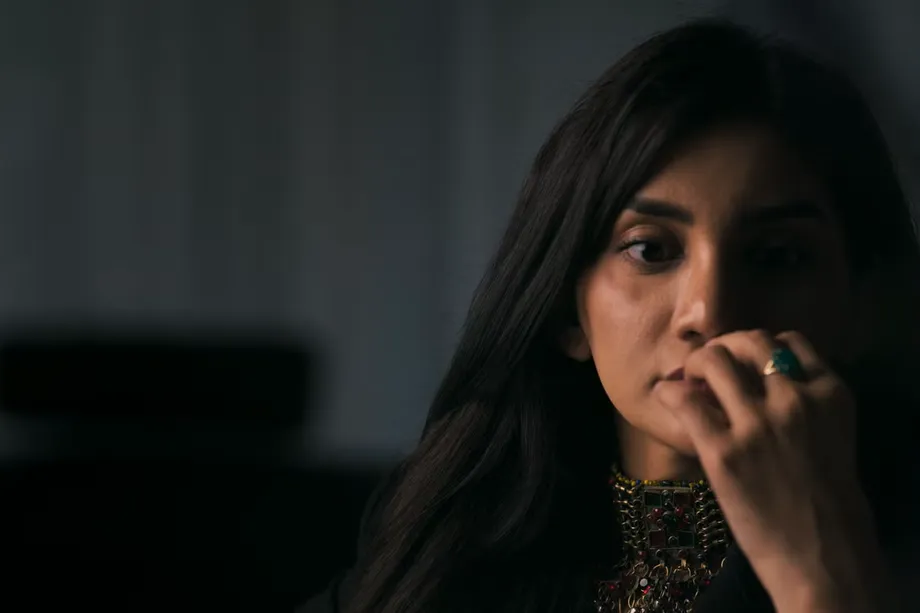
Restrictions reach from classrooms to escape routes
Nilofar, a 28 year old Afghan entrepreneur and mother of three now living in Warsaw, says she survived two Taliban assassination attempts before fleeing Afghanistan in August 2021. One attack left her husband with a bullet wound in his back. During the family's struggle to reach an evacuation flight, she says Taliban members broke her nose with an AK47.
Contents
- Restrictions reach from classrooms to escape routes
- Leaving Afghanistan did not end the fear
- Women describe punishment for speaking and working
- School exclusion reaches into the next generation
- Healthcare faces a shrinking supply of women
- Movement and information become harder to access
- Abuse at home meets fewer routes to protection
- International pressure centres on rights and evidence
- Governments call for action while women keep organising
- Key Points
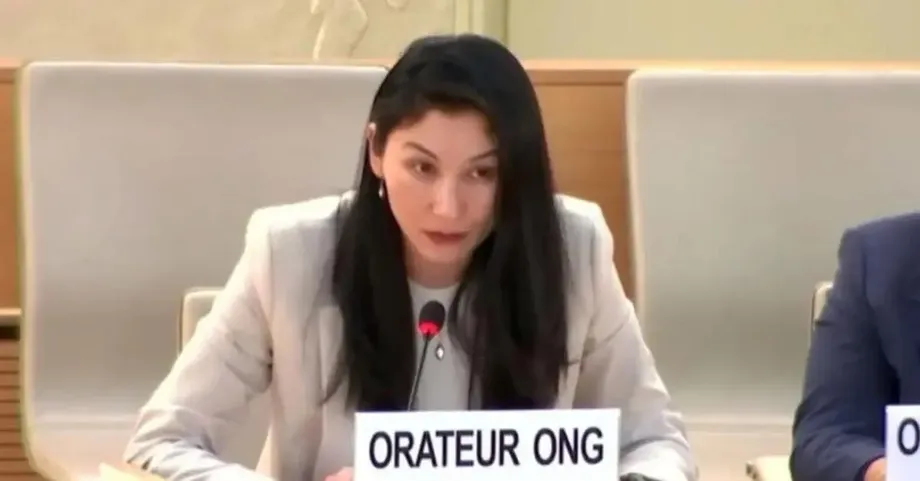
Her account connects the dangers faced by individual women to a broader warning from Richard Bennett, the United Nations special rapporteur on human rights in Afghanistan. Presenting his latest report to the UN General Assembly, Bennett said Taliban authorities were deepening restrictions, weakening protection against violence and making it harder for women to leave abusive relationships.
Bennett, an independent expert appointed through the UN human rights system, urged governments to make verified improvements in rights a condition of granting the Taliban greater international acceptance.
"Engagement with the de facto authorities must not confer legitimacy without measurable, independently verified improvements in human rights, nor should it come at the cost of accountability, equality or justice," Bennett said.
Taliban officials maintain that women's rights are protected under their interpretation of Islamic law. Women describing detention, interrupted education and forced exile tell a different story: restrictions on schooling, work and movement increasingly reinforce one another, narrowing both their daily choices and their routes to safety.
The consequences extend beyond those directly punished. Excluding girls from education reduces the number of future teachers and health workers. Restrictions on travel make reaching treatment or escaping violence harder. Families facing hunger have fewer ways to earn money when women cannot work.
Leaving Afghanistan did not end the fear
Nilofar says she discovered her name on a Taliban hit list before escaping during the first week of the movement's return to power. Her childhood had already been shaped by its earlier rule: her parents dressed and raised her as a boy to help her survive.
Nilofar, who now helps other women seek safety, described why staying was impossible for her.
"If I'd stayed in Afghanistan, I would have been killed and my children would have paid the price for their mother's activism," she said.
Poland offered her family a new beginning, but the emotional cost remains. Nilofar says she feels guilt about surviving while other Afghan women remain trapped. She has helped establish a nonprofit organisation funded by private donors to assist women and families trying to leave.
Brazil has provided humanitarian visas that have enabled some Afghan survivors to reach safety, including Fariha, whom Nilofar helped escape. Applications now pass through Brazil's broader humanitarian visa programme, while many evacuation routes available after the Taliban takeover have closed.
The chronology of the women's experiences shows how restrictions and resistance developed after the takeover:
- August 2021: The Taliban returned to power, and Nilofar fled with her family during the first week.
- December 26, 2021: Taliban authorities issued transport guidance requiring a close male relative to accompany women on journeys exceeding 72 kilometres.
- February 2022: Zahra, a dentist who opposed Taliban ideology, says she was arrested and tortured.
- 2024: UN Women cited an estimated maternal mortality rate of 638 deaths per 100,000 live births in Afghanistan.
Women describe punishment for speaking and working
Zahra, now living in Germany, says she was detained after speaking against Taliban ideology. She describes being beaten so severely that she struggled to breathe.
Zahra, a dentist separated from her husband after leaving Afghanistan, recalled the physical pain of her detention.
I felt my rib cage go into my lungs," she said. "I'll never forget it.
Her account also shows how displacement can interrupt family life for years. She says she has not seen her husband for four years, maintaining their relationship through video calls. The couple's hopes of having a child have been postponed by separation.
Fariha says armed men detained her because she refused to stop working in healthcare and helping women. She describes being taken to a rundown house, beaten, whipped and raped. Nilofar subsequently helped her leave for Brazil.
Nilofar says sexual assault and humiliation recur among the women whose cases she encounters, while stigma and fear discourage disclosure. She also describes cases in which recordings of abuse were used to threaten survivors into silence. Her observations concern the people seeking her help; no nationwide prevalence figure accompanies these accounts.
Bennett's report describes allegations of arbitrary detention, torture and sexual violence, alongside enforced disappearances and extrajudicial killings. Together, these forms of abuse make protest dangerous and can leave survivors afraid to seek help even after release.
School exclusion reaches into the next generation
Girls are barred from school beyond grade six, while women are excluded from universities. Restrictions on medical training further narrow the educational routes that once led to paid work and essential public services.
Some women continue teaching older girls secretly despite the risk of imprisonment. Other families send daughters to religious schools because these may offer one of their few remaining opportunities to leave home and learn outside it.
Nilofar says social pressure also influences those decisions. She alleges that girls in some religious schools face exploitation and describes growing pressure within families to accept restrictive ideas about women's place in society.
Bennett warned that exclusion from education damages girls' mental health and Afghanistan's development. He also pointed to exposure to forced marriage, child marriage, child labour and radicalisation as threats to the younger generation.
Afghan children's vulnerability extends beyond girls' education. UN monitoring described in earlier coverage of continued Taliban child recruitment verified the recruitment and use of 557 boys between January 2023 and December 2025, including children as young as 12. Taliban deputy spokesperson Hamdullah Fitrat rejected allegations of recruitment and said the practice was prohibited.
For families, lost schooling means more than missed lessons. A girl prevented from continuing her studies loses a route towards an income, professional qualifications and greater independence. Afghanistan also loses someone who might later teach children or provide medical care.
Healthcare faces a shrinking supply of women
Officials in Kandahar have reportedly instructed male dentists not to treat female patients and told clinics to employ female dentists. Restrictions on women's training make that instruction increasingly difficult to meet: clinics need qualified women while girls and young women are blocked from the education that produces them.
Canada's representative to the United Nations raised this connection at the General Assembly's Third Committee, which handles human rights and social issues. The representative warned that excluding women from secondary education, higher education and medical training reduces the number of female healthcare professionals and undermines access to essential services.
UN Women estimated Afghanistan's maternal mortality rate at 638 deaths per 100,000 live births in 2024. Expressed another way, that is approximately one maternal death for every 157 live births, illustrating the scale of the danger surrounding pregnancy and childbirth.
Fariha, the healthcare worker who fled to Brazil, fears that prolonged restrictions will leave Afghanistan without enough female teachers and midwives. Her warning concerns the time needed to train replacements: experienced workers cannot continue indefinitely without new graduates joining them.
A woman seeking treatment may therefore face several obstacles at once. A clinic may lack a female practitioner, a male practitioner may be restricted from treating her, and travel requirements may prevent her from reaching another facility independently.
Movement and information become harder to access
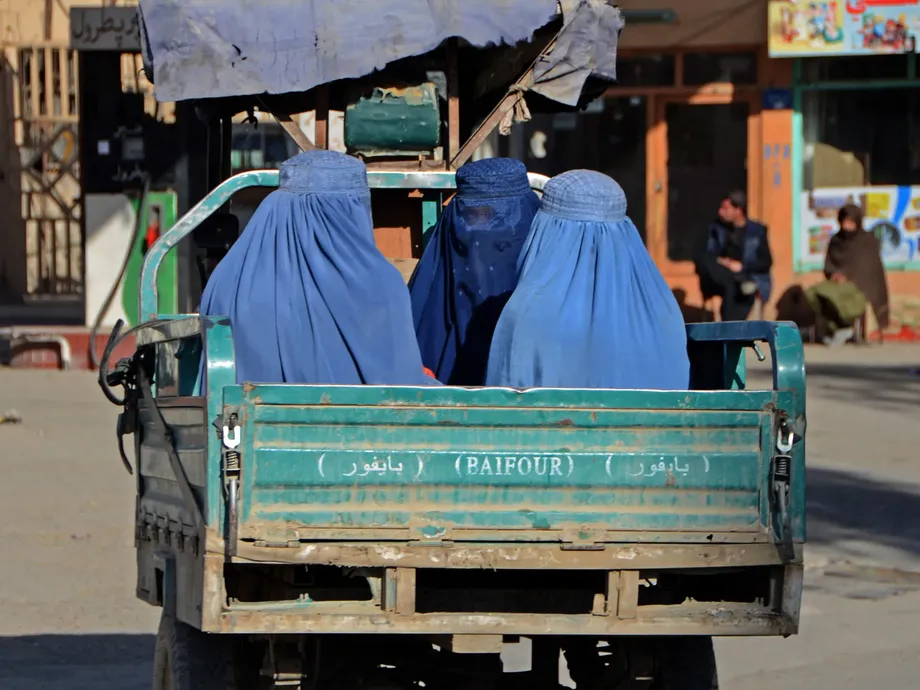
The Taliban's December 2021 transport guidance required drivers to refuse women travelling more than 72 kilometres without a close male relative. The restrictions on longer journeys made access to transport depend partly on whether a male family member was available.
Taliban spokesman Ahmadullah Wasiq described that guidance as a recommendation rather than an order. Its instructions nevertheless directed drivers to withhold rides, placing transport providers in a position to control women's movement.
Women also describe questioning by morality police over clothing and travelling alone. For someone whose nearest hospital, family support or possible refuge is far away, such restrictions turn an ordinary journey into a decision involving other people's permission and availability.
Access to information has narrowed too. The Taliban's suspension of BBC FM broadcasts removed a local transmission route for a service that said it reached 5.4 million people. Its Afghan programmes include educational material for girls excluded from secondary school.
Programming continued through other radio bands, online platforms and satellite. Listeners dependent on local FM reception, however, lost a way to receive both news and lessons. Restrictions on physical movement and access to information can leave women with fewer connections outside the home.
Abuse at home meets fewer routes to protection
Bennett said recent Taliban decrees had weakened safeguards against violence, made leaving abusive relationships increasingly difficult and permitted child marriage. Canada's UN representative specifically criticised the Taliban's law on the separation of spouses, saying it effectively recognises child marriage and increases risks of exploitation and abuse.
These legal changes matter most when a woman needs immediate protection. Leaving an abusive household requires somewhere safe to go, money for basic needs, transport and institutions willing to respond. Restrictions on employment and movement can make each step harder.
An investigation discussed in earlier coverage of deadly abuse against women documented 231 killings of women and girls across 10 provinces after the Taliban returned to power. Arrests were documented in 58 cases, approximately one quarter of that total. Fifty three deaths were officially classified as suicide.
The investigation included Liza Shams, 33, whose family described severe abuse before her death. Medical records recorded multiple facial fractures and other injuries, while a forensic report listed rat poison as the likely cause of death. Her father believed she was murdered, and no autopsy was performed.
Economic hardship compounds these dangers. The UN says three in four people in Afghanistan cannot meet their basic needs. Accounts of families selling daughters into marriage or domestic work show how hunger, restricted employment and unequal power within households can converge around a girl's future.
International pressure centres on rights and evidence
Bennett urged governments to support several routes towards accountability. He cited four International Criminal Court arrest warrants for senior Taliban officials and called for support for the Independent Investigative Mechanism for Afghanistan.
The UN Human Rights Council established that mechanism to collect, preserve and analyse evidence of serious international crimes and human rights violations. Preserving evidence can help investigators connect individual incidents to those responsible and prepare material for future legal proceedings.
Bennett also called for national prosecutions under universal jurisdiction. This is a legal principle allowing courts in some countries to investigate certain grave international crimes committed elsewhere, subject to their national laws.
Another route involves a dispute against Afghanistan under the Convention on the Elimination of All Forms of Discrimination against Women, known as CEDAW. Bennett urged the states pursuing that process to move faster. He also renewed calls to recognise gender apartheid as an international crime, a term advocates use for institutionalised domination and exclusion based on gender.
No timetable for reversing the restrictions or completing these legal processes was announced in the statements. Bennett's demand was for measurable change, supported by evidence and independent scrutiny, rather than diplomatic acceptance based on promises.
Governments call for action while women keep organising
Canada's UN representative said normalising relations with the Taliban should depend on concrete human rights measures. The representative also urged governments to use Bennett's findings and recommendations to support accountability.
Tammy Bruce, the US deputy representative to the United Nations, called for the immediate repeal of restrictions on women's education and employment. She said the Taliban had dismantled decades of progress and urged UN member states to turn commitments to women's rights into action.
Bruce described the United States as the largest single donor to the humanitarian system and stressed support for survivors of sexual violence during armed conflicts and natural disasters. Bennett similarly called for sustained humanitarian assistance alongside longer support for healthcare, education, mine clearance, independent media and civil society, particularly initiatives led by women.
Bennett's appeal also extended to civilian protection during tensions between Afghanistan and Pakistan. He urged both sides to take precautions to protect civilians and ensure independent investigations and accountability for civilian harm.
Nilofar continues raising money and helping women seek safety. Other Afghan women keep teaching, studying and defending their rights under severe restrictions. Their work makes the practical priorities concrete: safe places for survivors, access to treatment, opportunities to learn and reliable support for those trying to help.
Key Points
- Afghan women describe torture, sexual violence, family separation and dangerous escapes after resisting Taliban restrictions.
- UN expert Richard Bennett urged governments to require independently verified human rights improvements before granting the Taliban greater legitimacy.
- Exclusion from education and medical training threatens the future supply of female teachers and healthcare workers.
- Travel restrictions, poverty and weaker legal protections make it harder for women to leave abusive households.
- International accountability efforts include ICC warrants, evidence preservation, possible national prosecutions and a CEDAW dispute.
- Bennett called for sustained aid and support for education, healthcare, independent media and initiatives led by Afghan women.