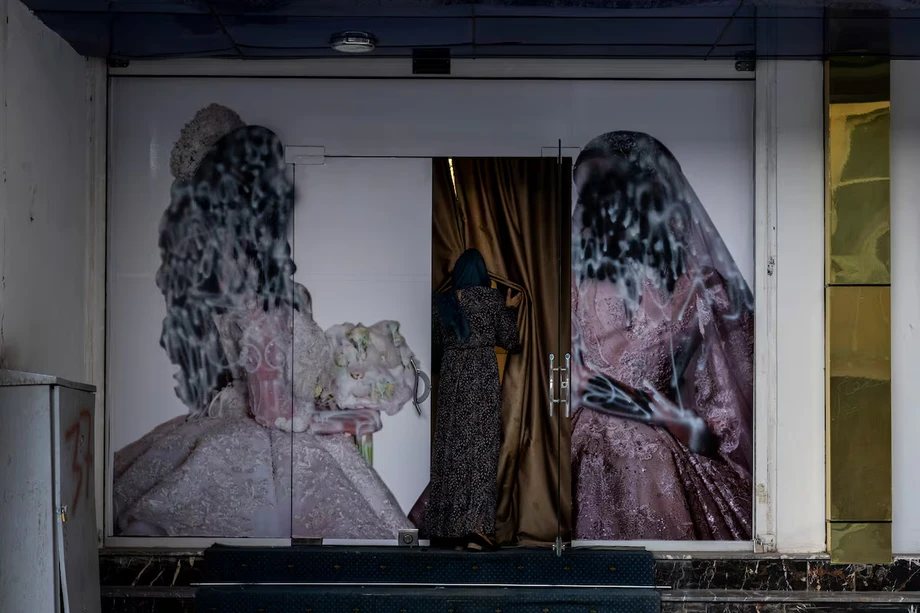
A Province Where Every Woman Is Bibi
Public employees and health workers in Balkh, a province in northern Afghanistan, have been told to stop writing and saying women's first names on official documents, including prescriptions and medical records, and to identify every female patient as Bibi. The word means granny or older woman and has long been used in Afghanistan as a respectful way to address someone older. Applied to a whole hospital, it turns a name into a category.
Contents
- A Province Where Every Woman Is Bibi
- What a Name Does for a Person
- A Custom Older Than the Taliban
- When Two Patients Share One Name
- A Mother Who Could Not Prove She Was One
- One Hundred and Forty Four Decrees and a Broken Arm
- The Care That Is Disappearing
- Resistance Behind Closed Doors
- Spain Calls It Gender Apartheid
- Where the Court Cases Stand
- What Is Still Unknown
- Key Points
Two things remain open. No text of the instruction has been published, and there is no confirmation that it applies anywhere outside Balkh. Karishma, a Kabul activist who uses a pseudonym, confirmed the order from the province and said that so far it has largely been ignored by the staff expected to enforce it.
Zubaida Akbar, who directs the Afghanistan program at the NGO Femena in the United States, expects the practice to travel. She said a local measure that meets resistance at first can return later as a decree covering the whole country, and that this has happened before with other restrictions on women.
The Taliban are very creative when it comes to imposing bans on women.
What a Name Does for a Person
Lalah Osmany, an Afghan activist based in Germany, describes a name as a gift received at birth that endures after death, a face, a voice and a story. She said the Balkh order goes beyond the polite label it uses, and that women in some cases are referred to with terms used for animals, such as goat or cow.
This is a systematic process of dehumanization. When a regime replaces a woman's name and gives her one of an animal, it is stripping her of her human soul and reducing her to a mere biological creature or the property of a man.
The custom shows up in other places. Afghan women have long been listed in official paperwork as the wife or daughter of a male relative instead of under their own identity, and many tombstones carry no woman's name. During the Taliban's first period in power, between 1996 and 2001, the word woman disappeared from street names and public spaces.
Osmany said a person with no name cannot dream, cannot own property, cannot claim justice and cannot be remembered in history, and that saying a woman's name out loud has become an act of resistance in Afghanistan. She told of an Afghan man who contacted her to say he had never known his mother's first name, because nobody used it, not even at home. He learned it only after she had died.
A Custom Older Than the Taliban
Erasing women's names from public life is an old tribal practice in Afghanistan and not an Islamic one, Osmany said. Surah 19 of the Quran is named after Maryam, the Virgin Mary, and mentions her name more than 30 times.
The practice outlasted the government backed by Western countries that fell to the Taliban in August 2021. Across those 20 years, women's names were still missing from graves and even from invitations to their own weddings. They were not banned, though. Passports carried the names of their female holders, women worked in public under their own names, and many were pressing for more rights.
A 2017 study by the Afghan Analysts Network, titled What's in a woman's name? No name, no public persona, tied the use of a woman's real name to her presence in public life. That same year Osmany started a campaign called Where is my name? to get women's names into documents that left them out, such as a child's birth certificate. It made her a target well before the Taliban returned. At 25 she received a photograph of the body of a woman who had been skinned by extremists, with a warning that she would end the same way if she did not stop.
I was afraid, but that didn't stop me.
In September 2020 the government then in power approved the voluntary inclusion of mothers' names in documents such as children's birth certificates. In cities and among younger Afghans, using a woman's name had stopped being taboo. "We had planted a seed of awareness that was growing rapidly," Osmany said.
- 1996 to 2001: the Taliban's first period in power removes the word woman from street names and public spaces.
- 2017: the Where is my name? campaign begins, and a study ties women's names to their public presence.
- September 2020: the government before the Taliban approves voluntary inclusion of mothers' names on some documents.
- August 2021: the Taliban return to power.
- May 14, 2026: a decree is issued that the group Femena counts as legalizing the rape of girls.
- November 2026: the Balkh instruction replaces women's names with Bibi on official papers.
When Two Patients Share One Name
The instruction lands hardest in health care, where names tell patients apart. If dozens of prescriptions and medical records are filed under Bibi or under a number, nurses and doctors lose the basic tool for matching a person to a test, a dose or a diagnosis. Activists warn this can lead to errors in prescriptions, diagnoses and treatment. Osmany said the combination of rules amounts to depriving women of medical care.
Basically, the fundamentalists are depriving women of medical care.
Other rules cut the same way. Male doctors are barred from treating women and girls in many settings, while women have been stopped from studying health professions such as nursing and midwifery, which shrinks the number of female staff who could treat them. In Herat, patients saw dental treatment stop partway after officers barred male dentists from treating women, leaving one patient with unfinished work on several damaged teeth months later.
Aid groups also report interference with the delivery of care. In Afghanistan the UN aid coordination office counted October's 29 access incidents, 21 of them involving interference with aid work and 11 involving gender restrictions, which affected both women who deliver assistance and women and girls trying to receive it.
A Mother Who Could Not Prove She Was One
Khadija Amín, an Afghan journalist now exiled in Spain, married at 19 in an arranged ceremony and became a well known television presenter. Her name does not appear on the birth certificate of her first child, or on those of the twins born later. When the Taliban returned in 2021 she fled the country, and her husband took the three children from her.
In 2024 she learned that her former husband had settled in Germany as a refugee with the children and traveled to Berlin to report him to the authorities and ask to see them. At the police station she could not file the complaint, because she held no document proving she was their mother. Two more years passed before a German court agreed to hear her claim. Her former husband then took the children back to Afghanistan, out of her reach.
One Hundred and Forty Four Decrees and a Broken Arm
Femena counts more than 144 decrees limiting the rights of Afghan women since the Taliban returned. They run from a rule that stops girls studying beyond the age of 12 to bans on most jobs and on speaking in public. The count includes a decree issued on May 14 that the group treats as legalizing the rape of girls.
The Taliban's penal code sets 15 days in prison for breaking a woman's arm. Hitting a camel can bring five months behind bars.
Akbar at Femena reads the Balkh order as part of the same pattern, in which each restriction is tested in one place before it becomes national policy. She said she fears the name ban will follow that route, as other local measures have.
The Care That Is Disappearing
Health services in Afghanistan have been losing capacity for other reasons too. UN Women, the UN aid coordination office and their partners report that nearly 300 humanitarian health facilities have closed or suspended work, affecting more than one million women and girls, and that more than 193 focal points for survivors of gender-based violence have closed. About 3.4 million women and girls in need are unlikely to reach water, sanitation and hygiene services. The figures were published by UN News on November 20.
Sofia Calltorp, UN Women's chief of humanitarian action, described what the loss looks like after a recent visit to the country.
One woman that I met in Kunar told me that she had suffered multiple miscarriages without access to healthcare. I also met with men who spoke of restrictions preventing them from supporting women.
Calltorp also met women facing a second winter away from homes lost in an earthquake, and then displaced again by flooding and by fighting along the border with Pakistan. She said programmes run by local women's organisations can turn individual lives around, and described a woman of 24 who had been held at home by her father for 18 months, abused and left without food. In her words, "I feel like life is not meant for me." A violence prevention programme working with her father ended the abuse.
Susan Ferguson, UN Women's special representative in Afghanistan, called the country the world's worst women's rights crisis and said Afghan women are fighting for their own survival. Funding cuts, she said, have forced humanitarians to decide which women receive support and which are turned away.
I urge all governments and other international donors to stand with us and with Afghan women and girls. Stay the course and increase, not cut, your support. Back these women.
UN Women puts the number of girls barred from secondary education at 2.6 million and projects that the loss will push more girls into child marriage and raise deaths in childbirth, while UNESCO estimates 2.4 million. The UN counts more than 100 edicts issued since 2021 that restrict women's movement, education and work, against Femena's tally of more than 144 measures affecting women. About 22 million women and girls are at growing risk of being denied health care over the longer term.
Resistance Behind Closed Doors
Restrictions have pushed women's work and study into homes. In Kabul, a salon owner rebuilt her business in an apartment after a raid took the equipment from her first one, and now employs seven young women who help support their families. Two sisters teach about 30 children and young adults, including girls as old as 20. A former national soccer player coaches boys in a small courtyard and boxes against a stack of old tires. All of them described their lives anonymously because they fear arrest. These are among the hidden schools and salons that keep women's work and study alive.
The salon owner said fear follows even an ordinary interruption.
Every time there's a knock on the door, I worry the Taliban might be on the other side.
Employment figures show how much has closed off. UN Women puts women's employment at 7 percent, against 84 percent for men, and more than half of women surveyed leave home no more than once or twice a month.
Spain Calls It Gender Apartheid
Spain's foreign ministry and the organisation Women for Afghanistan opened the fourth HearUs summit in Madrid on November 23, 2026, under the heading of Afghan women's leadership for justice and peace through accountability. José Manuel Albares, Spain's minister for foreign affairs, European Union and cooperation, described the system the Taliban have built as gender apartheid, a term he said goes beyond segregation and must be named correctly in law.
Albares said Spain will press in the coming negotiations on the Convention on Crimes against Humanity for gender apartheid to be written into that treaty, along with stronger legal responses to forced marriage, sexual and reproductive violence and persecution on grounds of gender. He added that the Taliban will not be recognized as Afghanistan's legitimate rulers while they deny the dignity of women, and that Spain has made a financial contribution so a new independent investigation mechanism on human rights in Afghanistan can begin work.
Pramila Patten, the UN special representative on sexual violence in conflict, told the summit that no other country has imposed such exhaustive and systematic restrictions on half its population on the basis of gender alone, and that the crimes can be considered crimes against humanity. She described accountability as a refusal to accept that some people stand above the law and not as revenge, and called for political will, sustained support and resources.
Fawzia Koofi, president of Women for Afghanistan, said the crisis is political as well as humanitarian, with a minority in power and about 43 million Afghans shut out of decisions about their country's future. She warned that without action the situation will cross Afghanistan's borders within five years and reach Europe.
Where the Court Cases Stand
Judges at the International Criminal Court in The Hague have closed the parts of the Afghanistan investigation covering alleged crimes by US troops and by Islamic State Khorasan, known as ISIS-K. The case that continues centres on alleged Taliban persecution of women, girls and LGBTQI+ people, and the arrest warrants against four senior Taliban leaders remain in force. In a decision made public on November 13, 2026, the court narrowed the case to that strand, and the prosecutor's office has appealed the closures.
In its ruling, the chamber pointed to significant limitations on the prosecution's ability to investigate and obtain evidence in Afghanistan. No date has been set for a decision on the appeal.
What Is Still Unknown
Balkh's instruction has no published text and no stated scope beyond the province. No official has said whether a national version is being prepared.
The legal route has its own gaps. The ICC prosecutor's appeal has no scheduled ruling. Negotiations on the Convention on Crimes against Humanity, where Spain wants gender apartheid written in, have no date set in the accounts given at the Madrid summit. UN Women has asked donors to increase funding rather than cut it, without attaching a figure to the request.
For families, the practical effect is narrow and immediate. A prescription, a birth certificate or a police report in Afghanistan may now carry the word Bibi where a woman's own name used to be, and a woman who cannot show that a document is about her loses the ability to prove who she is to a doctor, a court or a border officer.
Key Points
- Authorities in Balkh province, northern Afghanistan, have ordered women's names replaced with Bibi on official documents, including prescriptions and medical records.
- No text of the order has been published and there is no confirmation it applies outside the province.
- Activists including Lalah Osmany and Zubaida Akbar warn the measure could become a nationwide edict, as other local restrictions have.
- Femena counts more than 144 Taliban decrees restricting women's rights, including a May 14 decree the group treats as legalizing the rape of girls.
- The Taliban's penal code sets 15 days in prison for breaking a woman's arm and up to five months for hitting a camel.
- Nearly 300 humanitarian health facilities have closed or suspended work, affecting more than one million women and girls.
- About 22 million women and girls are at growing risk of being denied health care.
- Spain is pressing for gender apartheid to be written into the future Convention on Crimes against Humanity.
- The ICC case on alleged Taliban persecution of women, girls and LGBTQI+ people continues, with warrants against four senior Taliban leaders in force.