What Musthapha Asked Parliament to Reconsider
On November 28, 2026, Faiszer Musthapha, a member of Parliament, urged the Government to reconsider the Protection of the State from Terrorism Bill (PSTA). He told the House that provisions in the draft could affect political freedoms, trade union activity and the rights of journalists. The bill is intended to replace the Prevention of Terrorism Act (PTA), which began in 1979 as a temporary law and was made permanent in 1982 through an amendment. Musthapha said successive governments had used the PTA against political opponents, while many administrations had pledged over 47 years to abolish it.
Contents
- What Musthapha Asked Parliament to Reconsider
- Why the Definition of Terrorism Matters
- Confidential Information and the Whistleblower Problem
- What the Government Says the Bill Would Fix
- Parliament's Committee Becomes a Flashpoint
- Civil Society Demands Withdrawal
- Activists Warn of Street Protests
- What the Supreme Court Cleared
- The Companion Bill and the Digital State
- Who Faces Risk in Everyday Life
- Security, Trade and International Pressure
- The Calendar That Now Matters
- Key Points
Musthapha told Parliament that the argument could not stop at whether the bill was legally passed. He said the issue was the effect on public life and asked lawmakers to look past procedure.
"I respectfully urge the government not to look at the legality, but look beyond. Whether it requires a two-thirds or a referendum is a legal issue. But there is a bigger issue," Faiszer Musthapha said.
Musthapha welcomed the Government's decision to hold wider talks on the draft. He called for consultations with trade unions, civil society and other parts of the public, saying the proposed law could have far reaching consequences. His intervention came one day after the United Nations human rights office warned that the bill reproduces and expands many of the PTA's failings.
Why the Definition of Terrorism Matters
The definition of terrorism sits at the centre of the dispute. In criminal law, a definition decides who can be charged and how widely a power can be used. Musthapha argued that political, ideological and economic rights, as well as dissent, could fall within the draft law's scope. That matters for ordinary people because a broad offence can turn a protest, a strike, a leaflet or a news report into a security case.
He warned that clauses in the bill could be used in political rivalries and could restrict trade union work. He also raised concern about the possible effect on privilege between lawyers and clients, the rule that allows people to speak privately with their lawyers and get legal advice without the state reading every word. His request was to rethink provisions with those effects before the bill moves ahead.
Confidential Information and the Whistleblower Problem
Clause 8(2) shows why that worry is concrete. Under the draft, a person could be punished for gathering or supplying confidential information if they knew, or had reasonable grounds to believe, it would be used to commit or plan an offence. A public interest proviso allows disclosure where the public interest outweighs likely harm. The concern is the list of material treated as confidential.
The draft covers information "likely to have" an adverse effect on national security, information not in the public domain that could harm national or public security, details about the police, armed forces or Coast Guard, places of detention, and secret codes or encryption details. Ben Emmerson, who served as the UN Special Rapporteur on human rights while countering terrorism from 2011 to 2017, visited Sri Lanka in 2017 and issued a sharp assessment of the PTA. The same issue appears in the case of Katharine Gun, a GCHQ translator whose disclosure about the Iraq war was defended as public interest whistleblowing. The United Kingdom later enacted the National Security Act 2023 and the National Security (State Threats) Act 2026, while its Law Commission proposed a public interest defence for journalists and whistleblowers.
Sri Lanka's Official Secrets Act 1955 already has a broad definition of an official secret, but it has been long inactive. Lawyer and commentator Kishali Pinto Jayawardene has raised concern that the draft PSTA could revive that approach on a much larger scale. For a reporter, union official or lawyer, the practical question is whether a court would accept that disclosure served the public interest before the state punishes it.
What the Government Says the Bill Would Fix
The Government and officials involved in drafting the bill say it is meant to create the legal framework needed to safeguard national security. They point to procedures they say are stronger than the PTA: judicial authorisation for surveillance and detention, timelines supervised by courts, confessions admissible only when voluntary and made with a legal representative present, and video recordings of interrogations. The draft also addresses cyberterrorism and online radicalisation, reflecting the way security threats now move through digital spaces.
The PTA was criticised for allowing detention of up to 18 months without trial. A UN warning in October acknowledged improvements in the revised bill, including recorded police interviews and the removal of police confessions as evidence. It still found that the defence secretary could authorise an initial two month detention period, with a maximum of one year, and that military and Coast Guard personnel would gain substantial arrest and search powers. A later UN rewrite call urged a comprehensive rewrite before enactment.
Those safeguards do not settle the political dispute. A law can be better than the PTA in one part and still give officials powers that opponents believe are too wide. That is why lawmakers and civil society groups are pressing for changes at committee stage, not just a vote.
Parliament's Committee Becomes a Flashpoint
On November 23, the Sectoral Oversight Committee on Governance, Justice and Civil Protection met to consider the bill. The meeting was chaired by Dr. Najith Indika. Deputy Chairperson Hemali Weerasekara and members Ajith P. Perera, Faiszer Musthapha, Mujibur Rahman, Shanakiyan Rajaputhiran Rasamanickam, M.K.M. Aslam, Chandana Sooriyaarachchi, Dharmapriya Wijesinghe and Thushari Jayasinghe attended, with MP Lakmali Hemachandra also taking part with the chair's permission.
Civil society representatives agreed that the PTA needed repeal but questioned whether a new law should replace it and what that law should contain. Members of the drafting committee, the Attorney General's Department, the Inspector General of Police, senior police officials and armed forces personnel told the committee that the bill was needed to protect national security. Dr. Indika said extensive consultations had been held during drafting and further discussions with civil society would follow.
Opposition members of the committee had written to the Speaker asking that discussions continue without a final decision. Justice Minister Harshana Nanayakkara said the bill had already been examined by the Supreme Court, while Deputy Speaker Rizvie Salih said the matter should be handled at committee level. Rauff Hakeem accused the Government of violating Parliament's Standing Orders. No committee decision had been made public.
Civil Society Demands Withdrawal
Justice for All, a civil society organisation that has campaigned against the PTA and challenged the PSTA in the Supreme Court, appeared before the committee on November 23. It said the bill was unworkable in its present form and contained multiple draconian clauses that could make it more oppressive than existing laws. The organisation was invited on November 20, after writing to President Anura Kumara Dissanayake on November 9 and again on November 19 to request talks.
Justice for All told the committee that the proposed law had been introduced to repeal a law abused for more than four decades. Its statement also described its own legal and public campaign.
"At the outset we note that the PSTB has been introduced to repeal the Prevention of Terrorism Act (PTA), a law that has been used and abused for over four decades," Justice for All said. "Justice for All has conducted several activities across the country demanding the repeal of the PTA and most recently challenged the PSTB in the Supreme Court," it added.
The group said the President's promise of consultation remained unanswered.
"We continue to await a response from the President to his own promise to hold consultations," Justice for All said.
Activists Warn of Street Protests
On November 19, activists and lawyers signed a joint declaration at the Sri Lanka Foundation Institute in Colombo, warning of mass protests unless the PSTA is withdrawn and the PTA repealed. Wasantha Mudalige, a member of the National Executive Council of the People's Struggle Movement, which grew out of the 2022 Aragalaya protests, singled out the proposal to hold suspects for up to 72 hours before producing them before a magistrate. He pointed to deaths in police custody and said reducing the period to 48 hours, a 24 hour cut, would not solve the problem.
Attorney at law Tissa Weragoda said citizens generally have only 14 days from publication of a bill in the Government Gazette to challenge its constitutionality before the Supreme Court. The Gazette is the official publication that makes proposed laws public. Weragoda argued for consultation much earlier in the process.
Lahiru Weerasekara, leader of the People's Struggle Movement, said at a press conference on November 8 that the National People's Power (NPP) government had only temporarily retreated from the PSTA and the companion organised crime bill. He said Deputy Minister Sunil Watagala had indicated during the Budget debate that the bills could be reintroduced. Weerasekara linked the dispute to victims of the PTA.
"Our struggle will continue until justice is delivered to those who were victimised, disappeared and killed under the PTA," Lahiru Weerasekara said.
He warned that broad definitions could allow protests, strikes, trade union activity, leafleting, publishing news and sheltering protesters to be treated as terrorist offences. He also said the organised crime bill could treat three people obstructing a public official as an organised crime.
What the Supreme Court Cleared
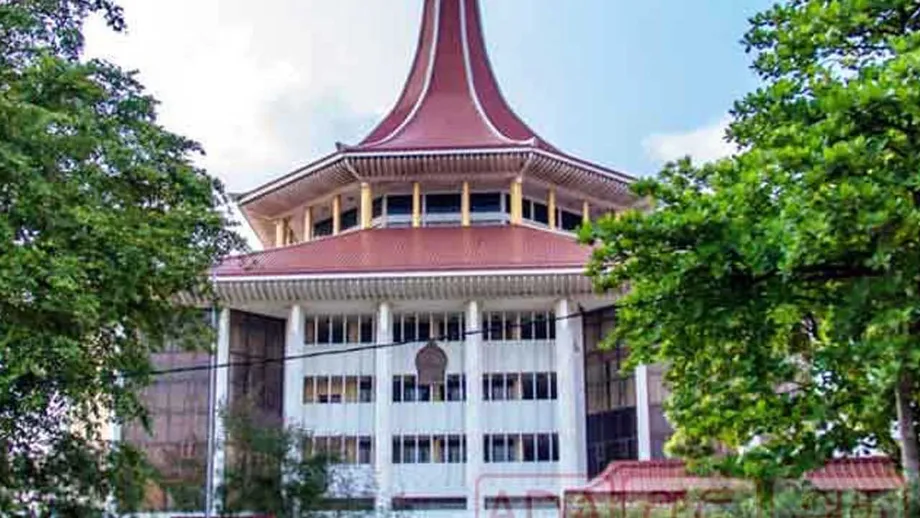
On November 21, the Supreme Court determined that both the PSTA and the organised crime bill could pass by a simple majority once amendments were made. A simple majority means more than half of the votes in Parliament, a lower threshold than a two thirds majority or a referendum. For the PSTA, the four amendments concern how and where courts hear challenges, including police applications for extended custody, oversight through the Supreme Court, omission of unnecessary provisions and clarification of review of executive orders.
The route to that ruling was contested. An earlier stage was marked by 36 court challenges, after the Speaker announced 11 more than the 25 first listed. By late November, a count of 66 petitioners had challenged the gazetted bill. The counts were taken at different stages and counted petitions or people differently. Petitioners had argued that disputed provisions required a two thirds majority and a referendum.
Shanakiyan Rasamanickam argued that Parliament had no mechanism to review laws after enactment, making scrutiny before passage vital. The Court's determination answered the constitutional question, but it did not end the argument over whether the bill is good policy or whether the Government has consulted widely enough.
The Companion Bill and the Digital State
Dr Sanjana Hattotuwa, a digital rights writer, has warned that reviewing each bill alone can miss how powers combine. His term for this is interaction design: a power removed from one law can reappear in another. The Prevention of Organised Crimes Bill (POC) would let a Superintendent of Police, with a Magistrate's order, compel providers of locking or encryption services to unlock data. A Deputy Inspector General could obtain subscriber details, call records and phone tower locations without a court order. Encryption protects messages so even service providers cannot read them; compelling providers to open them affects every user, not only a suspect.
The revised PSTA also carries a penalty of up to 15 years for gathering or sharing information about police or military activity, with no clear test of secrecy or harm. Filming an arrest or posting about a raid could fall within that wording. Both bills create duties to report certain conduct and offences for warning someone, with penalties of up to seven and ten years. Lawyers are exempt from the reporting duty, but journalists and group administrators may not be.
Other digital laws shape the same setting. The Online Safety Act No. 9 of 2024 remains in force and was used by Cargills Bank in April 2025 against people discussing its own data breach. A third draft Cybersecurity Bill has been with the Attorney General since October 2026 and remains unpublished. The Personal Data Protection Act is due to take greater effect on January 1, 2027 without rights to see, correct or erase personal data. Sri Lanka's digital identity programme, SL-UDI, is funded by a Rs. 10.4 billion Indian grant, with first identities due by the end of 2026, while the World Bank has a $50 million Digital Transformation Project. Hattotuwa also cited 80 vulnerable state websites, 61 without security fixes, and said only 17 of 37 critical institutions were in the national monitoring centre.
Who Faces Risk in Everyday Life
Nuwan Bopage, a lawyer and national executive committee member of the People's Struggle Alliance, said the terrorism bill contains two or three times more repressive powers than the PTA. He said it excludes Code of Criminal Procedure Sections 115 and 116, which provided judicial oversight during his own detention under the PTA, and would let the Attorney General delay indictments for up to 20 years. An indictment is the formal charge that sends a case forward, so delay leaves people under threat for a long period.
Bopage said the bill could let the president, a minister and the police restrict people's movements and ban organisations. He argued that action intended to pressure Sri Lanka's government, foreign governments or international organisations could be treated as terrorism if public property were damaged. That is why unions fear strikes and leafleting may be drawn into terrorism cases, and why journalists fear reporting on protests or security operations.
Musthapha's concern about privilege between lawyers and clients fits the same pattern. If the state can read or seize legal communications, a person may stop speaking freely to a lawyer. The UN Human Rights Office has warned that the bill reproduces and expands PTA failings, including risks of arbitrary detention, torture and restrictions on peaceful civic activity.
Security, Trade and International Pressure
The PTA's history gives the dispute its force. Introduced in 1979 as a temporary measure and made permanent in 1982, it was used for decades against Tamils and more recently against Muslims, journalists and government critics. Information supplied to the UN by the Human Rights Commission of Sri Lanka recorded 46 detention cases related to the PTA in 2025 and 12 during the first three months of 2026. The PTA has continued to be used while the replacement has been debated.
United Nations human rights experts said in a November 9 statement that they welcomed the plan to repeal the PTA and noted improvements in the latest draft. They sought safeguards on detention, torture, journalists' sources and accountability for officials who break the law. They also condemned immunity provisions in the bill. The Bar Association of Sri Lanka, led by president Rajeev Amarasuriya, objected to both proposed laws and asked for the committee report and dissenting views to be published. The Human Rights Commission recommended that the organised crime bill be withdrawn and substantially revised.
Economic stakes are part of the argument. Opposition leader Sajith Premadasa warned that the PSTA could cost Sri Lanka its European Union GSP+ concessions. GSP+ gives eligible countries lower tariffs on goods entering the EU if they meet rights and governance commitments. Human Rights Watch issued a November 2 warning on the organised crime bill and GSP+ obligations. The Board of Investment has put 2025 foreign direct investment inflows at about $1,057 billion, a 72 percent increase from the previous year. Investors look for predictable laws, independent courts and reliable remedies, not only tax incentives.
The Calendar That Now Matters
The bill has moved through drafts, court challenges and committee talks. The next hearing gives opponents one more chance to press changes before a vote. The main dates are:
- December 13, 2025: an earlier PSTA draft was published.
- September 18 and 22, 2026: the revised bill was dated in a Gazette supplement on September 18 and released on September 22.
- October 6: Justice Minister Harshana Nanayakkara presented the bill in Parliament.
- November 7: President Dissanayake said neither bill would pass without public consultation.
- November 21: the Supreme Court determined that both bills could pass by a simple majority after amendments.
- November 23: the parliamentary committee heard civil society representatives.
- November 28: Faiszer Musthapha urged Parliament to reconsider the PSTA.
- December 1: the sectoral oversight committee is due to hold a public session, and people can write to ask to be heard.
The ITAK, the main Tamil party, will not propose amendments because it opposes special anti terror laws and considers ordinary criminal law sufficient. The SJB plans to suggest amendments when the bill reaches parliamentary debate. No vote date was announced, and no committee decision had been made public.
Key Points
- Faiszer Musthapha urged Parliament on November 28, 2026 to reconsider the PSTA, citing risks to political freedoms, unions, journalists and lawyers.
- The PTA began in 1979, became permanent in 1982 and was used against political opponents while many administrations pledged to abolish it over 47 years.
- The draft terrorism definition could cover political, ideological and economic rights, dissent, protest activity and reporting on security operations.
- Justice for All and other groups want the bill withdrawn, saying it is unworkable and would be more oppressive than existing anti terror laws.
- Activists warned of mass protests unless the PSTA is withdrawn and the PTA repealed, with strong objection to 72 hours of detention before a magistrate.
- The Supreme Court allowed passage by simple majority after amendments, while petition counts rose from 25 to 36 announced challenges and later to 66 petitioners.
- The companion organised crime bill and existing digital laws add concerns about encryption, phone data, reporting duties, online speech and privacy.
- The next committee session is set for December 1; no vote date was announced and no final committee decision was public.