The forest survey found a stubborn gap
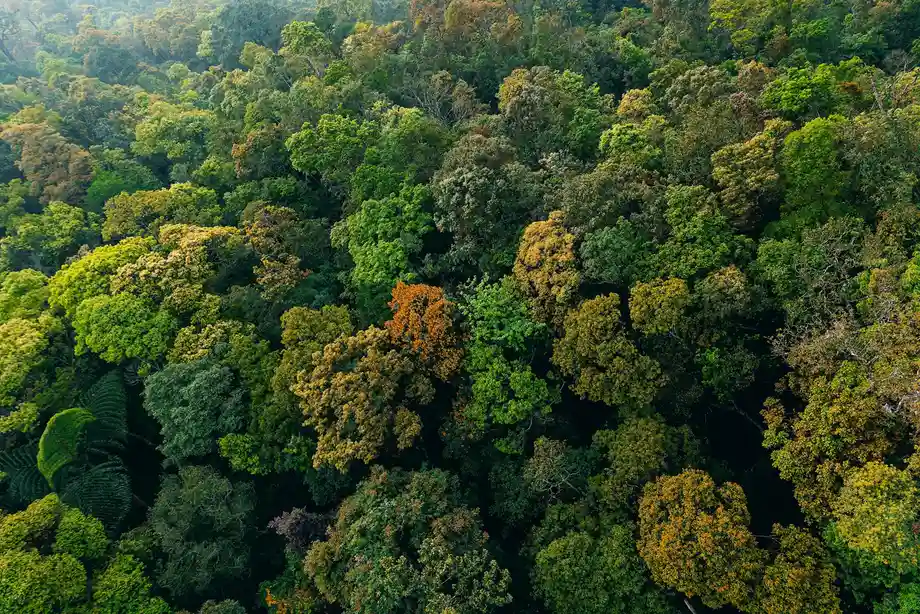
Between 2016 and 2024, 24 permanent plots in the Động Châu–Khe Nước Trong nature reserve in central Vietnam showed no net increase in carbon stored in tree trunks and branches. Net means gains after losses are subtracted. The study, published online on November 27, 2026, in Environmental Research Letters, followed forests where selective logging ended in 2007 but has not recovered in the way many climate plans assume.
Contents
- The forest survey found a stubborn gap
- What no net carbon gain means
- How the team measured thousands of trees
- A short timeline of the forest record
- How heat restricted carbon gains
- What the nature reserve protected
- Why carbon market estimates can run high
- What is still unknown
- What climate policy can take from the study
- Key Points
The researchers said the trees continued to grow. Carbon added through growth was almost entirely cancelled by carbon lost when trees died. They said the recovery path since logging stopped had fallen short.
The study authors put the central result plainly:
Since 2007, when selective logging in the region ended, these forests have not recovered as expected
The result matters because a forest can look greener while its carbon savings barely rise. The study found recovery rates far below the estimates of the U.N.'s Intergovernmental Panel on Climate Change for the region, and below rates reported for comparable logged forests elsewhere in Southeast Asia.
What no net carbon gain means
A tree acts like a small savings account for carbon. Through photosynthesis, it takes carbon dioxide from the air and stores much of it as wood. Photosynthesis is the process plants use to turn sunlight, water and carbon dioxide into sugar, leaving oxygen behind. When researchers measure carbon in trunks and branches, they are counting a large part of that stored carbon above the ground.
No net gain does not mean no life in the forest. It means new wood was balanced by losses. A tree that dies may decay slowly and release carbon. Additions and losses are entered in the same account, and over eight years the balance stayed almost flat in these plots.
The study authors described the common belief behind many tree planting and forest protection schemes. They wrote:
once logging stops, tropical forests will naturally bounce back and recover, rapidly taking up carbon dioxide and storing it in growing trees
Carbon markets are trading systems that put a financial value on cuts in greenhouse gas emissions or on carbon removal. A credit usually represents one tonne of carbon dioxide equivalent, a unit that lets different greenhouse gases be compared. If a forest credit is based on a recovery curve that is too steep, buyers may pay for carbon removal that has not happened at the promised pace.
How the team measured thousands of trees
The fieldwork was slow and physical. In 2024, one study author spent nearly two months camping in the forest, working with a field team of 12 people. The crew waded up riverbeds and stepped over slippery rocks because the terrain offered no easy trails. Mosquitoes, heat and steep ground were part of the daily routine.
The 24 plots are permanent plots, fixed areas visited again and again so changes can be compared. Since 2016, the team has made four rounds of measurements. Each round involved visiting every tree in those plots, identifying the species, wrapping a tape measure around the trunk to record diameter, and noting trees that had died.
Those details sound simple, but they are the backbone of the finding. Satellite images can show green cover, yet they cannot by themselves tell how much carbon is stored in each tree, which species are thriving or how many trees have died between visits. Ground surveys give carbon accounting a reality check.
A short timeline of the forest record
The study covers several periods that shape what the 2024 census means:
- From 1982 to 2007: Logging was particularly intense in Vietnam's tropical forests, reducing forest cover and ecosystem quality.
- Since the 1990s: National forest cover increased through plantations, which are tree crops planted by people, and natural regeneration, where forest returns on its own, but the quality of that recovery remained unclear.
- In 2007: Selective logging in the region ended, meaning some trees were still cut before that date, rather than the whole forest being cleared at once.
- From 2016 to 2024: Researchers measured the 24 plots four times and found no net gain in carbon stored in trunks and branches.
- In 2020: Long term monitoring by the team and partners helped support designation of the area as a nature reserve.
- In 2024: The reserve faced severe heat waves in April and four consecutive heat waves in August.
- On November 27, 2026: The study appeared in the journal.
The timeline explains why the finding is more than a snapshot. The forest had decades of disturbance, years of regrowth and eight years of close measurement before researchers concluded that carbon recovery had stalled.
How heat restricted carbon gains
Rising maximum temperatures help explain the stall. Maximum temperature is the highest temperature recorded during a day. The researchers linked higher maximum temperatures to lower carbon gains in the plots.
2024 was harsh in the region. The forest plots endured severe, prolonged heat waves in April and four consecutive heat waves in August. Heat can slow photosynthesis and increase water stress. In simple terms, trees under extreme heat have a harder time turning air and water into new wood, and they may lose more leaves or branches through stress and death.
The study authors were direct about what the heat was doing to the forest. They wrote:
Heat is already limiting tree growth here
The result connects weather on the ground to global carbon estimates. If recovery rates are calculated from forests growing in cooler conditions, they may be too high for forests facing stronger heat in a warming world.
What the nature reserve protected
The forest still held almost all the carbon stored in its trunks and branches by the end of the measurement period. The study treats this as a major point: the forest avoided a large new loss even though it did not add much new carbon.
The area was designated a nature reserve in 2020. The team and its partners supplied long term monitoring evidence that helped support the designation. The researchers said reserve status helped prevent further degradation through logging, securing the forest and the carbon it already stored.
Protecting regrowing forest is different from assuming it will rapidly absorb more carbon. Younger forests are vulnerable to being cleared again. Keeping them standing prevents the stored carbon from being released and gives the forest more time to grow, even if the growth rate is slower than expected.
Why carbon market estimates can run high
Article 6 of the Paris Agreement sets rules for countries working together on climate pledges. The study said these mechanisms often rely on generalized recovery estimates. In a warming world, that approach can overestimate how much carbon recovering tropical forests will absorb.
Southeast Asia is central to carbon markets and the ecosystem restoration industry. The study said the region hosts the majority of profitable forest restoration projects. Many projects value future carbon removal by assuming steady, fast tree growth, without measuring how the forest is functioning under extreme heat.
Vietnam has been building climate finance tools that depend on credible numbers. Vietnam built a carbon market to turn verified emissions cuts into green finance, with 511.47 million tonnes of allowances allocated to 110 establishments for the 2025 to 2026 compliance period, while trading records showed zero volume and value. An allowance is permission to emit a set quantity under a compliance scheme. Decree 112/2026/ND-CP took effect on May 19, 2026, setting routes for international transfers of emissions reductions and carbon credits. Vietnamese heavy industry also faced new costs as European carbon rules began, with the European Union's carbon border charge entering its definitive period on January 1, 2026. The forest study adds a different warning: even before credits are issued, the biology underneath the calculation must be measured.
What is still unknown
The study reports 24 plots in one reserve, not a national estimate for all Vietnamese forests. It gives no date for the next census, no yearly death count for each plot and no carbon credit price for this reserve. The finding is a detailed local measurement with wide relevance for forest accounting.
The measurements cover carbon in trunks and branches. Roots, soil and dead wood are outside this result. The study's central claim is about aboveground tree carbon in the measured plots, where the lack of net gain was measured.
What climate policy can take from the study
The researchers argue that climate policy needs committed local field surveys, even when the work is hard. Their evidence came from crews sleeping in hammocks in humid jungle, enduring insect swarms and battling steep terrain. Those conditions are uncomfortable, but they produced a test of how the forest is actually functioning.
Governments and carbon market projects can use such data to set more realistic recovery rates, decide how much protection needs funding and avoid counting carbon removal that extreme heat has slowed. Ground monitoring also helps identify where nature reserve status is keeping stored carbon safe.
The researchers said the wider expectation of rapid recovery needed tempering. They wrote:
Rapid and predictable recovery may be overly optimistic
For the Động Châu–Khe Nước Trong reserve, the practical change is concrete. Protection has reduced the risk of further logging; the next challenge is understanding how much carbon the forest can gain under hotter conditions and writing that reality into climate finance.
Key Points
- 24 permanent plots in Động Châu–Khe Nước Trong showed no net increase in trunk and branch carbon from 2016 to 2024.
- Trees grew, but tree deaths almost entirely offset the carbon gained through growth.
- Selective logging in the region ended in 2007, and recovery rates were far below regional estimates and comparable Southeast Asian forests.
- Rising maximum temperatures and severe 2024 heat waves were linked to lower carbon gains.
- The area became a nature reserve in 2020, helping prevent further degradation and protect stored carbon.
- Article 6 mechanisms and carbon market schemes that rely on generalized recovery estimates risk overstating carbon absorption.