A Green Power Test Reaches Heavy Industry
Vietnam's cement, chemical and building material producers are being pushed into a faster energy shift as European carbon rules start to turn emissions into costs. The pressure landed in concrete terms at a forum in Hanoi on 26 November 2026, where officials, industry associations and company representatives discussed how factories can obtain cleaner power without losing stable supply or raising prices beyond what customers will pay.
Contents
- A Green Power Test Reaches Heavy Industry
- What CBAM Changes for Cement and Fertilisers
- Why Cement Sits First in Line
- The Factory Math Behind Cleaner Cement
- Waste Heat and Solar Power Offer a Way Out
- Why Factories Cannot Simply Switch on Solar
- Policy Signals Push in the Same Direction
- Fertiliser and Chemicals Face a Different Carbon Problem
- Beyond the Factory Gate
- What Exporters and Buyers Should Watch
- What Industry Wants From Banks, Land Offices and VCCI
- Key Points
Business Forum Magazine coordinated the forum with the Vietnam Building Materials Association and Vietnam Cement Association under the direction of the Vietnam Chamber of Commerce and Industry, or VCCI. The event ran from 1:30 pm to 5:10 pm at VCCI Hall at 9 Dao Duy Anh Street. Speakers focused on direct power purchase agreements, battery storage, waste heat recovery, emission reporting and lower carbon materials.
The scale explains the urgency. Pham Van Bac, vice chairman of the Vietnam Building Materials Association, said Vietnam can produce about 125 million tonnes of cement, 150 million cubic metres of concrete, 840 million square metres of tiles and 350 million square metres of building glass a year. These products support housing, roads, factories and exports, but their production uses large amounts of power, fuel and raw materials.
What CBAM Changes for Cement and Fertilisers
The CBAM guide describes the European Union's Carbon Border Adjustment Mechanism as a carbon charge on imports of iron and steel, aluminium, cement, fertilisers, hydrogen and electricity. It began its definitive period on 1 January 2026. In simple terms, it is meant to make imported goods carry a carbon cost closer to the cost faced by EU producers under the EU emissions trading system.
For Vietnamese exporters, the main effect comes through EU customers. The law places payment responsibility on the authorised CBAM declarant, usually the EU importer or an indirect customs representative. Vietnamese factories do not send the payment directly, but their customers need data on embedded emissions and may factor the expected cost into purchase prices. A cement or fertiliser shipment with weak emissions data can become more expensive than one backed by verified figures.
Prices show why buyers care. CBAM certificates cost EUR 75.36 per tonne of CO2 equivalent in the first quarter of 2026, EUR 75.28 in the second quarter and EUR 82.32 in the third quarter. Default emission values carry an extra charge of 10% in 2026, rising to 20% in 2027 and 30% from 2028 for most covered goods. The free allocation deduction, which removes 97.5% of benchmark emissions from the bill in 2026, falls each year until 2034.
- 1 October 2023: the reporting period began, with quarterly emission reports but no payment.
- 1 January 2026: the definitive period began, with a 50 tonnes a year exemption for most importers.
- 1 February 2027: CBAM certificate sales open on the EU platform.
- 31 March 2027: the first quarterly check of the certificate holding rule takes place.
- 30 September 2027: the first annual declaration and certificate surrender cover 2026 imports.
- 2034: the free allocation deduction is set to reach zero under current rules.
The 50 tonnes a year rule applies per importer across all covered goods and does not cover hydrogen or electricity. It removes many small importers from the system while keeping more than 99% of emissions covered. A non EU seller using delivered duty paid terms still needs an indirect customs representative with authorised status. Missing certificates can bring a penalty of EUR 100 per tonne of CO2 equivalent.
Why Cement Sits First in Line
Cement is the most exposed part of Vietnam's building materials sector. Pham Van Bac said Vietnam ranks third in the world by cement production capacity. The Ministry of Construction puts cement emissions at about 60 million to 65 million tonnes of CO2 a year, or about 12% to 15% of total industrial emissions. UNIDO puts the sector at about 16% of national greenhouse gas emissions.
A kiln creates emissions in two ways. Burning coal or other fuel releases CO2, and the chemical reaction that turns limestone into clinker also releases CO2. That second part means switching fuel helps, but it cannot solve the problem alone. Lower clinker content, alternative raw materials and changes in product design are also needed.
Before the forum, Vietnam's carbon market had already entered a practical test. It allocated 511.47 million tonnes of allowances to 110 establishments for 2025 and 2026, while exchange records showed no trading volume or value. For cement plants, that makes verified emissions data more than a paperwork exercise. It is the basis for future compliance costs and possible carbon finance.
The Factory Math Behind Cleaner Cement
Energy costs shape every decision. Dinh Xuan Tonsai, quality director at Vissai Cement Group, said all energy costs, including electricity and fossil fuels, make up about 70% to 80% of cement production cost. Luong Duc Long, vice chairman and secretary general of the Vietnam Cement Association, gave a narrower figure: electricity alone accounts for about 15% to 17% of cement production cost, while grid electricity contributes about 4% to 6% of production greenhouse gas emissions. The two figures describe different slices of the same cost problem.
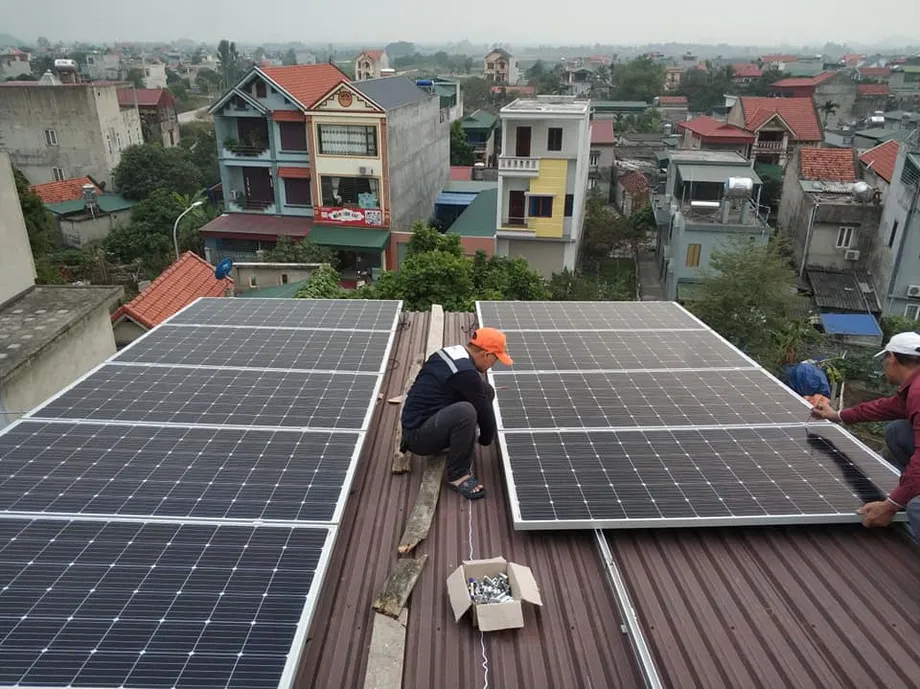
Vissai has installed a rooftop solar project of about 4 MW at a factory in Nghe An, mainly for its own use. Dinh Xuan Tonsai said power bought under a rooftop solar build, operate and transfer arrangement costs about 90% of the price EVN charges the factory. That discount helps, but it still leaves the company weighing payback time against the need for continuous production.
Pham Van Bac said some factories have already cut clinker content to about 40% to 70%, compared with 75% to 80% before. They use blast furnace slag, fly ash, limestone and other mineral additives. He also pointed to LC3 cement, made from calcined clay and limestone, which can cut CO2 emissions by up to 40%.
Luong Duc Long, vice chairman and secretary general of the Vietnam Cement Association, spoke about the pressure on cement plants from two sides: expensive power and tighter pollution limits. He described the squeeze in one sentence:
The cement industry is under double pressure from energy costs and increasingly strict environmental standards.
Efficiency has improved over decades. The association said heat use fell from about 1,300 to 1,500 kilocalories per kilogram in 1984 to 1993, with wet kilns reaching 1,700, down to about 750 to 850 in 2015 to 2024. Electricity use fell from about 110 to 120 kWh per tonne to about 90 to 100 kWh per tonne. QCVN 19:2024 also tightens dust, sulphur dioxide and nitrogen oxide limits, and adds controls for ammonia, hydrochloric acid, mercury and dioxin in waste co processing.
Waste Heat and Solar Power Offer a Way Out
Waste heat recovery is one of the most practical options. A cement kiln releases hot gas, and a recovery system uses that heat to make steam and generate electricity. Luong Duc Long said 67 clinker lines with designed capacity of at least 2,500 tonnes a day must invest in such systems, with total potential capacity of about 470 MW. By the end of 2026, 45 lines are expected to be operating with about 320 MW. The remaining 22 lines are expected to invest by 2030, with potential capacity of about 150 MW.
The share of factory power that can come from waste heat depends on the plant and the benchmark used. Luong Duc Long cited international experience of about 20% to 25%, while Vietnam's expected installations could cover about 25% to 35% of plant electricity demand. He also noted that some cement plants in China reach as high as 89%. A separate industry view put the long term potential of combined clean power sources at about 90% in countries with more experience.
Solar power adds another piece. Factories can place panels on roofs, empty yards and mined out parts of quarries. Wind power is also possible in some quarry areas. These sources vary with weather, so companies want battery energy storage systems, often called BESS. A BESS works like a large rechargeable battery. It stores power when the sun is strong and releases it when a kiln needs a steady supply.
Why Factories Cannot Simply Switch on Solar
Cement and chemical plants do not behave like offices. Kilns, mills and ammonia units often run day and night. A brief interruption can be costly, and a solar panel does not produce power at night. Dust from cement production can also settle on panels and reduce output. Companies therefore need a mix of grid power, self generated power, storage and a clear rule for buying renewable electricity.
Direct power purchase agreements, known as DPPA, are designed to let a large buyer purchase renewable power from a generator through a formal contract. Businesses at the forum said the mechanism needs clearer rules on transmission charges, purchase prices, contract conditions and reliable supply. Without those details, a factory cannot confidently calculate whether green power will lower costs.
Tran Thuy Tien, market development and external relations director at Constant Energy, pointed to practical problems under Decree 57/2025/ND-CP and Decree 243/2026/ND-CP. One issue concerns planning quotas for distributed solar projects fitted with devices that stop power flowing back into the grid. Another concerns the sale of surplus power to EVN when the factory uses a substation that EVN invested in and leased.
Nguyen Nam Anh, deputy head of the business board at Vietnam Electricity, said building material and chemical companies are major customers. He said EVN wants them to save electricity, use energy more efficiently and expand renewable energy use while supply remains tight. A final date for detailed guidance on DPPA transmission charges and power purchase terms was not given. The government has, however, set December 2026 for completion of a mechanism to promote battery storage.
Policy Signals Push in the Same Direction
National policy now points toward both energy security and lower emissions. Resolution 70-NQ/TW sets a requirement to move from simply ensuring electricity supply to ensuring stronger, more active energy security. At the forum, Hoang Quang Phong, vice chairman of VCCI, linked that policy shift to new openings for factories that can invest in rooftop solar, direct purchase contracts and storage.
These policies expand the space for enterprises to proactively access green electricity, including direct purchase of renewable power, self generated and self consumed rooftop solar, and energy storage solutions.
The Government Office issued Dispatch 10790/VPCP-CN on 22 October 2026, carrying the Prime Minister's instructions on electricity supply for 2027 to 2030. It assigns the Ministry of Industry and Trade to propose concentrated solar projects, solar projects on hydropower reservoirs and grid works that free up capacity, especially in northern Vietnam. It also asks for a battery storage mechanism and support for rooftop solar with storage in industrial parks.
- 8 August 2026: the Politburo issued Conclusion 83-KL/TW, calling for a modern building materials industry that saves energy and resources and cuts greenhouse gas emissions.
- 2025 to 2026: 51 cement facilities take part in a pilot allocation of greenhouse gas emission quotas under Decision 263/QD-TTg.
- 2027 to 2028: the pilot allocation is due to expand.
- 2029: formal emission quota allocation is due to begin.
- 1 January 2032: existing cement facilities must fully meet QCVN 19:2024.
Vietnam's 2022 nationally determined contribution and its net zero by 2050 commitment also frame the shift. The building materials strategy for 2021 to 2030, with a vision to 2050, calls for modern development, lower pollution and greater use of waste as raw material or fuel.
Fertiliser and Chemicals Face a Different Carbon Problem
Phung Ha, chairman of the Vietnam Fertiliser Association, said the country has more than 800 fertiliser production facilities with total capacity of about 29.3 million tonnes a year. The sector uses coal, natural gas and phosphate rock. Its hardest emission source is ammonia, a key input for nitrogen fertiliser and urea, because ammonia production needs high heat and pressure and currently relies heavily on fossil fuel.
Green energy can reduce that footprint and support higher value products such as green ammonia, green urea and fertilisers with high efficiency use, known as EEF. Some companies in the Vietnam Chemical Group and PetroVietnam have already invested in rooftop solar. PetroVietnam Fertiliser and Chemicals Corporation is also promoting biomass fuel to replace part of its natural gas use.
The technical barrier is high. Green hydrogen, green ammonia and carbon capture, use and storage remain at an early stage and are hard to fit into existing production lines. Green fertiliser also costs more than conventional products, putting domestic producers against cheaper imports. Phung Ha has called for green credit packages, tax preferences, research support and technology transfer to reduce the first investment cost. The steel sector faces a similar need for stable power. Dinh Quoc Thai, secretary general of the Vietnam Steel Association, said steelmakers have invested in renewable energy and efficiency, but their large power demand makes reliability essential.
Beyond the Factory Gate
Building material emissions do not stop at the plant boundary. They begin with quarrying and raw material processing, continue through production and transport, and extend to construction, building use, demolition and recycling. Pham Van Bac said the industry needs to move from cutting emissions at a single plant to cutting carbon across the whole life of materials and buildings.
That approach uses life cycle assessment, or LCA, which measures emissions across all stages of a product's life. A product carbon footprint states the emissions linked to one product. An environmental product declaration, or EPD, is a public document that presents verified environmental information so buyers can compare products.
Pham Van Bac cited Ministry of Construction figures showing that mitigation measures had cut about 3.25 million tonnes of CO2 equivalent compared with a business as usual scenario. Cement production accounted for about 2.89 million tonnes of that reduction. From 2022 to 2025, the cement group was estimated to have cut about 13.86 million tonnes of CO2 equivalent compared with the same type of scenario.
Data remains weak. Many facilities do not yet have full systems for tracking energy and raw material use. That makes it harder to verify emission cuts for customers, regulators or carbon markets. Better data would help companies choose between clinker reduction, alternative fuel, recycled materials, non fired building materials and carbon capture, use and storage.
What Exporters and Buyers Should Watch
CBAM changes the commercial conversation. A Vietnamese cement or fertiliser exporter may not pay the EU certificate bill, but an EU buyer will ask for emissions data before agreeing on price. Verified actual emissions can lower the bill compared with default values, especially as the extra charge on defaults rises. Suppliers that can document low emissions may be better placed to keep orders.
The covered goods include cement and clinker under CN code 2523, ammonia, nitric acid, nitrogen fertilisers, iron and steel, aluminium, hydrogen and electricity. Indirect emissions from electricity use count for cement and fertilisers, which makes clean power directly relevant to the reported number.
Further changes are still under discussion. A proposed extension to downstream steel and aluminium products from 1 January 2028 has not become law. The European Commission proposed about 180 products, the Council about 200 and the European Parliament 457. A second negotiation meeting was provisionally scheduled for 30 November 2026. A separate UK CBAM starts on 1 January 2027, and the EU and UK have been negotiating a link between their carbon markets.
What Industry Wants From Banks, Land Offices and VCCI
The Vietnam Cement Association has made three practical requests. It wants banks to give priority loans for waste heat recovery systems from clinker kilns, with state support for interest payments. It wants local authorities to allow solar and wind projects on land already assigned to cement plants, including raw material quarry areas. It also wants VCCI to connect factories with suitable finance and technology providers.
Land rules are a daily obstacle. Some localities treat plant and quarry land as designated for cement production only, not electricity generation. That interpretation blocks projects even when the mined area or factory roof is physically suitable. Plant managers also want faster guidance on grid connection and surplus power sales.
VCCI said it would gather the difficulties and proposals raised at the forum and submit them to relevant agencies. For companies, the near term task is to combine cheap power, stable supply and verified emission cuts. For banks and regulators, the task is to make the rules clear enough that a factory can calculate the cost of a cleaner kiln or solar project before it signs the loan.
Key Points
- Vietnam's cement, chemical and building material producers face rising pressure from energy costs and the EU's Carbon Border Adjustment Mechanism.
- CBAM began its definitive period on 1 January 2026, with certificate sales opening on 1 February 2027 and the first annual declaration due on 30 September 2027.
- Vietnam produces about 125 million tonnes of cement a year, and the sector emits about 60 million to 65 million tonnes of CO2 annually.
- Waste heat recovery could reach about 470 MW across 67 clinker lines, with 45 lines and about 320 MW expected by the end of 2026.
- Factory upgrades face high investment costs, old debts, land use limits and unresolved details in direct power purchase agreements.
- Industry groups want priority loans, interest support, permission for solar and wind on plant and quarry land, and stronger help with technology and emissions data.