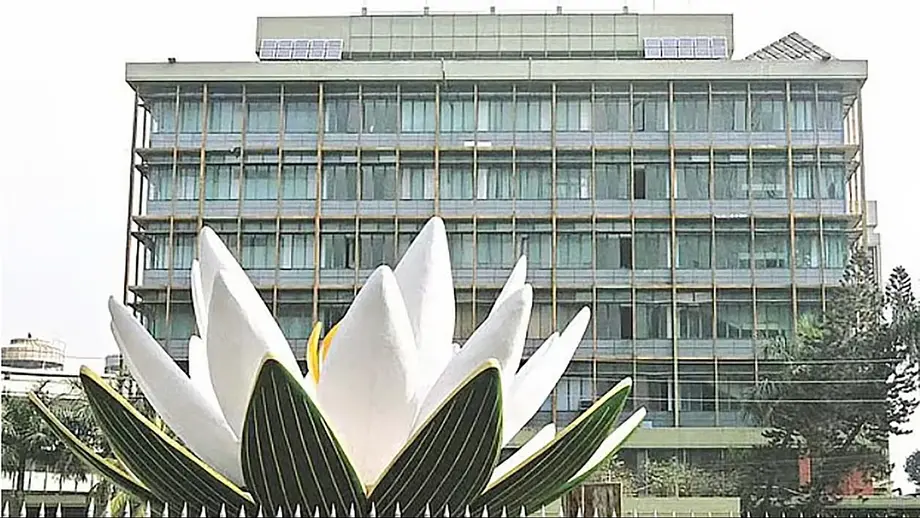
A domestic messaging system replaces a foreign detour
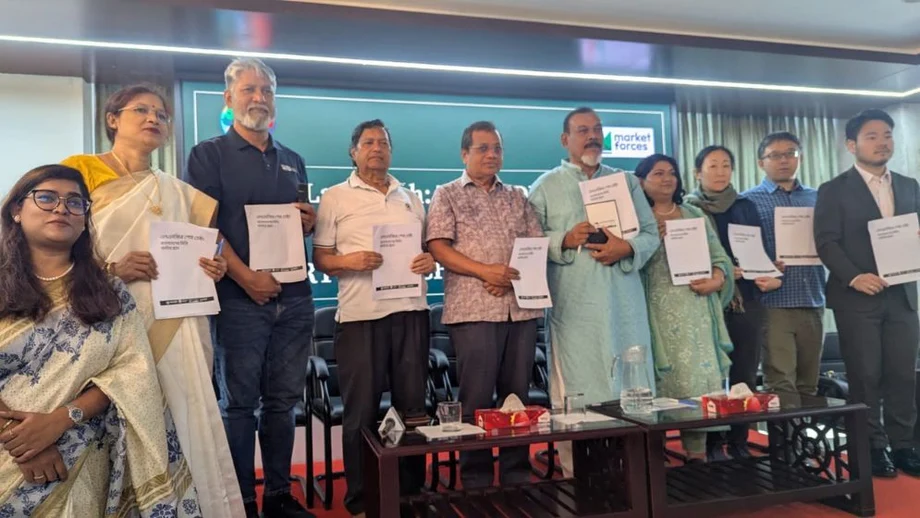
Bangladesh Bank launched the Bangladesh Real-time Trade Arrangement (BARTA), known as Barta, on Saturday, 28 November 2026, at the ANM Hamidullah Auditorium of the Bangladesh Bank Training Academy in Mirpur-2. Built in house with domestic expertise, the platform lets banks exchange messages and data on local letters of credit and back-to-back letters of credit issued against master export letters of credit or contracts. Bangladesh Bank expects the system to save about $7 million in foreign currency each year. At the launch, the estimate was also given as a range of $6 million to $7 million.
Contents
- A domestic messaging system replaces a foreign detour
- Why a local letter of credit once travelled through Belgium
- From 579,110 letters to millions in foreign currency
- How Barta follows the trade message
- Security choices behind the platform
- What exporters and local suppliers gain
- Finance Minister links trade systems to tougher reforms
- Insurance, capital markets and ports face similar data plans
- Policy rate cuts remain on the table
- Bank governance shadows the reform push
- Bangladesh Bank prepares a less visible foreign exchange auction
- The rollout still has clear limits and next steps
- What to Know
For years, local LC messages between two banks in Bangladesh travelled through SWIFT, an international messaging network based in Belgium. Barta moves those messages onto Bangladesh Bank servers. The central bank said there will be no fee for using the platform. SWIFT will continue during the first stage, then be phased out gradually after Barta becomes fully operational and stable. No exact phaseout date was announced.
The launch matters beyond bank technology. A garment exporter buying fabric from a Dhaka supplier now has a domestic route for opening, changing and confirming LC messages. Bangladesh Bank said the system will improve accuracy, transparency and supervision while reducing the time and cost of doing business. Governor Md Mostaqur Rahman presided over the event. Deputy Governor Dr Md Habibur Rahman gave the welcome address, while Deputy Governor Md Sarwar Hossain presented on Barta.
Other speakers included Finance Minister Amir Khosru Mahmud Chowdhury as chief guest, FBCCI Administrator Md Fazlul Hoque, BGMEA President Mahmud Hasan Khan, Footwear, Leather Goods and Accessories Exporters Association President Syed Nasim Manzur, and Association of Bankers, Bangladesh Acting Chairman Harun-ur-Rashid.
Why a local letter of credit once travelled through Belgium
A letter of credit is a bank promise to pay a seller if the required documents and conditions are met. In export trade, a foreign buyer may open a master LC for an order. A Bangladesh exporter can then open a local or back-to-back LC to buy raw materials from another company at home. Back-to-back LCs are common in ready made garments, where exporters need fabric, buttons, zippers and other inputs before the buyer pays.
Even when both banks handling that local LC were in Bangladesh, the message used to go through SWIFT and return from abroad. SWIFT is widely used for international payments, but using it for domestic trade created a foreign currency bill. Barta sends the message directly through Bangladesh Bank infrastructure instead.
The platform covers the full message chain. Banks can exchange notices about LC opening, amendments, discrepancies in documents, acceptance of bill payment and confirmation of payment. Central storage also means the records can be retrieved later without asking a foreign institution for data.
From 579,110 letters to millions in foreign currency
At the inauguration, Bangladesh Bank said 579,110 local LCs in foreign currency were opened in fiscal year 2025-26. At an average cost of about Tk1,500 each, exchanging messages for those LCs cost about Tk86.87 crore, or Tk868.7 million, equal to $7.24 million. After deducting earnings by commercial banks, the net foreign currency spending was $6.15 million. The expected annual saving of $6 million to $7 million is close to that net bill.
The cost matters because it was paid in foreign currency for a transaction entirely inside Bangladesh. Bangladesh Bank said banks will not pay a charge to use Barta, so money that once went to an foreign messaging route can stay in the country. Traders are expected to save time as well, especially when an LC is opened or changed after a supplier has begun preparing goods.
The savings estimate gives only part of the picture. The central bank also expects faster export trade, stronger backward linkage industries and more domestic value addition, meaning a larger share of the value of an export product is created in Bangladesh.
How Barta follows the trade message
Bangladesh Bank currently relies on information sent by commercial banks to monitor local LC activity. If a bank sends information late, the regulator can miss events in real time. Under Barta, information from LC opening through payment will sit directly with the central bank.
That live record can help in two practical ways. If a supplier and buyer disagree over a payment or document, the central bank and banks can look at centrally stored messages. If the scheduled payment date against an LC passes, Bangladesh Bank can identify it quickly. The central bank said this can reduce unadjusted export proceeds in deemed exports, where goods are treated as exports because they are supplied to export oriented businesses even if they are not shipped abroad.
SWIFT will remain alongside Barta during the transition. Bangladesh Bank said the older arrangement will be withdrawn gradually once the new platform is stable. Until then, banks can use both systems for local LC information.
Security choices behind the platform
Barta connects commercial banks to Bangladesh Bank through a dedicated secure IT network called an extranet, meaning a private network used by a limited group rather than the open internet. Each communication requires a three level approval process. Each bank's data is stored separately, and users are verified through two-factor authentication, which asks for a second proof of identity in addition to a password.
The platform also uses Application Programming Interface verification, a set of rules that lets systems check each other, along with tokens for access control, an encrypted Virtual Private Network, Network Address Translation and Level 3 firewalls. A VPN encrypts data while it moves. Network Address Translation hides internal network addresses. Firewalls filter traffic and block unauthorised access.
Bangladesh Bank officials will have read only monitoring access. They can view transactions but cannot alter or edit records. The governor said Barta was developed with strong cybersecurity measures and tested in several ways before launch. That design matters in a country that has seen data breaches involving National Identity Card, biometric and passport records, and where the Personal Data Protection Act 2026 leaves gaps such as no mandatory notification for victims.
Separate data storage, limited central bank access and approval trails are meant to reduce the chance that one compromised account exposes an entire system. They also make it easier to see who approved a message if something goes wrong.
What exporters and local suppliers gain
The biggest expected beneficiaries are backward linkage industries, the domestic factories that supply raw materials and inputs to exporters. For a garment exporter, that can include mills, accessory makers and packaging suppliers. Faster LC messages mean a local supplier can see an opening or amendment sooner and plan production with less uncertainty.
Bangladesh Bank said Barta will accelerate export trade and support the growth of these domestic suppliers. It also expects the system to increase domestic value addition. In simple terms, if a shirt is exported using locally made cloth and accessories, more of the shirt's value is earned inside Bangladesh instead of overseas.
The change is in the plumbing of trade. A letter of credit does not make the goods, but it tells banks and suppliers when money is promised and when payment is confirmed. Making that information faster and central gives exporters, suppliers and the regulator the same view of the transaction.
Finance Minister links trade systems to tougher reforms
Finance Minister Amir Khosru Mahmud Chowdhury, the chief guest, used the launch to widen the debate beyond technology. He said customs and the National Board of Revenue, both central to import and export trade, come up constantly in discussions with businesses at home and abroad.
Chowdhury said investors had repeatedly raised the NBR issue during visits abroad. He named Japan and Korea as places where the complaint came up.
I want to talk about customs... the NBR is becoming an issue. Wherever I go, the issue of the NBR comes up. Whether I go to Japan or Korea, they repeatedly bring up the NBR issue,
The finance minister urged stakeholders to continue consultations on all issues, not just the NBR. He said reforms depend on active participation from business groups, even when their views are sharp. He also connected Barta to a wider push for instant transactions and shared information across institutions.
Every transaction must take place instantly. There should be interconnectivity between information systems, close monitoring and transparency. This will reduce time and lower the cost of doing business,
Chowdhury said political leaders must be willing to absorb criticism if a decision helps trade, investment and ordinary people.
We are prepared to take painful decisions. Even if those decisions are painful, if they help the country's business and trade, investment and the well-being of its people, I believe taking them is the responsibility of a political government,
Insurance, capital markets and ports face similar data plans
The finance minister said the insurance sector is in worse condition than banking. He alleged that insurers were not settling claims while buying assets, making investments and misusing insurance funds.
While working on the insurance sector, I found that its condition is worse than that of the banking sector. The insurance sector has reached the same point as the banking sector. Insurance companies are not settling claims. Yet, they are purchasing assets, investing in different places and making personal investments. They are also misusing insurance funds,
Chowdhury also referred to cover notes issued for import shipments without collecting premiums. A cover note is temporary evidence of insurance, and a missing premium means the insurer may not have received the payment that should back the risk. He said the government is working to connect the NBR, Bangladesh Bank and insurance companies, and to set up a coordinated mechanism between Bangladesh Bank and the insurance regulator on cover notes, premium payments and misuse of back-to-back LCs.
Capital markets are part of the same plan. The government wants to connect the Bangladesh Securities and Exchange Commission, Dhaka Stock Exchange, Chittagong Stock Exchange, listed companies and brokerage houses so the regulator can monitor transactions and curb manipulation, collusion and undisclosed trades. Similar real time initiatives are planned at Chattogram Port.
Chowdhury said automation changes more than speed. He told business representatives that shared systems also affect costs, transparency and revenue.
Automation does not simply increase efficiency. It also reduces costs, ensures transparency and helps increase government revenue by preventing irregularities,
He added that the country needed practical work rather than long speeches.
We need to work more and talk less. That is what the country needs now,
Policy rate cuts remain on the table
Governor Md Mostaqur Rahman said lowering financing costs remains a priority for Bangladesh Bank. The central bank cut its policy rate, also called the repo rate, by 50 basis points, or half a percentage point, from 10 percent to 9.5 percent on 30 July 2026. The repo rate is the rate at which the central bank lends short term to banks, and it influences the interest rates businesses face.
Rahman said inflation had eased enough for the central bank to consider another cut. Bangladesh Bureau of Statistics data show point-to-point inflation fell to 8.27 percent in October 2026 from 8.34 percent in September, while the rate was 8.17 percent in the same month a year earlier. Point to point compares one month with the same month in the previous year.
We are trying to reduce the cost of financing. We have already reduced the policy rate by 50 basis points (0.5 percentage points). As inflation has come under some control, we can certainly consider reducing it further in the future,
The governor said businesses pass higher financing costs into prices. He argued that cheaper credit can help consumers, not just companies.
No businessperson pays extra costs out of their own pocket. They have to add them to the price of the product,
Rashed Al Mahmud Titumir, Adviser to the Prime Minister for the Ministries of Finance and Planning, went further at a roundtable on banking ethics. He called for cutting the policy rate from 9.5 percent to 7 percent to encourage investment.
Politically, I believe Bangladesh Bank's policy rate is very high. It should be brought down to 7%. Many economists may question this, but I believe this is the rational approach,
Bangladesh Bank had not announced a move to 7 percent. The governor spoke only of considering a further cut if inflation stays under control.
Bank governance shadows the reform push
Titumir said the economy needed recapitalisation equal to $80 billion, or 11 percent of gross domestic product. He alleged that GDP figures had been overstated since 2014-15 and said foreign debt rose 323 percent during the previous government. He said the reported default loan ratio had been 11 percent, while the actual figure was 35.73 percent and had fallen to 32.26 percent after reforms. He also described a four year plan to assess weak banks, cut default loans, recapitalise banks individually and improve governance. The insured deposit limit was raised from Tk1 lakh to Tk2 lakh, he said.
His default figures sit close to the scale described in late October, when one-third of bank loans were classified as defaulted at a banking conference. The banking crisis has also produced hard decisions about individual institutions. Bangladesh Bank's Padma Bank resolution opened a formal route for restructuring, merger, fresh capital or liquidation, with around Tk6,100 crore in deposits still unpaid.
Premier Bank Chairman Arifur Rahman said public confidence was lacking in nearly two thirds of banks. He argued that depositors, not directors, are the real owners because their savings fund the business.
Directors may serve as chairmen of banks, but they are not the owners. When directors assume the role of owners, they plunder public deposits,
Former Sonali Bank chairman Muslim Chowdhury called for a short recovery plan of three or four pages within the next three to six months, with progress measured against clear benchmarks. Mustafa K Mujeri, executive director of the Institute for Inclusive Finance and Development, said banking depends on public trust. He pointed to default loans, fraud, insider lending, corruption and weak corporate governance as forces that damaged that trust.
Bangladesh Bank prepares a less visible foreign exchange auction
The governor also said Bangladesh Bank is developing an automated foreign exchange auction system, expected within the next month, to reduce market manipulation. He said software would hide the identities of buyers and sellers so dealers could not easily see who was behind a large order.
We believe in a free-market system. That is why we are developing software to automate the entire transaction process. No one will be able to see who the seller is or who the buyer is. As a result, there will be no scope for manipulation,
Rahman said the auction would help find the actual market rate for foreign currency. No exact launch date was given beyond the next month. The need for market stability was visible in the November dollar sale, when Bangladesh Bank said it sold $205 million at Tk124.74 per dollar, while three bankers put the amount at $201 million. Remittance rates had been above Tk125.30 earlier that day.
The governor listed other steps to reduce business costs. Bangladesh Bank cut the upper limit of the margin above the benchmark on LCs to 3 percent and introduced a Tk7,000 crore stimulus package under which it pays interest costs for businesses. He also pointed to telegraphic transfer, or TT, a cheaper way to pay for imported raw materials than opening an LC through SWIFT. Importers can send up to $25,000 through normal TT and up to $50,000 from export retention quota accounts. Payments of $100,000 or more receive approval within 48 hours under a central bank circular.
If you use these facilities, costs will fall and we will save a lot of foreign exchange,
Rahman said the taka has depreciated about 60 percent over the past decade, compared with around 40 percent in a neighbouring country. He also described Bangla QR, a local QR payment system that lets small merchants receive the full amount of a payment, citing a vegetable seller who would now receive Tk100 on a Tk100 payment instead of Tk98.5. Bangladesh Bank is also working with foreign partners to digitise LC documents so papers can reach another country in about a minute.
The rollout still has clear limits and next steps
Barta has launched, but its benefits depend on daily use. Banks must send the full range of local LC messages through it, and businesses must adjust to the new route. Bangladesh Bank has urged bankers and businesses to use the platform. The central bank also wants to see the system stable before the SWIFT based local LC arrangement is withdrawn.
The next dated step is the foreign exchange auction, which the governor expects within a month. No exact date was given for full SWIFT withdrawal. Finance Minister Chowdhury has asked stakeholders to keep responding to reform proposals, including difficult changes in customs, the NBR, insurance and capital markets. For exporters and suppliers, the immediate change is simpler: local LC messages now have a domestic path, and the central bank can see them as they happen.
What to Know
- Bangladesh Bank launched Barta, the Bangladesh Real-time Trade Arrangement, on 28 November 2026 at its training academy in Mirpur.
- The platform moves local and back-to-back LC messages onto a central domestic system, with no fee for banks.
- Last fiscal year, 579,110 foreign currency local LCs cost about $7.24 million to message, or $6.15 million after bank earnings.
- Barta is expected to save $6 million to $7 million a year and improve oversight.
- SWIFT will continue during the transition until Barta is stable; no phaseout date was given.
- The governor signalled possible further policy rate cuts and an automated forex auction within a month.
- Finance Minister linked the platform to wider plans for customs, the NBR, insurance, capital markets and Chattogram Port.