A payment network measured in billions
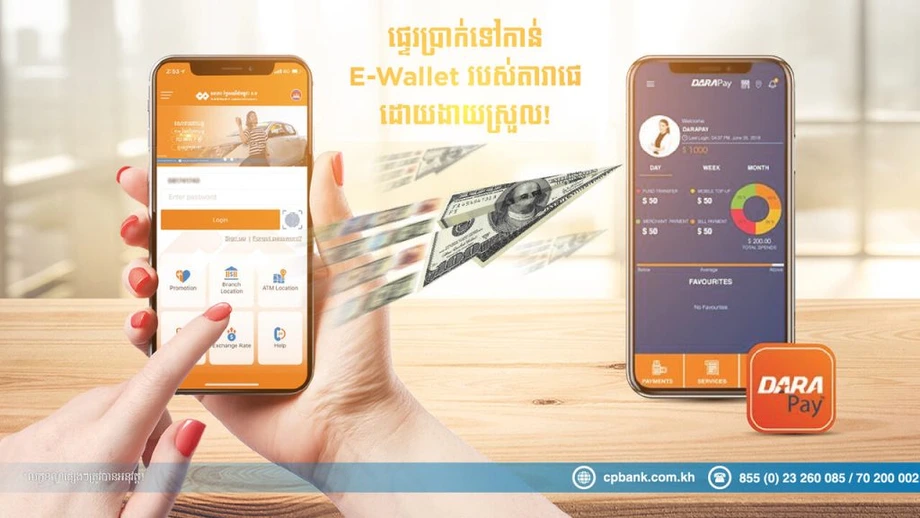
Cambodia's mobile money transactions have exceeded 5 billion, placing digital payments at the centre of a financial system where cash and bank branches once defined access. No period or breakdown by provider was given for that total. National Bank of Cambodia governor Dr Chea Serey has given a separate figure for the central bank platform: Bakong handled about 1.33 billion transactions in 2025.
Contents
- A payment network measured in billions
- Why Cambodia needed a shared payment system
- Why the central bank chose a Japanese startup
- What Bakong is, and why it is not a CBDC
- How QR payments changed everyday spending
- Rural income still arrives in uneven bursts
- From nine Asian markets to Rwanda and Japan
- Can rapid growth preserve trust?
- The dates behind Cambodia's payment shift
- Key Points
The platform operates in a country that had 21.7 million mobile phone subscriptions in 2025, equal to penetration of 123.55 percent. A rate above 100 percent means there are more subscriptions than residents, rather than a phone for every person. It still explains why Chea Serey sees the handset as a practical route to financial services. Speaking at Singapore Fintech Festival 2026, the governor described that opportunity.
Basically, everyone has one or two mobile phones. For us, it was how to make use of this channel to bring financial services to the people.
Bank account ownership has also changed sharply. Just 3.7 percent of Cambodian adults had an account in 2011, compared with 39 percent in 2024. Ownership is expected to reach 73 percent in 2026. The 2024 figure is more than ten times the 2011 level, while the projection would be nearly twice the 2024 share. The 73 percent figure remains a projection rather than a completed count. Account percentages measure access, while transaction totals measure activity, and both are needed to understand the scale of the change.
Why Cambodia needed a shared payment system
Cambodia abolished money altogether in the late 1970s. Decades later, persuading people to trust banks remained difficult. Even people with accounts often continued to live on cash. Using savings could require a trip to an automated teller machine, while many street vendors saw little reason to install card machines and pay the associated fees.
The banking system was also fragmented. Banks with large customer bases kept those customers within their own networks, leaving smaller institutions outside. Rural Cambodians mainly used digital wallets from payment service providers, while wealthier urban residents were more likely to hold bank accounts. Chea Serey described how that division affected an ordinary family transfer.
It was also a matter of connecting people from the urban and the rural areas. To do a simple transaction, where a parent in the province wanted to send money to their children studying in the city, it was almost impossible.
Cambodia launched Bakong in 2020 and built shared infrastructure around it and KHQR, the national standard for QR code payments. A QR code is the square pattern scanned by a phone camera to initiate a payment. A common standard gives participating institutions a shared way to present those payments. More than 60 banks, microfinance institutions and payment providers are now connected to the ecosystem.
Why the central bank chose a Japanese startup
Bakong uses blockchain, a digital record shared across a network, but Chea Serey said the technology was not the starting objective. The central bank wanted a way for banks and payment providers to connect directly, efficiently and with less risk.
It wasn't because it was blockchain, to start with.
Payment finality was part of that attraction. Finality is the point at which a transfer is completed and cannot simply be reversed within the payment process. The central bank saw value in a system that could link institutions without preserving the closed networks that had made transfers so difficult.
Japanese startup Soramitsu CBDC Co., Ltd. initially introduced the payment system. Its size raised an obvious question about why a central bank would choose a young company instead of a large technology supplier. Chea Serey said cost mattered, alongside the ability to develop the system collaboratively rather than purchase a finished product.
We could go with all the big names, but this is more affordable. They're in it with us. There's a lot of close collaboration, and it was not something that we bought off the shelf.
The governor said Soramitsu also shared the risk of failure, describing the central bank and the company as being in the same boat. That arrangement tied the startup's commercial future closely to a public payment system that had to work for large banks, smaller institutions and provincial wallet users.
What Bakong is, and why it is not a CBDC
Bakong was frequently described as a central bank digital currency, or CBDC, during its early years. A CBDC would generally involve a central bank issuing its own digital money directly to users. Chea Serey said the debate at the time raised concerns about monetary policy, financial stability and the role of commercial banks. If people moved their savings into wallets issued directly by the central bank, banks could lose deposits that help fund lending.
The National Bank of Cambodia chose a different structure. It does not issue money directly into Bakong wallets. Banks exchange fiat money, meaning ordinary government issued currency, for a version that can move on the blockchain. The underlying fiat money remains at the central bank while customers transfer value between one another.
Chea Serey explained the arrangement and compared it with stablecoins, digital tokens designed to maintain a steady value through backing by other assets.
We will hold the fiat money at the central bank, and we allow this money to be easily transferred from one customer to another. That's how it works. By definition, you can even call it stablecoins.
Her comparison concerns the way the digital representation is backed, rather than suggesting that Bakong is a privately issued cryptocurrency. The governor has repeatedly directed attention away from labels and toward whether the payment system performs its intended function.
We didn't want to go through this debate as to CBDC, not CBDC. We just want the payment system to work, whatever you call it.
How QR payments changed everyday spending
Six years after Bakong's launch, QR payments are accepted in restaurants, hotels, small street shops and motorised rickshaws known as tuk-tuks. For many users, a phone can replace both a card terminal and a cash withdrawal. Chea Serey connected that spread to a straightforward benefit.
It makes things a lot easier, so people use it.
Electronic payments can also create a transaction history. Chea Serey said this digital footprint allows banks to see cash flow and design products suited to a customer. For a shop, that record could show money arriving from sales and leaving for expenses. It provides more information than an occasional cash deposit, although the governor's description does not amount to a promise of credit for every user.
Bakong has also encouraged use of the Cambodian riel in an economy where the US dollar remains widely used. Making the national currency easier to transfer is part of the central bank's purpose, rather than requiring people to abandon other currencies immediately. Chea Serey summarized that objective in one sentence.
The idea is to make the usage of our local currency more convenient.
Rural income still arrives in uneven bursts
On November 28, 2026, farmer Sam Oeun harvested a cassava plant in Pailin province whose roots weighed nearly 6 kilograms. His farm is in Kngok village, Stueng Kach commune, Sala Krau district. He said his plants usually produced much smaller roots after more than nine months in the ground, and he placed the unusual plant beside the road so passing travellers could see it.
Sam Oeun attributed the exceptional result to nutrient rich, loose soil at that spot. He grows variety 89 cassava alongside some cashew trees. Frequent rain and stronger cassava prices in 2026 improved his harvest prospects, and he hoped to retain some money after repaying debts. He did not give a price per kilogram or discuss using a digital wallet.
His account shows the financial pattern behind the access debate: income can arrive at harvest while expenses and debt continue throughout the year. The banking products Chea Serey described depend on electronic records of cash flow, not on the size of a single crop.
Small businesses have related needs for finance, records and reachable customers. Cambodia's October 2026 business development strategy covers easier registration, technology, skills and access to finance for a sector employing about 2.98 million people, including more than 1.84 million women. Chea Serey separately argues that payment connections between countries can bring a larger pool of customers to small and medium enterprises.
From nine Asian markets to Rwanda and Japan
Cambodia's payment connections already extend to nine Asian markets, including India, China and South Korea. These links allow the domestic system to participate in transfers and QR payments beyond its borders, widening the potential reach of businesses that previously depended mainly on local customers.
Linking Bakong with RSwitch, Rwanda's national digital payment infrastructure, is intended to make transfers between the two countries faster, cheaper and more secure. A pilot with Japan will test regulated stablecoins for transfers between countries. A pilot is a limited trial designed to examine how a system works before any wider deployment.
An expansion of Bakong also gives users access to the international Visa and Mastercard networks directly from their digital wallets. Separately, the National Bank of Cambodia signed a memorandum of understanding with Visa to integrate Visa cards into the Bakong Tourist app. Such a memorandum sets out intended cooperation. No completion date was given for the Visa card integration, the Japan pilot or the Rwanda connection.
Can rapid growth preserve trust?
Chea Serey has acknowledged that fraud networks have exploited weaknesses in Cambodia's financial system. Her prescribed response includes stronger supervision, better identification of beneficial owners and closer international cooperation to detect illicit financial flows. A beneficial owner is the real person who ultimately owns or controls a business, rather than only the name appearing on its registration documents.
Cambodia is separately targeting virtual asset rules by the end of 2026. The National Bank of Cambodia and the Securities and Exchange Regulator of Cambodia issued a joint statement on September 23 identifying the issuing, exchange, trading and safeguarding of virtual assets as supervisory priorities. Safeguarding, often called custody, includes controlling the digital keys used to access assets on a customer's behalf.
The proposed legislation concerns virtual assets such as cryptocurrencies and their service providers. Bakong instead transfers digital representations of bank money under the central bank arrangement described by Chea Serey. The final law's scope, licensing requirements and enforcement arrangements had not been publicly detailed when the end of December target was announced.
The dates behind Cambodia's payment shift
Several dates separate the country's earlier cash constraints from its current payment network and the plans still being tested.
- Late 1970s: Cambodia abolished money altogether, part of the historical backdrop to later difficulties in building trust in financial institutions.
- 2011: Only 3.7 percent of adults had a bank account.
- 2020: Cambodia launched Bakong, later developing shared payment infrastructure around Bakong and KHQR.
- 2024: Adult bank account ownership reached 39 percent.
- 2025: Mobile phone subscriptions reached 21.7 million, and Bakong handled about 1.33 billion transactions.
- 2026: Account ownership is projected to reach 73 percent, with more than 60 financial institutions and payment providers connected to the shared ecosystem.
The immediate public checkpoints are the final account ownership figure for 2026, progress on the international payment connections and the results of the Japan stablecoin pilot. The virtual assets legislation has its own adoption target of the end of December 2026.
Key Points
- Cambodia's aggregate mobile money transactions have exceeded 5 billion, although no period or provider breakdown was given for that total.
- Bakong handled about 1.33 billion transactions in 2025, according to National Bank of Cambodia governor Dr Chea Serey.
- Mobile phone subscriptions reached 21.7 million in 2025, while adult bank account ownership rose from 3.7 percent in 2011 to 39 percent in 2024.
- Bakong and KHQR support a shared ecosystem connecting more than 60 banks, microfinance institutions and payment providers.
- Bakong is not issued directly as a central bank digital currency; banks exchange fiat money held at the central bank for a version transferable on blockchain.
- QR payments now reach hotels, restaurants, street shops and tuk-tuks, while electronic transaction records can help banks understand customer cash flow.
- Cambodia is connected to nine Asian markets, with further work involving Rwanda, Japan, Visa and Mastercard.
- Stronger supervision and international cooperation are central to the fraud response, alongside a separate target for virtual asset legislation by the end of 2026.