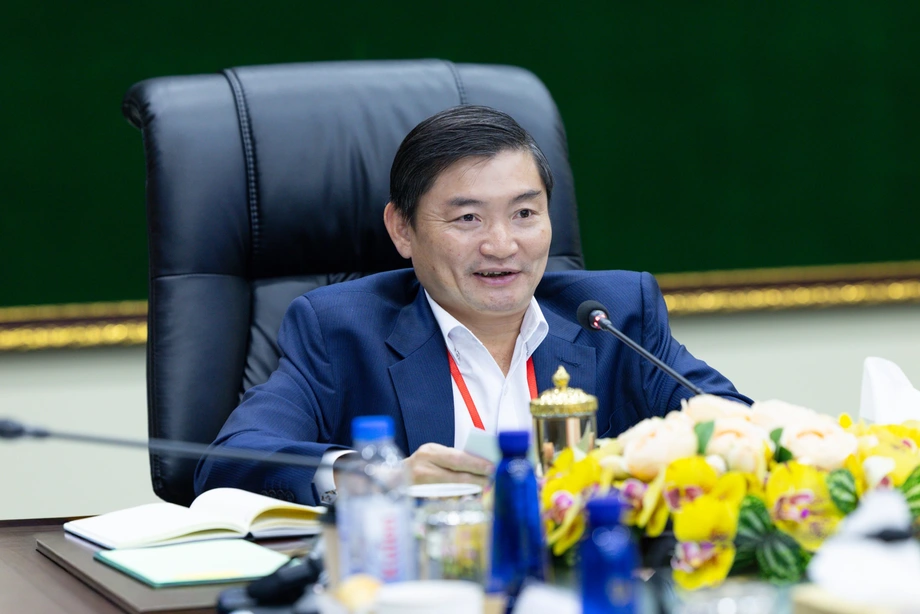
A $2 increase after 17 rounds of negotiations
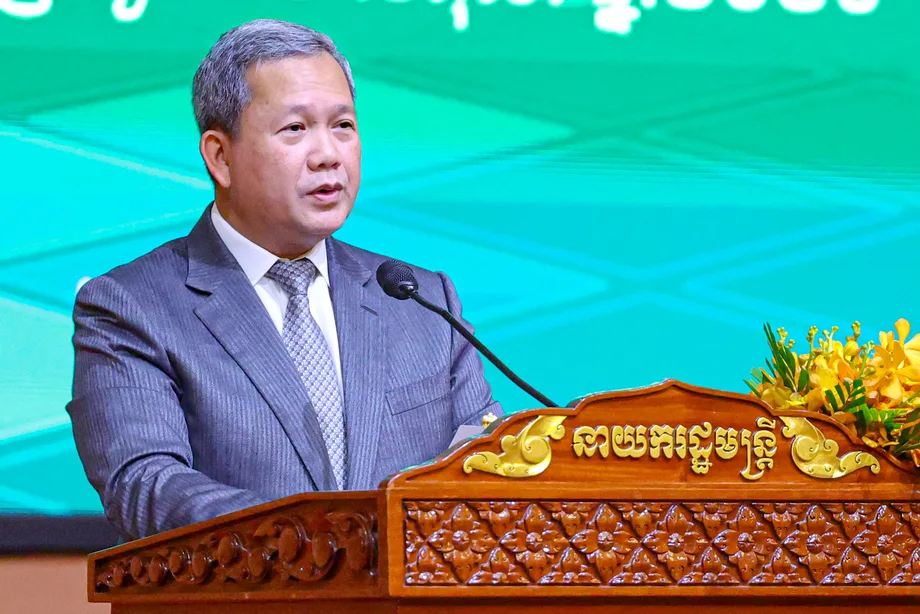
Cambodia will raise the monthly minimum wage for textile, garment, footwear, travel goods and bag workers from US$210 to US$212 on 1 January 2027, following 17 rounds of negotiations that ended with the wage council backing no increase. Prime Minister Hun Manet then added $2 to the council's figure.
Contents
- A $2 increase after 17 rounds of negotiations
- How the council reached $212
- What workers will receive beyond the base wage
- Why unions say prices will absorb the increase
- The research behind the $250.66 demand
- Families face school bills, debt and uncertain income
- Employers point to shipping costs and competition
- A growing export sector with competing pressures
- Key Points
The decision, announced on 30 September 2026, increases the base wage by about 0.95%. A temporary monthly allowance of $2.50 for travel and accommodation will remain, bringing the base wage plus that allowance to $214.50. Attendance, housing and transport benefits lift the government's stated minimum monthly package to $231.50 before overtime.
The Ministry of Labour and Vocational Training's wage announcement says the final meeting took place at the ministry in Phnom Penh. Worker representatives had sought $225, while employers wanted to retain $210. The National Council on Minimum Wage chose the employers' figure through a secret ballot before the prime minister intervened under the Law on Minimum Wage.
The outcome affects a sector employing nearly one million people, most of them women. Workers and unions say the increase offers little relief from food bills, rent, school expenses and debt. Employers argue that larger increases could put pressure on factories competing for international orders.
How the council reached $212
The council brings together government, employer and worker representatives. At the final vote, 47 of its 51 members supported $210, three supported the unions' $225 proposal and one abstained. The resulting $212 rate is $13 below the workers' final negotiating position.
Unions had initially sought more. Seven unions called for $250.66, a demand backed by 125 civil society organisations. By the final negotiations, the majority worker position had moved to $225, still $15 above the existing wage.
The main dates show how the decision developed:
- 14 September 2026: Trade union federations submitted a letter seeking a $250.66 minimum wage.
- 30 September 2026: After 17 rounds of talks, the council voted for $210. Hun Manet added $2, producing the announced $212 rate.
- 5 October 2026: Trade unions and civil society organisations issued a joint statement calling for reconsideration.
- 1 January 2027: The new monthly minimum wage takes effect.
The October statement criticised the council's independence, transparency and effectiveness because its internal vote had favoured keeping the wage unchanged. The government presented the final increase as support for workers during an uncertain economic period.
What workers will receive beyond the base wage
The $212 figure is the statutory monthly base wage. Other payments remain unchanged, including a $10 attendance bonus, $7 for housing and transport, the temporary $2.50 allowance, seniority payments of $2 to $11 and an overtime meal allowance.
Labour Minister Heng Sour said discussions about Cambodia's wages should include the additional benefits. He described the minimum monthly package before overtime as follows:
"Whenever we talk about the minimum wage, please don't forget to add the benefits worth $19.50. In general, workers receive at least $231.50 a month, even without overtime. It is not just $212 a month," Sour said.
The calculation is $212 plus $10, $7 and $2.50, giving $231.50. The ministry gives a broader monthly range of $231.50 to $242.50 when other benefits are included. A worker's total depends on the benefits and seniority payments that apply, with overtime paid separately.
The temporary allowance is being retained from 2026, so the new increase in the base wage is $2 a month, or $24 over a full year. The $214.50 figure combines the new base wage with the continuing $2.50 allowance. Workers should therefore see the base wage increase and the retained allowance as separate items on their pay calculation.
Why unions say prices will absorb the increase
A joint statement published by the Clean Clothes Campaign on 5 October compares the 0.95% wage increase with projected inflation of approximately 3.1%, which it attributes to the International Monetary Fund. The trade unions and civil society organisations behind the joint wage statement calculate that workers would need another $6.51 a month simply to preserve the purchasing power of a $210 base wage.
Purchasing power means how much a wage can buy. If the prices of a family's usual food, transport and other necessities rise faster than its income, the family has to buy less or find money elsewhere. Under the statement's calculation, the $2 increase falls $4.51 short of the amount needed to keep pace with projected inflation.
Yang Sophorn, president of the Cambodian Alliance of Trade Unions (CATU), separately cited inflation of 3.8%, which she said added about $8 to workers' costs. The joint statement uses a forecast of about 3.1%; Sophorn's estimate uses 3.8%. Both comparisons put price growth above the wage increase.
Sophorn said workers needed between $250 and $300 monthly to meet basic needs and achieve a decent standard of living. She also argued that higher electricity, water and rental costs added pressure beyond the price increases she cited.
The research behind the $250.66 demand
The October joint statement says eight major trade union federations developed the $250.66 proposal using research involving 422 workers at 28 factories in Phnom Penh, Kandal and Kampong Speu. The survey examined workers' actual living expenses and those of their families.
The proposed figure would have added $40.66 to the existing $210 base wage. The approved $212 rate is $38.66 below that demand. The Cambodian Youth Power Union Federation supported $250.66, while CATU called for at least $250.
The unions' demand concerns a wage sufficient to meet basic household needs. The legal minimum is the amount employers must pay as a base wage; the unions' proposed living wage is built around what workers and their families need to spend. The dispute is therefore about both the legal floor and the cost of maintaining a household.
The statement calls on the council and other parties to reconsider the proposal. No date for a further wage review was announced.
Families face school bills, debt and uncertain income
Garment workers' families spend an average of $504 a month, according to household spending figures cited in the wage debate. That is more than twice the government's $231.50 minimum package for one worker. Household budgets combine the needs of several people, while the wage figures describe the earnings of an individual worker.
CENTRAL, a Cambodian labour rights organisation, says 75% of garment workers' families are in debt and 56% of workers rely on overtime. It says families have reduced spending on food and education to meet their expenses.
Sok Kanh, a factory worker in Phnom Penh, said a small base wage increase would leave families struggling, especially those with children. She described school fees of $30 or $40 per child, before school supplies, food and other daily expenses.
Kanh said rising prices and rent reduced the benefit of a higher wage:
"If wages increase but market prices are stable, we would have no problem. But prices and rent are also increasing, and that puts an additional burden on workers," she said.
Song Kunna, 44, from O Raing Ov district in Tboung Khmum province, faces similar pressures. A garment worker since 2014, she supports four children, while her husband earns an uncertain income from farming and occasional work. Her wages go towards food, education, bank repayments and household needs.
Kunna described spending about 10,000 riel a day on her own food and between 35,000 and 40,000 riel a month on travel. She wanted a base wage of about $250, with overtime and other benefits on top, to make household expenses easier to manage.
Employers point to shipping costs and competition
Nang Sothy, vice president of the Federation of Employers and Business Associations of Cambodia and an employer representative, supported the government's decision. He said factories faced economic uncertainty, border issues and rising international transport costs.
Sothy urged people to consider those pressures when judging the increase:
"Please don't judge the additional $2 as too little because we are facing an economic crisis, border issues and problems in the global economy," Sothy said.
He linked the temporary $2.50 allowance to increased costs associated with the Suez Canal crisis. He also stressed that employers pay benefits beyond the base wage and that Cambodia's factories depend heavily on processing goods for export.
Heng Sour warned that a much larger wage increase could affect job creation and factory expansion. He said the government would work to improve conditions for industrial investment while pursuing measures to reduce workers' daily living costs.
Pav Sina, president of the Collective Union of Movement of Workers, offered a more mixed assessment. He said $2 would not meet workers' actual expenses, but regarded an increase as a positive development under difficult economic conditions. His position reflected the tension between seeking higher wages and protecting existing jobs.
A growing export sector with competing pressures
Cambodia's garment, footwear and travel goods sector recorded $11.76 billion in exports during the first eight months of 2026, up 7.2% from the same period a year earlier. Those figures place the wage decision within a large industry that provides income to nearly one million workers and their families.
Sothy warned that declining exports and rising shipping costs could burden employers. The figures for the first eight months show export growth across the sector during that period, while his warning describes the market and cost pressures employers say they face.
Workers focus on what remains after paying for necessities. Employers focus on the cost of producing goods and winning orders. The government's approach combines a modest base wage increase, continued allowances and a promise to address living costs and investment conditions.
The immediate change is straightforward: from January, the legal base wage rises by $2, while existing benefits continue. Whether families feel relief will also depend on food prices, rent, debt payments and access to overtime. For workers already relying on extra hours, the size of the guaranteed monthly increase is central to the dispute.
Key Points
- The monthly minimum wage rises from $210 to $212 on 1 January 2027 for workers in the covered textile, garment, footwear, travel goods and bag sectors.
- The council voted for $210 after 17 rounds of talks; Prime Minister Hun Manet then added $2.
- The retained $2.50 temporary allowance brings the base wage plus that allowance to $214.50.
- The government puts monthly earnings including benefits at $231.50 to $242.50, before overtime.
- Unions say the 0.95% increase falls below rising living costs and sought wages of $250 to $250.66.
- The sector employs nearly one million people and exported $11.76 billion in the first eight months of 2026.