A US$20 Billion Bet on Imported Gas
Bangladesh could spend as much as US$25.8 billion in one year on imported liquefied natural gas under a proposed expansion of gas power in the southeast, according to a study released in Cox's Bazar on Saturday, 28 November 2026. The authors warn that the strategy would expose households and factories to higher electricity costs, worsen air pollution and intensify the climate threats facing a country already vulnerable to floods and cyclones.
Contents
- A US$20 Billion Bet on Imported Gas
- Why the Import Bill Could Swing So Widely
- What MIDI Would Build in Chattogram
- Supply Cancellations Are Already Straining the Economy
- Matarbari 1 Offers a Warning From the Coast
- Why Garment Factories Are Central to the Debate
- How Bangladesh's Renewable Target Would Work
- Experts Urge a Transition With a Realistic Grid Plan
- The Government Is Pursuing Gas and Renewables at Once
- Key Points
The study, LNG's Last Ditch: The MIDI Master Plan for Bangladesh, was prepared by Market Forces, Waterkeepers Bangladesh and Dhoritri Rokhhay Amra (DHORA). It puts the construction bill for the Moheshkhali-Matarbari Integrated Infrastructure Development Initiative (MIDI) at about US$20 billion. At the highest fuel price estimate, a single year of LNG imports would cost US$5.8 billion more than building that entire infrastructure programme.
Munira Chowdhury, Asia Energy Transition Director at Market Forces and an author of the study, presented its findings at the launch. DHORA convener Fazlul Qader Chowdhury chaired the event, which also heard from Waterkeepers Bangladesh coordinator Sharif Jamil, Yuki Tanabe of the Japan Center for a Sustainable Environment and Society, and Makiko Arima of Oil Change International and Fossil-Free Japan.
Chowdhury directed her strongest criticism at the Japanese businesses and interests involved in Bangladesh's energy plans.
Japanese companies and interests are coercing Bangladesh into a last-ditch dangerous dependence on liquefied natural gas, risking the lives of millions of people and a safe climate.
Why the Import Bill Could Swing So Widely
LNG is natural gas that has been cooled until it becomes liquid, allowing it to be transported by ship. An import terminal receives the fuel and turns it back into gas through a process called regasification. Pipelines then carry that gas to power stations, factories and other consumers. Bangladesh therefore has to pay for the fuel itself, the ships and terminals that deliver it, and the plants that burn it.
The US$25.8 billion estimate assumes that average prices forecast for 2027 continue under import plans extending beyond the 2030s. For 2040, the study examines imports of about 25 million tonnes of LNG a year. Its low price case costs US$10.3 billion annually, the medium case costs US$15.8 billion and the high price case reaches US$25.8 billion. A broader summary calculation also gives a possible annual bill of US$7 billion if international prices decline. These are price scenarios rather than a fixed charge, and they show how strongly the final cost depends on the world market.
Falling domestic gas production is already increasing Bangladesh's reliance on imports. The study recalls how the surge in LNG prices after the war between Russia and Ukraine disrupted electricity generation in Bangladesh. A similar shock under a larger import programme would leave the power sector and industry needing far more foreign currency at precisely the moment when fuel becomes harder to afford.
What MIDI Would Build in Chattogram
The master plan prepared by the Japan International Cooperation Agency (JICA) proposes up to 13 gigawatts of new power generation burning LNG in the Chattogram region. That is 13,000 megawatts. Market Forces estimates that the power projects would cost about US$19 billion, while a terminal on land capable of regasifying 1,000 million cubic feet of LNG per day would cost another US$1 billion.
Japanese involvement examined in the study extends beyond JICA. It also includes the Japan Bank for International Cooperation and energy companies JERA, Sumitomo and Itochu. Japan's prospective private investment in Bangladesh is estimated at up to one trillion yen, or roughly US$6.3 billion. Chowdhury argues that this financial and technical capacity could support solar power, wind power and modern transmission systems instead of additional gas infrastructure.
Market Forces estimates that fossil fuel plants associated with MIDI would release more than 1 billion tonnes of greenhouse gases, measured as carbon dioxide equivalent, over their operating lives. It says that total is more than 10 times Bangladesh's current fossil fuel emissions. The study links additional pollution to health dangers and warns that higher emissions would aggravate the climate hazards facing coastal communities.
The full 13 gigawatts remains a proposal within the master plan. The launch did not give a start date for constructing the entire programme or announce financing covering every proposed plant.
Supply Cancellations Are Already Straining the Economy
Rashed Al Mahmud Titumir, the prime minister's adviser on finance and planning, gave a stark account of the current exposure at the fourth Bangladesh Energy Conference in Dhaka on the same Saturday. He said suppliers had cancelled 55 LNG cargoes since 18 March amid the Middle East crisis, forcing the government to buy replacement fuel at higher prices on the international spot market. Spot purchases are arranged for relatively prompt delivery rather than through a supply contract covering many years.
Titumir put LNG import subsidies at about Tk 34,000 crore since the government took office in February, equivalent to Tk 340 billion. He said the crisis had imposed an additional US$4.12 billion in costs between March and September. Imported fuel dependence, he added, was pressuring foreign exchange reserves while raising production costs and inflation.
The adviser also said Tk 281,388 crore had been paid in capacity charges for idle power plants between 2009 and June 2026. A capacity charge pays a producer for keeping electricity generation available, even when the plant is not operating. For Bangladesh, that means public money can be absorbed by unused plants while the government also subsidises imported fuel.
The subsidy pressure was visible in a Tk 60 subsidy estimate released on 5 November. It calculated that Bangladesh would need to provide more than Tk 60 for each cubic metre of gas when LNG costs US$20 per million British thermal units, a standard energy pricing unit. Asian spot LNG reached US$27.50 per million British thermal units in September 2026.
Missing deliveries and terminal interruptions have compounded those costs. By October, Excelerate's delivery suspension had been extended until November after the company supplied two cargoes under a contract that envisaged 12 during 2026. Petrobangla figures cited at the time showed a daily gas shortfall of about 1.474 billion cubic feet, nearly 37% of demand. Petrobangla also warned that Summit terminal maintenance in early November would temporarily remove 320 million cubic feet per day from the grid and reduce total gas supply by about 13%.
Matarbari 1 Offers a Warning From the Coast
The 1,200 megawatt Matarbari 1 coal power plant provides the study's main example of what coastal energy construction can mean for local people. The approximately US$6 billion project was financed by JICA, with construction involving Sumitomo Corporation, Toshiba and IHI. It began operating in 2024.
The study associates the project with displacement, river damage, pollution, debt and corruption allegations. It says more than 20,000 salt farmers, fishers and other local producers lost or suffered damage to their livelihoods during construction. Those figures represent people whose income depended on coastal land, water and natural resources rather than on employment at the plant itself.
The project's financing and construction history spans more than a decade:
- 2014: JICA signed its first loan agreement for the 1,200 megawatt Matarbari 1 coal project.
- 2014 to 2021: Successive financial commitments made it one of JICA's largest official development assistance projects.
- 2024: Construction was completed and the plant began operating.
- 2025: JICA provided an additional US$381 million loan for Matarbari 1.
- 28 November 2026: The new study used the project's record to challenge further fossil fuel expansion around Matarbari and Moheshkhali.
Sharif Jamil warned that another large construction programme would add environmental and financial pressures to those already experienced by coastal communities.
Pouring US$20 billion into new gas infrastructure under the MIDI master plan would lock Bangladesh into severe air pollution, mangrove destruction, debt and energy price shocks that directly impact our garment industries.
Why Garment Factories Are Central to the Debate
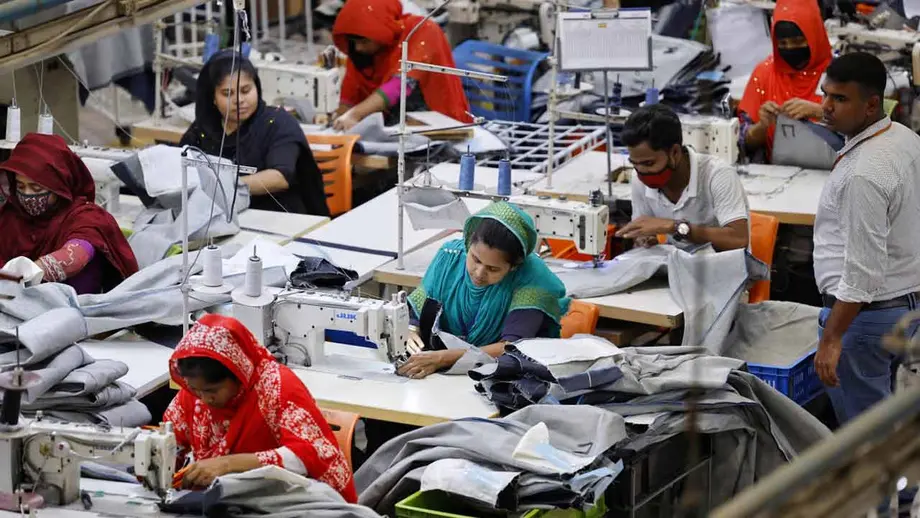
Garment manufacturers depend on reliable electricity and predictable production costs to meet export orders. The study says rising power bills, blackouts and gas supply interruptions have already disrupted factories and caused hundreds of millions of dollars in lost production. A larger LNG import bill could deepen that pressure if the state responds through higher subsidies, increased electricity prices or greater borrowing.
Climate commitments among international apparel brands add another consideration. Bangladeshi industry leaders are seeking stronger support from brands such as Uniqlo for renewable electricity, battery storage and the electrification of factory processes. Batteries store power for use when generation or grid supply is insufficient, while electrification can replace some direct use of fossil fuels in industrial equipment.
Air pollution and climate damage connect the energy decision to public health. Chowdhury said thousands of people already die from toxic pollution, while the study warns that additional emissions would make floods, cyclones and other disasters more dangerous. Mangrove destruction would also threaten coastal forests that provide habitat and help shelter communities from storm surges.
How Bangladesh's Renewable Target Would Work
Market Forces estimates that Bangladesh has technical potential for 240 gigawatts of solar power and 30 gigawatts of wind power on land. The combined figure is 270 gigawatts, making the government's 10 gigawatt renewable target for 2030 equivalent to about 3.7% of that potential. Technical potential describes what the resource could support; actual generation still requires suitable sites, finance, equipment and grid connections.
Titumir told the Dhaka conference that the government aims to add more than 10,000 megawatts of renewable capacity by 2030. His breakdown included 5,500 megawatts from solar panels on rooftops, 4,000 to 5,000 megawatts from solar installations on the ground, and 450 to 500 megawatts from wind, energy from waste, floating solar and agricultural solar. The government also aims for renewables to meet 20% of electricity demand by 2030 and 30% by 2040.
Existing incentives include a 0% tax rate for solar power until 2035 and duty free imports of solar equipment. At the Renewable Energy Fest 2026 held at BUET on 27 October, Power Minister Iqbal Hasan Mahmud Tuku said work was underway on a special renewable energy law intended to make decisions and activities between 2026 and 2030 easier. He acknowledged that fossil fuel dependence had exposed Bangladesh to world market instability and the effects of war in the Middle East.
The Dhaka conference also announced Tk 1,500 crore for solar installations through loans carrying 6% interest and repayment over 12 years. For factories, rooftop panels could supply part of their electricity without requiring every project to wait for a large central power station.
Chowdhury said JERA, Sumitomo and Itochu had an opportunity to direct investment towards solar and wind projects. She framed the choice around the needs of consumers rather than the interests of fuel suppliers.
Bangladeshi people need affordable renewable energy and cleaner air, rather than gas power making our pollution deadlier and climate disasters more dangerous.
Experts Urge a Transition With a Realistic Grid Plan
Dr Ijaz Hossain, a sustainable energy specialist and former BUET professor, described the 10,000 megawatt target as ambitious but achievable. He said reaching it could provide 20% of total electricity from renewable sources, while preparing transmission lines for that power would be a substantial challenge. He also cautioned that Bangladesh has no scope to withdraw immediately from LNG and coal.
Dr Nazneen Ahmed, an economist and executive director of the Centre for Policy Dialogue, called for a specific plan that gives renewable energy increasing priority in stages. Her position is that one system cannot simply be shut down to start another because Bangladesh is not currently able to meet all its needs with renewable power.
The condition of the transmission network gives those warnings a practical dimension. During the October 27 grid failure, national generation fell by 5,370 megawatts within an hour, from 14,719 megawatts at noon to 9,349 megawatts at 1pm. Parts of Dhaka, Narayanganj and Chattogram lost power. Officials associated the disruption with a fault on the Meghnaghat-Haripur grid line and said at the time that its precise technical cause still had to be established.
Transparency International Bangladesh executive director Iftekharuzzaman challenged the government's spending priorities. He said only 3.4% of the Tk 17,345 crore power and energy allocation in the 2026 to 2027 fiscal budget was earmarked for renewable energy, equal to roughly Tk 590 crore, while 96.6% went to fossil fuels. He called for an integrated national energy plan, a stronger Sustainable and Renewable Energy Development Authority and arrangements for managing solar panels and equipment after their operating lives.
So where is the commitment? Where is the implementation?
City Bank deputy managing director and chief economist Ashanur Rahman identified another constraint: banks depend heavily on deposits available at short notice, making it difficult to finance projects that need investment for eight to 12 years. He proposed easier financing through green bonds and sukuk, which are certificates structured to comply with Islamic finance principles. Bangladesh Sustainable and Renewable Energy Association president Mostafa Al Mahmud said inconsistencies between government announcements and regulations were discouraging private investors, while Hasan Mehedi of the Bangladesh Working Group on Ecology and Development opposed more LNG infrastructure in environmentally sensitive areas.
The Government Is Pursuing Gas and Renewables at Once
Titumir said the government is still pursuing a third floating LNG terminal with daily regasification capacity of 600 million cubic feet, alongside the terminal on land at Matarbari with capacity of 1,000 million cubic feet per day. He also called for more domestic gas exploration and a stronger Bangladesh Petroleum Exploration and Production Company Limited. Diesel stocks have increased from 17 days of supply when the government took office to 38 days, with a target of 90 days.
The study recommends a different allocation of new investment: solar panels on factory roofs, battery storage, and stronger electricity transmission and distribution networks. Jamil said international financiers should support the 2030 renewable targets and grid resilience instead of assets that would require fuel imports for decades.
No date was given for introducing the special renewable energy law. The next fixed policy markers are the renewable targets for 2030, the solar tax incentive running until 2035, and the government's goal of meeting 30% of electricity demand with renewables by 2040. Until then, Bangladesh is following two tracks at once: preparing infrastructure that could receive more LNG while offering incentives intended to reduce its eventual need for imported fuel.
Key Points
- A study launched in Cox's Bazar on 28 November 2026 warns that Bangladesh's annual LNG import bill could reach US$25.8 billion.
- The MIDI proposal includes about US$19 billion for gas power plants and US$1 billion for an LNG terminal on land.
- JICA's master plan proposes up to 13 gigawatts of new LNG power generation in Chattogram and a terminal handling 1,000 million cubic feet per day.
- The study's 2040 scenarios assume about 25 million tonnes of annual LNG imports, with costs ranging from US$10.3 billion to US$25.8 billion.
- It estimates more than 1 billion tonnes of lifetime greenhouse gas emissions from the associated fossil fuel plants.
- More than 20,000 salt farmers, fishers and local producers reportedly lost or suffered damage to their livelihoods during construction of Matarbari 1.
- The government says 55 LNG cargoes have been cancelled since 18 March, while import subsidies have reached about Tk 34,000 crore since February.
- Bangladesh is targeting more than 10,000 megawatts of renewable capacity by 2030, supported by solar tax and import duty incentives.
- Energy specialists support a staged transition but say grid preparation, financing and continued near term use of LNG and coal must be addressed.