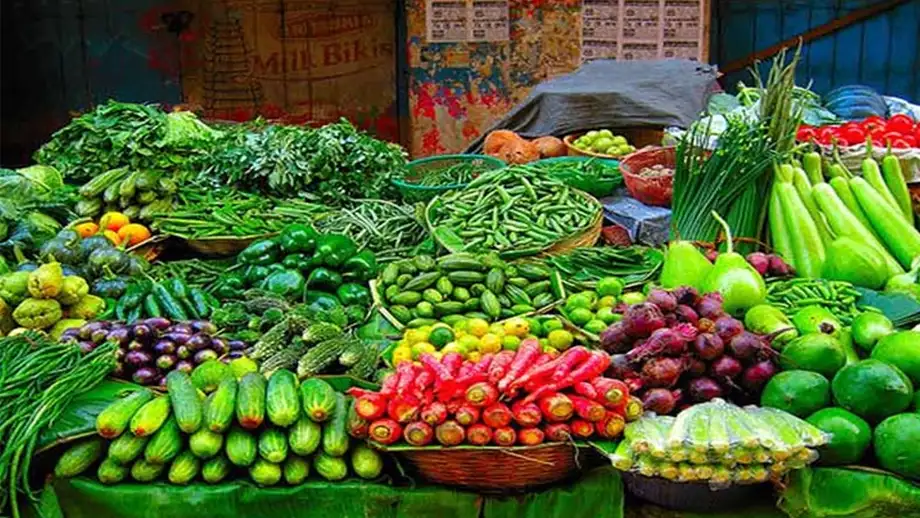
Winter Markets Lose Their Usual Relief
Dhaka's kitchen markets delivered the opposite of expected winter relief this week. Flat beans, brinjal, okra, bottle gourd and pointed gourd that sold for Tk 40 to Tk 60 a kg or apiece last week were sold at Tk 80 to Tk 120 on Friday, November 27. Small and medium cauliflowers and cabbages rose to Tk 40 to Tk 80 each from Tk 30 to Tk 50. Markets in Karwan Bazar, Ibrahimpur, Shewrapara, Kazipara, Kachukhet and Farmgate showed the same pattern. Traders said rain had rotted standing crops in producing regions and interrupted the route from field to stall.
Contents
- Winter Markets Lose Their Usual Relief
- What Traders and Buyers Saw
- How Rain Turned Fields Into Market Delays
- The Price Board Across the Capital
- Why 130 Cauliflowers Became a Price Argument
- Household Budgets Take the Hit
- Gopalganj Shows the Same Pattern Outside Dhaka
- Oil, Eggs, Chicken and Fish Add to the Bill
- Why Winter Did Not Bring Cheaper Vegetables
- What Happens Next for Shoppers
- Key Points
At Shewrapara and Taltala, the rise was put at Tk 10 to Tk 40 per kg for both winter and summer varieties. Flat beans cost Tk 100 to Tk 140, up from Tk 70 to Tk 100 a week earlier. New potatoes were Tk 120, up from Tk 80 to Tk 90. A shopper who spent Tk 100 on three or four vegetables before now often receives a smaller quantity of each item.
Early winter normally gives consumers a break because local vegetables reach markets in larger volumes. This week, most items sat in the Tk 80 to Tk 120 range, and several sellers said they were raising prices to recover produce lost to rot.
What Traders and Buyers Saw
Md Selim, a vegetable trader at Karwan Bazar, said prices had been low even two weeks earlier, as usual at the start of winter. He said winter vegetable supply dropped over the previous three or four days, and that the change was sharp.
Over the last three to four days, the supply of winter vegetables has dropped, nearly doubling prices.
Selim sold flat beans at Tk 100 a kg, up from Tk 50 to Tk 60 the week before, and brinjal at Tk 100, up from Tk 60. He quoted okra and pointed gourd at Tk 80 to Tk 100, bottle gourd at Tk 80 to Tk 100 each and ridge gourd at Tk 150 a kg. His stall captured a wider market shift: produce that had looked affordable in early winter had moved into the range households use for protein or staple foods.
How Rain Turned Fields Into Market Delays
Sultana Nasir, an assistant director at the Department of Agricultural Marketing, said Dhaka saw three days of rain, while some rural areas received more. She said farmers could not harvest and some young plants were damaged.
While it rained for three days in Dhaka, some rural areas saw more rain. Farmers could not harvest vegetables, and some sensitive seedlings were damaged.
She said the disruption affected the supply chain, meaning the route produce takes from farms through wholesale markets to retail stalls. She said higher prices would not last.
This disrupted the supply chain, pushing up prices. Rates will return to normal very soon; this is temporary.
Vegetables are perishable, so a delay of one or two days can change both quantity and quality. If workers cannot cut crops in the field, trucks arrive partly loaded. If produce gets wet and sits in transit, some of it rots before it reaches a shop. Retailers then price the saleable stock to cover both the purchase and the loss.
Md Shah Alam, a trader at Mirpur 1, said rain had raised prices a little because crops were damaged. Some sellers linked the rain to the effects of a cyclone, saying fields were harmed and wholesale arrivals fell.
The rainfall was associated with Cyclone Akvan, which made landfall in Odisha. District-level reports indicate that around 15,000 hectares of Aman potato and winter vegetable fields were affected in Bangladesh over three days. The Department of Agricultural Extension (DAE) has yet to publish a consolidated national estimate of affected acreage or crop losses.
Satkhira reported damage to crops across 5,567 hectares, including 521 hectares of vegetables, with chilli, onion and garlic crops also affected. In Khulna, rainfall affected 531.60 hectares of farmland between November 18 and 21, including 224.90 hectares of winter vegetables. Potato, chilli, coriander and onion crops were also affected. Preliminary DAE figures for Rajbari indicate that 450 hectares of onion seedbeds, 941 hectares of onion, 257 hectares of garlic and 611 hectares of vegetables have been damaged or exposed to damage.
In Cumilla, rainfall put crops across 2,341 hectares at risk, with winter vegetables among the worst affected. Growers in Chandpur reported damage to coriander, red amaranth, spinach and radish following 102 millimetres of rainfall over three days. Waterlogging also threatened potato, onion and garlic crops in Naogaon. The DAE was assessing crop damage and advising growers on drainage, harvesting and crop protection.
The Price Board Across the Capital
Retail prices varied by quality, size and market, but the broad pattern was clear across several parts of Dhaka on November 26 and 27.
- Tomatoes cost Tk 150 a kg for local varieties, Tk 180 for Indian tomatoes and Tk 80 for green tomatoes. Other market checks put ripe tomatoes at Tk 120 to Tk 160. Traders said lower imported tomato arrivals kept local ripe tomatoes high.
- Local carrots sold at Tk 100 a kg and Chinese carrots at Tk 140. New potatoes ranged from Tk 100 to Tk 140, while old potatoes stayed at Tk 25 to Tk 30.
- Long brinjal cost Tk 80 to Tk 100 a kg, white round brinjal Tk 100 and black round brinjal Tk 120. Beans ranged from Tk 100 to Tk 120, with some flat beans quoted at Tk 140.
- Other vegetables included bitter gourd at Tk 100 to Tk 120, spiny gourd at Tk 160, okra at Tk 80 to Tk 100, local pointed gourd at Tk 100, hybrid pointed gourd at Tk 70, radish at Tk 50 to Tk 60 and coriander leaves at Tk 160.
- Cauliflower and cabbage ranged from Tk 30 to Tk 80 each, depending on size and market. Bottle gourd cost Tk 50 to Tk 90 each, and ash gourd about Tk 60.
Green chilli showed the split in market conditions. Some stalls priced it at Tk 50 to Tk 80 after a Tk 20 fall, while other checks found Tk 80 to Tk 100. In Gopalganj, green chilli rose from Tk 70 to Tk 100. Papaya was one of the few low priced items, selling at Tk 25 to Tk 40 a kg in several markets. Against that, most common vegetables were Tk 80 to Tk 120, which is why shoppers described the basket as expensive even where winter arrivals had begun.
Why 130 Cauliflowers Became a Price Argument
Md Sohel, a trader in the vegetable market, gave the clearest example of how losses reach the customer. He said he had brought 130 cauliflowers and found 20 already rotten. He said the remaining stock had to carry that loss.
I brought 130 cauliflowers, but 20 of them have already rotted. I have to keep the price of the remaining ones higher to make up for the loss.
The arithmetic is plain. About 15 of every 100 cauliflowers in that batch were lost. A trader who expected to sell 130 pieces had only 110 sound ones left, so each saleable cauliflower had to recover a share of the damaged stock.
Khorshed Alam, a vegetable seller at Malibagh bazaar, said sudden rain damaged fields and reduced supply. He expected prices to ease when new winter crops arrived in larger quantities. Helal Uddin, a vegetable vendor, said wholesale prices had not fallen even as supply gradually increased, leaving retailers paying high rates at the arot, or wholesale market.
Household Budgets Take the Hit
Akbar Hossain, a resident of Begunbari who went to Karwan Bazar after finding prices nearly doubled at his local market, said even the wholesale hub offered little relief.
It is hard to accept vegetable prices shooting up like this just as winter arrives.
Alamgir Hossain, a customer at Shewrapara's Jamtala kitchen market, said he removed several items from his weekly list.
I skipped many items and will buy them later once prices fall.
Abdur Rahim, a shopper at Kazipara market, usually buys half a kg each of three or four vegetables for a household of three. He cut that to 250 grams per item.
I have a fixed budget for vegetables. Trying to buy four varieties within Tk 100 leaves me no choice but to cut the quantity.
Rahat Hossain, a shopper at another Dhaka market, said the difficulty was not one item but the whole basket.
I don't know what to buy. Everything is expensive, making it difficult for people with fixed incomes to manage their households.
Rahidul Islam, an employee in the private sector shopping at Badda market, said he now buys half a kg where he once bought a full kg. Sajjad Hossain, a buyer at Rampura market, said most vegetables still cost Tk 80 to Tk 120 despite the start of winter. Moin Mosaraf, another buyer, said people with fixed incomes think about the money in their pocket before choosing anything at the market.
Gopalganj Shows the Same Pattern Outside Dhaka
Gopalganj faced the same rise after two days of rain. Prices there increased by Tk 10 to Tk 40 a kg in three days. Ucche rose from Tk 60 to Tk 100, cauliflower from Tk 60 to Tk 80, cabbage from Tk 50 to Tk 70, brinjal from Tk 80 to Tk 120 and green chilli from Tk 70 to Tk 100. Bottle gourd rose from Tk 30 to Tk 50 or Tk 60 each.
Zahidul Islam, a buyer in Gatepara, said restricted vehicle movement and two days of rain reduced arrivals. Tarikul Islam, a buyer from Bedgram, said gas, transport and essential costs were already stretching budgets. Al Amin Islam, a trader, said the market was closed on Thursday, rain disrupted life on Friday and arrivals at the wholesale point were short on Saturday.
Md Arif Hossain, Gopalganj district agricultural marketing officer, said the department was monitoring the market and working to keep it under control.
The sequence across the country is short enough to follow:
- November 26: soybean oil prices rose by Tk 3 a litre, and a market check at Mirpur 1 found vegetable prices high after crop damage.
- November 27: Friday checks in Dhaka showed most vegetables at Tk 80 to Tk 120 or more, with some shoppers cutting quantities.
- November 28: traders still expected fresh orders for soybean oil and deliveries within days, while Gopalganj buyers faced higher prices after rain and a market closure.
- Sunday: Miraj Store expected soybean oil supply if Saturday orders went through.
Oil, Eggs, Chicken and Fish Add to the Bill
Soybean oil added a second squeeze. Its price rose by Tk 3 a litre after the November 26 hike, yet bottled soybean oil remained unavailable at most Dhaka shops. Some retailers still sold at the old price, while others quoted bottled oil near Tk 204 a litre.
The decision behind the increase was taken at a Thursday afternoon meeting in the commerce ministry's conference room to review the overall edible oil supply situation. Commerce Minister Khandaker Abdul Muktadir chaired the meeting. The commerce ministry issued a press release on Saturday, November 28, 2026, saying the adjustment had been decided unanimously after a review of a Bangladesh Trade and Tariff Commission report on edible oil stocks, international and local market prices, letters of credit and imports. It cited higher international edible oil prices, import costs and the overall domestic supply situation.
Under the revised prices, bottled soybean oil costs Tk 207 a litre, up from Tk 204, loose soybean oil Tk 188, up from Tk 185, and a five-litre bottle Tk 1,015, up from Tk 1,000. The price of loose palm oil remains unchanged.
The Bangladesh Vegetable Oil Refiners and Vanaspati Manufacturers Association told the meeting that edible oil prices were last adjusted on September 2. It sought a readjustment ahead of Ramadan in line with international prices and current import costs, saying higher soybean and palm oil prices abroad had made normal imports and supply increasingly challenging without a fresh domestic adjustment.
Bangladesh Trade and Tariff Commission chairman Nasir Ud Daula, commerce ministry additional secretary Khadija Naznin and representatives of the agencies and business organisations concerned attended the meeting. The press release said traders would be directed to keep supply normal, while the Directorate of National Consumer Rights Protection and district administrations were instructed to take necessary legal action to prevent artificial crises, illegal hoarding and sales above the government-set price.
Sujon, a salesperson at Miraj Store in Lalbagh, said company representatives had not visited the shop after the price change. He said supply depended on when they took orders.
They may come on Saturday (28 November). If they take orders then, we may get soybean oil from Sunday.
Egg prices moved differently across markets. At Mirpur 1 on November 26, red chicken eggs cost Tk 125 to Tk 130 a dozen and white eggs Tk 120, after increases of Tk 5 to Tk 10. Duck eggs were Tk 200 to Tk 210, up by Tk 20 to Tk 30. On November 27, brown farm eggs in other city markets were Tk 130 to Tk 140, Tk 10 lower than earlier. Red eggs in some large markets were Tk 135 to Tk 140 after a fall of as much as Tk 10.
Chicken gave buyers some room in several places. Broiler was quoted at Tk 160 to Tk 180 a kg, Sonali at Tk 280 to Tk 330 and local chicken at Tk 620 to Tk 650. Several market checks put broiler Tk 10 to Tk 20 lower than 15 days earlier. At Shewrapara and Taltala, broiler stayed at Tk 170 and Sonali cock at Tk 300 to Tk 310 from the week before. Beef remained close to Tk 750 to Tk 800 a kg, and mutton was quoted at Tk 1,250 to Tk 1,300.
Fish did not offer much relief. Tilapia sold at Tk 220 to Tk 230 a kg, farmed koi at Tk 220 to Tk 280, small pangas at Tk 180 to Tk 200, large pangas around Tk 270 and katla from Tk 300 to Tk 500. Small shrimp were Tk 600 to Tk 700, while galda shrimp started around Tk 800. Hilsa ranged from Tk 1,000 to Tk 2,600 depending on size. Nasir, a fish vendor, said there was no fish shortage, but wholesale rates were high and buyers were cutting quantities. Spices also cost more in some shops: cloves rose by Tk 150 to Tk 1,550 a kg, and cumin rose by Tk 140 to Tk 640. Rice, pulses, sugar and flour showed little change, with sugar at Tk 110 a kg, a two kg packet of flour at Tk 170 and atta at Tk 140.
Why Winter Did Not Bring Cheaper Vegetables
Three pressures met at once. First, rain damaged crops and caused rot. Second, transport and wholesale arrivals were irregular. Third, sellers faced fees and losses before produce reached the retail stall.
Traders at wholesale markets said koyeli, a middleman fee, had returned and added Tk 5 per palli. A palli is a load brought for sale. They also said Tk 40 was being collected from every van or vehicle at Karwan Bazar for three days. Those charges are small on paper, but they are added to each consignment and then spread across the vegetables sold.
Market monitoring can affect how quickly prices settle. Sultana Nasir's department said the disruption was temporary, and Gopalganj's district agricultural marketing officer said monitoring was under way. No new official date was given for prices returning to earlier levels. Khorshed Alam expected relief within days, while Helal Uddin said wider supply could take a few weeks.
What Happens Next for Shoppers
The next price move depends on arrival volumes. If fields can be harvested and trucks can move without delays, wholesale rates should soften, and retail prices usually follow. If more produce rots in transit, traders will keep building losses into prices.
For households, the immediate change is practical. Families are buying smaller quantities, dropping varieties and delaying some purchases. Vegetables that normally anchor a simple meal, such as brinjal, okra, beans and gourds, now cost close to the same as several protein items. Until supply settles, the shelf price will keep reflecting damage in the field, losses at the wholesale point and the cost of moving goods through markets affected by delays.
Key Points
- Most vegetables in Dhaka rose from Tk 40 to Tk 60 to Tk 80 to Tk 120 a kg or each within about a week.
- Traders blamed crops damaged by rain, rotten produce and disrupted arrivals; the Department of Agricultural Marketing called the disruption temporary.
- Flat beans at one Karwan Bazar stall rose to Tk 100 from Tk 50 to Tk 60, while brinjal rose to Tk 100 from Tk 60.
- Shoppers in Karwan Bazar, Shewrapara, Kazipara, Badda and Rampura cut quantities or dropped items from their lists.
- Gopalganj saw the same rise, with prices up Tk 10 to Tk 40 a kg after two days of rain and a market closure.
- Soybean oil remained scarce despite a Tk 3 a litre price rise, while chicken eased in some markets and fish prices stayed high.