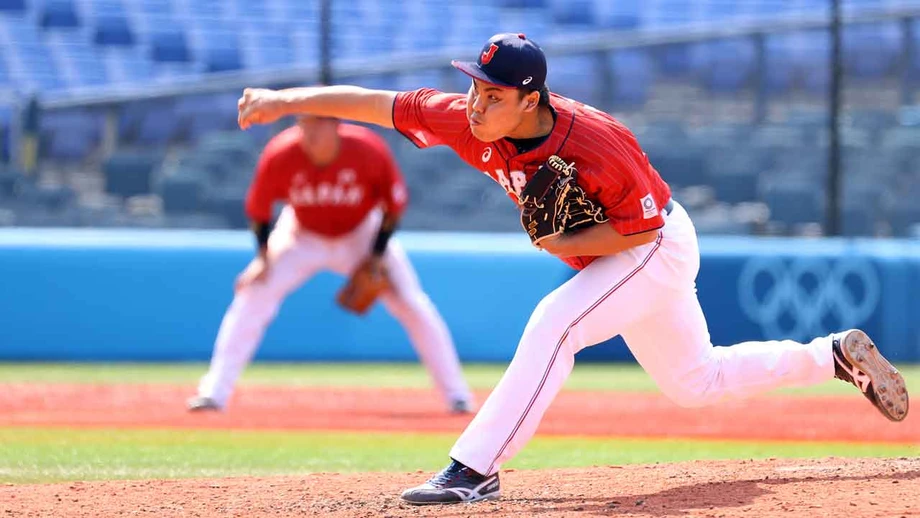
Toronto lands Japan's ERA leader
The Toronto Blue Jays have officially signed Japanese pitcher Kaima Taira to a contract worth US$80 million over five years, betting that one of Nippon Professional Baseball's most unusual pitchers can solve an immediate need in their rotation. The guarantee is worth about 12.8 billion yen and represents Toronto's first major acquisition of the offseason.
Contents
- Toronto lands Japan's ERA leader
- What the contract and posting fee really cost
- The season that made Taira a marquee target
- Why a pitcher listed at 5 feet 8 inches can reach 99 mph
- The main risk is workload
- What changes for Toronto's rotation
- How a frantic market shaped the price
- Why Okamoto matters to this signing
- The labor deadline and the lineup still waiting
- A celebrity in Japan, a new discovery in Canada
- Key Points
Taira, 27, is coming off a season in which he went 12-5 for the Saitama Seibu Lions and led NPB with a 1.36 earned run average. ERA measures how many earned runs a pitcher allows over nine innings on average. Taira worked 146 innings, struck out 141 batters and walked 45 while allowing only 95 hits and four home runs.
Toronto announced the signing on Friday, Nov. 27, which was Nov. 28 in Japan, four days after the agreement was reached. Taira and his agent, Scott Boras, are scheduled to attend an introductory press conference at Rogers Centre on Monday, Nov. 30. That event will take place on Dec. 1 in Japan.
Listed at 5 feet 8 inches and roughly 210 pounds, Taira does not look like a conventional power pitcher. He nevertheless throws close to 100 mph, uses as many as eight pitch types and arrives with experience as a starter, closer and setup reliever. Toronto expects him to continue starting, although his workload will require careful management.
What the contract and posting fee really cost
The $80 million guarantee includes a $5 million signing bonus and averages $16 million per season. Taira can use an opt-out after the 2029 season, meaning he can leave the final two years of the contract and become a free agent. If he remains in Toronto, the agreement covers the 2030 and 2031 seasons as well.
Toronto must also pay Seibu a posting fee of $13.875 million. Posting is the system through which a Japanese club makes a player available to MLB teams and receives compensation when he signs. The fee is separate from Taira's salary, bringing Toronto's total expenditure to $93.875 million.
The fee follows a formula based on the size of the guarantee. Toronto owes 20 percent of the first $25 million, which is $5 million; 17.5 percent of the next $25 million, which is $4.375 million; and 15 percent of the remaining $30 million, which is $4.5 million. Those amounts produce the $13.875 million total.
Seibu and Toronto moved through the process quickly:
- Oct. 30: Seibu announced that Taira would be made available through the posting system.
- Nov. 24: Taira and Toronto reached agreement on the contract.
- Nov. 27: The Blue Jays formally announced the signing.
- Nov. 30: Toronto is scheduled to introduce Taira at Rogers Centre, with Boras also attending.
- After the 2029 season: Taira can exercise his opt-out and return to free agency.
The season that made Taira a marquee target
Taira allowed just 22 earned runs across 23 outings in 2026. His 95 hits allowed and 45 walks produced a WHIP of 0.96. WHIP combines walks and hits allowed per inning, so his figure means that he permitted fewer than one such baserunner during an average inning.
His underlying numbers were nearly as impressive as his ERA. Taira struck out 24.8 percent of the batters he faced, walked 7.9 percent and generated ground balls at a rate of 48.5 percent. His walk rate fell for a third consecutive season. Among qualified NPB pitchers, he had the lowest ERA, the fifth best WHIP and the seventh best strikeout rate.
Career records covering his nine NPB seasons list a 38-24 record, a 1.85 ERA and 676 strikeouts against 252 walks in 633 2/3 innings. His Japanese honors include the 2020 Rookie of the Year award, a reliever of the year award, a Golden Glove and selection to the Pacific League's Best Nine. He also won an Olympic gold medal with Japan at the Tokyo Games, which were held in 2021.
Those figures explain why several clubs were connected with him, including the Cubs, White Sox, Mets, Padres and Tigers. Toronto secured the agreement by offering a fifth guaranteed year while keeping the average salary below the largest contracts signed by starting pitchers this winter.
Why a pitcher listed at 5 feet 8 inches can reach 99 mph
Taira's fastball averaged approximately 96 mph in Japan, making him the hardest throwing NPB starter by average velocity, and it reached 99 to 100 mph. His height makes that speed more surprising. He was two inches shorter than anyone who started an MLB game in 2026 and is one inch taller than former Toronto starter Marcus Stroman.
His delivery helps compensate for his stature. Taira releases the ball about 6.8 feet in front of the pitching rubber, compared with an MLB average near 6.5 feet. Extension measures how far toward home plate a pitcher releases the ball. Greater extension shortens the remaining distance to the batter and reduces the time available to react.
Taira also releases the ball from a height of approximately 4.94 feet. That would have tied Chris Sale for the second lowest release height among MLB starters, with only Joe Ryan lower at 4.69 feet. The combination of speed, extension and a low release creates an angle that hitters rarely encounter.
The fastball is supported by a sinker, cutter, slider, sweeper, curveball, changeup and splitter. Against hitters batting from the right side, Taira uses pitches that move away from them, including his sinker, sweeper and slider. Against hitters on the left side, he turns more often to his splitter, changeup and cutter. Batters in Japan hit just .165 against his cutter last season, with only one hit for extra bases.
Pitching analyst Lance Brozdowski has identified one adjustment to watch: Japanese pitchers often lose some horizontal and vertical fastball movement when changing from NPB's smaller, tackier ball with higher seams to MLB's larger ball with flatter seams. Taira's deep mix gives him other ways to retire hitters, but his fastball command and velocity will remain central to his success.
The main risk is workload
Taira entered professional baseball as a fourth round draft choice and made his NPB debut at 19 in 2019. He won Rookie of the Year in 2020 after striking out 62 batters in 53 innings. From 2020 through 2022, he finished each season with at least 53 innings and an ERA below 2.00 while working primarily in relief.
Seibu moved him into its rotation in 2023, and he responded with a 2.40 ERA over 150 innings in 23 starts. Forearm trouble interrupted his progress in 2024 and contributed to a return to the bullpen. He remained there in 2025, leading the Pacific League with 31 saves across 54 appearances. Another opportunity to start in 2026 produced his ERA title, but his 146 innings still fell short of his career high.
Taira has discussed the different demands himself. Speaking on the Pacific Swings podcast, Seibu's former starter and closer explained how he thought about preparation and fatigue:
Pitch counts are the biggest difference I see between being a starter and a bullpen guy," Taira said on Pacific Swings. "When I started, I tried not to run up the pitch counts in the bullpen before a game, because I don't want to be exhausted during the game.
Toronto is expected to give him extra rest and shorter outings early rather than immediately asking him to match Dylan Cease's heaviest workloads. His relief background provides an alternative if his arm cannot sustain a full season in the rotation. The size of the contract, however, shows that the Blue Jays are paying him to start.
What changes for Toronto's rotation
Cease remains the ace after finishing second in American League Cy Young voting, with Taira expected to join José Soriano, Trey Yesavage and Cody Ponce in the leading rotation group. Spencer Arrighetti, Jake Bloss and Ricky Tiedemann provide additional depth. Toronto can also consider another addition because Ponce is returning from major knee surgery and Yesavage worked only 97 2/3 innings during an interrupted season.
The Blue Jays needed that reinforcement. Max Scherzer and Shane Bieber entered free agency, Kevin Gausman was traded at the deadline, and José Berríos and Bowden Francis underwent Tommy John surgery. Cease finished 2026 on the injured list with a shoulder problem that did not require surgery.
Toronto's starters ranked eighth in strikeout rate at 23.3 percent, but they were 27th in walk rate at 9.5 percent and 28th in innings pitched with 749 1/3. Among pitchers who started for Toronto and worked at least 60 innings for the club, only Cease had an ERA below 3.70.
Taira can affect that picture in two ways. A successful transition would give Toronto another starter capable of missing bats near the top of the staff. A move to relief would still leave the club with a pitcher who has closed games and handled important late innings, although it would deliver less value on a contract designed for a starter.
How a frantic market shaped the price
Toronto's agreement followed a series of missed opportunities. The club reportedly offered Tarik Skubal $420 million over nine years before the New York Mets signed him for $450 million. Trevor Rogers then agreed to join the Chicago Cubs for $120 million over five years, while Freddy Peralta landed with Baltimore for $125 million over the same period.
Taira's $16 million average salary compares with $24 million for Rogers and $25 million for Peralta. His entire guarantee equals about 18 percent of Skubal's contract. Toronto is spending less because Taira has never pitched in MLB and has only two seasons of substantial starting experience in Japan, while his ERA, velocity and pitch variety provide the attraction.
The agreement arrived during a broader rush of Japanese talent into MLB. Teruaki Sato, who won a triple crown with Hanshin, agreed with the Cubs on a contract worth $120 million over six years around the same time. Toronto finished 79-83 and last in the American League East in 2026, one year after reaching the World Series, adding urgency to its first major move of the winter.
Why Okamoto matters to this signing
Kazuma Okamoto gave Toronto a recent Japanese success story. The Blue Jays signed the former Yomiuri Giants slugger last January to a contract worth $60 million over four years. Okamoto responded by hitting 33 home runs and driving in 92 runs in 2026, leading the team in both categories and setting a club record for home runs by a rookie.
His performance supplied a useful reference point as Toronto pursued another prominent Japanese player. Club president Mark Shapiro and general manager Ross Atkins view Japan as an investment for many years, involving the franchise's international presence as well as its roster. Taira is now the club's second major signing from Japan in consecutive offseasons.
The labor deadline and the lineup still waiting
Toronto's pitching addition does not address its largest offensive problem. The Blue Jays scored 648 runs in 2026, the fewest in the majors, and finished last in home runs. Vladimir Guerrero Jr. hit only nine home runs in 144 games, including one at home, after hitting eight in 18 postseason games in 2025.
Potential lineup targets linked with Toronto include Seiya Suzuki, Randy Arozarena, Jazz Chisholm Jr. and Brandon Lowe. Suzuki declined Chicago's qualifying offer and is among the most accomplished hitters still available. Whether Toronto completes another significant signing before the labor deadline has not been decided.
MLB's collective bargaining agreement expires at 11:59 p.m. Eastern time on Dec. 1, one day after Taira's scheduled introduction. Owners are expected to initiate a lockout, a stoppage that would freeze signings and negotiations until a new labor agreement is reached. The same deadline was already shaping Jyun-Yue Tseng's posting window, which is scheduled to run until Dec. 22 for the Taiwanese reliever.
A celebrity in Japan, a new discovery in Canada
Taira grew up on Ishigaki, Japan's southernmost city, and his Okinawan heritage inspired the nickname Sea Demon. His compact build led to the Fire Hydrant, while other supporters call him King Kaima. His popularity extends beyond baseball through a YouTube channel with more than 150,000 subscribers, featuring pitching tutorials, travel videos, life advice and video game streams. His first book, Taira Mind, was released on Amazon earlier in November.
His route to pitching began by chance. Taira explained on Pacific Swings that he started as a catcher and moved to the mound because his middle school team had only six players:
I'm big and a little fat, so it was at catcher. Pitcher was when I was in middle school, there were only six (players) on my team so I had to be a pitcher.
Canadian fans will now become acquainted with both the personality and the unusual mechanics. His first immediate test comes away from the field at his Toronto introduction, followed by a spring in which the Blue Jays must turn a celebrated Japanese season into a sustainable MLB role.
Key Points
- Toronto officially signed Kaima Taira to an $80 million contract over five years, including a $5 million signing bonus.
- The Blue Jays will also pay Seibu $13.875 million, bringing their total expenditure to $93.875 million.
- Taira can opt out after the 2029 season and become a free agent.
- He went 12-5 with an NPB best 1.36 ERA, 141 strikeouts and 45 walks in 146 innings last season.
- His fastball approaches 100 mph, while his low release and exceptional extension create a rare angle for hitters.
- Toronto expects Taira to start behind ace Dylan Cease, although his career high of 150 innings makes workload management essential.
- Taira's introduction is scheduled for Nov. 30 at Rogers Centre, one day before MLB's labor agreement expires.
- Toronto still needs offensive help after scoring the fewest runs in the majors in 2026.