A New Price for the Outfield Market
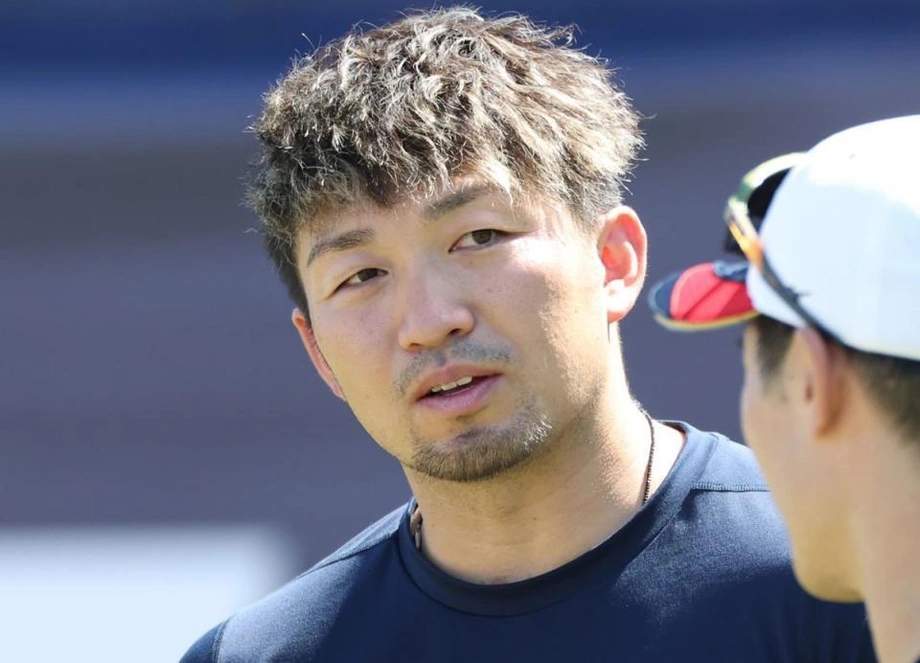
Seiya Suzuki has set his price above $120 million guaranteed, using the agreement worth $120 million over six years that Teruaki Sato reached with the Chicago Cubs as the new measuring line for outfielders. The timing matters as much as the number. Major League Baseball's collective bargaining agreement expires at 10:59 p.m. CT on Tuesday, Dec. 1, which is 8:59 p.m. PT, and a lockout would freeze transactions until a new deal is reached.
Contents
- A New Price for the Outfield Market
- Why Sato Changed the Conversation
- What Suzuki Has Proved at the Plate
- A Better Glove Changed the Value
- The Qualifying Offer, the Pick and the Deadline
- Key Dates in a Market Moving Fast
- The Candidate List Is Wide, Then Narrow
- Why San Diego Makes Sense
- What Seattle and Toronto Would Gain
- The Cubs Have Not Closed the Door
- A Thin Market Lifts the Top Bats
- The Money Test for Buyers
- What to Know
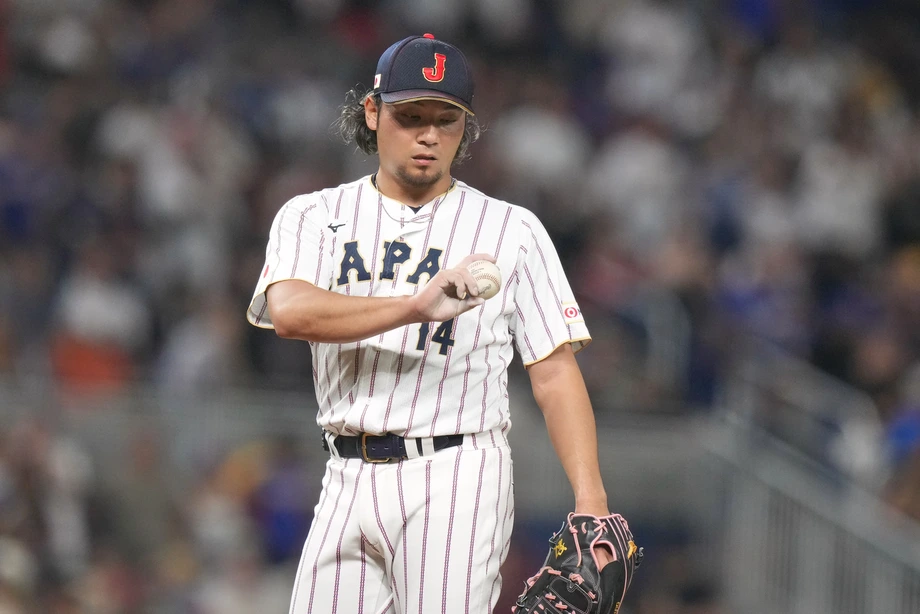
Suzuki's representatives have told interested teams that the outfielder, who turned 32 last August, wants a guarantee larger than Sato's. Japanese coverage said the deal could approach 20 billion yen. Sato is 27 and entering his next season at age 28. He came from Hanshin through the posting system, a process that lets a Japanese player seek MLB terms while his former club receives a fee. His agreement with Chicago was still described as pending a physical and had not been confirmed by the club.
Suzuki spent his entire five seasons in North America with the Cubs after joining from Japan before the 2022 season. Chicago gave him $85 million over five years and paid a $14.625 million posting fee, then a record outlay for a Japanese position player. That contract ended after 2026, leaving him free to test a market in which most of the big early money went to pitchers.
Why Sato Changed the Conversation
Sato's deal works out to $20 million a season. Suzuki is nearly five years older and has five seasons of proof against major league pitching, so the people around him are not asking for the same length. They are asking for a higher average annual value, the figure obtained by dividing the guaranteed money by the number of seasons. A $125 million guarantee would mean $31.25 million a season over four years or $25 million a season over five.
Jon Heyman, a baseball reporter, wrote that Suzuki's representatives at THE TEAM had told suitors their client wanted to beat Sato's guarantee. He put the request in one sentence:
Suzuki told teams he's aiming to top Teruaki Sato's $120M Cubs guarantee.
Heyman placed Randy Arozarena in the same price range, writing:
Arozarena surely is in that arena, too.
The number is not random. Sato had been expected to land near $80 million over five years, but Chicago added a year and $40 million. Once that agreement was in place, Suzuki's camp had a concrete comparison: a younger hitter with huge upside had reached nine figures, and an established major leaguer wanted more per season.
What Suzuki Has Proved at the Plate
Suzuki's case rests on steady offense. Over five MLB seasons, he has batted .269, reached base at a .351 clip and slugged .472, with 113 home runs in 2,899 plate appearances. His 128 wRC+ means he has created runs at a rate 28 percent above league average, with 100 as the baseline. Only Shohei Ohtani, Juan Soto and Bryce Harper posted a higher wRC+ in each of the last five seasons among players with enough plate appearances.
His 2026 season was his best all around. He played 143 games, batted .270, hit 26 home runs, drove in 86 runs, walked 81 times, reached base at a .368 clip and posted an .841 OPS, a measure of how well a player reaches base and hits for power. The same offense was measured at 134 wRC+ and 131 OPS+, both around one third better than the average hitter.
Wins above replacement, usually shortened to WAR, tries to turn hitting, fielding, baserunning and playing time into one number. Suzuki's 2026 season was counted as 5.1 bWAR in one system and 4.5 fWAR in another. The figures use different formulas, but both place him near the top of this winter's hitters.
A Better Glove Changed the Value
Suzuki was once viewed mainly as a hitter whose glove might limit his playing time. He played 134 games at designated hitter over the last two seasons and 143 games in right field, but his defense in 2026 changed the way clubs could present him. He was a Gold Glove finalist in right field.
In 972 2/3 innings in right field, he recorded 14 Defensive Runs Saved and 4 Outs Above Average, metrics that estimate how many runs a fielder prevents compared with an average player. Another Statcast measure listed 5 Outs Above Average. Those totals helped him look like an everyday right fielder rather than a hitter needing rest.
That matters in a simple way. Teams that need offense can still put him in the field and keep another bat in the lineup. For the Cubs, Padres, Mariners and Blue Jays, the defensive gain helps explain why a player entering his age 33 season can seek a contract usually reserved for younger stars.
The Qualifying Offer, the Pick and the Deadline
Chicago offered Suzuki a qualifying offer worth $23.15 million for one season, about 3.66 billion yen. A qualifying offer is a proposal for one season that gives the old club draft compensation if the player leaves and signs elsewhere. Joel Wolfe, Suzuki's agent, disclosed the decision at the Nov. 11 GM meetings; the formal rejection was dated Tuesday, Nov. 17, 2026.
If Suzuki signs with another club, the Cubs receive a compensatory pick after the fourth round of the next draft. That pick would then go away because Chicago signed Trevor Rogers, a move that also cost the Cubs their second highest pick and $1 million of international bonus space. If Chicago brings Suzuki back, there is no compensatory pick to begin with.
The next clear date is Dec. 1. The CBA expires at 10:59 p.m. CT, 8:59 p.m. PT, and the expected lockout would freeze signings and trades. No contract for Suzuki had been announced, neither he nor his representatives had commented publicly on the asking price, and no date had been given for a decision beyond the desire to finish before the freeze.
Key Dates in a Market Moving Fast
The sequence helps explain why the asking price arrived so late and why teams are working quickly.
- Nov. 16, 2026: Suzuki visited the Padres' facility.
- Nov. 17: He rejected Chicago's qualifying offer of $23.15 million for one season.
- Nov. 24: Sato agreed to $120 million over six years with the Cubs, pending a physical and club confirmation.
- Nov. 26, with the Japanese date Nov. 27: Suzuki's request to exceed Sato's guarantee became public.
- Dec. 1: The collective bargaining agreement expires at 10:59 p.m. CT, 8:59 p.m. PT, with a transaction freeze expected.
The Candidate List Is Wide, Then Narrow
The wider list included the Padres, Blue Jays, Phillies, Mariners and Red Sox. The Orioles and Astros were also mentioned alongside Arozarena, while the Yankees had checked in on him and were waiting on Cody Bellinger before deciding whether to enter the Suzuki race. Toronto had already added Japanese pitcher Kaima Taira for $80 million over five years.
By the later stage, the active group was down to four teams: the Padres, Blue Jays, Phillies and Mariners. The Padres were described as the early favorites. Suzuki's visit to their facility on Nov. 16 gave that interest a physical form, even though no offer had been made public.
Geography is part of the picture. Suzuki has been described as preferring the West Coast, which helps San Diego and Seattle. Toronto and Philadelphia would need to overcome that preference with money, playing time or the chance to win sooner. The Blue Jays were widely viewed as one of his strongest suitors, in part because their 2026 offense finished last in the Majors in runs and home runs.
Why San Diego Makes Sense
San Diego can offer Suzuki a clear role. He would play right field, keeping Fernando Tatis Jr. at second base, a position Tatis has preferred. The Padres had an inconsistent offense in 2026 and could use a hitter who combines average, power and improved defense. Suzuki's .841 OPS and 26 home runs would fit that need.
One person in American baseball said San Diego had appealed to Suzuki before, when he first entered MLB. The person said:
If the salary and contract terms were the same for multiple interested teams, he would choose the Padres.
Another person in American baseball described the city as familiar territory for Suzuki's household. That person said:
San Diego is one of the most comfortable environments for Seiya and his wife, Airi.
Those comments help explain the Padres' confidence, but the roster problem remains. San Diego still needs starting pitching and had also been linked to pitcher Tarik Skubal. Spending more than $120 million on Suzuki would use a large share of the resources needed to repair the rotation.
What Seattle and Toronto Would Gain
The Mariners need another dependable outfield bat. Randy Arozarena became a free agent after rejecting a qualifying offer, the club did not tender Luke Raley a contract and Victor Robles also reached free agency. Seattle's projected 2027 outfield has Brendan Donovan in left, Julio Rodríguez in center and Dominic Canzone in right, though the club would rather keep Donovan available as a utility player. Lazaro Montes and Michael Arroyo, who reached the majors in September, could also take larger roles.
Seattle finished 76 and 86, and its lineup ranked 27th in OPS. A payroll estimate put the club's available room at $25 million to $30 million for 2027, roughly the yearly cost of a $125 million agreement covering five seasons. T-Mobile Park is a difficult hitting environment, and the franchise has never reached a World Series in 50 attempts, a run summarized as 0 for 50.
Toronto's case is different. The Blue Jays went 79 and 83 and finished last in the Majors in home runs after reaching the 2025 World Series. They have commitments to Anthony Santander, Vladimir Guerrero Jr. and Dylan Cease, and manager John Schneider would need to arrange playing time if Suzuki arrived. One forecast had Toronto landing him for $120 million over five years before the lockout.
The Cubs Have Not Closed the Door
Carter Hawkins, Chicago's general manager, said at the GM meetings in Las Vegas that Suzuki still appealed to the club. Hawkins said:
He's one of the best hitters in the league. Of course, we would be silly not to have interest in reuniting with him.
Chicago's lineup scored more runs than any other in the 2026 regular season, and Suzuki spent much of the year as the second best hitter behind MVP Pete Crow-Armstrong. A return would give the Cubs another bat from the right side alongside Sato, Crow-Armstrong and Michael Busch. That balance matters because several of Chicago's hitters in the middle of the order bat left.
The obstacles are practical. Matt Shaw is currently slated for right field, Ian Happ could return and Pedro Ramirez could step in for Happ if needed. Catcher Carson Kelly is also a free agent. All five pitchers who ended the season in Chicago's starting rotation are free agents, so the front office has said much of its offseason work will go to pitching. Bringing Suzuki back would be the club's third contract above $100 million this week.
Sato's presence changes the outfield picture too. He was a Gold Glove third baseman in Japan and a Triple Crown winner, but the Cubs can use him in a corner outfield spot. Crow-Armstrong's defense in center gives Chicago room to accept some adjustment from Sato. Suzuki would be a more proven major league defender, but the money would be higher.
A Thin Market Lifts the Top Bats
Arozarena is the closest comparison. He is one year younger than Suzuki and produced a 5.5 WAR season compared with Suzuki's 4.5 fWAR. Over the last two seasons, Arozarena's 135 wRC+ edged Suzuki's 128, with similar home run, walk, strikeout and hard contact rates. Arozarena brings more speed on the bases. Suzuki brings the better defensive case.
Arozarena's representative, Scott Boras, was described as seeking six years and $150 million, while Arozarena prefers East Coast teams. Suzuki prefers the West Coast. The overlap is in the middle: the Padres, Blue Jays and Phillies were linked to both, while the Red Sox and Mariners were tied to Suzuki and the Yankees, Orioles and Astros to Arozarena.
Other outfield choices include Ian Happ and Taylor Ward. Several of the deals this winter went to pitchers, leaving few established hitters for clubs that need offense now. Hitters in their early 30s whose value came mostly from offense had often landed in the $60 million to $80 million range. Suzuki's improved defense and steady playing time, including 600 plate appearances in consecutive seasons, move him into a different group.
The Money Test for Buyers
A guaranteed contract is the total a club promises, as long as the player stays healthy and meets the terms. Average annual value, often shortened to AAV, is the yearly average used to compare deals of different lengths. Sato's agreement pays $20 million a season by that measure. Suzuki's request would likely start above that, even if the total stayed near $125 million.
Clubs prefer four years because the player will be 33, 34, 35 and 36 during the deal if it starts in 2027. Suzuki's side can point to the weak supply of hitters and ask for five years at a lower yearly figure. Deferred money could also shape the final number, moving payments to later years without changing the guarantee.
Seattle's available room of $25 million to $30 million matches the AAV of a $125 million agreement covering five seasons, but not the AAV of the same money over four years. Toronto's forecast of $120 million over five years sits just below the asking price. San Diego's challenge is that the same money could also address its rotation.
What to Know
- Suzuki wants a guarantee above the $120 million Sato received from the Cubs.
- A $125 million deal would average $31.25 million a season over four years or $25 million over five.
- Suzuki hit 26 home runs in 2026, posted an .841 OPS and became a Gold Glove finalist in right field.
- He rejected Chicago's $23.15 million qualifying offer, which affects the Cubs' draft position.
- The Padres, Blue Jays, Phillies and Mariners formed the active group, with San Diego described as the early favorite.
- The collective bargaining agreement expires at 10:59 p.m. CT on Dec. 1, and no deal had been announced before that deadline.