How one contract created several futures
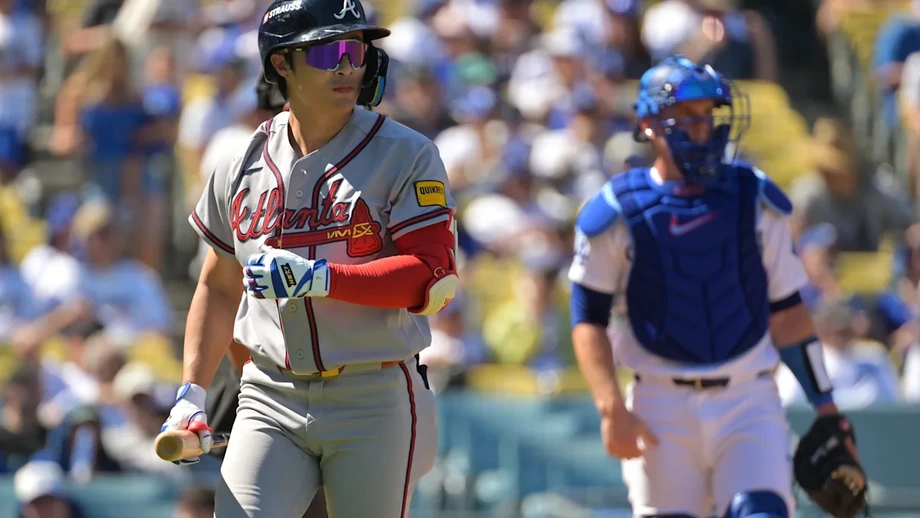
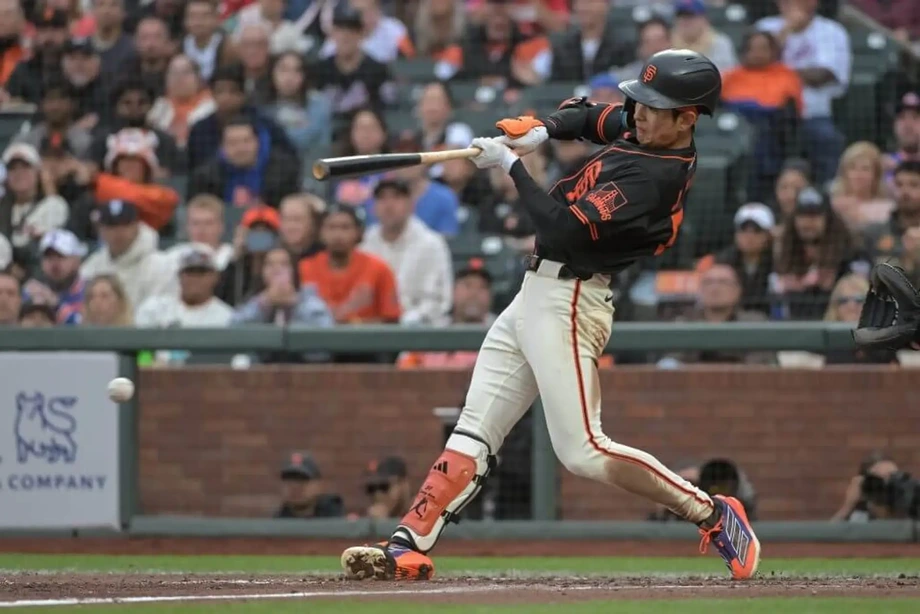
Lee Jung-hoo will enter the 2027 season with money and reputation pulling him in different directions. The San Francisco Giants outfielder has a clause that can let him leave after that season, but using it would mean giving up two guaranteed seasons worth $41 million, about 54.7 billion won. Before that choice arrives, the same contract is already being discussed as a possible problem for a Giants team trying to reduce payroll and reshape its outfield.
Contents
- How one contract created several futures
- Why Philadelphia is watching the outfield market
- What the escape clause would mean
- A better season still ended in questions
- What pitchers learned about Lee
- Why defense changed the trade conversation
- Why selling Lee is easier said than done
- Which Giant could actually move
- The Philadelphia plan shows the value of flexibility
- What to watch in 2027
- The timeline behind the decision
- Key Points
The numbers behind the debate are precise. Lee signed a contract covering six seasons before 2024, worth $113 million, about 151 billion won. From the viewpoint of November 2026, three seasons and $63 million remain, covering 2027, 2028 and 2029. If he stays through 2027 and then walks, the amount he gives up is the final two seasons, $41 million. Those figures describe different moments of the same deal, not a change in its terms.
What makes the story travel beyond San Francisco is the 2027 free agent market. An analysis published on Nov 28, Korea time, placed Lee among the outfielders who could become available after the 2027 season, alongside Cody Bellinger and Steven Kwan. That listing assumes Lee uses his escape clause. It also shows how his name has moved into conversations about clubs that need offense from the outfield now and flexibility later.
Why Philadelphia is watching the outfield market
Philadelphia's need is immediate. Dave Dombrowski, the Phillies' president of baseball operations, has acknowledged the club needs a regular outfielder. The club had hoped Teruaki Sato, the former Japanese batting triple crown hitter, would fill that role. Sato instead signed with the Chicago Cubs for six seasons and $120 million, about 160.3 billion won.
Alec Bohm's departure made the lineup issue larger. Bohm agreed with the Kansas City Royals on a deal covering two seasons worth $20 million, about 26.7 billion won. That removed a hitter from the right side of the order. Free agent options Seiya Suzuki and Randy Arozarena were raised as alternatives, but the Philadelphia analysis argued that trading for Los Angeles Dodgers outfielder Teoscar Hernandez could make more sense.
Hernandez offers a shorter path. He played 125 games this season, batting .267 with 16 home runs, 64 RBIs and a .759 OPS, which is on base plus slugging. He posted a .907 OPS against pitchers who throw with the left hand and rose from .706 in the first half to .814 in the second half. Hernandez is due $22 million in 2027, about 29.4 billion won, with club options of $15 million, about 20 billion won, in each of 2028 and 2029.
Performance is only part of the appeal. A club option is a team's right to keep a player for another season at a set price. If Hernandez plays well, Philadelphia can keep him. If the outfield changes, the club can walk away. The logic was to avoid a large, long commitment to an outfielder in his 30s and keep room for the 2027 market, where Lee, Bellinger and Kwan could appear.
Ronald Acuna Jr. was also listed as a possible free agent if the Atlanta Braves decline a $17 million club option. That path was viewed as unlikely. For Philadelphia, the practical choice may be between spending now on Hernandez and waiting to see which bigger names reach the market.
What the escape clause would mean
Lee's contract gives him a decision point after the 2027 season. If he plays that season and chooses freedom, he would forgo $41 million guaranteed money. Player clauses of this kind are valuable because they let a player bet on his future price. The bet only makes sense if the market is likely to offer more than the money left behind.
Trade analysis published on Nov 21 treated that bet as unlikely because Lee's current production did not yet point to a bigger offer. That view can change with one strong season. Lee is not expected to become a traditional power hitter, especially at Oracle Park, where pitchers have an advantage. The Giants need him to reach base more often, use his speed and hit enough doubles and triples to matter near the top of the order.
No announcement has given a date for Lee's decision, and he has not said what he will do. The clause is tied to the end of the 2027 season. Until then, every at bat will be read as evidence of whether he can make a strong case in a market that judges hitters by age, health, defense and production.
A better season still ended in questions
Lee's 2026 season was his best in the major leagues, but it also explained the doubts. He played 143 games, had 539 at bats, collected 149 hits, scored 65 runs, stole 12 bases, hit 10 home runs and drove in 57 runs. His batting average was .276 and his OPS was .724.
OPS adds two skills: getting on base and hitting with power. OPS+ adjusts that figure to the league and the ballpark, with 100 as average. Lee's OPS+ was 105, so he was slightly above average as an offensive player. That is useful, but it is not the level a team expects from a player with a $113 million contract.
The season split is the clearest number. From Apr 11 to Jun 24, Lee had 236 plate appearances, a .366 average, five home runs and 22 RBIs. After that, across 294 plate appearances, he hit .223. His average had climbed as high as .338 in June before the drop. A plate appearance is one turn at the plate, whether it ends in a hit, a walk or an out.
His 2025 line was quieter: 150 games and a .266 average. His 2024 season ended after he injured his shoulder while playing defense, leaving him without the normal first step in his major league career. A review focused on the Giants published on Nov 23 said Lee had not fully met expectations but was not a poor major league player. It described hot stretches that could not be sustained.
What pitchers learned about Lee
Lee built his reputation on contact. In Korea, he could cover many parts of the strike zone and put the ball in play without striking out often. That skill traveled. The problem came when major league pitchers adjusted. They attacked the edges and the zones where Lee was less likely to drive the ball with authority.
The review focused on the Giants said Lee must become more selective instead of simply making contact. It argued that long slumps showed hitting the ball was not enough. He needs a better sense of which pitches to swing at and more damage when pitchers give him a pitch he can handle.
Lee has worked on that during the offseason, according to accounts from late November. The work is practical rather than mysterious. He is trying to turn short bursts into steady production, to shorten slumps and to make pitchers pay when they miss over the plate. If he does that in 2027, the contract decision becomes a real choice. If the same pattern returns, the Giants and other clubs will keep treating him as a complicated asset.
Why defense changed the trade conversation
Offense is only half of the case. Lee's career Defensive Runs Saved total as an outfielder is minus 11. Defensive Runs Saved, often shortened to DRS, compares a fielder with an average player at the same position. A negative number means the player has given back runs through defense rather than saving them.
Lee played more right field than center field in 2026, after starting as a center fielder. That move can reduce pressure on a player who does not cover as much ground, but it also invites questions about his fit over several seasons. Outfielders are judged on run prevention as well as hitting, especially when their contracts are large.
One trade argument said the Giants should keep Casey Schmitt and try to find a new team for Lee. Schmitt can play second base, third base and shortstop, and the argument favored his offensive production and defensive flexibility. The same case pointed to young outfielders such as Bo Davidson, Victor Bericoto and Scott Bandura, all of whom have reached the majors briefly, as players who could benefit from more chances. Drew Gilbert and Jonah Cox were also named among outfield resources.
Another part of the argument cited Heliot Ramos as a defensive weakness the Giants had already reduced. It said Lee should be the next one addressed. The analysis also referred to Buster Posey, who leads the Giants' baseball operations, and his preference for building the farm system, noting that a trade with little return may not appeal to San Francisco.
Why selling Lee is easier said than done
The contract is the wall in front of any trade. An acquiring club would take on three seasons and $63 million, about 87 billion won, while also considering that Lee could leave after 2027 and seek a new deal. That is a difficult package for a buyer: a large salary and a possible exit route that could benefit the player, not the new team.
The same Nov 21 analysis listed Lee alongside Willy Adames and Matt Chapman as Giants players with large contracts who would be hard to move. It saw first base prospect Bryce Eldridge nearing the majors and named Rafael Devers, who hit 37 home runs this season, as a more realistic trade candidate.
A Nov 23 assessment took a mixed view. It said San Francisco could try to clear one large salary, but that Lee's contract and performance made him difficult to use as a trade chip. Other clubs would need to believe his bat would improve enough to justify the money and the defense.
Some commentary called Lee a negative asset and said the Giants should actively find a new team for him. That position still admitted the trade would be hard. One analysis said Lee had little trade value and that San Francisco might have to send money with him because about $64 million remained after his contract in Korea ended. That figure is close to the $63 million remaining figure used elsewhere and reflects the same contract window.
Which Giant could actually move
San Francisco's winter choices reach beyond Lee. Rafael Devers' 37 home runs give him a different kind of trade market. With Bryce Eldridge close to the majors, the Giants could consider moving Devers to make room at first base or to reshape the lineup.
Willy Adames and Matt Chapman remain part of the large contract conversation. Both were named with Lee as players the Giants might consider moving to lower payroll. The difficulty is that all three deals require a team willing to take on a large amount of money.
Logan Webb was also mentioned in recent speculation as a possible trade option, even though he had previously been treated as untouchable. If Devers or Webb were moved, Lee's role would change. He would no longer be a player with a large contract among several. He would become a more visible part of the Giants' next lineup, with more pressure to supply steady offense.
That possibility cuts both ways for Lee. A trade of another star could give him more chances to hit near the top of the order. It could also remove established protection around him and put his own contract under a brighter light. The Giants have not announced such a move, and no trade timeline was given.
The Philadelphia plan shows the value of flexibility
The Hernandez idea was about filling a hole now while keeping options open. His 2027 salary of $22 million is large, but the two club options at $15 million are smaller than his 2027 number. The Phillies would not be locked into the same amount for three seasons.
Lee's contract works differently. The remaining money averages $21 million a season across the 2027 to 2029 window, and the choice sits with the player. If his 2027 season looks like his April to June stretch, the choice could be obvious. If it looks like the .223 stretch that followed, staying for guaranteed money may make more sense.
This is why 2027 is a test for both sides. Lee can use the season to prove he is worth a new contract. The Giants can use it to decide whether he fits their next version of the roster. Fans will see simpler numbers, batting average and home runs, but front offices will look deeper: walks, strikeouts, defense, contract cost and how players tend to perform as they get older.
What to watch in 2027
Lee does not need to become a slugger to change the debate. At Oracle Park, where the ball does not travel as easily, a contact hitter can still be valuable by reaching base, running well and driving the ball into the gaps. The Giants want fewer long slumps, better swing decisions and more hits that move runners.
The specific keys are clear from 2026. Lee had 149 hits in 539 at bats, which is solid for a contact hitter. But he did not walk enough or drive the ball often enough when pitchers gave him a pitch he could handle. Improving those details would raise his OPS above the 105 OPS+ level and give his team more reliable run production.
Health will matter too. The shoulder injury in 2024 cost him a full season and made his major league sample smaller. Two full seasons since then have given the Giants and other clubs a better view. A healthy 2027, with steady defense and a stronger second half, would give Lee the best platform for a market decision.
The timeline behind the decision
The debate has built through several dated moments. The list below keeps the contract, injuries and recent commentary in order, so the reasons for the 2027 test are easier to see.
- Before the 2024 season, Lee signed with San Francisco for six seasons and $113 million.
- During 2024, a shoulder injury sustained on defense ended his season.
- In 2025, he played 150 games and hit .266.
- In 2026, he played 143 games and produced his best major league line: .276, 10 home runs, 57 RBIs, a .724 OPS, 65 runs and 12 steals.
- On Nov 21, Korea time, trade analysis framed Lee as an expensive and difficult player to move, while pointing to Devers as a more realistic candidate.
- On Nov 23 and Nov 24, commentary focused on the Giants said 2027 would give a clearer answer about Lee's growth and role.
- On Nov 28, Korea time, the Philadelphia outfield analysis placed Lee among possible 2027 free agents if he uses his escape clause.
- During the 2027 season, Lee's health, consistency and defense will shape the choice. The clause can be used after that season.
The next clear date is the end of the 2027 season. No date was given for an announcement, and no decision has been made public.
Key Points
- Lee can leave after the 2027 season, but that would mean giving up two guaranteed seasons worth $41 million.
- His full contract covers six seasons and $113 million, with three seasons and $63 million described as remaining from the 2027 to 2029 window.
- Philadelphia's outfield search has brought his name into the 2027 free agent conversation alongside Cody Bellinger and Steven Kwan.
- Lee hit .276 with 10 home runs, 57 RBIs and a .724 OPS in 2026, with a sharp split from .366 before late June to .223 after that.
- His defense remains a concern, with career outfield Defensive Runs Saved at minus 11 and more right field time in 2026.
- San Francisco faces arguments both to trade him and to keep him, while the large contract makes any deal difficult.
- The 2027 season will decide whether he seeks a new market or keeps the guaranteed money.