Detroit makes Kim Ha-seong official
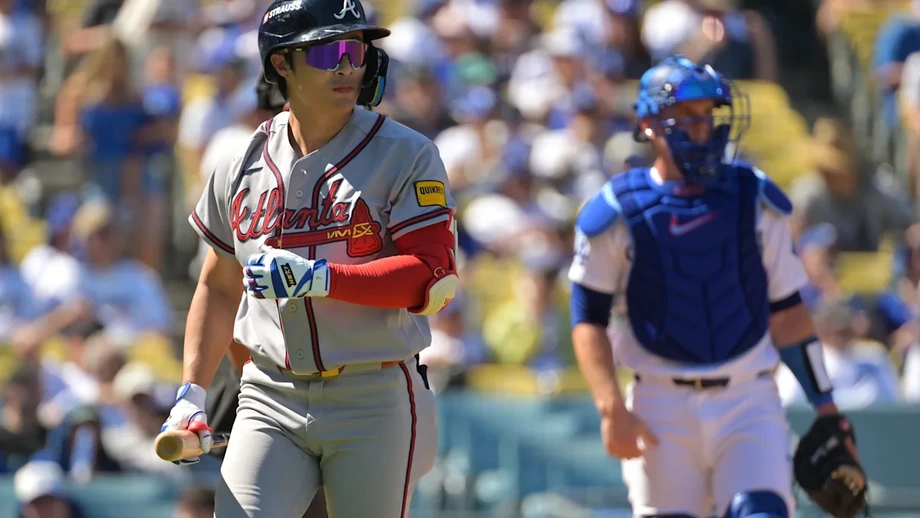
The Detroit Tigers made Kim Ha-seong's arrival official on November 28, 2026, Korea time, using the club's social media accounts to welcome the infielder, who is 31. The post showed a composite image of Kim in a Detroit uniform and carried a short message. Kim is set to play the 2027 season with Detroit, his fourth Major League Baseball club.
Contents
- Detroit makes Kim Ha-seong official
- What the deal pays and how the bonuses work
- Why a former Gold Glove star took a 75 percent cut
- What happened to Kim's bat in 2026
- Why Detroit's defense made the signing logical
- Where Kim may play in the infield
- The roster domino effect in Detroit
- What fans and the club are weighing
- What Detroit gets and what remains unknown
- The path back to a bigger contract
- Key Points
The move ended a wait of three days between the first public account of the agreement and the club announcement. Detroit's post was simple, and it gave fans the first official image of Kim as a Tiger.
Welcome to Detroit
The Tigers' announcement of the signings stated:
The Tigers have agreed to terms on one-year major league contracts with right-handed pitcher Luis Gil and infielder Ha-Seong Kim.
The terms attached to the deal give Detroit a chance to upgrade its infield at a price far below Kim's previous salary. He will receive 5 million dollars guaranteed, about 6.7 billion won. With incentives, the deal can reach 6 million dollars, about 8 billion won. That is 75 percent less guaranteed money than the contract worth 20 million dollars for one season that he had with the Atlanta Braves.
Kim will be the first South Korean player to join Detroit. The Tigers have seven division titles, 11 American League pennants and four World Series championships, but they reached the postseason only in 2024 and 2025 since 2014. They finished 76-86 and fourth in the American League Central in 2026.
What the deal pays and how the bonuses work
The base salary is 5 million dollars for the 2027 season. The extra 1 million dollars is paid through playing time markers. Kim earns 250,000 dollars when he reaches 400 plate appearances, another 250,000 at 450, another at 500 and another at 550. A plate appearance is one turn at the plate, whether it ends in a hit, a walk or an out. The money is tied to availability rather than batting results.
Reaching all four markers would mean 550 plate appearances. At roughly four plate appearances per game, that is about 138 games, close to a full season. Kim reached 626 plate appearances in 152 games during his best year in 2023, so the target is within his past workload if he stays healthy.
The drop in pay is steep. Kim signed with Atlanta for 20 million dollars after the 2025 season. Even if he collects every bonus with Detroit, his maximum 6 million dollars would be 30 percent of that previous contract. It is his lowest guaranteed salary since he reached the majors. A physical examination was still pending when the terms first surfaced.
Why a former Gold Glove star took a 75 percent cut
Kim's price fell because the last two seasons were interrupted by injuries and a severe batting slump. He reached Major League Baseball with San Diego in 2021 after starring as a shortstop in Korea. He built his reputation with defense at shortstop, second base and third base, then won the 2023 National League Gold Glove in the utility category. The award recognized the best defensive players at each position, with the utility honor going to a player who excelled at more than one infield spot.
- 2021: Kim played 117 games for San Diego, batting .202 with 8 home runs, 34 runs batted in and 6 steals.
- 2022: He became the regular shortstop, playing 150 games and batting .251 with 11 home runs, 59 runs batted in and 12 steals. His wins above replacement, a broad value stat, was 5.0.
- 2023: He played 152 games, batted .260, hit 17 home runs, drove in 60 runs and stole 38 bases. He won the Gold Glove and posted 5.4 wins above replacement.
- 2024: A right shoulder injury limited him to 121 games. He batted .233 with 11 home runs, 47 runs batted in and 22 steals. He later had shoulder surgery.
- After the 2024 season: Kim became a free agent for the first time and signed with Tampa Bay for two seasons worth up to 31 million dollars, with a clause allowing him to leave after one season.
- 2025: He rehabbed, returned in July, struggled and moved to Atlanta in September. Atlanta then brought him back on a deal worth 20 million dollars for 2026.
- 2026: He slipped on ice in Korea in January, ruptured a tendon in the middle finger of his right hand and missed the World Baseball Classic. He returned on May 12, hit .068 over six weeks, spent about a month on the injured list in July with finger inflammation and finished with 15 hits in 129 at bats across 51 games.
Those injuries changed the shape of his career. After three strong seasons with San Diego, he bounced between Tampa Bay and Atlanta and has signed a series of short deals while trying to recover both his health and his value.
What happened to Kim's bat in 2026
Kim's 2026 line at the plate was the worst of his Major League career. He hit .116 with no home runs, 9 runs batted in, 11 runs scored and a .359 OPS in 51 games. That line came from 147 plate appearances, with 15 hits in 129 at bats. OPS adds how often a hitter reaches base to how much power he shows.
He also reached base at a .219 rate and slugged .140. Among 465 hitters with at least 100 plate appearances, his batting average, slugging percentage and OPS were the lowest. His weighted runs created plus, a stat that compares run creation with the league average, was 7. On that scale, 100 is average, so 7 shows how far his offense had fallen. He finished at minus 1.2 wins above replacement and went hitless in five at bats during four postseason games.
The power outage was stark. Kim hit 17 home runs and stole 38 bases in 2023. In 2026, he had no home runs and 2 steals. He was never mainly a power hitter, but his speed and steady contact once made him difficult to handle. The finger injury and repeated time away disrupted that part of his game as well.
Defensive numbers from 2026 were mixed. Kim played 365 innings at shortstop, saved 4 runs by Defensive Runs Saved, was minus 2 in Outs Above Average and minus 3 in Fielding Run Value. Outs Above Average estimates how many extra outs a fielder makes compared with an average player at the same position. Fielding Run Value turns fielding performance into a run estimate.
Why Detroit's defense made the signing logical
Scott Harris, Detroit's president of baseball operations, made the defensive plan clear before the deal became public. He spoke at a news conference while discussing a contract extension for pitcher Troy Melton, a deal running six seasons and worth 46.5 million dollars. Harris said the club still had moves to announce and explained why infield defense mattered to a pitching staff that gets many balls on the ground.
There are a few moves that haven't been announced yet. We'll continue to strengthen our pitching staff, and it's also important to improve our infield defense to protect our pitchers. We need to be able to turn weakly hit balls into outs effectively.
Detroit had reasons to look for help. Over two seasons, the Tigers ranked 18th in Major League Baseball with minus 12 Fielding Run Value. In 2026, they generated ground balls on 44.3 percent of balls in play, fourth in the league. Their infielders combined for minus 24 in range, tied for 28th with the Los Angeles Angels. Simply put, Detroit pitchers were getting ground balls, but the defense behind them did not turn enough of those balls into outs.
Kim's best seasons fit that need. In 2023, he had plus 9 Outs Above Average and 16 Defensive Runs Saved across second base, third base and shortstop. The Tigers had tracked him before, and the club saw a player who could still change the defensive picture if his body held up.
The defensive case is why the deal can work even if the bat stays quiet. A shortstop who covers ground and handles the ball cleanly helps pitchers, helps younger teammates and reduces pressure on a lineup that needs steady offense. Detroit is buying a chance that the 2023 defender is still there.
Where Kim may play in the infield
Detroit's infield picture points in one direction: Kim at shortstop, with Kevin McGonigle spending more time at third base. McGonigle won the 2026 American League Rookie of the Year award after batting .278 with 18 home runs, 72 runs batted in and a .806 OPS in 156 games. He played 96 games and 78 starts at shortstop, plus 94 games and 72 starts at third base.
McGonigle's defensive numbers were better at third. He had plus 8 Defensive Runs Saved at third base and plus 2 at shortstop, with minus 3 Outs Above Average overall. Moving him to third could let him settle into one spot, and Kim could take most of the shortstop work. Manager A.J. Hinch has another flexible option because Kim can also play second and third.
The rest of the infield gives Detroit choices. Hao-Yu Lee had minus 4 Defensive Runs Saved, minus 6 Outs Above Average and minus 4 Fielding Run Value in 270 innings over two seasons, but his best defensive work came at second base. Colt Keith had minus 9 Defensive Runs Saved in 1,271 innings at second since 2024. Both hitters have produced similar offense over the last two seasons, with Lee at 107 weighted runs created plus and Keith at 106. Keith has struggled against pitchers who throw left, with a 60 weighted runs created plus in 159 plate appearances since 2024.
Spencer Torkelson remains a defensive concern at first base, with minus 4 Defensive Runs Saved and minus 14 Outs Above Average over three seasons. That means Detroit cannot solve every infield issue with one signing. Kim gives Hinch a better range of combinations, but the manager still has to decide which players fit each game.
The roster domino effect in Detroit
Adding Kim required a place on the 40-man roster, a list of players protected from certain drafts and eligible for the Major League roster without a separate move. Detroit filled that need by designating Taiwanese infielder Tsung-Che Cheng for assignment. A designated player is removed from the 40-man roster and can be traded, sent to the minors if he clears waivers or released.
Tsung-Che Cheng had been acquired from the Boston Red Sox in a cash trade the previous month. He can play shortstop and second base, the same positions Kim can handle. He had 14 games with Boston in 2026, batting .256 with 10 hits, no home runs and 5 runs batted in. He also spent much of the year with Boston's top minor league affiliate, playing 94 games with 71 hits, 8 home runs, 30 runs batted in and 10 steals.
Tsung-Che Cheng is familiar to Korean baseball fans. He hit a home run off Gwak Bin for Taiwan at the 2026 World Baseball Classic and collected three hits off Moon Dong-ju in the final of the 2022 Hangzhou Asian Games. His departure shows how quickly a roster spot can change hands in December, especially when a club adds a player with similar defensive skills.
Detroit also made pitcher Luis Gil's signing official at the same time. Gil agreed to a deal worth 2.3 million dollars for one season. The club designated pitcher Beau Brieske for assignment as well, creating more room on the 40-man roster. Those moves show that Kim's arrival was part of a wider roster cleanup, not a single addition made in isolation.
What fans and the club are weighing
The first reaction in Detroit was cool in some corners. Some fans wanted a bigger offensive addition after a season in which the Tigers finished fourth in their division. Others saw Kim's signing as evidence that the front office had not changed its careful spending approach. He had appeared in only 99 games over the past two seasons, and some supporters wondered why the club added another infielder when it already had several.
The calmer case for the deal starts with the price. Five million dollars is a modest amount in modern baseball, and Kim does not need to become a star for the signing to be useful. That pay level matches recent deals for bench players and utility infielders such as Isaiah Kiner-Falefa, Miguel Rojas and Enrique Hernandez. A player who can pinch hit, replace a defender late in games and take some at bats against pitchers who throw left can help over a long season. If he recovers more of his old form, the value rises quickly.
Hinch's handling of Kim may matter more than the contract itself. One concern is that Kim could be used too often as a pinch hitter, a role that limited Jahmai Jones in 2026. Another is that Kerry Carpenter could lose some at bats against pitchers who throw left if Hinch turns to Kim, who bats from the right side, in those spots. The same view noted that Kim does not cover as many positions as Matt Vierling. Kim's best value is steadier defense and offense that keeps innings moving, not home runs.
A measured plan would bring Kim along slowly, especially early in 2027. The Tigers can use him at second or shortstop in the eighth or ninth inning, then expand his role if his bat and body respond. That approach would protect a player who has not played a full season since 2023 while still giving Detroit a useful bench and defense option.
What Detroit gets and what remains unknown
Detroit gets a player who was once one of the most valuable defenders in the league. Kim posted 5.0 wins above replacement in 2022 and 5.4 in 2023, then won the Gold Glove. In his prime, he combined speed, range and the ability to play several infield positions. The Tigers have not hidden their hope that the 2023 version can return enough to improve the defense around a young core.
The club also gets a shield at a modest price against uncertainty. Kim is 31, young enough that a recovery could still produce useful seasons. The central infield market was thin this winter, with few available players who could handle shortstop or second base. Philadelphia had shown interest earlier in the offseason, but Detroit moved first. The same offseason also showed the limits of the position player market. Around the time Kim agreed to terms, the Chicago Cubs added Teruaki Sato, another hitter coming from an Asian league, while the pitching market moved faster.
A possible lockout, a temporary stoppage of league operations, added urgency because labor talks created uncertainty around free agency. Some speculation even centered on Kim returning to South Korea. Detroit's announcement removed that question for now. Kim did play well for Atlanta right after the 2025 trade deadline, so his decline was not one sudden moment. Detroit had also acquired pitcher Rafael Montero from Atlanta at that deadline, giving up prospect Jim Jarvis, so the Tigers have been willing to find value in players the Braves moved on from. The signing also hints at how Detroit is planning for 2027, when the offense of Gleyber Torres may no longer be in the lineup. Asking Kim to replace that offense would be ambitious given his 2026 numbers.
Kim had not issued a formal statement about the move at the time of the post, and the club did not announce a date for him to speak publicly. The exact playing time split was not part of the announcement. Bryce Rainer, the 11th overall pick in the 2024 draft, reached high Class A in 2026 and remains the future shortstop prospect. The next real test comes when games start in 2027 and Detroit sees whether Kim's right hand and timing have returned.
The path back to a bigger contract
For Kim, this is a chance to rebuild a market that once looked much larger. After the 2023 Gold Glove season, he was linked with a contract package that could reach 100 million dollars. Two seasons affected by injury later, his guaranteed salary is now 5 million dollars. His career line stands at 639 games, a .234 average, 473 hits, 52 home runs, 226 runs batted in and 86 steals. He has taken short deals since leaving San Diego, and Detroit gives him another chance to produce a season that can change the next contract conversation.
The bonuses make that path clear. If Kim reaches 550 plate appearances, he shows he can stay on the field for a full season. If he also recovers the defense that produced plus 9 Outs Above Average and 16 Defensive Runs Saved in 2023, he gives Detroit more than the contract costs. If the bat improves even to league average, his next free agency could look very different.
That outcome is not guaranteed, but the structure works for both sides. Detroit limits its financial exposure and keeps infield options open. Kim gets a Major League role, a defined route to extra money and a stage to show that the injuries that derailed two seasons are behind him.
The Tigers have a practical offseason story: a former Gold Glove infielder arrives with a steep pay cut, a club tries to stop ground balls from becoming hits, and a player tries to turn one more short deal into a longer career. The coming season will decide whether this is a small bargain for Detroit or another stop on Kim's road back.
Key Points
- Detroit officially announced Kim Ha-seong's signing on November 28, 2026, Korea time, for the 2027 season.
- The deal pays 5 million dollars guaranteed and up to 6 million dollars through playing time bonuses.
- Kim's guaranteed salary is 75 percent below the deal worth 20 million dollars that he had with Atlanta.
- He can earn 250,000 dollars at 400, 450, 500 and 550 plate appearances.
- Kim hit .116 with no home runs and a .359 OPS in 51 games in 2026, his worst Major League season.
- Detroit wants his defense, especially at shortstop, and may move Kevin McGonigle more often to third base.
- Tsung-Che Cheng and Beau Brieske were designated for assignment as Detroit cleared 40-man roster space.
- Kim is the first South Korean player to join the Tigers and the fourth Major League team of his career.