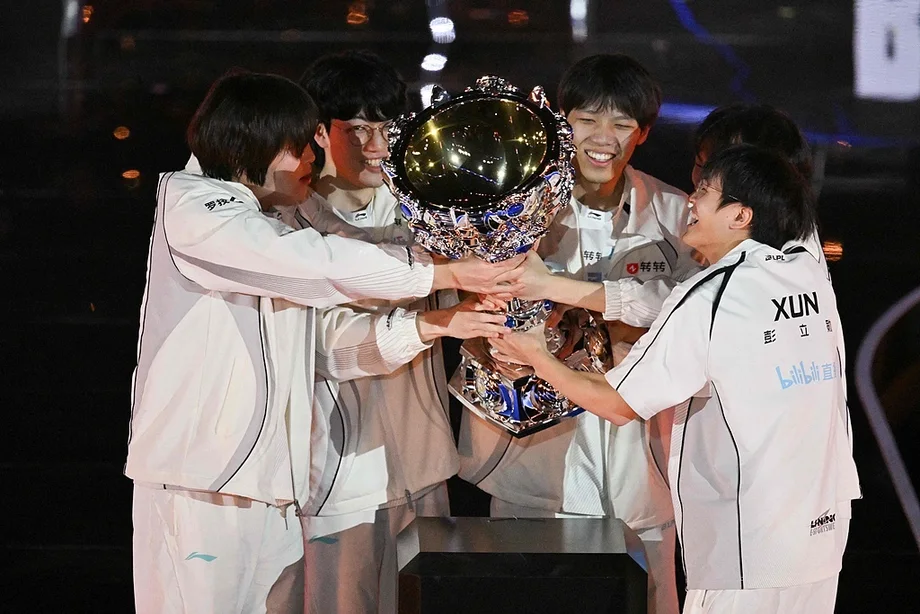
A Historic Triumph in New York
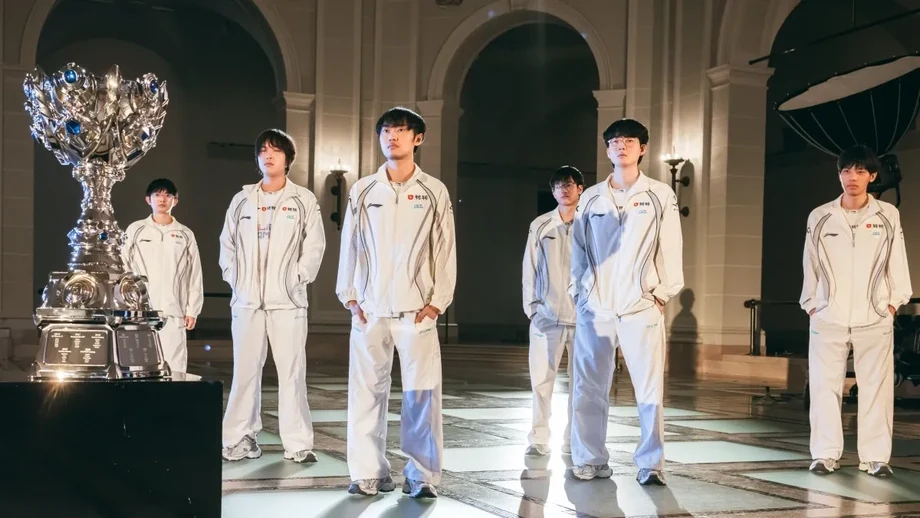
Beijing time on November 15, 2026, marked a monumental turning point for Chinese esports as the Bilibili-backed team BLG secured the championship at the 2026 League of Legends World Championship in the United States. BLG defeated South Korea's Gen.G with a score of 3:1 in the final round, claiming the first global title in team history. This victory also ended a five-year drought for the LPL (League of Legends Pro League) division, marking the fourth world championship for the region since EDG last lifted the trophy in 2021.
Contents
The road to the championship tested the team's resilience from the very beginning. During the Swiss stage, BLG stumbled with a record of two wins and two losses, standing on the brink of elimination before mounting a four-game winning streak to secure a spot in the knockout rounds. In the decisive matches leading up to the final, BLG swept HLE 2:0, dominated DK 3:0 in the quarterfinals, and overcame the six-time world champion team T1 with a 3:1 victory in the semifinals. By conquering four separate Korean LPL adversary teams in succession without a single domestic match, the squad carved a definitive path to the ultimate prize.
The Journey of Bilibili Gaming
Bilibili originally entered the professional esports landscape in December 2017 by acquiring the former LPL team IMay and rebranding it as BLG. The operational entity behind the team is Shanghai Bilibili E-Sports Information Technology Co., Ltd., where Shanghai Bilibili Animation Co., Ltd. holds a controlling stake of 55.7802 percent, alongside individual investor Zhu Yichen at 43.3747 percent and Shanghai Bilibili Technology Co., Ltd. at 0.8452 percent. In January 2021, Bilibili E-Sports completed its first round of financing, raising 180 million yuan and pushing its post-investment valuation past 800 million yuan.
Team leadership noted that the journey required immense rebuilding after years of fluctuating performance. BLG hero league team head Yuan Xi explained that the organization began seeking out driven young talent at the end of 2022, leading to rapid development in 2023, a narrow miss in 2024, and early tournament exits in 2025 before the roster finally matured into a cohesive unit. BLG esports club director Lin Qing pointed out that the critical difference compared to previous years lay in the growth of the roster and support staff, whose past failures in high-stakes matches built the necessary tactical maturity to navigate the world championship stage.
The core roster features four Chinese players whose stellar performances defined the tournament run: Zhu Ding, Chen Zebin, Peng Lixun, and Luo Wenjun. Speaking about the intense pressure leading up to the final, Luo Wenjun recalled the heavy anticipation, while Chen Zebin expressed a sense of disbelief when the final nexus fell. Peng Lixun reflected on how the heartbreaking loss in the 2024 world final against T1 forced the team to refine their communication and tactical judgment over the following year, transforming past setbacks into the foundation for their eventual victory.
Reflecting on Life After the Crown
Despite the massive wave of public celebration, the players expressed a desire to keep their daily routines grounded. Peng Lixun noted that winning the tournament fulfilled a personal objective, but his daily life would remain focused on training and self-improvement. Chen Zebin mentioned checking online community discussions, observing that public sentiment shifts quickly from harsh criticism during losses to enthusiastic praise following a victory.
In the semifinals, mid-laner Zhu Ding faced off against legendary player Faker, experiencing both victories and defeats against the seasoned veteran. Describing the encounter, Zhu Ding acknowledged Faker's historic status in the game while expressing an eagerness to learn and eventually surpass him in future competitions. Following their match, the two players crossed paths in a hotel gym, where the veteran competitor offered words of encouragement for the upcoming finals.
Riding the Wave of Digital Engagement
For Bilibili, owning an esports team serves a much broader purpose than standard club management, acting as a strategic anchor to deepen user engagement and support content creators. Since acquiring the broadcasting rights for the world championship in 2020, Bilibili has integrated esports deeply into its platform ecosystem. Financial reports show that Bilibili achieved an annual revenue of 30.35 billion yuan in 2025 with a net profit of 2.59 billion yuan, followed by a total revenue of 15.41 billion yuan in the first half of 2026 alongside a monthly active user base reaching 373 million.
The tournament generated staggering digital metrics across the platform. Leading up to the final, users generated over 270,000 video submissions related to the event, while the championship match itself drew over 20 million concurrent online viewers and accumulated more than 3.3 million chat messages. To celebrate the victory, Bilibili offered free platform membership extensions to all users, resulting in 22.8 million people claiming the reward by the conclusion of the event window.
Overcoming the Single Revenue Trap
Despite the excitement surrounding the victory, industry analysts point out structural challenges facing the broader domestic esports market. Gamma Data co-founder and chief analyst Wang Xu previously highlighted that the industry suffers from a fundamental commercialization problem, relying too heavily on sponsorship revenue which leaves clubs and tournament operators vulnerable to economic shifts. Club leadership echoed these concerns, noting that sponsorship slots in the first stage of the domestic league had previously dropped from ten to seven due to subpar international performances in prior years.
The world championship victory immediately altered this financial dynamic. Lin Qing revealed that new sponsorship inquiries flooded in almost immediately after the final match concluded. Maintaining top-tier training facilities, coaching staffs, and player development programs requires substantial capital, making the expansion of commercial models an urgent priority for every esports organization. To diversify income sources, BLG began exploring offline experiential models, partnering with movie theaters to host live screening events that extended from Shanghai into other regions, alongside organizing fan meetups and merchandise sales near competition venues.
The Backbone of Youth Training and Regional Support
Addressing the future growth of the discipline, team management emphasized that cultivating young talent remains paramount. Yuan Xi stated that esports clubs must draw lessons from traditional sports by prioritizing rigorous youth training academies to discover and nurture upcoming competitors. When offering advice to young aspirants wishing to pursue professional gaming, Lin Qing recommended treating education as the primary priority and treating gaming as a recreational pursuit until exceptional ranking achievements warrant professional consideration.
The team's success is also closely tied to the robust local ecosystem in Shanghai. Operating out of Yangpu District, BLG benefits from the city's extensive municipal support. Earlier in the year, regional authorities introduced targeted policy measures designed to foster gaming and esports industrial agglomeration, international service capabilities, and technological empowerment. With numerous esports clubs and active fans contributing to the local atmosphere, Shanghai continues to serve as the central hub for competitive gaming in the region.
At a Glance
- BLG defeated Gen.G 3:1 in the 2026 League of Legends World Championship final held in New York.
- The victory marks the first world title for BLG and the first time an LPL team has won the trophy in five years.
- Bilibili platform engagement surged during the event, with over 20 million concurrent viewers and 22.8 million users claiming celebratory membership rewards.
- Team management plans to focus on youth training development and expanding offline fan experiences to counter traditional sponsorship reliance.
- The triumph immediately revived brand interest, sparking a wave of new sponsor inquiries and driving up demand for official team merchandise.