The deal that gives Chicago another dependable arm
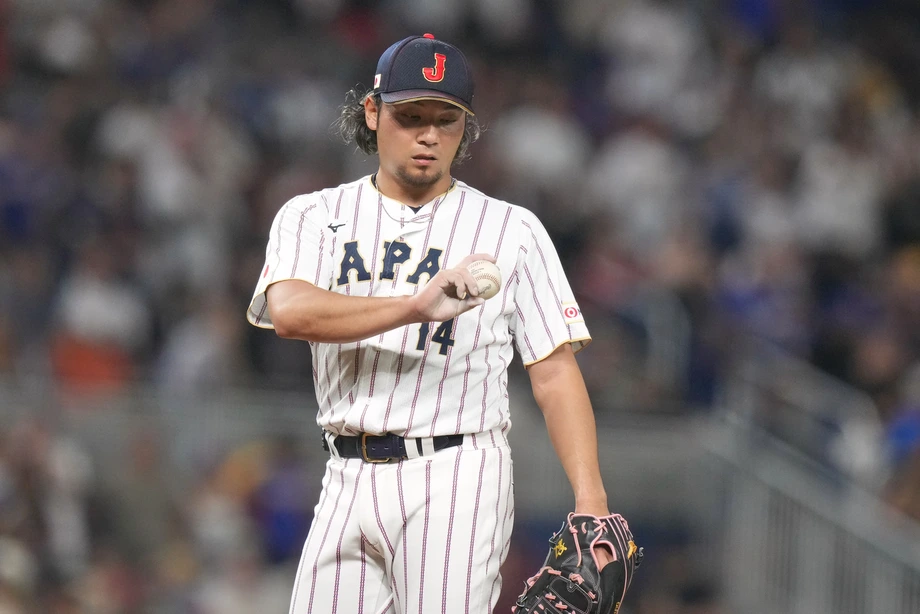
The Chicago Cubs reached an agreement Friday with Hiromi Itoh, 29, a righty from Japan's Hokkaido Nippon-Ham Fighters, giving a team with a thin rotation another starter who has thrown enormous amounts of innings. The deal was still pending a physical, the usual medical check that comes before a major league contract becomes final. The Cubs did not disclose Itoh's financial terms or the posting fee.
Contents
- The deal that gives Chicago another dependable arm
- What is settled and what is still open
- Why innings matter so much to the Cubs
- A season by season timeline in Japan
- Control is the selling point, not raw speed
- How Itoh performed on baseball's biggest stages
- Why Chicago acted before the labor deadline
- The rest of the roster reset
- Where Itoh fits and what Chicago still needs
- Key Points
Itoh arrives three days after the Cubs finalized a deal with outfielder Teruaki Sato and four days after they agreed to a contract worth $120 million over five years with lefty Trevor Rogers. He was due to be introduced as a Cub on Monday. Chicago moved quickly because its roster was stripped by free agency and injuries, and because baseball's labor agreement was set to expire late Tuesday U.S. time, with owners expected to stop transactions soon after.
The addition keeps a Japanese pipeline in place. Seiya Suzuki, Shota Imanaga and Ian Happ left in free agency, but Sato is expected to play right field and Itoh is now set to join the rotation. The Cubs were swept by San Diego in the first round of the playoffs and finished with 89 wins and 73 losses, second in the National League Central, so the winter has been about rebuilding depth rather than making a single splash.
What is settled and what is still open
Itoh came to the major leagues through the posting system, the arrangement that lets a player under contract with a Japanese club negotiate with MLB teams. The Fighters announced on Nov. 1 that they had approved Itoh's posting and begun the application procedures on the first day of the filing window. MLB notified all 30 clubs that he was available the same day, and the official 45-day negotiating window began Nov. 2, U.S. Eastern time, with Dec. 16 the reported deadline. If Itoh signs with Chicago, the Cubs will pay Nippon-Ham a posting fee scaled to the value of his guaranteed contract. The process turns his agreement into a contract only after the medical check is complete.
Sato's introduction was set for Monday, Rogers's news conference for Tuesday, and baseball's labor contract for Tuesday at 11:59 p.m. EST. MLB and the MLB Players Association said the collective bargaining agreement would expire at 11:59 p.m. EST Tuesday, Dec. 1, and that the transaction freeze would begin with the lockout immediately afterward. Some Japanese and Korean calendars put the expected lockout on Dec. 2 because the deadline lands late Tuesday in North America and crosses midnight in Asia. Once a lockout begins, clubs cannot complete signings or trades involving players on protected rosters until a new agreement is reached.
Why innings matter so much to the Cubs
Chicago entered the offseason needing starters who could take the ball regularly. Shota Imanaga, Matthew Boyd, Clay Holmes and Kevin Gausman became free agents, while Ben Brown and Cade Horton were coming off surgery. Justin Steele, Edward Cabrera and Braxton Garrett were the returning arms in the group.
Itoh's record fits the need. Over six Nippon Professional Baseball seasons, all with Nippon-Ham, he pitched 1,000 2/3 innings and struck out 902 batters, leading the league in both categories over that span. He made at least 23 starts in each of those seasons and recorded more than 150 innings in every one. His career earned run average in Japan was 2.92. Earned run average, or ERA, counts earned runs allowed per nine innings and is the standard measure for run prevention.
He reached at least 172 2/3 innings in each of the last three years. That kind of workload matters because a starter who can work deep into games protects the bullpen, which is the group of relief pitchers who finish games. For a Cubs team that lost multiple rotation options, durability is as valuable as a flashy pitch.
A season by season timeline in Japan
Itoh was the first overall pick in the 2020 NPB draft and joined Nippon-Ham in 2021 after attending Tomakomai Komazawa University, now known as Hokuyo University. He won 10 games as a rookie and reached double figures in wins in five of his six seasons. The arc from steady rookie to award winner explains why Chicago sees him as a reliable innings eater.
- 2021: 23 games, a record of 10 wins and 9 losses, 146 innings, 141 strikeouts and a 2.90 ERA.
- 2022: 26 games, a record of 10 wins and 9 losses, 155 2/3 innings, 112 strikeouts and a 2.95 ERA.
- 2023: 24 games, a record of 7 wins and 10 losses, 153 1/3 innings, 134 strikeouts and a 3.46 ERA.
- 2024: 26 games, a record of 14 wins and 5 losses, 176 1/3 innings, 161 strikeouts and a 2.65 ERA, leading the Pacific League in wins and winning percentage.
- 2025: 27 starts, a record of 14 wins and 8 losses, 196 2/3 innings, 195 strikeouts and a 2.52 ERA, with six complete games, the most in the league, and the Sawamura Award.
- 2026: 26 games, a record of 10 wins and 10 losses, 172 2/3 innings, 159 strikeouts and a 3.18 ERA.
The Sawamura Award is Japan's top honor for a starting pitcher, comparable to the Cy Young Award in MLB. The 2025 season was Itoh's peak: he led the league in innings and strikeouts, won 14 games for the second straight year and threw six complete games, meaning he finished games he started. The combined ERA over the last three seasons was 2.77, while the individual season numbers show how his results dipped in 2026 before the move. His ERA was above 3.00 in only two of his six NPB seasons.
Control is the selling point, not raw speed
Itoh was listed at 176 centimeters and 85 kilograms, a compact build for a major league starter. His fastball generally sits between 90 and 94 mph. It averaged 92 mph in 2026, down from 93 mph the year before. Those numbers are below the power range of many MLB starters, which is why questions about his ceiling exist.
His strength is command, the ability to put pitches where he wants them. Itoh walked just 4.7% of batters faced in 2026 and 3.6% in 2025, second best among qualified NPB pitchers. A walk rate is the share of hitters who reach base because the pitcher throws four balls outside the strike zone. Keeping that number low helps a pitcher survive even when he does not overpower hitters.
Itoh's repertoire was described with six or seven pitches, but the list is long: four seam fastball, sinker, slider, splitter, cutter, curveball and changeup. Evaluators have questioned whether he has one dominant secondary pitch, the kind of offering that produces many swings and misses. His slider and splitter stand out, and his deep mix can keep hitters off balance. In 2026 he walked only 34 batters and allowed 16 home runs across 172 2/3 innings, evidence that he limited free passes and kept damage within bounds.
That profile points to a dependable starter near the back of a rotation, not a guaranteed ace. For the Cubs, who need innings after a rotation was hit hard, that can still be a valuable addition. A pitcher who avoids walks gives his defense a better chance and keeps his team in games even on nights when his best stuff is unavailable.
How Itoh performed on baseball's biggest stages
Itoh represented Japan at the 2021 Tokyo Olympics, the 2023 World Baseball Classic and the 2026 World Baseball Classic. At the Tokyo Games, he pitched five scoreless innings across three games as Japan won gold. That performance remains one of the strongest marks on his international record because Olympic games compress pressure into short, decisive matchups.
The 2026 World Baseball Classic was rougher. Itoh made two appearances and allowed five runs in four innings. Kim Hye-seong hit a homer with two runs that tied the score against South Korea. Venezuela's Wilyer Abreu hit a homer with three runs off him in the Super Round, a blow that knocked Japan out of the tournament.
Those results explain why some evaluators lowered their view of Itoh after his 2025 award season. They also sit beside a different fact: he returned to Nippon-Ham and won 10 games in 2026, his fifth season with victories in double figures. His NPB value came from repeating the workload, not from one flawless month on the international stage.
Why Chicago acted before the labor deadline
The Cubs' quick sequence was shaped by the calendar. Baseball's labor contract was due to expire Tuesday at 11:59 p.m. EST, and owners were expected to lock out players. A lockout is a work stoppage in which teams shut players out of jobs, halting signings and trades while a new collective bargaining agreement is negotiated.
That deadline also cut into the posting window for Japanese players. The normal window lasts 45 days from the date a player is posted, but with the labor agreement ending Dec. 1, the time available for MLB clubs to complete deals was shortened by about a third. Itoh, Sato and Kaima Taira, who signed with the Toronto Blue Jays, all came off the NPB market before the stoppage.
Agent Joel Wolfe spoke about Itoh's market at the general managers' meetings in Las Vegas on Nov. 11, the annual gathering where club executives discuss player moves. He said interest had been strong and left little doubt that multiple clubs had checked in.
There have already been inquiries from many teams, and I feel pleasantly surprised.
That interest mattered because the Cubs were trying to fill more than one hole. Sato, Itoh and Rogers gave them a hitter and two pitchers before the sport's transaction system was expected to pause. The club still had work left before any further moves.
The rest of the roster reset
Rogers is a different kind of pitcher from Itoh. He stands 6 foot 6 and throws lefty, while Itoh is much smaller and throws righty. Rogers agreed to a deal worth $120 million over five years and went 10 wins and 11 losses with a 4.03 ERA in 30 starts for Baltimore in 2026. He rejected a qualifying offer worth $23.15 million from the Orioles, a contract for one season that teams use to seek compensation when a player leaves in free agency.
His recent path includes a strong second half. Rogers returned from injury around midseason in 2025 and went 9 wins and 3 losses with a 1.81 ERA in 18 starts, finishing fifth in the American League Cy Young vote even though he did not pitch before late May. Over his career, he is 34 wins and 48 losses with a 3.88 ERA in 132 starts for Baltimore and Miami.
Sato, 27, agreed to a deal worth $120 million over six years and became official Friday. The outfielder hit .306 with 39 homers and 106 RBIs for the Hanshin Tigers in 2026, winning the Central League Triple Crown and a second straight MVP award. He hit .277 with 40 homers and 102 RBIs in 2025, and the value of his contract surpassed Lee Jung-hoo's contract. Sato was 3 for 10 with two RBIs for Japan at the 2026 World Baseball Classic, and he remains a contact question because he struck out in 26.7% of his plate appearances in 2026, compared with a Central League average of 21.7%.
Chicago also agreed to a contract for one season with lefty reliever Ryan Yarbrough, pending a physical. Yarbrough turns 35 on Dec. 31 and went 2 wins and 1 loss with a 3.69 ERA and three saves in 38 appearances for the New York Yankees in 2026. A reliever enters games after the starter, usually in the late innings, and Yarbrough gives the Cubs another experienced arm for those roles.
Where Itoh fits and what Chicago still needs
Itoh, Rogers, Justin Steele, Edward Cabrera and Braxton Garrett give the Cubs a group of starters with different styles. Rogers can miss bats with his size and stuff, while Itoh offers the chance to take innings and limit walks. Brown and Horton are coming off surgery, so the club cannot assume either will carry a full workload. That makes Itoh's history of at least 23 starts in every NPB season useful.
A winter ranking placed Itoh 21st among pitching options and pointed to his standing at 1.75 meters and his modest fastball velocity as reasons for caution. The same concerns follow him to Wrigley Field. He is not likely to overpower lineups, and his success depends on locating pitches, changing speeds and avoiding walks. The Cubs are betting that those skills translate, and that the combination of a slider, splitter and changing speeds gives him enough margin against major league hitters.
The immediate change is practical. Chicago has added a starter who has thrown more than 1,000 innings in Japan, a lefty who recently produced a strong partial season, and a power hitter for the outfield. The Cubs also kept two Japanese stars together after Sato and Itoh were teammates with Samurai Japan. The exact shape of the rotation and the length of any stoppage were unresolved as the offseason rushed toward Tuesday.
Key Points
- The Cubs reached an agreement with Hiromi Itoh, 29, a Japanese starter, pending a physical.
- Itoh won the 2025 Sawamura Award and led NPB in innings and strikeouts over six seasons with Nippon-Ham.
- He pitched 172 2/3 innings in 2026 with 159 strikeouts, a 3.18 ERA and a 4.7% walk rate.
- Chicago also added Trevor Rogers for $120 million over five years and Teruaki Sato for $120 million over six years.
- The moves came before baseball's labor deal was due to expire Tuesday at 11:59 p.m. EST, with a lockout expected.