Singapore takes the chair with a practical test
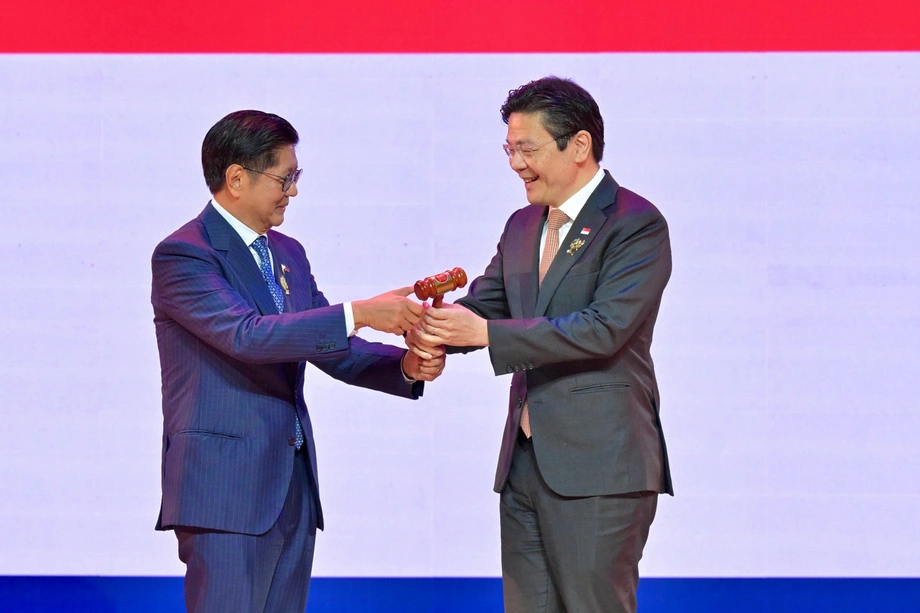
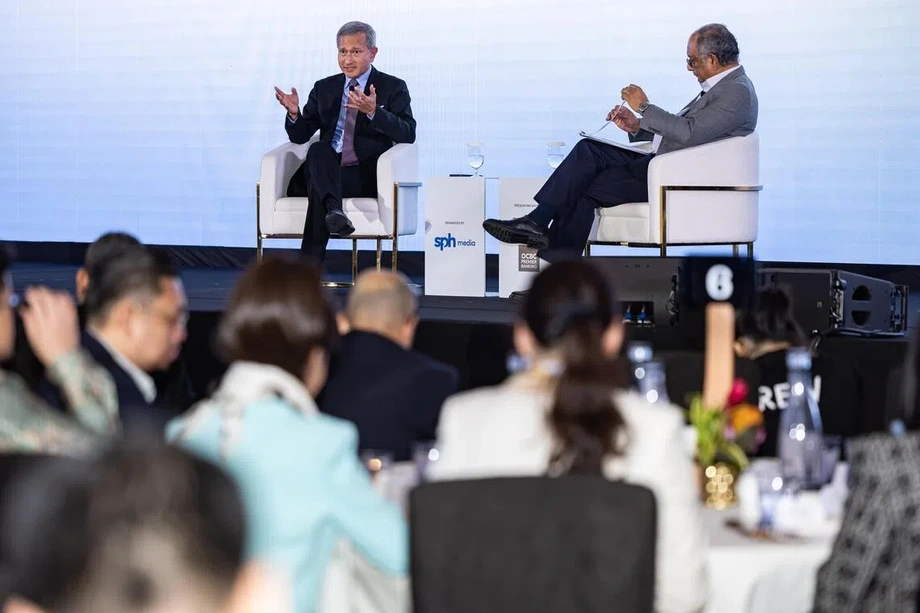
Singapore will assume the rotating ASEAN chairmanship on 1 January 2027, taking over from the Philippines as the grouping of 11 countries marks its 60th anniversary. Foreign Minister Vivian Balakrishnan said at the closing dialogue of SPH Media's Asia Future Summit on 27 November that the year would be a success if ASEAN members stayed in relative peace and security and moved further toward a single market and investment zone.
Contents
- Singapore takes the chair with a practical test
- Why the 60th anniversary matters
- The economic agenda is about trade across borders
- Singapore wants access, not obedience
- Why ASEAN centrality matters beyond the phrase
- The South China Sea code is the unfinished 20 per cent
- Why a weak code could be worse than another delay
- Myanmar, Thailand and Cambodia test ASEAN's own peace
- Digital rules and wider partnerships move ahead
- What changes for people and what remains open
- Key Points
That standard links diplomacy to everyday life. Lower barriers, more reliable supply chains and linked electricity systems can affect goods, jobs and factories. Balakrishnan put ASEAN's combined economy at more than US$4 trillion; the Manila handover gave about US$4.5 trillion. Both figures point to the scale of the market Singapore wants to connect more tightly.
Balakrishnan said members would argue, but shared vulnerabilities are greater than differences.
We will have squabbles, we will have disagreements, but our shared vulnerabilities far exceed our differences.
Keeping all 11 together in relative peace and security, he said, is the first success factor.
Why the 60th anniversary matters
ASEAN was founded in Bangkok on 8 August 1967 with the signing of the ASEAN Declaration. The Ministry of Foreign Affairs said in its written reply to Parliament dated 24 September 2025 that ASEAN Day is observed every year on that date and was formalised in the ASEAN Charter, signed by 10 ASEAN leaders at the 13th ASEAN Summit on 20 November 2007 in Singapore.
The reply also said Balakrishnan hosted students from the School of Science and Technology, Methodist Girls' School and CHIJ Secondary School under the ASEAN Tapestry Programme. They discussed ASEAN's importance to Singapore, how the grouping builds consensus, and regional cooperation and integration. The ministry said it is planning commemorative events for 2027, including initiatives to encourage regional travel, so younger people can understand ASEAN's role.
The dates that frame the handover are:
- 1967: ASEAN is founded in Bangkok.
- 2018: Singapore last held the chair, when South China Sea code talks were already under way.
- 14 to 17 November 2026: The Digital Economy Framework Agreement was signed on 14 November, and the 49th ASEAN Summit ran in Manila from 15 to 17 November.
- 27 November 2026: Balakrishnan set out his success measures at the Asia Future Summit.
- 1 and 2 December 2026: ASEAN secretary general Kao Kim Hourn is due to visit Singapore to prepare the chairmanship.
- 1 January 2027: Singapore formally takes the chair.
The economic agenda is about trade across borders
Balakrishnan said ASEAN has not yet achieved its vision of a single market, investment zone and production base. In simple terms, a firm in one member state should be able to sell, pay workers, move data and ship parts to another with fewer rules standing in the way.
He named lower tariffs and other barriers, stronger regional supply chains and the ASEAN Power Grid. Deputy Prime Minister Gan Kim Yong, speaking at the summit programme, warned that economic nationalism would shrink opportunity across the region.
Raising barriers among ourselves would narrow the opportunities available to each of us.
Balakrishnan described energy as the critical variable for the digital economy. He pointed to hydropower from Laos, geothermal energy from the Philippines and Indonesia, and fossil fuels from Brunei, Indonesia and Malaysia. Linked well, those resources could help ASEAN become a net energy exporter and attract investment.
All 11 members signed the Enhanced Memorandum of Understanding on the ASEAN Power Grid in Manila, according to the ASEAN summit analysis from Fulcrum. The same analysis said only six of 11 members had ratified the ASEAN Petroleum Security Agreement as of late October. A power grid links national networks so electricity can move to where it is needed; a fuel security arrangement lets countries use reserves held by neighbouring countries in a crisis.
Singapore wants access, not obedience
Balakrishnan wants ASEAN to remain an open, inclusive engagement zone and not become an arena for proxy wars. A proxy war is a conflict in which outside powers back opposing sides instead of fighting each other directly. He said the 11 members have different levels of economic and political dependence on the United States and China, which makes a forced choice dangerous.
The foreign minister rejected flattery as a way to deal with powerful partners. He said Singapore should not change its language to please Beijing, Washington, London or Paris in turn.
yes sir, yes sir, three bags full
Balakrishnan said Singapore does not seek handouts or subsidies from major powers. He set out what Singapore wants from them.
What we want is access. We want access to technology. We want access to your markets. We want to be treated fairly, and we want to be useful but not made use of.
He called the United States a vital, essential and stalwart partner and said all relationships evolve. The United States is Singapore's largest source of foreign investment, and the bilateral free trade agreement has operated smoothly for more than 20 years. Differences now include tariffs and export controls.
Balakrishnan rejected the idea that Singapore's policy is simply a balancing act between powers. He said consistency matters because Singapore cannot be used against one partner by another.
It's not a question of balance. That's why maintaining a principled, consistent foreign policy is so critical for us.
Why ASEAN centrality matters beyond the phrase
ASEAN centrality is the idea that the grouping should be the main platform for politics and security in South East Asia. It does not make ASEAN a government above its members. It gives the region a shared table that major powers are expected to use.
Balakrishnan had set out similar chairmanship priorities in October: ASEAN economies should grow and integrate so their combined capabilities exceed what each country can achieve alone. Prime Minister Lawrence Wong announced the 2027 theme, Deeper Integration, Wider Partnerships, on 17 November.
Balakrishnan described the global setting as an interim between orders. He named four shifts: changed US and China relations, disruption of globalisation and the rules governing trade, the weaponisation of interdependence through tariffs, critical minerals and supply chains, and a technology revolution driven by artificial intelligence, renewable energy and biotechnology.
Survey figures show why the shared table matters. The ISEAS Yusof Ishak Institute's 2026 survey put ASEAN at 23.4 per cent as the institution most trusted to uphold international rules, ahead of the United States at 22.3 per cent. An April survey found 52 per cent of South East Asian opinion leaders would side with China over the United States if forced to choose. South East Asia drew about US$244 billion in foreign direct investment in 2025, against US$105 billion for China, giving ASEAN economic weight if members keep it together.
Members already make different technology choices. Singapore and the Philippines joined Pax Silica, an initiative on artificial intelligence supply chains backed by the United States. Several others joined the World AI Cooperation Organisation, initiated by China. Washington's licensing rule on advanced chips, announced on 16 November, affects Singapore, Malaysia, Thailand and Indonesia and targets Chinese firms renting computing power there.
The South China Sea code is the unfinished 20 per cent
Philippine Foreign Secretary Ma. Theresa Lazaro said at the November 2026 ASEAN summit in Manila that ASEAN and China had provisionally agreed on about 80 per cent of the Code of Conduct (COC) negotiating text. Balakrishnan described the talks as 80 per cent to 90 per cent complete. The target was to finish by the end of 2026, but the code remained unfinished at the Manila summit.
The code is a proposed set of rules to manage disputes and prevent conflict in waters where China's claims overlap with those of Brunei, Malaysia, the Philippines and Vietnam. Balakrishnan said the hard questions are geographical scope, whether the code will be legally binding, and how international law and the United Nations Convention on the Law of the Sea (UNCLOS) apply. UNCLOS covers boundaries, marine resources, navigation, overflight and peaceful settlement of disputes.
Singapore is not a claimant in the South China Sea. Its priorities are peace, freedom of navigation and overflight, and peaceful dispute resolution. Balakrishnan said the code's test is practical.
Main thing is keep the peace, keep the trade flowing, and I think I can also say fairly confidently, nobody in ASEAN wants to go to war over this issue.
He said he had urged Beijing to be more "magnanimous" toward smaller ASEAN countries and described China's use of hard and soft power as work in progress. Hard power means military or economic pressure; soft power means attraction and persuasion. He said Singapore would try to move the talks along.
Why a weak code could be worse than another delay
Collin Koh, senior fellow at the S. Rajaratnam School of International Studies at Nanyang Technological University, argued that a rush to meet a deadline could produce a code with little force. He said a symbolic agreement would damage ASEAN's credibility more than another delay.
One dispute concerns what counts as restraint. Beijing's proposed wording would bar military exercises with actors from outside the region unless concerned parties are told in advance and express no objection. Several ASEAN members hold drills with the United States, India and Japan, sometimes near features claimed by China. A rule that lets one party object to outside drills would shift control over those exercises.
The 2018 draft text set out two oversight options: ASEAN and China working groups linked to the 2002 Declaration on the Conduct of Parties, or a dedicated commission. In either case, consensus would be required to settle alleged violations. Verification and enforcement therefore matter as much as wording.
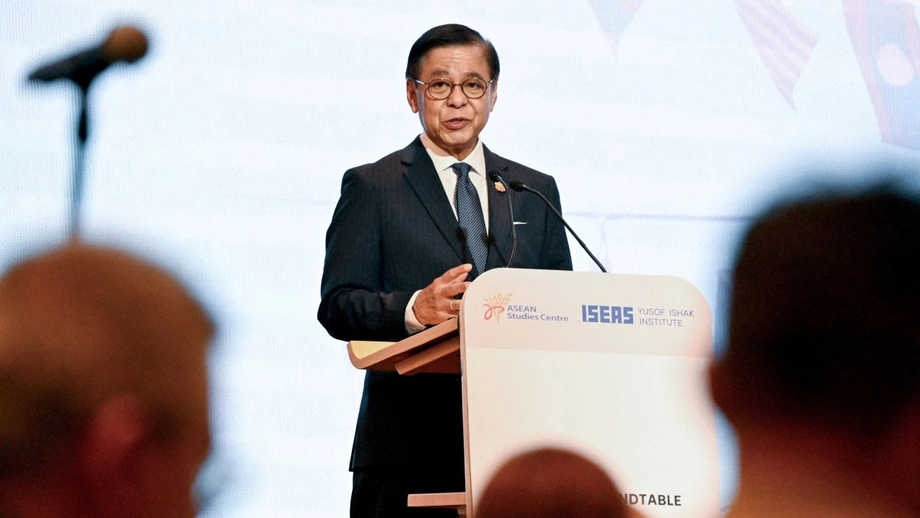
The ASEAN secretary general, Kao Kim Hourn, said unresolved points could go to senior officials and, if needed, foreign ministers. He said compromise would be required from ASEAN and China, and that Singapore's earlier work on the ASEAN Charter showed it could handle difficult talks.
Myanmar, Thailand and Cambodia test ASEAN's own peace
Balakrishnan said ASEAN has made tremendous progress since 1967, when several members faced active disputes or recently ended conflict. He cited the Konfrontasi, in which Indonesian commandos bombed MacDonald House in Singapore and killed civilians, and acknowledged the civil war in Myanmar and the border dispute between Cambodia and Thailand.
The United Nations says more than 100,000 people have been killed in Myanmar's conflict since the 2021 military coup. On 19 November, the International Court of Justice ruled that Myanmar committed genocide against the Rohingya during a military crackdown in 2017 and ordered compensation and safe return for displaced Rohingya. Myanmar's government, backed by the military, expressed great disappointment. ASEAN has kept limits on political representation while saying full representation may return in phases if progress is sustained.
Thailand and Cambodia fought in July and December 2025 along a border that runs 800 kilometres. The International Crisis Group put the toll at at least 150 killed and about one million displaced. Language adopted at a meeting of ASEAN parliamentarians and cited in Fulcrum's ASEAN analysis referred to 20,000 displaced people. A ceasefire reached on 27 December 2025 has largely held, though both sides have accused the other of violations. Singapore will lead the ASEAN Observer Team monitoring the ceasefire in 2027.
The ASEAN secretary general said the ceasefire was fragile because negotiations had been limited. He urged both countries to use their foreign, defence and border agencies. He said outside help can support peace, but the main responsibility belongs to the countries and ASEAN.
Peace must be from within.
Digital rules and wider partnerships move ahead
The Digital Economy Framework Agreement was signed on 14 November ahead of the Manila summit. It is ASEAN's first standalone legally binding digital pact, covering electronic commerce and data rules. The ASEAN secretary general said members aim to ratify it within 180 days, while countries needing more time for infrastructure and regulation can join later.
The summit also accelerated the upgraded ASEAN Trade in Goods Agreement, with rollout targeted by the end of 2026, and the free trade area with China known as FTA 3.0, scheduled to take effect on 1 December. ASEAN and Canada announced the substantive conclusion of free trade negotiations, making Canada a prospective first North American free trade partner. In 2027, ASEAN marks 50 years of relations with the United States, Canada and the European Union.
Balakrishnan described partnerships reaching Africa, South America, the Pacific Islands and Canada, as a strategy extending across the Pacific. Gan Kim Yong called for shared AI safety research, common governance guidance and worker retraining. AI Singapore's Sea-Lion model draws on Alibaba's Qwen and Google's Gemma, showing how regional firms can use tools from both major technology camps.
Cyprus, Slovakia and Slovenia acceded to the Treaty of Amity and Cooperation on the eve of the summit, after Sweden, Poland, Romania and Lithuania did so in July. The treaty asks parties to settle disputes peacefully and renounce force. Its reach is visible in those accessions, while its limits are visible in the fact that Russia, a party since 2004, invaded Ukraine, which became a party in 2022.
What changes for people and what remains open
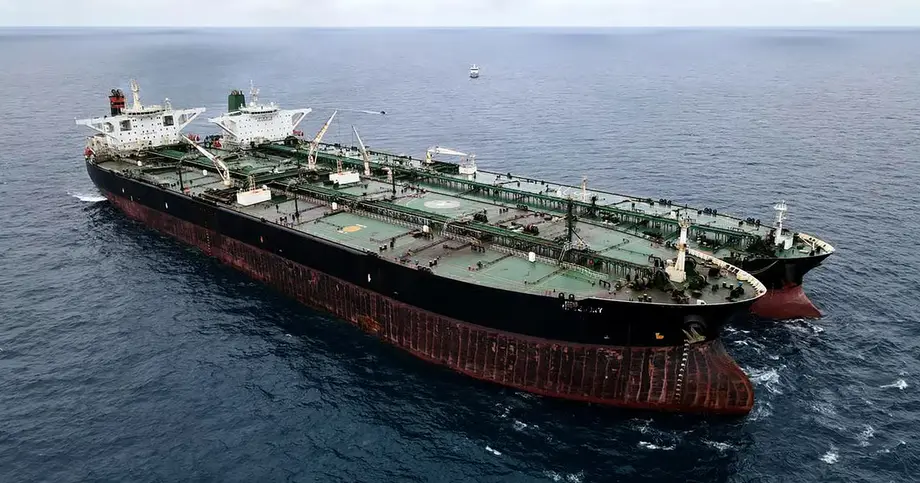
For a shop owner, lower barriers can mean fewer approvals when sending goods to another market. For a factory, a more reliable grid can mean fewer interruptions. For a worker, common digital rules can make it easier to use online payments, verify identities and sell services across borders. The Malacca Strait carries nearly 29 per cent of seaborne oil, so disruptions around shipping routes can reach prices far from the source of a crisis.
The ASEAN Secretariat issued a working visit announcement on 27 November, saying Kao would visit Singapore on 1 and 2 December at Balakrishnan's invitation. Kao is due to discuss priorities and deliverables with Prime Minister Lawrence Wong and meet senior ministers before the chairmanship begins.
Several decisions remain open. Negotiators have not agreed a final South China Sea code, and no signing date was given. Kao expects talks to conclude in 2027; Lazaro said she trusted Singapore to finish the discussions. Scope, legal status and the role of international law and UNCLOS remain unsettled.
Regional economic projects also need ratification and implementation. The petroleum security agreement had been ratified by only six of 11 members as of late October. Members aim to ratify the digital economy pact within 180 days, though Kao acknowledged that some countries need more time. Myanmar's political representation remains limited, and the threshold for restoring it has not been defined in detail. Thailand and Cambodia have a ceasefire, but broader negotiations have moved slowly.
Singapore's chairmanship will not turn ASEAN into a single government. It can make the region easier to trade with, harder to divide and better prepared when shipping lanes, energy supplies or digital systems come under strain.
Key Points
- Singapore takes the ASEAN chairmanship on 1 January 2027, during ASEAN's 60th anniversary year.
- Vivian Balakrishnan defined success as relative peace, deeper economic integration and an open regional order.
- About 80 per cent of the South China Sea Code of Conduct text is provisionally agreed, with scope, legal status and implementation still unresolved.
- ASEAN signed new digital trade and power grid agreements in Manila; ratification and implementation remain ahead.
- Singapore will lead the ASEAN Observer Team for the Thailand and Cambodia ceasefire and host the ASEAN secretary general before taking office.