A Survey Launch With Budget and Membership Stakes
Indonesia used the launch of the OECD Economic Survey of Indonesia 2026 in Jakarta on Thursday, November 26, to set out a reform agenda that reaches from classroom spending to disaster finance and the management of companies owned by the state. The event was held at Mezzanine Hall in the Finance Ministry complex. The survey is the ninth edition since 2008 and the first published during President Prabowo Subianto's administration.
Contents
- A Survey Launch With Budget and Membership Stakes
- What the Survey Is For
- How Indonesia Got to 80 Percent
- APBN and Danantara Become Two Policy Levers
- Budget Priorities Put People and Disasters in Focus
- Growth Forecast Shows Momentum and Pressure
- Fuel Subsidy Review Puts Fairness and Cost in One Frame
- Three Laws Remain Central to the Membership Test
- The Jakarta Visit Turned Review Into Public Negotiation
- What Changes for Households, Companies and Regions
- What to Watch Before 2028
- Key Points
The launch was attended by OECD Secretary-General Mathias Cormann, Bappenas Deputy Minister Febrian Alphyanto Ruddyard and Indonesian Ambassador to France Mohamad Oemar. Finance Minister Suahasil Nazara told officials and guests that Indonesia sees its bid to join the Organisation for Economic Co-operation and Development as a continuing test of policy quality. He said the country was making progress and that the journey itself mattered, because it pushes the economy toward better rules and services. The Finance Ministry statement carrying his remarks was cited on Friday, November 27, a day after the launch.
Indonesia is currently undergoing an accession process to become a full member of the OECD. I am sure that this process will continue to show progress, and we believe that continuing this journey is something very important for us.
Suahasil framed accession as a path toward an economy that is inclusive, green, resilient and innovative. The stakes are practical. The survey was published as the government projected 5.4 percent economic growth in 2026, allocated at least Rp59 trillion (about US$3.22 billion) for disaster management in the 2026 state budget, and reported that about 80 percent of technical reviews for OECD accession had been completed. Indonesia wants full membership by 2028, while the OECD Secretary-General said no fixed timetable has been set.
What the Survey Is For
The survey is a regular health check for an economy. It assesses growth, stability and risks, then offers policy advice. The 2026 edition covers macroeconomic management, human resources, education, science, technology, engineering and mathematics (STEM), the green economy and green finance.
More than 21 contributors helped prepare it, including ministries, agencies, Bank Indonesia, the Financial Services Authority, regional governments, civil society organisations and research institutes. The contributor mix matters because Indonesia's economy is spread across many islands and levels of government; a national document that includes regional and civil society input can describe problems that a central ministry may miss.
How Indonesia Got to 80 Percent
Indonesia began accession in February 2024, becoming the first Southeast Asian country to pursue full OECD membership. In June 2025, it submitted an Initial Memorandum, a self assessment of its alignment with 240 OECD standards. The technical review phase began in September 2025 and has continued through November 2026.
Coordinating Minister for Economic Affairs Airlangga Hartarto said around 80 percent of technical reviews across 25 accession areas had been completed. A figure attached to OECD Secretary-General Mathias Cormann's visit was that 24 of the OECD's 25 committees had conducted reviews. The two numbers describe different parts of the process: the policy sections being examined and the committees doing the examinations.
The days before the launch were dense:
- February 2024: Indonesia formally started accession.
- June 2025: The Initial Memorandum covering 240 standards was submitted.
- September 2025: Technical reviews began across the accession areas.
- November 25, 2026: Cormann held meetings in Jakarta, including a ministerial session of the National Team for the Acceleration of Indonesia's OECD Accession.
- November 26, 2026: The survey was launched at the Finance Ministry, and Cormann paid a courtesy call on President Prabowo.
Indonesia has cooperated with the OECD since 2010, before accession began. Deputy Finance Minister Juda Agung said that history helped in areas such as finance and the environment. Cormann said Indonesia had made major progress, and that the pace would depend on the government supplying information and acting on OECD findings.
APBN and Danantara Become Two Policy Levers
Suahasil said Indonesia's new macroeconomic management framework rests on two instruments. The State Revenue and Expenditure Budget, or APBN, is the national budget that funds public services and programs. BPI Danantara is the investment agency that consolidates companies owned by the state. It can invest in strategic projects and, in the OECD's view, could attract private capital if it works effectively.
The finance minister said the old habit of relying on the budget alone had changed. He said every major government goal can now be pursued through either budget spending or Danantara investment, and he described coordination between them as essential.
Every major government vision now has two execution options: through State Budget spending or through Danantara.
Under this division of labor, the national budget stays focused on public services and national priorities. Suahasil listed food security, the energy transition, education, healthcare, micro, small and medium enterprises, and downstreaming of natural resources. Downstreaming means processing raw materials inside Indonesia before export, so more value and jobs remain in the country.
The OECD saw a possible gain if Danantara invests well: private money could be drawn into projects, and infrastructure or industrial work could move faster. That outcome depends on investment decisions that deliver real projects rather than simply shifting assets from one place to another.
Budget Priorities Put People and Disasters in Focus
Suahasil said the government will ensure that the required 20 percent allocation for education in the state budget is realized, not only written into plans. He said health spending will stay at around 5 percent of the state budget, with room to rise if fiscal capacity allows. Fiscal capacity simply means the money available after revenue, debt obligations and other spending needs are considered.
Disaster financing is another pillar. The 2026 state budget contains at least Rp59 trillion for disaster management. The government also plans a pooling fund with regional governments, a shared pot of money that can be used when a disaster strikes. A pool gives a province or district access to a larger reserve than it might hold alone.
The Finance Ministry will publish more detailed monthly budget realization reports covering both the national budget and regional budgets, known as APBD. Combined, these figures form one public expenditure metric. That change is meant to show how much government money, central and regional, is actually reaching the economy each month.
Growth Forecast Shows Momentum and Pressure
The OECD projected 5.4 percent economic growth for Indonesia in 2026, above the 5.1 percent expansion recorded in 2025. Growth is expected to be 5.3 percent in both 2027 and 2028. Real gross domestic product, which is output adjusted for price changes, grew by an average of 5.5 percent from a year earlier during the first three quarters of 2026.
The components behind the forecast show why 2026 looks strong but uneven. Household consumption was projected at 5.1 percent, up from 5 percent in 2025. Investment was put at 6.2 percent, up from 5.1 percent. Government consumption was forecast at 14.3 percent, far above 2.5 percent in 2025. Exports were expected to grow 4.2 percent, down from 7 percent, while imports were projected at 6.9 percent, up from 4.8 percent.
Net exports, meaning exports minus imports, were expected to subtract 0.3 percentage points from 2026 growth. The OECD expects a positive contribution in 2027 and 2028. Inflation was projected at 3.3 percent in 2026 as food and energy prices rose and the rupiah weakened about 9 percent against the US dollar from the start of the year.
The current account deficit was projected at 1.6 percent of gross domestic product. That means Indonesia was expected to spend more on foreign goods, services and transfers than it earned from abroad. Higher prices for gas and coal exports were not enough to offset a larger oil import bill. The OECD also listed higher energy and transport costs, disrupted farm inputs, a stronger El Nino and capital outflows as risks that could hurt purchasing power and production.
Fuel Subsidy Review Puts Fairness and Cost in One Frame
On Friday, November 27, in Jakarta, the survey pushed energy subsidies into open debate. Coordinating Minister for Economic Affairs Airlangga Hartarto, who chairs the National Team for the Acceleration of Indonesia's OECD Accession, said President Prabowo Subianto had paid attention to the recommendation. He said the government was examining how to make energy aid better aimed at the people who need it. No detailed plan has been published, and no date was given for the president's announcement.
What the OECD conveyed has also drawn the president's attention, and moving forward we certainly must find ways to ensure that subsidies provided for the energy sector can be utilized in a more targeted manner.
The OECD said heavy energy subsidies strain the state budget, distort energy prices and protect households with low incomes less well than cash transfers aimed at them. It recommended cutting fuel subsidies by restoring a fuel price adjustment mechanism that moves in stages, paired with targeted assistance. Under such a mechanism, subsidized fuel prices could rise gradually when global oil prices climb, while aid would be directed to households that need help.
The government has kept fuel prices stable to soften the effect of global energy prices on families. The OECD said that step did not fully protect farmers and industries that use large amounts of energy from higher input costs. Cheaper fuel gives relief in the short term, but it can also absorb budget money that might be used for schools, health services or social aid.
Three Laws Remain Central to the Membership Test
Airlangga said the technical work has reached a late stage, but legal alignment still needs work. Three reforms stand out, and the government has targeted those changes for 2027. The government is preparing changes to corruption rules on bribery of foreign public officials through the Ministry of Law and the Corruption Eradication Commission. The Trade Ministry and KPPU are working on a revision of the Competition Law. The Statistics Agency, BPS, is preparing changes to statistics rules, with possible involvement from the Finance Ministry.
In October, Indonesia's push for foreign bribery law reform showed how the membership test reaches criminal law. The Corruption Eradication Commission had recommended changes covering foreign bribery, trading in influence, illicit enrichment and bribery in the private sector. At that stage, 20 of 24 sectors had completed technical reviews. The current count refers to 25 accession areas, with about 80 percent finished.
Deputy Finance Minister Juda Agung said 42 legal instruments in the fiscal and financial sectors fall under his area, covering taxation, budgeting, pension funds and insurance. About 68 percent are fully aligned with OECD criteria, he said. Fully aligned means the rules meet the organization's standards; the rest are partly aligned and need further changes.
Airlangga, who leads the national accession team, said presidential support gives the process political weight. He described membership as a tool for changing policy rather than a diplomatic prize alone.
OECD accession is a national strategic agenda that has received the full attention and support of the president. The government is committed to ensuring that every stage of the accession process proceeds effectively, measurably and in line with Indonesia's economic transformation agenda toward becoming a developed country.
The Jakarta Visit Turned Review Into Public Negotiation
Cormann's visit on November 25 and 26 took the accession work beyond closed technical meetings. He joined a ministerial meeting of the national accession team chaired by Airlangga. Finance, Foreign Affairs and Trade ministers attended, along with the head of the Financial Services Authority board and the head of the Corruption Eradication Commission. Cormann also held a courtesy call with President Prabowo and met leaders of the House of Representatives.
The OECD Secretary-General was scheduled to speak with business groups, including the Indonesian Chamber of Commerce and Industry and the Indonesian Employers' Association. Dialogues were also set with civil society groups, academics, labor unions and think tanks. Those meetings give firms, workers and researchers a route to raise how OECD standards would affect daily business and public services.
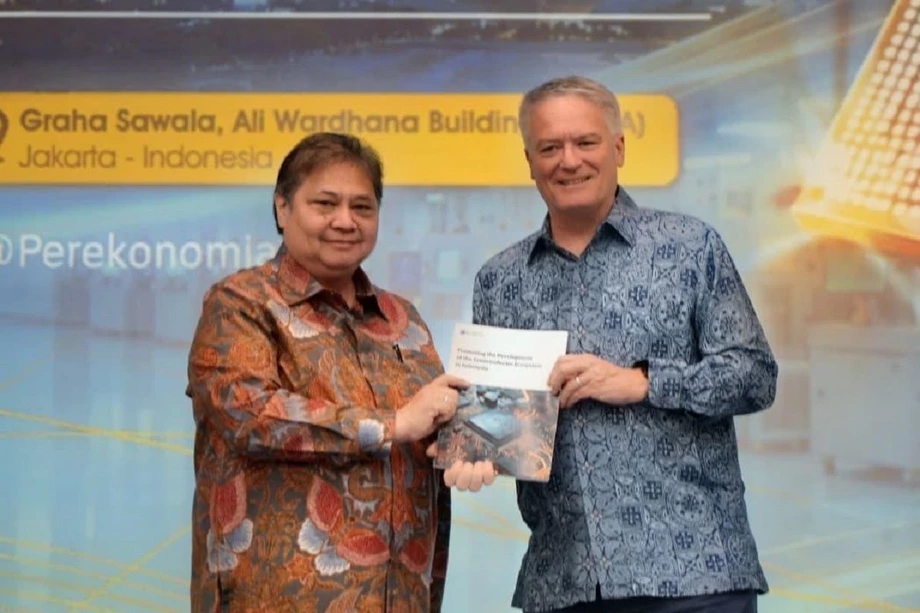
At 17.15 WIB (Western Indonesia Time) on November 26, Cormann also discussed accession and Indonesia's growth potential in a television interview with Andi Shalini. On November 25, the OECD launched a separate report on the semiconductor ecosystem at the Coordinating Ministry for Economic Affairs. It came alongside warnings about import bottlenecks and limits to utility services in Batam. Semiconductors, or chips, are the small devices that process information in phones, vehicles and data servers. Indonesia already has assembly, testing and packaging activity, especially in Batam and West Java.
Mathias Cormann, OECD Secretary-General, said Indonesia would need average annual growth of at least 5.8 percent over the next two decades to reach the income level associated with developed country status by 2045. During the same visit, he linked reforms to jobs and global demand for products such as chips. He summarized the goal this way:
The key is to ensure Indonesia is best positioned to capitalize the current momentum.
What Changes for Households, Companies and Regions
For families, the clearest effects lie in education, health, fuel prices and disaster readiness. A 20 percent education allocation matters once programs are delivered. Suahasil's commitment addressed implementation by saying the allocation would be realized optimally. Health spending near 5 percent of the budget gives a base for services, with increases possible if revenue allows.
For companies, the shift is about finance routes and rules. Budget spending can fund public services and priority programs, while Danantara can invest in strategic projects. Monthly figures covering central and regional spending could help firms see where public demand is emerging. Changes on competition, statistics and foreign bribery would shape how businesses compete and how officials are monitored.
For regions, the disaster pooling plan and wider budget reporting change how risk and spending are shared. A pooling fund lets many governments put money into one reserve. When a disaster hits one area, the fund can provide money faster than a region might raise on its own.
What to Watch Before 2028
Three timelines now guide the story. The legal revisions are targeted for 2027, full membership is targeted for 2028, and the fuel subsidy review will move when the president announces the steps. Officials will also watch whether monthly reports include national and regional spending in one clear view, whether education and health allocations are spent as planned, and whether disaster financing reaches provinces and districts through the proposed pooling fund.
The next committee reviews will test whether the reform language produces changes that can be measured. The economic test is equally sharp. Growth of 5.4 percent in 2026 would be stronger than 5.1 percent in 2025, yet inflation, currency pressure and a wider current account deficit could squeeze households and firms. The OECD forecast gives Indonesia room to act, and its risk list explains why the reform drive is being pushed now.
Key Points
- The OECD Economic Survey of Indonesia 2026 was launched on November 26 at the Finance Ministry in Jakarta, with Suahasil Nazara linking it to structural reform and OECD accession.
- Indonesia has completed about 80 percent of technical reviews across 25 accession areas and targets full membership in 2028.
- The government plans to use both the State Budget and Danantara, with budget spending focused on public services and national priorities.
- The 2026 budget includes at least Rp59 trillion for disaster management, while education is set at 20 percent of state spending and health at around 5 percent.
- The OECD projects 5.4 percent growth in 2026, with inflation at 3.3 percent and a current account deficit of 1.6 percent of gross domestic product.
- Fuel subsidies are under review after an OECD recommendation for staged price adjustment and targeted assistance.