A nationwide reset of local councils
On Sunday, November 29, 2026, Kazakhstan will elect 3,447 deputies to 228 maslikhats, replacing every local council in the country. Nearly 11,000 candidates are seeking seats, and 12,679,459 people appear on the voter list. The councils were dissolved early, turning what might have been a routine renewal in 2028 into a nationwide vote on local representation after a year of constitutional change.
Contents
- A nationwide reset of local councils
- Why is the vote happening early?
- What can a maslikhat actually change?
- How are the seats and candidates divided?
- Why does the race feel quiet?
- What happens when colleagues compete?
- What is prohibited on November 28 and 29?
- How can voters find their polling station?
- What preparations remain for Sunday?
- Key Points
Voting will take place at 10,338 polling stations. Of these, 9,782 serve people according to where they live, while 556 are in temporary locations such as hospitals and military units. Most stations open at 7:00 a.m. and close at 8:00 p.m. A group of 101 stations may open at 6:00 a.m. under the procedure established by law.
The 228 councils comprise 20 regional, 38 city and 170 district maslikhats. Their deputies approve local budgets and development plans, giving them a role in decisions about road repairs, heating, schools, water pipes and public transport. They can also initiate a vote of no confidence in an akim, the appointed governor or mayor who runs the local administration, in circumstances provided by law.
Sunday's ballot is unusual for another reason. It is the first time since 2003 that maslikhat elections are being held separately from parliamentary elections. Thousands of local contests, rather than one national parliamentary campaign, will determine who speaks for communities in their councils.
Why is the vote happening early?
President Kassym-Jomart Tokayev announced early elections on September 24 at the first session of Halyq Kenesi. On October 12, he signed a decree terminating the powers of maslikhats at every level. Before doing so, he consulted Prime Minister Olzhas Bektenov and Kurultai Chairman Aibek Dadebay, as required by the Constitution. The Central Election Commission then scheduled the vote for November 29.
The maslikhats chosen in March 2023 had been expected to serve until 2028. Their early dissolution followed national changes that replaced the two chambers of parliament, the Senate and Mazhilis, with a single chamber called the Kurultai. The local election completes this sequence of institutional changes.
- March 2023: The outgoing maslikhats were elected with terms expected to run until 2028.
- March 2026: A referendum approved a new Constitution providing for the Kurultai.
- June 2026: Amanat, formerly Nur Otan, voted to merge into Adilet, a party supporting the president.
- July 1, 2026: The new constitutional arrangements took effect.
- August 2026: Adilet won 71.17% of the parliamentary vote and 110 of the Kurultai's 145 seats. Its leader, Aibek Dadebay, became chairman of the chamber.
- October 14 to 27: Candidates were nominated for the local elections.
- November 28 and 29: A day of silence is followed by voting, with election results due within five days.
Amanat was built by first president Nursultan Nazarbayev. Dadebay previously headed the presidential administration. Their presence in this sequence connects the local vote with the broader reorganisation of Kazakhstan's political institutions, although the choices on Sunday's ballots concern regional, city and district councils.
What can a maslikhat actually change?
A maslikhat is an elected local council. It does not run the administration day to day, which is the work of the akim and the akimat, the local executive office. The council instead examines and approves budgets, proposes amendments and approves plans that determine where schools are built, which roads are repaired and which utility networks receive investment.
Those powers make the election relevant to basic services. A council's budget decisions can affect whether a district heating system is upgraded, a rural water pipe is replaced or a neighbourhood receives new public facilities. Deputies also provide an elected check on appointed local executives, including through the limited power to begin a vote of no confidence.
Political scientist Gaziz Abishev argues that many voters nevertheless see the councils as weak within Kazakhstan's centralised system. He notes that the president appoints a regional akim with the maslikhat's consent and presents two candidates for the position. The president can also dismiss an akim and dissolve a maslikhat. Abishev further points to oil revenue and other major receipts being concentrated nationally before regions receive transfers. In his assessment, residents often do not feel that the work of local deputies changes their quality of life, even though councils influence local questions.
How are the seats and candidates divided?
The 3,447 seats break down into 668 deputies in 20 regional maslikhats, 626 in 38 city maslikhats and 2,153 in 170 district maslikhats. Across the country, 334 seats will be filled from party lists and 3,113 by candidates competing in constituencies that return one deputy. Deputies are elected by secret ballot for terms of five years.
Voters in Astana, the regions and cities of national significance, including Almaty and Shymkent, will encounter a mixture of party lists and constituency races. Half of the deputies in those councils are elected through each method. District councils and cities of regional significance elect only individual constituency candidates. Parties and, in some cases, public associations can nominate candidates, while citizens may also nominate themselves.
Seven parties are taking part: Auyl, the National Social Democratic Party, the People's Party of Kazakhstan, Respublica, Aq Jol, the Baytaq Green Party and Adilet. Each party may register only one list in a region, and women and young people together must constitute at least 30% of that list. Across 20 regions, 97 lists are competing for the 334 party list seats. CEC member Azamat Aimanakumov said those lists included 1,160 candidates, while the Kazakh language summary of the briefing gave 1,165. Another 9,422 candidates are running in constituencies that elect one deputy.
Candidates must be Kazakh citizens aged at least 20. People declared legally incapable by a court, those serving prison sentences and people with specified criminal or corruption convictions cannot stand. A candidate may run in only one constituency. The required deposit is 425,000 tenge, equal to five times the minimum wage. It is returned if a party receives at least 5% of the vote, or if an individual candidate is elected or receives at least 5%.
Why does the race feel quiet?
Competition varies considerably between districts. At a November 27 briefing in Astana, Aimanakumov described where voters have the largest number of choices.
The fiercest competition is in the Turkistan Region, where there are up to five candidates vying for a single seat. In another 121 districts, four candidates are running for each seat. This represents the highest level of competition.
Aimanakumov said the least competitive races have two candidates per seat. He identified 44 such districts spread across 11 regions. These contrasting figures show why a national description of the campaign can obscure very different local contests.
Abishev attributes the limited public attention partly to voter fatigue after the constitutional referendum and Kurultai election in 2026. Aibek Kumysbekov, co-founder of Astana Open Dialogue, separates visible national publicity from the work candidates are doing locally. He says candidates are holding meetings and mobilising supporters, but their efforts are dispersed among thousands of districts.
Several thousand separate campaigns are taking place at the same time in specific districts across the country. Each district has its own candidates and its own problems. That is why there is no single large national campaign that the whole country discusses every day.
Kumysbekov also says national fame is less useful to a local candidate than recognition within a district or professional community. An entrepreneur, doctor, teacher or local activist may be well known to neighbours without attracting national attention. Meetings and direct contact can matter more than expensive advertising, particularly for candidates with limited funds.
What happens when colleagues compete?
Some constituencies have produced unusually personal contests between colleagues. In district No. 4 in Ulytau Region, 22-year-old layout designer Dairbek Ryskulov is running against Elvira Alpanbayeva, the editor in chief at the newspaper where they work. In Shymkent's district No. 5, programmer Berik Barlybay and personnel inspector Aruzhan Makhambetali are competing against Bakytzhan Pozilov, the chief doctor at the hospital employing all three.
In Almaty Region's district No. 1, an agronomist and an accountant at the Birlik agricultural company are running against the company's director. CEC Chairman Nurlan Abdirov has said the law does not prevent colleagues, including managers and employees, from contesting the same district.
The campaign has also included registration cancellations connected to candidate declarations. Yulia Goiko's case concerned undeclared cashback from Freedom Bank, while Yerasyl Tolebayev's involved form 250.00. Dias Tlebalganov's case involved 500,000 tenge. Svetlana Romanovskaya in Almaty's district No. 5 and Berdygali Bereketov in Zhanaozen also lost registration in cases associated with declaration requirements.
The election itself has a budget of 35.8 billion tenge. CEC member Mikhail Bortnik said 25.1 billion tenge, about 70% of the total, is designated for paying commission members. The remainder supports the other organisational costs of operating thousands of polling stations and processing the vote.
What is prohibited on November 28 and 29?
Campaigning was required to stop at 00:00 on November 28. Prosecutors cited Paragraph 2 of Article 27 of the Constitutional Law on Elections when explaining the deadline. November 28 is a day of silence, and campaigning is prohibited on both that day and election day.
Deputy Prosecutor General Erlan Utegenov said prosecutors had already acted against violations during the campaign.
Prosecution authorities have so far identified 13 violations of election legislation. Seven of them involve campaigning during a period when it was prohibited.
All 13 people were held administratively liable. Previously displayed printed campaign materials may remain in place outside election commission premises and voting rooms. Material published online earlier may also stay where it was, but it cannot be moved onto the homepages of internet resources.
Publishing opinion poll results, election forecasts and related research is prohibited in media and on online platforms during the five days before voting and on election day. Polling inside voting premises is also banned. Outside those premises, organisations that informed the CEC in advance may conduct an exit poll, meaning a survey asking voters how they voted as they leave.
Unlawful campaigning carries fines under Article 102 of the Administrative Offenses Code. The penalties use MCI, a monthly calculation index employed to set many Kazakh state payments and fines. One MCI is 4,325 tenge in 2026.
- Individuals: 15 MCI, or 64,875 tenge.
- Small businesses and nonprofit organisations: 20 MCI, or 86,500 tenge.
- Medium-sized businesses: 25 MCI, or 108,125 tenge.
- Large businesses: 35 MCI, or 151,375 tenge.
Publishing prohibited polls or forecasts can bring a fine under Part 2 of Article 120 of 43,250 tenge for individuals and 108,125 tenge for legal entities. Separate rules govern public assemblies: meetings, rallies and pickets follow a notification procedure, while demonstrations and marches require approval. Violations may lead to action under Article 488 of the Administrative Offenses Code and, where substantial harm is caused, Article 400 of the Criminal Code.
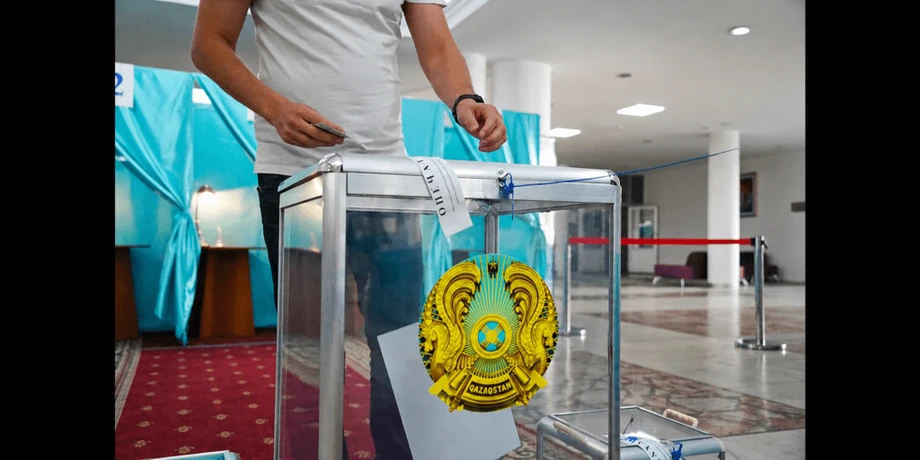
CEC member Lazzat Suindik also clarified the rules on photography. Article 27 prohibits photographing or filming a completed ballot on election day and distributing such material. Voters may still take pictures at a polling station, including beside the ballot box or while inserting a ballot, provided their party choice is not visible. The distribution restriction applies on election day; Suindik said it no longer applies after voting day has passed.
How can voters find their polling station?
Three online services on the gov.kz platform allow voters to find their polling station number and address. The information is also available through eGov Mobile. Authorities sent SMS invitations and push notifications through eGov Mobile and banking applications, with links to the station search service. Special Maslikhat-2026 sections on election commission websites explain the vote, while the Sailau AI assistant on the CEC website answers questions.
National and regional television and radio outlets have carried information in Kazakh and Russian, with sign language interpretation for citizens with impaired hearing. Newspapers, internet banners, public screens, railway stations, shopping centres and public service offices have also carried election material. Almost 7,000 pieces of outdoor information have been installed across the regions.
Mukhtar Yerman, the CEC's deputy chairman, said precinct commission members had also finished delivering personal invitations. He described the digital and direct contact work as part of the same task.
We see the task not just as reaching people with information, but as creating conditions in which every voter can easily get what they need to know and exercise their constitutional right on Nov. 29.
People without permanent registration who have never appeared on a voter list have an additional option. They can register on election day at 218 specially designated polling stations. Contact centres are operating in every region for voters who need assistance.
What preparations remain for Sunday?
More than 5,700 training events have been organised for the election. Over 86,000 commission members completed seminars and remote testing and received certificates. Akimats have delivered voter lists to polling stations, and commission members have travelled through all 20 regions to inspect preparations. Regional headquarters reported on station readiness during the final checks on November 27.
Observation is being organised through 258 public associations and nonprofit groups. Thirteen accredited their observers with the CEC, while 245 did so with territorial commissions. Their presence covers organisations operating at both national and local levels.
Weather is a practical concern. Forecasts indicate that blizzards, ice and fog could affect 15 of the country's 20 regions on November 29. Abdirov assigned four final tasks: complete the technical preparation of stations; control ballot delivery, storage and accounting; provide accessible conditions for citizens with disabilities; and maintain public order in coordination with interior authorities, prosecutors and other responsible bodies. Weather preparations form part of that work.
The commissions are due to issue the election results within five days. The new deputies will then begin terms of five years, with their immediate responsibilities including local budgets and development programmes. No date has been given for the first sessions of the incoming councils.
Key Points
- Kazakhstan votes on November 29, 2026, for 3,447 deputies in 228 local councils.
- The voter list contains 12,679,459 people, and 10,338 polling stations will operate.
- Nearly 11,000 candidates are competing, including representatives of seven political parties.
- A total of 334 seats will be filled from party lists and 3,113 through individual constituency races.
- The early election follows Tokayev's October 12 decree dissolving councils whose terms had been expected to last until 2028.
- Campaigning is banned on November 28 and 29, with strict limits on polls and photographs of completed ballots.
- Prosecutors identified 13 election law violations, including seven involving campaigning during a prohibited period.
- Observers from 258 organisations have been accredited, while bad weather is forecast in 15 regions.
- Election results are due within five days of voting.