A warning delivered with a plan for growth
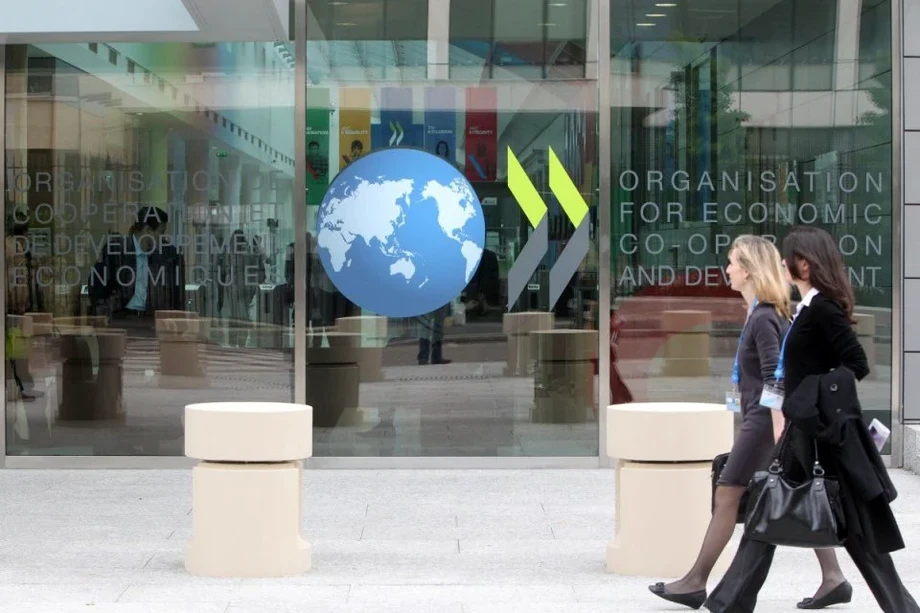
Indonesia's ambition to win a larger place in the global semiconductor industry faces a basic problem: components cannot always reach factories quickly or cheaply enough. On Wednesday, 25 November 2026, Organisation for Economic Co-operation and Development (OECD) Secretary-General Mathias Cormann presented Coordinating Minister for Economic Affairs Airlangga Hartarto with a report titled Promoting the Development of the Semiconductor Ecosystem in Indonesia at the ministry's office in Jakarta.
Contents
- A warning delivered with a plan for growth
- Why can efficient ports still mean expensive supplies?
- Why start with assembly, testing and packaging?
- Can Batam retrain workers quickly enough?
- How large is the opportunity Indonesia is chasing?
- What do the trade figures reveal?
- Can Batam's power and water support bigger chip plants?
- Why did a 300% research incentive produce only Rp3 billion?
- How does this fit Indonesia's OECD membership push?
- Key Points
The report identifies five connected tasks: predictable industrial policy, smoother access to global supplies, suitable skills, research and innovation support, and dependable infrastructure. Cormann praised relatively efficient container handling at Indonesian ports, but said import licensing still creates delays and costs. He also called for continuing reviews of the domestic component level policy, known as TKDN, which can require products or activities to use a minimum amount of local content.
Semiconductors, commonly called chips, process instructions or store information inside products ranging from telephones and vehicles to data center servers. Indonesia already has activity in assembly, testing and packaging, particularly in Batam and West Java. Assembly and packaging protect finished chips and connect them to other components, while testing checks whether they work. Airlangga welcomed the OECD findings and said the government would incorporate its recommendations into Indonesia's reform agenda before discussions in OECD committees.
Why can efficient ports still mean expensive supplies?
Foreign inputs accounted for more than a third of the value of Indonesia's electronics exports in 2022, including semiconductors themselves. That share was almost twice the proportion of imported inputs across manufacturing as a whole. A factory assembling and packaging chips therefore depends on imported materials and components arriving on schedule, even when the finished products support Indonesian exports and employment.
Cormann pointed to the expansion of import controls through the Commodity Balance system in late 2023, covering more than 3,800 products. Known in Indonesia as Neraca Komoditas, the system uses assessments of domestic supply and demand in administering import controls. Disruption in 2024 contributed to delays affecting about 26,000 containers at Indonesia's main ports. For Cormann, the episode illustrated the expense that administrative interruption can impose on companies operating across international production networks.
The OECD recommended simplifying and stabilizing the Commodity Balance system, considering an approach based more on market forces, and continuing to examine TKDN. Its argument is that greater choice in obtaining inputs can lower production costs and improve competitiveness. This matters especially for assembly and packaging businesses, which must coordinate numerous parts and materials rather than rely solely on what is produced locally.
Cormann said Indonesia could create more quality jobs if it made the production process more competitive and positioned itself to capture rising global demand. He summarized the objective in these terms:
The key is to ensure Indonesia is best positioned to capitalize the current momentum.
Why start with assembly, testing and packaging?
Semiconductor investments require large amounts of capital and commitments extending over many years. The OECD said Indonesia needs an industrial strategy that goes beyond aspirational targets and gives investors specific, predictable policy commitments. It also recommended stronger coordination for the Semiconductor Task Force established in 2024, with wider participation from ministries and agencies responsible for employment, education and transport.
Assembly, testing and packaging, abbreviated as ATP, offers the most immediate starting point because Indonesia already has companies, infrastructure and training activity in this segment. The OECD also considers ATP relatively labor intensive, giving it greater potential to generate employment. Chip design remains under development, while capacity in wafer fabrication, the stage that creates circuits on silicon wafers, is limited. Beginning with ATP would allow Indonesia to expand from existing industrial capabilities while developing the skills and institutions needed for more advanced activities.
Can Batam retrain workers quickly enough?
Batam has about 250,000 manufacturing workers, and more than 40% of its residents of working age are employed in manufacturing. More than 210,000 workers combine manufacturing experience with formal education. The OECD sees this group as a potential source of semiconductor technicians, particularly for assembly and packaging facilities. Cormann said their skills can generally be developed in less than a year, making the retraining of existing industrial workers a realistic way to add capacity relatively quickly.
A partnership between Batam State Polytechnic and Infineon has already trained 60 technicians for the company's Batam operations. The OECD nevertheless said stronger basic education, especially mathematics and science, remains essential for producing a larger supply of technical talent over time. Factory retraining can address immediate vacancies, while school and vocational education determine the size of the future talent pool.
Chip design requires a different set of skills and tools. The government has partnered with British technology company Arm Limited to train 15,000 young Indonesian engineers, placing design talent alongside infrastructure and energy in its development strategy. Airlangga has identified human resources as one of the industry's largest cost components and said the training program reflects the direction of government policy.
Airlangga described the agreement with Arm in these terms:
We are partnered with Arm Limited to train 15,000 of our young engineers.
How large is the opportunity Indonesia is chasing?
Airlangga projected that the global semiconductor market would reach US$1 trillion by 2030, driven by data centers, artificial intelligence, wireless communications and automotive electronics. Market datasets point to a faster timetable. The Semiconductor Industry Association put global sales at US$791.7 billion in 2025, an increase of 25.6% from the previous year. World Semiconductor Trade Statistics projected in June 2026 that sales for 2026 could reach US$1.51 trillion.
Indonesia brings a domestic market of about 285 million people to that competition. Its digital economy is expected to grow from roughly US$180 billion to US$400 billion by 2030. Across ASEAN, the digital economy is projected to reach US$2 trillion by 2030 as regional integration advances through the Digital Economy Framework Agreement. These projections help explain why Airlangga wants Indonesia to participate in production rather than serve only as a destination for imported chips.
His response to the OECD also rested on the location of existing activity. Most Indonesian semiconductor operations are in free trade zones, such as Batam, which are designated areas with special trade and customs treatment. Airlangga argued that current policy is therefore already aligned with the industry's requirements. He cited infrastructure, green energy and relatively good logistics as strengths, while warning that growing data center demand should not leave Indonesia merely as a market for foreign suppliers. The government has also said it is prepared to provide energy infrastructure for semiconductor investment.
What do the trade figures reveal?
The OECD report places Indonesia's semiconductor industry at an early stage, with the sector's value added contributing less than 0.1% of national gross domestic product. Trade figures show the scale of its reliance on foreign integrated circuits. UN Comtrade data accessed through the World Bank's World Integrated Trade Solution recorded US$4.13 billion of Indonesian imports under customs category HS 8542 in 2024, compared with exports of about US$746.75 million. Imports were consequently about 5.5 times exports, leaving a gap of roughly US$3.38 billion.
Malaysia provides a regional comparison. It accounts for about 13% of global ATP activity and, according to Bank Negara Malaysia, supplied 7.3% of world semiconductor exports in 2024. Its National Semiconductor Strategy, launched in May 2024, set an investment target exceeding US$100 billion and seeks to expand from assembly into integrated circuit design, advanced packaging and fabrication. Indonesia is therefore competing for capital against a neighbour with a larger established position, while investors weigh policy certainty, technical workers, utilities and supplier networks.
Can Batam's power and water support bigger chip plants?
Indonesia has improved ports and major transport corridors, and the OECD assessed national electricity access and reliability for businesses as relatively good. Batam's experience is less reassuring. Cormann said the island has repeatedly faced electricity shortages as industrial demand rises, infrastructure ages and power generation experiences disruptions. Semiconductor producers also increasingly want reliable renewable energy, adding another requirement beyond simply having enough generating capacity.
The OECD recommended removing regulatory obstacles to renewable energy and accelerating investment in transmission networks. One proposal is an electricity interconnection linking Batam, Bintan and Sumatra. Connecting Batam to Sumatra's much larger power system could improve reliability and provide access to renewable energy resources on the larger island.
Water presents an equally concrete constraint. Batam has no large rivers, limited groundwater and six reservoirs filled by rain. Cormann said one modern chip fabrication plant could use as much as 16% of the island's current water supply. Such a facility would compete with residents and the growing data center sector, making investment in water storage, treatment and demand management essential.
Road maintenance also affects industrial logistics. About 44,000 kilometers of roads deteriorated during 2024, and around nine in ten affected sections were severely damaged. The OECD interpreted this pattern as evidence that maintenance often begins after deterioration has become expensive. It recommended earlier preventive maintenance at the regional level so that raw materials and finished products can move without avoidable disruption.
Why did a 300% research incentive produce only Rp3 billion?
Indonesia allows companies to deduct up to 300% of eligible research and development costs when calculating taxable income, consisting of the basic 100% deduction and an additional deduction of as much as 200%. This is not a cash grant. It reduces the income on which tax is calculated. Yet the scheme generated estimated national tax savings of only about Rp3 billion in 2024.
Tax holidays for priority industries produced estimated savings of around Rp6.3 trillion, approximately 2,100 times the research incentive figure. A tax holiday temporarily reduces or removes corporate income tax for qualifying investors. The contrast shows which fiscal instrument companies used far more heavily. Cormann recommended directing incentives toward technology and productive investment while reducing dependence on tax holidays.
The OECD identified several reasons for the limited use of research support: companies may not know it exists, rules and guidance can be unclear, and the administrative burden can be substantial. Requirements include registration and approval from the National Research and Innovation Agency (BRIN), while companies can also encounter delays in obtaining certificates needed to receive the tax benefit. Simpler procedures and better information for eligible businesses are among the proposed remedies.
The innovation challenge extends beyond taxation. Fewer than 3% of Indonesian manufacturers surveyed in 2023 had introduced a process innovation during the previous three years. The OECD called for shared testing facilities for assembly and packaging companies and access to technology suited to Indonesia's existing industry. Moving into chip design creates another expense: electronic design automation software and licenses for intellectual property can be costly for universities, startups and young design firms. A separate Arm Holdings arrangement allows startups and research institutions to apply for free access to certain Arm intellectual property. The OECD said these benefits should reach private companies and startups, rather than stopping at enterprises owned by the state.
How does this fit Indonesia's OECD membership push?
The semiconductor review was prepared through collaboration between the Coordinating Ministry for Economic Affairs and the OECD Secretariat. Its examination of trade, investment, skills, infrastructure and innovation overlaps with the technical work involved in Indonesia's accession process. Cormann connected those reforms to the Indonesia Emas 2045 ambition of becoming a country with high incomes, saying closer alignment with OECD standards and practices could attract investment, strengthen growth and improve living standards.
The government has set 2028 as its membership goal, but Cormann said there is no fixed accession timetable. Progress depends on the government continuing to supply information, implement reforms and act on OECD findings and recommendations. That work already includes a drive to criminalize foreign bribery. In October, Airlangga said Indonesia had completed technical reviews in 20 of 24 sectors, while proposals from the Corruption Eradication Commission also addressed trading in influence, illicit enrichment and bribery in the private sector.
- Late 2023: Indonesia expanded Commodity Balance import controls to more than 3,800 products.
- 2024: The Semiconductor Task Force was formed, and import system disruption contributed to delays affecting about 26,000 containers.
- 25 November 2026: Cormann and Airlangga presented the semiconductor ecosystem report in Jakarta.
- 2028: Indonesia's stated goal for OECD membership, although the organization has given no fixed accession date.
- 2030: Indonesia's digital economy is projected at US$400 billion and ASEAN's at US$2 trillion.
- 2045: The Indonesia Emas vision targets the status of a country with high incomes.
No deadline was announced for decisions on import licensing, TKDN or changes to research incentives. No construction date was given for the proposed Batam, Bintan and Sumatra electricity link, and no specific date was provided for the next OECD committee discussions. The immediate government commitment is to incorporate the report's recommendations into the national reform agenda.
Key Points
- The OECD presented its Indonesian semiconductor report to Airlangga Hartarto in Jakarta on 25 November 2026.
- It identified policy certainty, supply chain integration, skills, innovation and infrastructure as the five main areas requiring action.
- Import controls expanded to more than 3,800 products in late 2023; disruption in 2024 contributed to delays affecting about 26,000 containers.
- The OECD recommended a simpler and more stable Commodity Balance system and continuing reviews of TKDN.
- Indonesia's immediate industrial base is assembly, testing and packaging in Batam and West Java, supported by plans to train 15,000 young engineers with Arm.
- Indonesia imported US$4.13 billion of electronic integrated circuits in 2024 and exported about US$746.75 million.
- Batam faces recurring electricity shortages and relies on six rain-filled reservoirs; one modern fabrication plant could use up to 16% of its current water supply.
- Research tax incentives generated estimated savings of Rp3 billion in 2024, compared with about Rp6.3 trillion from tax holidays for priority industries.
- Airlangga promised to integrate the recommendations into reforms, while Cormann said OECD accession has no fixed timetable despite Indonesia's 2028 goal.