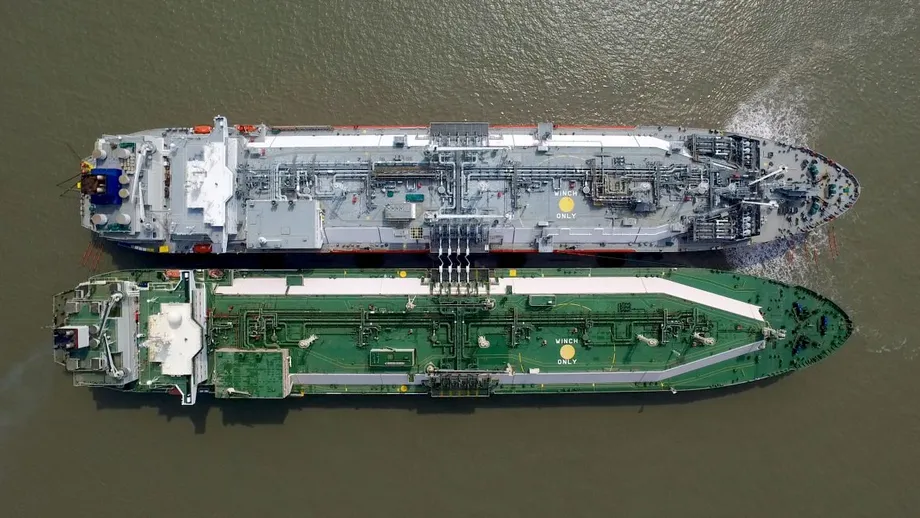
Missing cargoes deepen Bangladesh's gas squeeze
Excelerate Energy has extended its suspension of liquefied natural gas deliveries to Bangladesh until November, prolonging an interruption that began in early March and adding pressure to a country already receiving far less gas than it needs. The US company last supplied LNG in late February 2026, shortly before the latest Middle East conflict escalated, according to a senior official at state gas company Petrobangla.
Contents
- Missing cargoes deepen Bangladesh's gas squeeze
- What Excelerate promised to deliver
- Why several suppliers stopped together
- How the disruption unfolded
- Qatar's losses widen the replacement bill
- Replacement gas costs much more
- Subsidies absorb a widening price gap
- A terminal ran out while cargoes were delayed
- Less gas despite greater spending
- Key Points
The suspension comes during the first year of a supply agreement signed on November 8, 2023. Excelerate was contracted to deliver 0.85 million tonnes in 2026, equivalent to about 12 cargoes. It supplied two cargoes before stopping deliveries and invoking force majeure, a contract provision allowing obligations to be suspended or delayed because of events beyond a company's control.
Bangladesh's total gas supply stood at about 2.526 billion cubic feet per day in the latest Saturday figures cited by Petrobangla, against demand of around 4 billion cubic feet per day. That leaves a daily shortfall of approximately 1.474 billion cubic feet, or nearly 37% of demand. Petrobangla has been rationing supplies to industries, power plants and other consumers.
Disruptions involving QatarEnergy and Oman's OQ Trading have made replacement cargoes harder and more expensive to secure. Government LNG subsidies reached Tk10,300 crore during July through September, while some emergency purchases cost more than twice the prices paid before the conflict.
The crisis now combines three pressures: missing deliveries under supply contracts, expensive replacement purchases and interruptions at the terminals that turn imported LNG into gas for the national network. Paying for another cargo addresses only part of that problem; it also has to arrive in time and pass through an operating terminal.
What Excelerate promised to deliver
Petrobangla's agreement with Excelerate runs for 15 years, from January 2026 through 2040. Annual deliveries are scheduled at 0.85 million tonnes in 2026 and 2027, increasing to 1 million tonnes from 2028 through 2040. A Petrobangla official put those volumes at 12 cargoes annually during the first two years and 16 annually thereafter.
The contract price is linked to 13.35% of the average Brent crude oil price over three months, plus $0.30 per million British thermal units. A British thermal unit measures energy; LNG prices are commonly quoted per million of these units, abbreviated as MMBtu. Linking the price to oil gives the contract a different pricing basis from cargoes bought at current market rates.
An earlier Petrobangla projection envisaged six Excelerate cargoes through December, compared with the contracted 12 for 2026. At that stage, the company had delivered two cargoes and its force majeure declaration had been extended until August. The latest extension takes the suspension until November, further narrowing the remaining delivery window. No confirmed restart date or revised delivery schedule was given.
Why several suppliers stopped together
Excelerate's US headquarters did not shield its Bangladesh deliveries from disruptions in Qatar. An official at Rupantarita Prakritik Gas Company Ltd, or RPGCL, said Excelerate buys LNG from QatarEnergy under a separate commercial arrangement to supply Bangladesh. Production trouble at QatarEnergy therefore affected Excelerate's commitments as well.
Petrobangla officials also described OQ Trading's supply arrangements as closely connected to QatarEnergy. Bangladesh consequently faced interruptions across three suppliers whose deliveries shared exposure to the same production and shipping risks.
QatarEnergy halted LNG production on March 2. Petrobangla operations and mines director Rafiqul Islam dated its force majeure declaration to March 4, while officials describing the initial disruption placed the declaration on March 2. OQ Trading invoked force majeure on March 5, followed by Excelerate on March 6.
The Strait of Hormuz became a central obstacle as the conflict disrupted a major route for LNG leaving the Gulf. For Bangladesh, buying through different companies still left several contracted deliveries dependent on Qatari production and passage through the same waterway.
How the disruption unfolded
The supply interruption has stretched across most of 2026, with monthly extensions of force majeure and repeated attempts to find replacement shipments. The main developments show how a problem that began with overseas production and shipping reached Bangladesh's gas network and public finances.
- Late February: Excelerate delivered its last LNG cargo before the suspension.
- March 2 to 6: QatarEnergy halted production, and QatarEnergy, OQ Trading and Excelerate invoked force majeure.
- March 8: Bangladesh invited bids for four spot cargoes as it sought replacements for April deliveries.
- July 14: Petrobangla's Rafiqul Islam said QatarEnergy was expected to supply only about half its planned 2026 deliveries.
- July 21: A fire forced Excelerate's floating terminal at Moheshkhali out of operation.
- August 19: The terminal stopped supplying gas again after its LNG inventory ran out.
- September 21: A Tk3,000 crore subsidy payment brought LNG support for July through September to Tk10,300 crore.
- Latest extension: Excelerate's delivery suspension was prolonged until November.
Bangladesh's April import plan had called for 11 cargoes: six under long term contracts, two under shorter agreements and three from the spot market. Officials warned that at least eight deliveries could be lost, although four cancellations had been confirmed at that early stage. Five of the six cargoes under long term contracts were expected to pass through Hormuz; the sixth was expected from Angola.
Qatar's losses widen the replacement bill
QatarEnergy was scheduled to send Bangladesh around 40 cargoes in 2026. Rafiqul Islam said about 20 could be affected, leaving expected deliveries at roughly half the planned total. A 15 year agreement signed in 2023 was due to begin supplying additional volumes in 2026, just as the conflict disrupted production.
Qatar supplied about 60% of Bangladesh's LNG import requirements in 2025. QatarEnergy had been supplying more than 3.5 million tonnes annually, making the interruption especially difficult to replace through other sellers.
Petrobangla chairman Md Arfanul Hoque described the response when the three suppliers suspended deliveries:
We are now looking for alternatives from the spot market to fill the window left vacant by the three suppliers.
Bangladesh bought 49 spot LNG cargoes during 2025. By July 2026, it had already bought 35, equivalent to about 71% of the previous year's total in seven months. Eleven LNG cargoes arrived in July alone, most secured through spot purchases.
Spot purchases are individual shipments bought at prevailing market prices rather than delivered under a continuing supply agreement. They give Bangladesh another way to obtain gas, but expose it to sharp price movements when buyers across Asia seek replacement supplies at the same time.
Replacement gas costs much more
Bangladesh generally paid around $10 to $12 per MMBtu for spot LNG before the conflict. September cargoes were contracted at $24.25 to $24.63 per MMBtu, while more recent emergency purchases exceeded $26 to $28, with some approaching $30.
Comparing the September range with the earlier $10 to $12 range shows how sharply procurement costs increased: even $24.25 is slightly more than twice $12. The resulting bill depends on each shipment's volume and purchase terms, but the price change explains why replacing missing contracted cargoes has required much larger subsidies.
Competition and availability have also complicated purchases. An initial tender for two March cargoes drew no bids. A second attempt secured one shipment above $28 per MMBtu and another at around $24.
Energy Secretary Md Saiful Islam said Bangladesh was considering purchases through government to government arrangements alongside spot tenders. Direct procurement became another route for securing cargoes, although approval to buy did not guarantee prompt delivery.
Bangladesh sought supplies from West Africa, Indonesia, North America and other regions as it looked beyond disrupted Middle Eastern routes. These purchases still required available cargoes, ships and delivery windows that matched the country's immediate needs.
Subsidies absorb a widening price gap
The government released Tk10,300 crore for LNG subsidies during July through September, including Tk3,000 crore on September 21. One crore equals 10 million taka, putting the three month subsidy at Tk103 billion.
That spending was already about 70.5% of the Tk14,600 crore spent during the whole of fiscal year 2025-26. The previous year's final bill had itself exceeded an initial allocation of Tk6,000 crore. Petrobangla figures put subsidy payments from February 17 through September 21 at about Tk20,900 crore.
AKM Mizanur Rahman, Petrobangla's finance director, attributed a substantial additional cost to the conflict and continuing supply suspensions:
The Iran war cost us an additional Tk10,600 crore as most long-term suppliers have maintained force majeure since March, forcing us to rely on expensive spot purchases,
During July through September, the blended average gas cost was Tk46.40 per cubic metre, compared with a weighted average selling price of Tk23.90. The Tk22.50 gap meant that sales revenue covered only about 52% of the stated cost, leaving the government to fund the difference.
Annual LNG subsidies had risen from Tk6,000 crore in fiscal year 2023-24 to Tk14,600 crore in 2025-26, an increase of about 143%. Continued expensive purchases have extended that pressure into the new fiscal year.
A terminal ran out while cargoes were delayed
Excelerate's floating terminal at Moheshkhali stopped supplying the national grid at about 3:00pm on August 19 after running out of LNG. The next cargo was expected around August 23. The terminal had only recently resumed partial operation following disruption associated with the July 21 fire and a technical fault.
A floating storage and regasification unit, or FSRU, stores LNG and warms it back into gas before sending it into pipelines. Excelerate's role operating this terminal is separate from its role selling LNG under the Petrobangla contract. Both cargo availability and terminal operation affect how much gas reaches consumers.
Before the August shutdown, Excelerate's terminal was supplying about 250 million cubic feet per day and Summit's terminal about 550 million. Total national gas availability was roughly 2,420 million cubic feet per day. After Excelerate's inventory ran out, supply fell below 2,200 million, compared with around 2,650 million before the July fire.
RPGCL had invited bids on August 17 for five cargoes due between August 23 and September 5, but received offers for only two. A revised tender attracted one further offer for early September, leaving two August shipments uncertain at the time.
A cargo from Aramco Trading Singapore was approved at $23.93 per MMBtu for September 1 to 2 delivery. Its scheduled arrival was too late to fill the immediate August gap. The Cabinet Committee on Economic Affairs also approved in principle the direct purchase of 14 additional cargoes, while eight previously planned direct purchases were still unconfirmed.
Less gas despite greater spending
Bangladesh began importing LNG in August 2018. RPGCL figures show cumulative imports of about 39.133 million tonnes across 631 cargoes by August 2026. Imports have become a substantial part of national gas supply, even as buying them has become more expensive.
In Petrobangla's latest cited Saturday figures, regasified LNG supplied 936 million cubic feet of the total 2.526 billion cubic feet available each day. Imported LNG therefore accounted for about 37% of supply. National demand has remained around 4 billion cubic feet per day since 2024.
Power plants, factories and other gas consumers face rationing because the available volume falls short of those needs. Emergency imports help maintain supply, while their higher cost increases the burden on government finances. Reducing purchases would leave an even larger gap unless another source of gas became available.
Shipping risks extend beyond Hormuz. Renewed threats around the Bab el-Mandeb Strait, connecting the Red Sea with the Indian Ocean, have reduced vessel traffic. The route carries an estimated 8% to 10% of Qatari LNG, and disruption can add freight, insurance and logistics costs to an already expensive market.
November is now the stated endpoint of Excelerate's latest suspension. Bangladesh's immediate task remains securing enough replacement cargoes, getting them to working terminals and funding the gap between procurement costs and domestic sales revenue.
Key Points
- Excelerate's LNG delivery suspension has been extended until November after its last shipment in late February 2026.
- The company supplied two cargoes before suspending deliveries, against 12 contracted for 2026.
- QatarEnergy was expected to deliver about half its planned 40 cargoes this year.
- Bangladesh's latest cited gas supply was about 37% below national demand.
- LNG subsidies reached Tk10,300 crore during July through September, about 70.5% of the previous full fiscal year's spending.
- Expensive replacement cargoes and terminal interruptions have kept pressure on gas supplies to power plants, industries and other consumers.