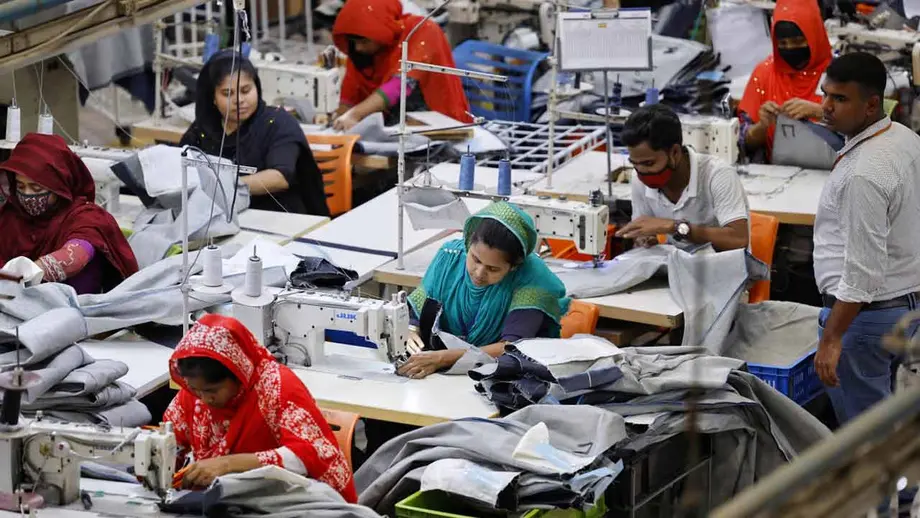
A $254 million shift in just 18 days
International fashion retailers moved about $254 million worth of garment orders out of Bangladesh between November 1 and 18, 2026, according to three Bangladeshi factory owners familiar with the business. India received the largest share, while Vietnam, Cambodia and Indonesia also gained work. The diverted orders were equal to nearly one tenth of Bangladesh's monthly garment orders.
Contents
- A $254 million shift in just 18 days
- The losses reach far beyond the diverted orders
- How the crisis unfolded
- Why a 36% wage rise failed to end the protests
- Why delivery dates now matter as much as price
- Why India has an advantage
- Orders cancelled, postponed or moved
- The government rejection and the political blame
- December 16 raises the stakes for stability
- What happens next for workers and buyers
- What to Know
The owners named Zara, H&M, Marks & Spencer and Celio among the retailers involved. They spoke without being identified because they feared damaging their relationships with international buyers. Inditex, which owns Zara, declined to comment. Marks & Spencer, H&M and Celio did not respond to requests for comment, and no public breakdown shows how much business each brand moved.
An order diversion means that a retailer has clothing made by a supplier in another country instead of waiting for production to resume at its original factory. For the buyer, this can protect delivery dates for new clothing collections. For a Bangladeshi manufacturer, it can mean idle sewing lines, cancelled work and export income going to a competitor.
The factory owners described the shift as a major blow to an industry built on competitive production costs. They also warned that the consequences could outlast the immediate unrest if buyers become comfortable with suppliers that deliver on schedule elsewhere.
The losses reach far beyond the diverted orders
The Bangladesh Garment Manufacturers and Exporters Association, known as BGMEA, put production losses from the protests at more than $400 million. Its survey of 317 factories produced a more precise estimate of $428 million in losses during the first 18 days of November. The industry findings also counted around 59 million pieces of confirmed garment orders that moved to competing countries, with more than 600 factories affected by the wider disruption.
The two dollar figures measure different problems. The $254 million estimate concerns work reassigned to other countries, while the $428 million figure covers production lost during factory stoppages and other disruption. A factory can lose valuable operating days even when an order has not formally been cancelled.
Manufacturers in and around Dhaka lost an estimated 20 to 25 production days. That created backlogs just as buyers were pressing for strict shipment dates. Some factories considered overtime and expensive air freight to catch up. Sending garments by aircraft can protect a delivery appointment, but it also consumes more of the manufacturer's earnings than conventional sea transport.
The national stakes are considerable because garments supplied $38.7 billion of Bangladesh's $48 billion in total exports during the financial year ending in 2026. That is about 81% of export earnings. The industry employs approximately 4.4 million people and provides nearly 40% of the country's manufacturing jobs, so prolonged stoppages affect household incomes as well as government foreign currency earnings.
How the crisis unfolded
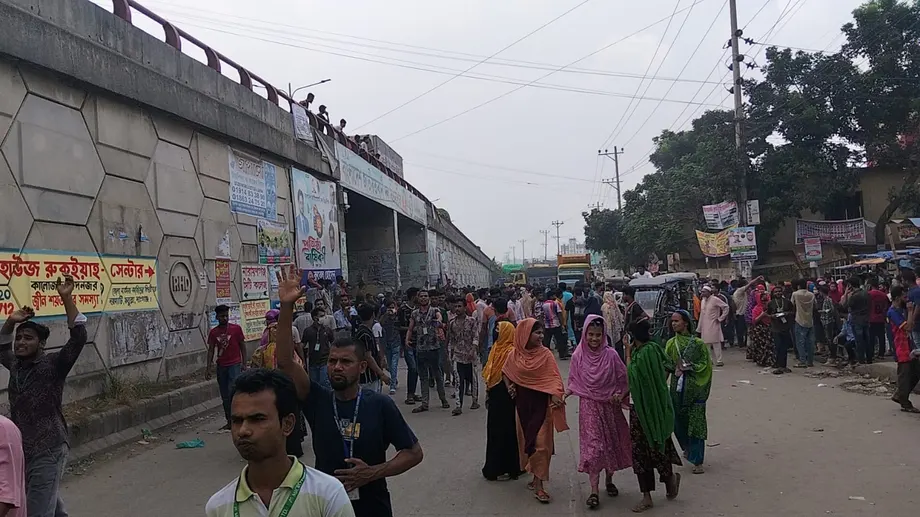
The order shifts came during several weeks of labour protests, factory closures and political tension. The main dates show how the industrial dispute and the political crisis began to overlap.
- Late October: Protests over garment wages intensified, with unrest spreading around Dhaka and important production centres including Gazipur and Narayanganj. Road blockages, clashes and factory closures interrupted output.
- November 1 to 18: Factory owners said brands diverted approximately $254 million in orders. BGMEA's survey put production losses at $428 million across 317 factories during the same 18 days.
- November 25: The government approved a 36% increase in the garment minimum wage. The decision failed to meet union demands and was followed by further clashes.
- November 26: Garment workers protested in Gazipur, where security forces fired tear gas. Production was disrupted at 405 factories on the day after the wage decision, although the disruption began easing afterward.
- November 28: Labour Ministry secretary Abdur Rahman Tarafder hoped workers would return to their jobs, while government adviser Ruhul Kabir Rizvi publicly rejected the accounts of orders moving abroad.
- December 1 and December 16: The Bangladesh Nationalist Party planned a Victory Month rally on December 1, while former prime minister Sheikh Hasina's stated intention to return on December 16 kept political tension high.
The wage decision therefore came after buyers had already begun moving work. The largest political tests were still ahead when manufacturers were trying to restart production and reassure customers.
Why a 36% wage rise failed to end the protests
The government appointed Minimum Wage Board raised the minimum monthly garment wage from Tk12,500 to Tk17,000. The increase of Tk4,500 was approximately 36%, but it was also described as the smallest rise in four decades.
Workers had demanded Tk30,000, more than double the previous minimum. The approved figure was Tk13,000 below that demand. Two board members had supported Tk18,000, which was still Tk1,000 above the final amount. Fresh clashes with police followed the announcement.
Abdur Rahman Tarafder, secretary of the Ministry of Labour and Employment, called the increase "satisfactory" and said he hoped all garment workers would resume work on Saturday, November 28. No nationwide attendance figure accompanied his appeal.
Manufacturers said the increase would narrow Bangladesh's labour cost advantage over India at the same time as utility and raw material bills were rising. Union groups countered that garment pay in Bangladesh remained low by international industry standards.
Babul Akhter, a union leader and a representative of workers on the wage board, also challenged the reasoning behind the order diversions. He said retailers already include political instability and labour unrest in their sourcing decisions. In his view, using the latest unrest to justify moving business was hard to justify and raised serious doubts about whether it was being used as an excuse.
Why delivery dates now matter as much as price
M. Mohiuddin Chowdhury, a BGMEA director, said factories were being squeezed by higher wages, utility bills and raw material costs while buyers demanded lower prices. Energy shortages, worsened by the crisis in the Middle East, added another expense by forcing some factories to obtain power from costlier alternative sources.
Delivery speed has become central to this contest. The lead time is the period between placing an order and completing production and delivery. Chowdhury said rival manufacturing centres generally need 60 to 90 days, compared with about 120 days in Bangladesh.
India can deliver about a week faster than Bangladesh, according to his estimate. Vietnam and Cambodia can shorten lead times by as much as 15 days. Those differences matter when a retailer has already booked shop space, advertising and distribution around a particular launch date.
Chowdhury explained the buying calculation in his own words.
Price becomes secondary when brands are under pressure to meet strict delivery deadlines.
This helps explain why higher wages alone do not settle the argument. A cheaper factory can still be unattractive if unrest or power interruptions make its shipment date unpredictable.
Why India has an advantage
India already has a large textile and clothing manufacturing base. Ministry of Textiles figures put India's textile and apparel exports at Rs3.09 lakh crore in the 2025 to 2026 financial year, with finished garments accounting for Rs1.39 lakh crore. One lakh crore equals 1 trillion rupees, so those figures represent Rs3.09 trillion and Rs1.39 trillion respectively. Finished garments therefore made up about 45% of the total.
The trade agreement between India and Britain could also improve the position of Indian clothing in the British market, where Bangladesh has traditionally benefited from preferential access. Vietnam, Cambodia and Indonesia remain alternatives for retailers seeking to spread production across several countries rather than depend on one supplier base.
Indian textile shares rallied after the order shifts became public. Gokaldas Exports rose by as much as 11%, while Trident gained about 5%. Welspun Living, KPR Mill and Vardhman Textiles each advanced around 2%. Investors were responding to the possibility that Indian exporters could win additional business.
Orders cancelled, postponed or moved
Khan Monirul Alam, managing director of Alps Apparels Group, offered a direct account of the commercial damage. His company mainly supplies European brands, and he said new business began drying up at the start of November.
Since November 1, most of my buyers have stopped placing orders because of the unrest. They are telling us our orders have been shifted, postponed or cancelled and that they have already found alternative solutions.
BGMEA president Mahmud Hasan Khan declined to identify the brands involved. He said temporarily moving some orders elsewhere could help the industry retain international clients while limiting financial losses. That approach treats immediate delivery as essential to preserving a customer relationship, even when production cannot proceed as planned in Bangladesh.
Factory owners remain concerned about the next round of orders. Their fear is that a buyer which finds dependable production elsewhere may continue using that supplier after Bangladeshi factories reopen.
The government rejection and the political blame
Ruhul Kabir Rizvi, political adviser to Prime Minister Tarique Rahman and acting secretary general of the Bangladesh Nationalist Party, rejected the accounts of garment orders shifting abroad on November 28. Speaking at a press briefing at the party's central office in Nayapaltan, Dhaka, he described them as misleading and part of a coordinated campaign to undermine the government.
Rizvi said the government had responded promptly to workers through discussions and steps addressing legitimate dues and minimum wages. He urged journalists to verify information and accused some people within the administration and media of diverting public attention and creating confusion.
The more objective news the media publishes and the stronger the media becomes, the stronger democracy will be. But misinformation is dangerous for democracy.
His statement did not provide an alternative value for diverted orders. Rizvi also accused the Awami League of trying to portray Bangladesh internationally as unstable through killings and bloodshed. While making that allegation, he cited the deaths of Raju Molla in Faridpur, Shahinur Rahman in Narail and Sohel Rana, along with killings in Gopalganj and Narsingdi.
Rizvi separately announced that the BNP would open its Victory Month programme with a rally at Suhrawardy Udyan on December 1. Prime Minister and BNP Chairman Tarique Rahman was scheduled to attend as chief guest, with the rally set to begin at 2pm.
December 16 raises the stakes for stability
Sheikh Hasina's possible return from exile in India has added another layer of uncertainty. The former prime minister has said she intends to return on December 16. She was convicted in absentia of crimes against humanity and sentenced to death over the use of excessive force against protesters who drove her from office in August 2024.
The Rahman government has said it would carry out the sentence if she returns and has demanded that India extradite her as a prisoner. India has refused previous extradition requests. Hasina's Awami League was banned from politics after she went into exile, while paramilitary forces were deployed in anticipation of further unrest before December 16.
The date is already emotionally charged because it is Bangladesh's Victory Day, marking the 1971 victory associated with independence from Pakistan. Rizvi described it as the culmination of a long struggle to protect sovereignty. No detailed public travel arrangements for Hasina's return were available, leaving factories and buyers to prepare for the possibility of more disruption around an important national anniversary.
What happens next for workers and buyers
Bangladeshi manufacturers say restoring predictable production is the immediate task. Overtime may reduce backlogs, while air freight may rescue selected shipments, but both increase costs. Workers whose factories were idle face uncertainty over shifts and income even when export orders eventually resume.
Chowdhury warned that improved conditions would not automatically bring the work back.
The challenge is restoring buyers' confidence before temporary shifts become long-term sourcing decisions. Brands have options. They will not wait for us if instability persists.
For Indian garment workers, additional orders could lead to recruitment, longer hours or higher production targets for existing employees. The outcome will depend on whether retailers place repeat orders and sign longer commitments with suppliers. No factory hiring totals or contract lengths have been disclosed, so the scale and durability of any employment gain are not yet known. Some orders could return to Bangladesh if production stabilises quickly, but no brand has given a public timetable for that decision.
What to Know
- Factory owners estimated that $254 million in garment orders left Bangladesh between November 1 and 18, 2026.
- India received the largest share, with Vietnam, Cambodia and Indonesia also attracting business.
- BGMEA's survey of 317 factories recorded $428 million in production losses and about 59 million pieces of orders shifted abroad.
- The minimum monthly wage rose from Tk12,500 to Tk17,000, well below the Tk30,000 demanded by workers.
- Manufacturers around Dhaka lost an estimated 20 to 25 production days.
- Competing production centres generally deliver within 60 to 90 days, compared with about 120 days in Bangladesh.
- Government adviser Ruhul Kabir Rizvi dismissed the order diversion accounts as misleading on November 28.
- A BNP rally was planned for December 1, while Sheikh Hasina's stated return date of December 16 remained a major source of political tension.