A Celebration With a Practical Message
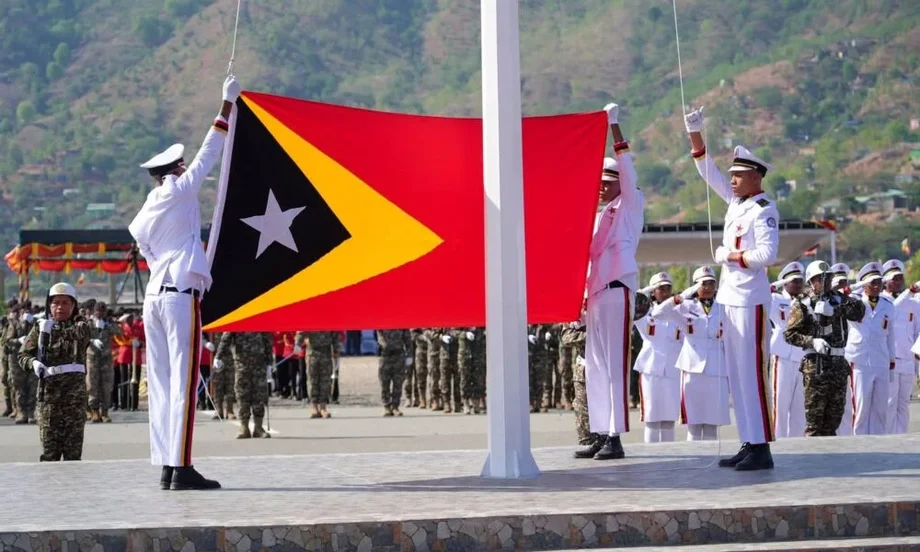
President José Ramos-Horta led the raising of Timor-Leste's national flag at Tasi Tolu in Dili on Saturday, November 28, 2026, marking 51 years since the proclamation of independence on November 28, 1975. He used the anniversary to argue that political freedom must now produce economic sovereignty, with more national production, exports, decent employment and responsible investment.
Contents
- A Celebration With a Practical Message
- Why November 28 Still Matters
- What Economic Sovereignty Means
- Gas, Industry and Jobs
- Independence Measured in Daily Life
- Democracy Beyond Elections
- Palomita's Death and the Demand for Safety
- Climate Pressure and Water Security
- Viqueque Honors Its Veterans
- Regional Duties and the Next Deadlines
- What to Know
The official theme connected 51 years of history with consolidating stability and promoting sustainable development. Guests included Papua New Guinea Prime Minister James Marape, Vanuatu Prime Minister Jotham Napat, former Vanuatu Prime Minister Barak Tame Sopé and Portugal's Minister of the Presidency, António Leitão Amaro. Representatives of state institutions, the diplomatic corps and international organisations also attended.
Ramos-Horta said Timor-Leste possesses valuable natural resources, agricultural land, a young population, a strategic location and cultural and natural attractions. Those assets, he said, should support a country capable of financing public services without compromising the wealth inherited by future generations. His speech joined that economic programme to demands for stronger courts, less poverty, modern public administration, action against domestic violence and preparation for climate pressures.
Why November 28 Still Matters
The anniversary commemorates the proclamation of independence rather than the restoration of effective national government in 2002. Community representative João Pedro Corte-Real said the date symbolises freedom and the right of the Timorese people to determine their own future. He recalled dictatorship, discrimination and restricted access to education under Portuguese rule, while noting that the proclamation came before Indonesia's invasion.
- November 28, 1975: Timor-Leste proclaimed independence as Portuguese colonial rule was ending.
- The Indonesian invasion followed, beginning 24 years of occupation, resistance and suffering.
- 2002: Timor-Leste restored its independence and began governing itself.
- October 2025: The country became ASEAN's 11th member.
- November 28, 2026: ceremonies in Dili and the municipalities marked the proclamation's 51st anniversary.
Ramos-Horta thanked Portugal, Vanuatu, African countries that use Portuguese, the Community of Portuguese Language Countries and people who sheltered resistance representatives or kept Timor-Leste on the international agenda. He gave particular recognition to former Vanuatu Prime Minister Walter Lini for defending Timorese rights in the Pacific and at the United Nations.
Geniva Livania da Costa, a student at São Jose Externato school, said the new generation should honour those who endured the 24 year struggle, preserve its history and help build peace. Her appeal reflected a recurring message of the day: remembrance carries responsibilities for citizens who did not experience the liberation struggle themselves.
What Economic Sovereignty Means
The Petroleum Fund sat at the centre of Ramos-Horta's economic warning. The fund is the state's savings vehicle for petroleum income, helping pay for public expenditure while preserving wealth for the future. The president called it a national achievement and an essential development asset, but said natural resources are finite and the fund cannot be treated as an unlimited source of public financing.
He requested management based on prudence, transparency, accountability and a vision extending beyond electoral cycles. A balanced fiscal policy must also raise revenue for education, health, infrastructure, security and other services. Workers on low incomes, particularly those dependent on the minimum wage, should be able to live with dignity.
Farmers and cooperatives were promised continued support through technical knowledge, irrigation, improved seeds, credit, storage, transport and access to markets. Ramos-Horta said the state must build roads, bridges, electricity, water and sanitation systems and provide dependable public services. Public investment, however, should not indefinitely replace the productive initiative of families, communities and businesses.
National Parliament President Maria Fernanda Lay connected that programme to political stability and government continuity. She said some targets in Timor-Leste's development plan through 2030 have been achieved while others remain outstanding, requiring a common review of how the budget is executed. She also identified public concern about access to health facilities and basic infrastructure.
Gas, Industry and Jobs
Ramos-Horta described maritime boundaries with Australia and land and sea boundaries with Indonesia as important affirmations of sovereignty. He praised Prime Minister Kay Rala Xanana Gusmão's leadership in securing those gains, while stressing that maritime resources must now produce tangible national development. Greater Sunrise and the Tasi Mane energy programme are expected to support investment, employment and the transfer of knowledge.
The speech followed Timor-Leste's move toward full control of Greater Sunrise. On October 27, national petroleum company Timor GAP agreed to buy Woodside Energy's 33.44 percent interest for up to US$200 million. Combined with the planned acquisition of Osaka Gas's 10 percent share, the transactions would give Timor GAP complete ownership when both are completed, which is targeted for the first half of 2027. The fields contain an estimated 5.3 trillion cubic feet of natural gas.
On November 10, the government also launched a US$12 million investigation of the proposed pipeline route to Natarbora on the south coast. The initial geophysical work was expected to last four months and examine seabed conditions and hazards before engineers complete the design. Greater Sunrise remains a much larger undertaking than the purchase of ownership interests, requiring financing, technical expertise and production facilities.
The president also cited a refinery, a gas pipeline, conversion of electricity plants to use natural gas and solar developments in Manatuto and Laleia. Solar power is intended to support the Tsuneishi Shipbuilding facility at Laleia. The shipbuilding and repair yard is expected to create about 4,000 jobs and begin operating in 2028. Industrial parks at Tíbar and Laleia and the Suai Supply Base could provide work for national suppliers, training for employees and new activity in services, agriculture and commerce.
Independence Measured in Daily Life
Ramos-Horta said Timor-Leste continues to face multidimensional poverty, child malnutrition and unequal access to essential services between urban and rural communities. Multidimensional poverty measures deprivation across areas such as health, education and living conditions, rather than considering income alone. He also identified stunting, in which chronic nutritional deficiency holds back a child's growth and development.
President Ramos-Horta explained the meaning of independence through the circumstances of a household struggling to meet its basic needs.
For a family without sufficient income to feed its children, independence must translate into food security and employment opportunities.
He called for increased health funding to improve salaries, working conditions and transport for professionals serving the municipalities. That attention should extend from cleaning staff and cooks to technicians, midwives, nurses and doctors. Education funding should similarly support teachers from preschool through university, across general and polytechnic education.
Schools, universities, polytechnics, training centres and businesses were asked to cooperate more closely. Ramos-Horta identified demands for skilled workers in agriculture, construction, health, education, tourism, digital technology, industrial maintenance and renewable energy. He called Timorese youth the country's greatest asset, while noting that a young population becomes an advantage only when education, healthcare, housing, social protection and jobs are available.
His social programme included early childhood investment, fuller participation by women, protection of children, equal opportunities for persons with disabilities and use of skills acquired by Timorese living abroad. Eliana Martins, a young citizen speaking in Dili, carried the same argument into a direct request: education should receive adequate investment so the next generation can contribute to national development.
Democracy Beyond Elections
Ramos-Horta said democracy requires more than holding elections. It depends on independent institutions, accessible and impartial justice, competent public administration, a free press and citizens who can exercise their rights without fear. Constitutional rights, he added, must become concrete guarantees for poor people, vulnerable groups and those least able to make their voices heard.
He named judicial independence, action against corruption, equality before the law and accountability for public officials as indispensable pillars of the republic. Cooperation among the presidency, government, National Parliament and courts should respect each institution's constitutional powers. Legitimate political disagreement must not paralyse the state or obstruct establishment of the Supreme Court of Justice, and no party, leader or officeholder stands above the republic.
The president described his own Majistratura ba Influénsia as a responsibility to use presidential standing to promote dialogue, stability and the national interest. He also criticised excessive bureaucracy and unnecessarily complex procedures. Administrative reform should include simpler processes, digital government, responsible use of artificial intelligence, training for civil servants and protection of citizens' data.
The practical goals are easier access to documents for families at home and through consular services abroad, better access to public services for farmers and a predictable environment for businesses. Ramos-Horta also connected efficient administration with curbing corruption, improving budget execution and ensuring public resources reach intended recipients.
Palomita's Death and the Demand for Safety
The killing of Palomita Gusmão Guterres in Tasi Tolu on November 18, 2026, gave the ceremony a sombre focus. Ramos-Horta renewed his condolences to her family and described her death as an irreparable loss and a painful warning about violence against women and domestic abuse. He said such violence is a social problem and a human rights violation, not a private matter to remain hidden inside a home.
President Ramos-Horta addressed Timorese men directly, connecting personal dignity with conduct toward women and other vulnerable people.
Our dignity and our masculinity are demonstrated through respect, responsibility and protection, never through intimidation or violence.
The case has been classified as aggravated homicide under Article 139 of the Penal Code, which carries a prison sentence of 12 to 25 years. Dili District Court ordered three defendants detained before trial and placed two others under identity and residence terms, known as TIR, a restrictive measure short of detention. Ramos-Horta asked families, communities and state institutions to strengthen prevention, protect victims and hold aggressors accountable.
Legal reform proposals have followed. The Lei Palomita initiative is FRETILIN's proposed Prevention and Combating of Femicide Law, formally tabled in the National Parliament on November 23, 2026. The initiative was led by Nurima Ribeiro Alkatiri and co-sponsored by Cristina Yuri Rebelo, Helena Martins and Aniceto Longuinhos Guterres Lopes. It would amend the Penal Code to create an autonomous femicide offence, defined as killing a woman for gender-related reasons, with a proposed sentence of 15 to 25 years' imprisonment, rising to 30 years in the most serious cases. The current code provides eight to 20 years for simple homicide under Article 138 and 12 to 25 years for aggravated homicide under Article 139.
The bill would also ban the use of dowry, honour or traditional settlements to reduce sentences and require the National Police of Timor-Leste and Public Prosecution to carry out a risk assessment on every complaint within 72 hours. It proposes a dedicated General State Budget allocation, a national femicide data system and an annual report to Parliament. The initiative has not been enacted and requires parliamentary approval. FRETILIN is not requesting an accelerated procedure and has sought scrutiny by Commission A. Public hearings are proposed to begin in January 2027, with plenary debate scheduled for February 2027. No date for a parliamentary vote was announced at the ceremony. Data cited from the United Nations Committee on the Elimination of Discrimination against Women indicate that more than half of Timorese women aged 15 to 49 have experienced physical or sexual violence from a male partner.
Marcelina Fátima, who sells fruit in Dili, said the killing made her fear for women conducting ordinary business. She requested stronger legislation and serious government action against perpetrators. Her concern gave practical force to Ramos-Horta's closing message that freedom and dignity require women to live safely and without fear at home and in public life.
Climate Pressure and Water Security
Ramos-Horta warned that irregular rainfall, extreme weather, coastal erosion and environmental degradation threaten agriculture, fisheries, food security and access to services. He said adaptation finance must produce reliable water supplies, protection for coasts, infrastructure able to withstand severe weather and farming methods suited to changing conditions, rather than remain a collection of pledges.
The president described how those changes reach households and isolate communities.
When the rains are delayed, farmers are left uncertain about when to sow their crops. When water sources diminish, families face even greater hardship. When storms or floods destroy roads and bridges, entire communities can become isolated.
He said Timor-Leste already experiences water stress and called for investment in collecting water from different sources, strategic storage, wastewater treatment and reuse. Domestic conservation must match the country's international environmental advocacy, including protection of its soils, rivers, forests and coastal areas.
Smoke from seasonal fires in Indonesia, particularly Papua, affected Timor-Leste with unusual intensity for the first time in 2026, worsening air quality. MapBiomas Indonesia data for January through September recorded 313,777 hectares burned across Papua's six provinces. The figures also listed 297,732 hectares in Bali, Nusa Tenggara and Maluku, 258,149 hectares in Kalimantan and 233,474 hectares across Sumatra, Java and Sulawesi.
Viqueque Honors Its Veterans
The municipal commemoration in Viqueque began at 8:30 a.m. with the raising of the national flag on the Viqueque town football field. Francisco Cruz Simões de Gonzaga Soares, president of the Viqueque Municipal Authority, asked residents to preserve peace, stability and unity. He warned young people about crime and irresponsible use of artificial intelligence to create and share inappropriate images on social media, and asked parents to guide their children's online activity.
One hundred and twelve veterans in grades 2 and 3 received Diplomas of Honour. Colonel Manuel Freitas of the F-FDTL, known as Mau-Buti, presented them on behalf of the president. The recognition rests on Law No. 3/2006 of April 12, the Statute of National Liberation Combatants, including Articles 23(b) and 30, as amended by Law No. 3/2024 of June 12.
Adriano Câmara, president of the municipal veterans council and known as Lentil, said the diplomas recognise sacrifice and provide a historical legacy for families. Veteran Daniel Sarmento, known as Fogeti, welcomed the honour as recognition for himself and his generation. Câmara also urged martial arts organisations to remain sporting activities that teach discipline, rather than becoming instruments of fighting, group division or instability.
In Dili, Leonardo Pinto Soares expressed pride that Timorese people can now conduct their daily activities freely. His requests were concrete: roads, clean water and electricity should reach the municipalities. Those appeals echoed Lay's concern about basic services and Ramos-Horta's argument that independence must improve everyday life beyond the capital.
Regional Duties and the Next Deadlines
Preparations for international events form another part of the government's economic programme. Ramos-Horta cited the CPLP Games, Dili International Marathon, Tour de Timor, Festival Fronteira, Rabilau Festival, PermaYouth Camp TL and Science Expo as opportunities for tourism, youth participation and international promotion. Hotels, transport, telecommunications, internet access, online markets and electronic financial services must improve if Timor-Leste is to host larger gatherings.
Full ASEAN membership in October 2025 opened further opportunities for trade, investment, training and educational exchange. Timor-Leste is now preparing for its planned ASEAN presidency in 2029. India's External Affairs Minister S. Jaishankar sent anniversary greetings to Foreign Minister Bendito dos Santos Freitas and reaffirmed India's commitment to bilateral relations and its partnership with ASEAN. He also recalled Indian President Droupadi Murmu's visit to Timor-Leste in August 2024 and her participation in the Horta Show hosted by Ramos-Horta.
The World Health Organization's South-East Asia Region has also identified Timor-Leste as the second ASEAN member, after Thailand, to develop a National Essential Diagnostics List. Such a list helps a health system prioritise essential tests and related technologies. India developed the first list globally, while Nepal was the third country to do so.
The public dates attached to the anniversary programme now extend from completion of the Greater Sunrise ownership transactions in the first half of 2027 to the shipyard's planned opening in 2028 and the ASEAN presidency in 2029. Together, they provide concrete points against which the government's promises on investment, employment and international readiness can be measured.
What to Know
- Timor-Leste marked the 51st anniversary of its November 28, 1975 independence proclamation with ceremonies in Dili and the municipalities.
- Ramos-Horta called for economic sovereignty through more production, exports, decent jobs and responsible management of the Petroleum Fund.
- Greater Sunrise, Tasi Mane, industrial parks and a Laleia shipyard are central to the government's employment and investment plans.
- The shipyard is expected to create about 4,000 jobs and start operating in 2028.
- Poverty, child malnutrition and unequal services prompted requests for increased health, education and vocational training investment.
- The president demanded independent courts, accountable institutions, simpler administration and responsible use of artificial intelligence.
- Palomita Gusmão Guterres's killing on November 18 prompted FRETILIN's Lei Palomita bill, which proposes 15 to 25 years in prison for femicide, rising to 30 years in the most serious cases, with plenary debate scheduled for February 2027.
- Climate priorities include water storage, wastewater reuse, coastal protection and practical support for vulnerable communities.
- Viqueque honoured 112 veterans, while citizens requested better roads, water, electricity, schools and health services.
- Timor-Leste is preparing for its planned ASEAN presidency in 2029 after becoming the bloc's 11th member in October 2025.