Timor-Leste Seizes Control as Major Energy Partners Step Away
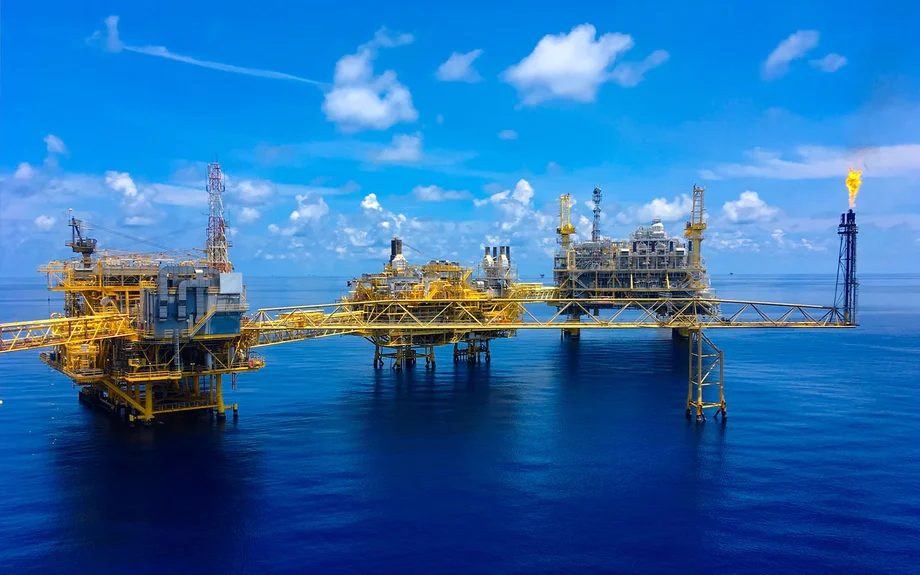
Timor-Leste is forging ahead with its ambitious Greater Sunrise oil and gas project after taking full control of the multi-billion-dollar offshore development. The strategic shift follows the decision by Australian energy giant Woodside to sell its 33.44 percent participating interest back to the Timorese government. The transaction, formalised on October 27, 2026, transfers the stake to state-owned petroleum company Timor GAP for up to US$200 million. Combined with a separate agreement by Osaka Gas to sell its 10 percent share in September 2026, Timor GAP is set to hold full ownership of the resource once both deals complete in the first half of 2027. This move ends Woodside's involvement in the Sunrise Joint Venture after more than 25 years of planning and negotiations. The Greater Sunrise fields sit in the Timor Sea approximately 150 kilometres south of Timor-Leste and 450 kilometres north-west of Darwin, Australia, holding an estimated 5.3 trillion cubic feet of natural gas. Prime Minister Kay Rala Xanana Gusmão told Parliament that the acquisition is the culmination of nearly seven years of talks aimed at ensuring the gas is piped to Timor-Leste for domestic processing rather than to existing facilities in Darwin. The government has staked its economic future on the development, creating friction with international energy firms that previously favored the lower-cost Australian option.
Contents
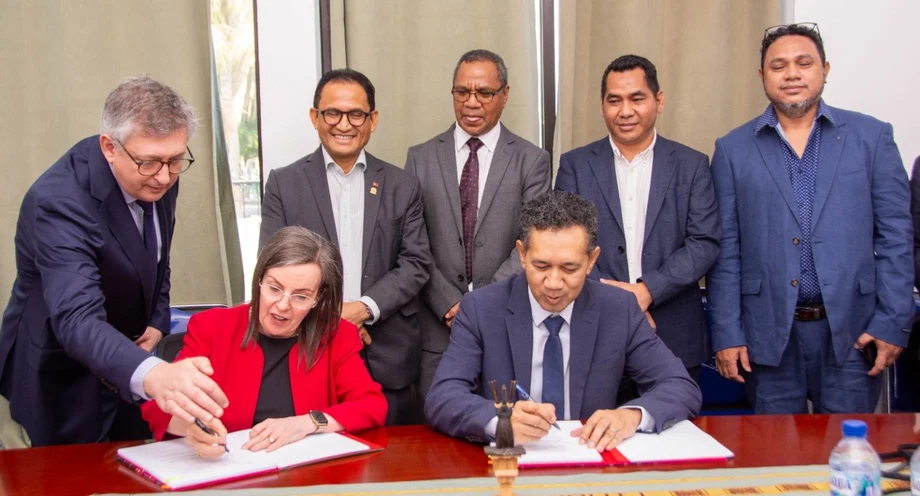
The agreement between the Ministry of Petroleum and Mineral Resources of Timor-Leste and Woodside Energy Ltd was officially signed on November 25, 2025, as detailed in the ministry's Cooperation Agreement. This pact outlines plans to study and mature a greenfield liquefied natural gas concept capable of producing roughly five million tonnes per year, alongside a domestic gas facility and a helium extraction plant. First production is targeted to begin as early as 2032 to 2035, subject to final investment decisions.
International Inquiries and Geopolitical Interest
Following the departure of all four major oil and gas companies previously involved in the venture, the Timorese government has opened discussions with alternative investors from around the globe. Petroleum Minister Francisco da Costa Monteiro stated that companies from Russia, China, Japan, Europe, and America have expressed interest in participating in the project. The involvement of foreign powers has sparked intense debate among analysts regarding the geopolitical implications of the development. Prime Minister José Ramos-Horta previously noted in 2022 that his country would be very interested in Chinese financing, and government officials held discussions with state-owned giant Sinopec in 2024. Industry experts point out that because the resource is relatively small by global standards and the onshore processing model faces commercial hurdles, traditional western energy companies have stepped back. This leaves room for state-backed entities that might view the project through a strategic lens rather than a purely commercial one. Energy analysts suggest that a China-backed pathway is one of the few realistic scenarios for the project to proceed given its commercial challenges, though such an outcome raises serious questions about economic sovereignty and regional security dynamics.
Commercial Viability and Mounting Financial Risks
Independent energy analysts continue to question whether the project makes economic sense under the government's preferred model of building a dedicated pipeline and processing plant on the southern coast. Leading oil and gas analyst Saul Kavonic from MST Financial warned that the resource size is insufficient to support the high costs of a standalone domestic development. Total development costs have historically been estimated between US$14.1 billion in a 2021 government-commissioned report and US$20.5 billion in a 2015 assessment. Financing such a massive undertaking poses a severe challenge for Timor-Leste, which currently has no operating petroleum fields producing royalties. The nation's sovereign wealth fund, the Petroleum Fund, holds about US$18 billion, but international bodies and local watchdogs have warned that reserves could be depleted by the late 2030s without new revenue streams. Marta Da Silva, head of the local accountability organization La'o Hamutuk, cautioned that the country is running toward a fiscal cliff due to a lack of transparency surrounding how the government intends to fund the multi-billion-dollar price tag. The government has stated its aim to finance the project through 30 percent equity and 70 percent project finance, relying heavily on foreign capital markets and sovereign reserves.
Infrastructure Preparations and Seabed Surveys
Despite financial warnings, the government is pressing ahead with physical preparations on the ground and at sea. Prime Minister Xanana Gusmão recently launched a seabed mapping mission to determine the safest route for the proposed pipeline traversing the deep Timor Trough. Fugro Singapore Marine was contracted to carry out a US$12 million geophysical and geotechnical survey along the corridor connecting Greater Sunrise to Natarbora on the southern coast. This marine investigation follows earlier government spending on infrastructure along the southern corridor, including a highway and an international airport built under the Tasi Mane initiative. Officials intend for these transport and industrial links to support an economic hub that creates local jobs and builds technical capacity. Alongside these national efforts, Timor-Leste has looked to regional partners for technical training. Petroleum Minister Francisco da Costa Monteiro met with Vietnamese Ambassador Pham Binh Dam to discuss cooperation between state-owned enterprise Timor GAP and Petrovietnam. The discussions included proposals for Timorese engineers and technicians to train at established Vietnamese facilities in preparation for domestic construction projects. Furthermore, First Abu Dhabi Bank expressed interest in financing large-scale infrastructure related to the Greater Sunrise development following discussions with President José Ramos-Horta in Abu Dhabi, signaling that Middle Eastern institutional capital is also evaluating the project.
Timeline of Key Developments
- 1974: The Greater Sunrise gas fields are discovered in the Timor Sea.
- 2018: Australia and Timor-Leste sign a permanent maritime boundary treaty establishing the Greater Sunrise Special Regime.
- November 25, 2025: The Ministry of Petroleum and Mineral Resources and Woodside Energy sign a Cooperation Agreement for a Timor-based liquefied natural gas concept.
- October 27, 2026: Woodside announces an agreement to sell its 33.44 percent participating interest to Timor GAP for up to US$200 million.
- November 10, 2026: Timor-Leste launches a US$12 million seabed survey to map the pipeline route to Natarbora.
- November 20, 2026: Petroleum Minister Francisco da Costa Monteiro meets with Vietnamese officials to discuss energy cooperation and technical training.
At a Glance
- Timor-Leste acquired Woodside's 33.44 percent stake in Greater Sunrise, bringing the nation close to full control alongside an earlier deal with Osaka Gas.
- Development cost estimates range from US$14.1 billion to US$20.5 billion, creating significant fiscal exposure for the nation's sovereign wealth fund.
- The government plans to fund the project using 30 percent equity and 70 percent project finance while targeting first LNG production between 2032 and 2035.
- Companies from China, Russia, and other nations have expressed investment interest following the exit of traditional western energy operators.
- Analysts and accountability groups warn of commercial viability hurdles and potential risks to the country's long-term economic sovereignty.