A seabed investigation begins before the pipeline is built
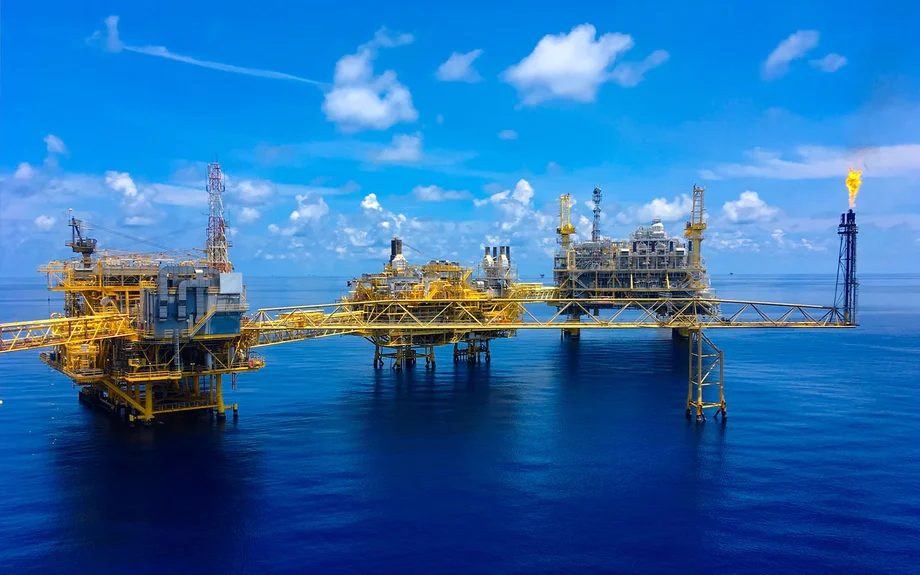
Timor-Leste announced the launch of a US$12 million survey on November 10, 2026, to investigate a pipeline route from the Greater Sunrise gas field to Natarbora on its southern coast. The work will examine the seabed along a proposed connection that the government wants to use to bring offshore gas ashore for processing.
Contents
- A seabed investigation begins before the pipeline is built
- What the first survey will measure
- Testing the ground and observing the sea
- A separate contractor will carry out lighter testing
- How the work is scheduled
- What the announced budgets cover
- Ownership changes are moving alongside the surveys
- Legal approvals have their own timetable
- Why the route matters for Natarbora
- Key Points
Petroleum and Mineral Resources Minister Francisco da Costa Monteiro said the high resolution geophysical survey would take four months. Fugro Singapore Marine will carry out the work as the opening stage of a wider marine investigation, followed by studies that test the ground beneath the seabed.
The immediate task is to find a suitable route and identify hazards before engineers complete the pipeline design. Monteiro said earlier feasibility studies had found the project technically possible, while the new investigations would provide the detailed information needed for infrastructure intended to operate for 30 years or longer.
The route crosses the Timor Trough, where Fugro describes survey depths reaching 3,000 metres and, in its earlier contract announcement, exceeding that depth in parts of the wider survey area. At such depths, specialist vessels, underwater equipment and careful measurements are needed to understand where a pipeline could safely rest.
The government is also investigating connections from Bayu-Undan and Chuditch to Natarbora. Fugro's published contracts specifically describe the Greater Sunrise export pipeline and the Bayu-Undan Pipeline Highway, placing those two corridors at the centre of its announced survey programme.
For Natarbora, the work advances planning for a proposed liquefied natural gas development, known as TLNG. LNG is natural gas cooled into a liquid so that ships can carry it to customers. The pipeline would be the connection between the offshore resource and the planned facilities on land.
What the first survey will measure
Fugro's initial contract announcement describes geophysical, seismic, autonomous underwater vehicle and environmental surveys across the Greater Sunrise and Bayu-Undan development areas. Together, those activities will map conditions along the proposed pipeline corridors.
Geophysical surveys use instruments to measure the seabed and investigate features beneath it. Seismic equipment uses sound to help reveal layers below the seafloor, while autonomous underwater vehicles, or AUVs, are unmanned craft that can carry survey instruments through the water.
Engineers need that information to choose where a pipeline should go, design it for local conditions and identify geological hazards. A route may need to avoid unstable slopes or areas where the ground could move. Monteiro specifically identified the possibility of ground collapse as something the investigations would examine.
Fugro said the offshore campaign would include environmental survey activities, alongside the measurements used for routing and engineering. Its regional centres in Kuala Lumpur and Perth will process the data and check its quality before it is used in project decisions.
Testing the ground and observing the sea
Fugro's September contract announcement, published on September 24, identifies two additional awards: a heavy geotechnical survey and a metocean survey. The first is planned to take six months, and the second 12 months, with fieldwork scheduled to begin in the first quarter of 2027.
Geotechnical work tests the physical properties of the seabed, including the strength and behaviour of its soils. Sampling and laboratory analysis help engineers understand how the ground would support a pipeline. Metocean work measures weather and ocean conditions, providing a different set of information about the environment in which construction and operations would take place.
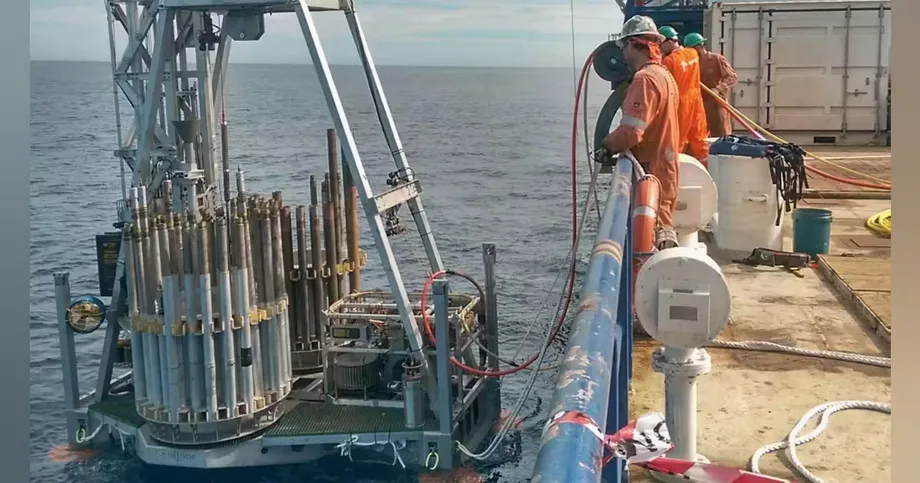
Fugro plans to deploy its Seafloor Drill and SeaScout 35 MKII Cone Penetration Testing systems. Cone penetration testing pushes an instrument into the ground and measures resistance, helping specialists assess the layers below the seabed.
The company's Remote Operations Centre in Kuala Lumpur will connect specialists on land with the teams working offshore. Safri Drahman, Fugro's Asia Pacific Regional Business Line Director, described the purpose of the initial survey award:
By combining advanced geophysical, seismic and AUV technologies with our strong regional expertise, we will deliver the critical Geo-data needed to support the safe and successful development of this strategically important energy infrastructure.
A separate contractor will carry out lighter testing
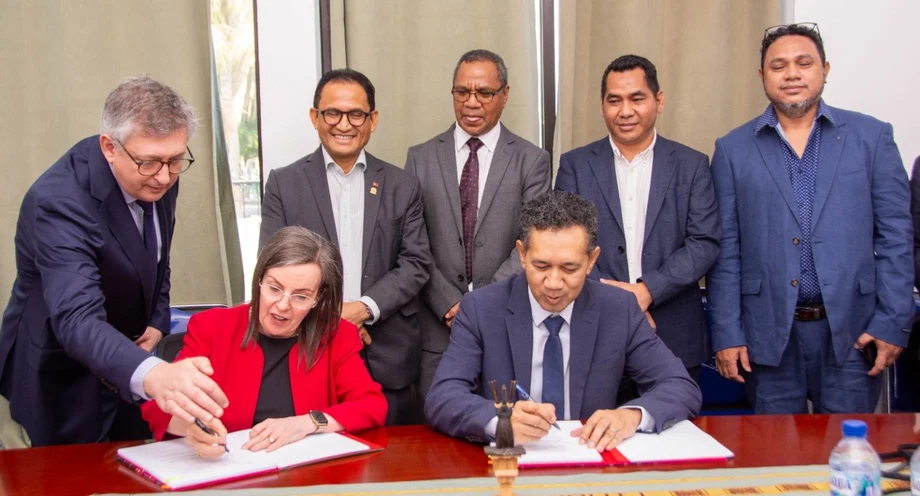
Indonesia's PT Taka Hydrocore signed an agreement with the ministry on September 24, 2026, for a Light Geotechnical Investigation along the Greater Sunrise and Bayu-Undan routes to Natarbora. That assignment is separate from Fugro Singapore Marine's work.
Monteiro said the PT Taka activity was funded with more than US$10 million and would take six months. It involves collecting samples in the Timor Sea, with the results to be incorporated into subsequent design work for the proposed LNG development.
PT Taka executive director Syukri Fitrialdi said the company would use equipment and technical services in areas deeper than 3,000 metres. The company said it had 20 years of experience in the sector.
The November launch account described the September agreements as heavy and light geotechnical work involving Fugro. Fugro's own announcement identifies its additional awards as heavy geotechnical and metocean surveys, while the September signing account identifies PT Taka as the light geotechnical contractor. Those descriptions matter because each assignment collects a different part of the information needed for the route.
How the work is scheduled
Monteiro placed the start of the geophysical survey in November 2026 and gave it a duration of four months. Fugro's initial contract announcement scheduled offshore operations for the fourth quarter of 2026 and estimated approximately three months at sea, after mobilisation and planning during the third quarter.
Fugro's September statement had instead referred to geophysical work in the third quarter of 2026, followed by the next survey stages in early 2027. The November launch announcement places the start in the fourth quarter. The main dates and planned stages are:
- July 17, 2026: Fugro announced the geophysical survey contract, according to its September statement.
- September 24, 2026: Fugro announced heavy geotechnical and metocean awards; PT Taka signed the separate light geotechnical agreement.
- November 10, 2026: Timor-Leste announced the launch of the geophysical survey, with a four month duration given by the minister.
- First quarter of 2027: Fugro plans to begin six months of geotechnical fieldwork and 12 months of metocean fieldwork.
The November account put the wider field data collection programme at about a year. Fugro's schedule gives the metocean component alone 12 months from its planned start in early 2027, extending that work into 2028 if the timetable holds.
What the announced budgets cover
Monteiro identified US$12 million as the budget for the high resolution geophysical survey itself. His September description of the PT Taka work put that separate activity at more than US$10 million.
Those two amounts together exceed US$22 million, although they relate to different assignments and announcements. Fugro's official September statement did not disclose prices for its heavy geotechnical or metocean contracts.
The minister said further survey work had been included in the ministry's submitted budget proposal for 2027. Spending on the investigations therefore stretches beyond the November launch and into the next budget year.
The survey budgets pay for information needed before major construction commitments: mapping, sampling, testing and analysis. A date for pipeline construction or the first delivery of gas was not given in the launch announcement. The next scheduled activities are the surveys in early 2027, while route selection and engineering will use their findings.
Ownership changes are moving alongside the surveys
Timor GAP, the national petroleum company, signed an agreement on October 27, 2026, to buy Woodside Energy's entire 33.44% interest in Greater Sunrise for up to US$200 million. The Woodside stake purchase agreement, combined with a separate agreement to acquire Osaka Gas's 10% interest, would bring the resource entirely under Timor GAP's control once both transactions are completed.
Woodside and Timor GAP are targeting completion of their transaction in the first half of 2027, subject to government, regulatory and joint venture approvals. That places the proposed ownership change in the same period as the next major survey stages.
The purchase terms connect much of Woodside's payment to later progress. US$13.71 million is payable when the sale closes, US$11.29 million follows a final investment decision, and US$175 million is tied to the first LNG cargo. A final investment decision is the formal commitment to finance and proceed with a project.
The first cargo payment represents 87.5% of the maximum US$200 million price. Timor GAP would gain control through the ownership transactions while taking responsibility for advancing the engineering, financing and construction needed to reach that milestone.
Legal approvals have their own timetable
Timor-Leste and Australia have also reached technical agreement on three documents governing Greater Sunrise: the Petroleum Mining Code, the Production Sharing Contract and the Fiscal Regime. The agreement on three frameworks was discussed at a September 25 meeting in Dili involving Prime Minister Kay Rala Xanana Gusmão, Monteiro and Australian Special Envoy Katrina Cooper.
The Petroleum Mining Code sets the rules for petroleum activity. The Production Sharing Contract governs the relationship with the contractor and the allocation of production under the contract. The Fiscal Regime sets taxation and other fiscal obligations.
The documents must pass through approval procedures in both countries. In Timor-Leste, the announced process involves the Council of Ministers and then the National Parliament. The evaluation was expected to take about three months, pointing to around December 2026 if that estimate holds.
Monteiro said work in 2027 would focus on the approved single development concept and detailed design. The seabed investigations, ownership transactions and government approvals are therefore advancing on parallel schedules, each addressing a different requirement for development.
Why the route matters for Natarbora
Natarbora is the planned destination for both the Greater Sunrise export pipeline and the Bayu-Undan Pipeline Highway in Fugro's programme. Bringing the corridors to the same coastal area connects the offshore investigations directly to the government's proposed LNG development.
Timor-Leste wants processing on its southern coast to support industry, employment and export earnings. For engineers, the immediate challenge is more specific: determine the route, test the ground and provide a sound basis for the pipeline and associated facilities.
The scale of the next stages is much larger than the survey programme. An independent assessment in 2018 put Greater Sunrise development costs at US$15.6 billion, a historical estimate that illustrates the size of the undertaking beyond purchasing ownership interests and investigating the seabed.
Greater Sunrise was discovered in 1974 and has spent more than five decades awaiting production. The November launch moves work toward a more detailed understanding of the route to Timor-Leste. The practical results will be measurements, samples and engineering information that help determine how that connection can be built.
Key Points
- Timor-Leste announced a US$12 million geophysical survey on November 10, 2026, for the proposed Greater Sunrise pipeline to Natarbora.
- Monteiro said the survey would take four months; Fugro's initial announcement estimated approximately three months of offshore operations.
- Fugro plans six months of heavy geotechnical fieldwork and 12 months of metocean fieldwork beginning in the first quarter of 2027.
- PT Taka Hydrocore has a separate light geotechnical assignment lasting six months, funded with more than US$10 million.
- The surveys will examine seabed conditions in the Timor Trough, including areas around 3,000 metres deep and beyond.
- Ownership transactions, legal approvals and engineering work are progressing alongside the surveys. No construction or first gas date was announced.