A Letter From Tokyo Puts a Fourth Term in Focus
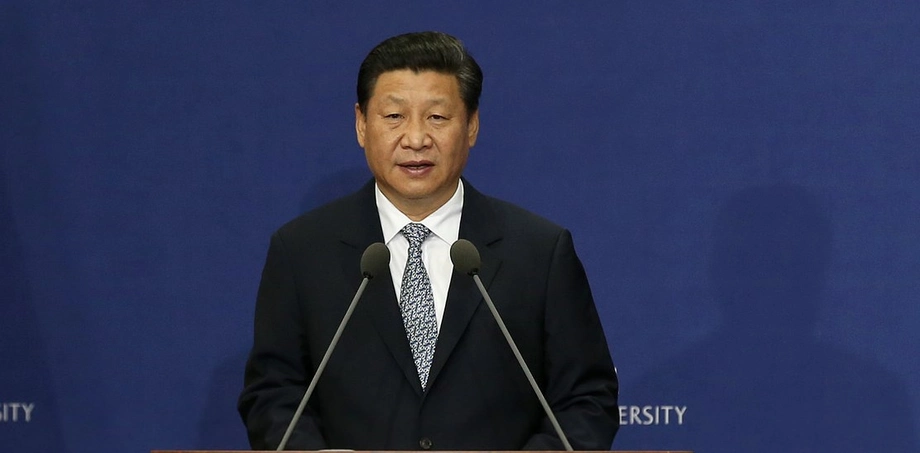
Xue Jian, a Chinese businessman aged 36 who says he controls a retail group listed in Shanghai, has published a rare open letter asking President Xi Jinping, who is also Communist Party leader, to give up another term and hand power to a temporary transition body. The letter, dated November 21 and written in Tokyo, appeared on X on November 26 through an account known as Teacher Li Is Not Your Teacher. Xue Jian, the businessman named as author, then confirmed that he had written it:
Contents
- A Letter From Tokyo Puts a Fourth Term in Focus
- Who Is Xue Jian?
- What the Letter Asks Xi to Do
- A Generational Argument in Personal Terms
- From Ren Zhiqiang to the Shanghai Lockdown
- How Wenfeng Says Its Sale Attempts Were Blocked
- The Economic Warning in the Letter
- Why This Letter Stands Out
- What Is Still Unknown
- What Happens Next
- Key Points
The letter was written by me.
The timing is sensitive. Xi is expected to seek a fourth term at next year's 21st National Party Congress. A real name appeal from a company chairman with business interests and employees still inside China stands out in a political system where open criticism of the top leader can carry severe costs.
Who Is Xue Jian?
Xue Jian was born on January 16, 1990, in a small town in northern Jiangsu. He is chairman of Jiangsu Wenfeng Group and the actual controller of Wenfeng Shares (601010), shares listed in Shanghai and traded mainly in yuan inside mainland China. His company operates department stores, supermarkets, commercial property and hotels, with its base in Nantong, Jiangsu province.
Xue led the acquisition of Jiangsu Wenfeng Group in 2018 and became one of the youngest leaders among China's top 500 private enterprises. Xue Jian, recalling his first day as chairman in 2018, described a private reaction that contrasted with the public praise:
What he did not know was that, at that moment, I felt no joy at all. Instead, I was filled with fear.
That fear, he wrote, came as the Constitution was amended to remove the presidential term limit and the Supervision Law took effect. The Supervision Law created a wider role for liuzhi, a form of supervisory detention used by Party investigators. Xue said friends were held for months, made to sit still for long hours and threatened with pressure on their families.
What the Letter Asks Xi to Do
The letter is a political plan, not a simple complaint. It asks Xi to forgo another term, step down from his main Party and state posts, publish the country's real fiscal accounts and local government debt, and allow a transition lasting one to two years. During that period, Xi would remain chairman of the Central Military Commission for security, then hand over military power when a new constitution takes effect.
Xue proposed a seven member National Emergency Committee authorized by the Central Committee, the Party's top body between congresses. Four members would be chosen by Xi and three by civil society. He named Cai Qi, Wang Xiaohong, Li Qiang and Peng Liyuan as possible Xi choices, and Ren Zhiqiang, Jimmy Lai and Liu Xia as civil society examples. The new constitution, he wrote, should protect private property, establish the rule of law, safeguard citizens' freedoms, lift the ban on forming political parties and return state power to the people.
The plan also includes a special amnesty for Xi, his family and Central Committee members, plus protection for the jobs of more than seven million civil servants. Xue put the chance of success at about 30 percent. He asked governments at every level to stop placing private entrepreneurs in supervisory detention or arresting them, and he urged authorities to allow Ren Zhiqiang, a jailed businessman whose health he said had worsened, to receive medical treatment outside prison.
A Generational Argument in Personal Terms
Xue built the letter around paired childhood scenes. He was nine in 1999, when his school began computer classes and he opened a QQ account. He noted that Xi was nine in 1962, when Xi's father, Xi Zhongxun, was purged. At 13, Xue read online about the famine of 1959 to 1962, while Xi, according to the letter, was subjected to a struggle session at school. At 15, Xue spent evenings in internet cafes; Xi was sent to Liangjiahe to work in the countryside.
Xue Jian, chairman of Jiangsu Wenfeng Group and author of the letter, said younger generations could not be asked to live by the rules of an earlier era:
You cannot demand that we live the way your generation once did, much less demand that the entire country return to the days before 1978.
The letter says Xue never went to university, entered business at about 20 and worked his way up with family support. His argument links personal opportunity to political openness, and he uses that history to reject a return to the years before China's reform era.
From Ren Zhiqiang to the Shanghai Lockdown
Ren Zhiqiang, a retired property executive and son of a former vice minister of commerce, met Xue in 2014. Ren was known as an outspoken member of the Communist elite, and he introduced Xue to the Alashan SEE Ecological Association, an environmental group for entrepreneurs. Ren Zhiqiang, a retired property executive who worked with Xue in that environmental group, told him in 2014 that legal protections were essential for lasting stability:
Yes. Because that is the only way this country can enjoy lasting peace and stability.
Their later conversations turned darker. Xue wrote that Ren first defended Wang Qishan's anti corruption campaign as genuine, then said in 2018 that Wang might be discarded after serving his purpose. Ren sent Xue an essay criticizing Wang in 2019. In 2020, Ren was sentenced to 18 years in prison after writing an essay critical of Xi's handling of the COVID-19 pandemic. Xue said Ren's son received nine years and associate Dong Guoqiang received ten.
Shanghai's 2022 lockdown changed Xue's own calculations. He said he was confined to his home and office for more than a month, heard of residents unable to reach hospitals and medicines, and arranged for his father, diagnosed with advanced stomach cancer, to have surgery in Japan because treatment at home was not available. He decided in April 2022 to leave China.
How Wenfeng Says Its Sale Attempts Were Blocked
Jiangsu Wenfeng Group is based in Nantong and runs retail, commercial real estate and hotels. Xue said its hotel business kept losing money after the pandemic, leaving the group needing cash to repay loans and pay wages. In his letter, he listed about 10 billion yuan in group assets, while the listed company held about 6 billion yuan in total assets, 4 billion yuan in net assets, 1 billion yuan in cash and nearly 900,000 square metres of commercial property, with about 10,000 employees.
The sequence he described runs across several years:
- 2018: Xue led the acquisition of Jiangsu Wenfeng Group and became chairman.
- 2022: The Shanghai lockdown and his father's illness pushed him to leave China.
- 2023: After entrepreneur Zheng Yonggang died in Japan, Xue posted on WeChat Moments asking the government to stop arresting private entrepreneurs. He said instructions attributed to Cai Qi and Li Shulei reached Jiangsu and Nantong, a provincial publicity team visited the company, and his WeChat functions were blocked.
- September 2024: After speaking again about Ren's illness, Xue said authorities began investigating him.
- 2025: The company faced continuous investigation, and old friends in China were summoned for interviews.
- December 2025 to April 2026: A 5 percent stake sale was blocked by the Jiangsu Securities Regulatory Bureau. A buyer offered 1.25 billion yuan for 20 percent of the company, then a Shenzhen buyer offered 950 million yuan, and a revised 750 million yuan deal for 15 percent and control was halted after the bureau asked the Shanghai Stock Exchange to stop it.
- Late April 2026: Wenfeng Shares received an ST risk warning, a marker used for companies with serious financial or internal control risks.
- July 17, 2026: The China Securities Regulatory Commission opened an investigation into Wenfeng Shares and Jiangsu Wenfeng Group over suspected disclosure violations linked to the 2026 interim report.
Xue Jian, describing the 1.25 billion yuan offer, wrote that a deputy secretary-general of the Nantong Party committee rejected the buyer by phone:
We do not welcome this buyer.
Xue said Wenfeng Shares lost about 60 percent of its market value, falling from roughly 5 billion yuan to under 2 billion yuan. He said he would accept the loss of his own assets in China, but wanted the company saved for its workers. Shen Jung-chin, a professor in National Taiwan University's Department of International Business, noted that the share price had dropped to just over 1 yuan, close to the delisting line, while the company moved into loss and faced an internal control risk warning. The company's operating problems and the regulatory investigation add context to the share price fall alongside Xue's account of blocked sales.
The Economic Warning in the Letter
Xue used Wenfeng's troubles to argue that China's economy is close to a sharp break. He described a condition he called multi organ failure and warned that a delay of one year could cost the country the chance of a peaceful transition. His letter urges the government to publish accurate data on fiscal shortfalls, local state enterprise liabilities, hidden debt, bank bad loans and usable foreign exchange reserves.
The figures he cited cover property, jobs, debt and energy. Xue said property values had fallen about 50 percent from their peak, erasing roughly 200 trillion yuan in value. He cited 725 million people employed in 2025, 320 million flexible workers in the first quarter, and a broader estimate of more than 400 million people in flexible work or underemployment. He also cited 63,000 retirements a day and 120 million personal loan defaults, meaning borrowers who had failed to repay loans.
Xue said all 31 provinces and equivalent regions had negative local finances once hidden debt was counted. Hidden debt means borrowing kept outside official budgets, often through local financing vehicles. He wrote that some counties in northern Jiangsu borrowed at 12 percent to 15 percent interest to pay civil servants, and that one county raised tens of billions of yuan. He linked the risks to US tariffs and energy pressure, saying refined fuel prices had risen more than 20 percent while Shandong local refineries ran at about 50 percent capacity.
Why This Letter Stands Out
Open letters to China's top leader are rare. Real name appeals from active or recently active business figures are rarer, because their companies, employees and family connections can remain exposed to government pressure. Xue is in Tokyo, but Wenfeng's workforce and assets are in Jiangsu, and he said about 10,000 employees were waiting for clarity over wages.
Cai Shenkun, a commentator living in the United States, said the letter showed how private entrepreneurs had moved from confidence to disappointment. He said criticizing government problems was not betrayal of the country, and argued that national renewal requires independent thought, freedom and dignity. Yaita Akio, executive director of an Indo Pacific strategy think tank and a former China bureau correspondent for a Japanese newspaper, said the author's identity carried the strongest message. Foreign critics can be dismissed as hostile, he said, while a sitting chairman with employees still depending on him is harder for Beijing to brush aside.
What Is Still Unknown
By the time of publication, there was no response from Chinese authorities and no public statement from Jiangsu Wenfeng Group. The author was identified as Xue in the letter, and an X account bearing his name confirmed it, but his current whereabouts and personal safety had not been independently confirmed.
Corporate disclosures support parts of the company timeline, including the ST warning and the July 17 investigation. The claims about officials blocking stake sales, pressure over WeChat posts and instructions attributed to Cai Qi and Li Shulei come from Xue's letter. No timetable was given for the securities investigation, and no date has been announced for any decision on his political proposal.
What Happens Next
The next political marker is the 21st National Party Congress, expected next autumn. Under Party rules, the Central Committee handles major decisions between congresses, which is why Xue framed his proposed emergency committee as needing Central Committee authorization. The plan would require decisions that have not been announced: Xi's consent, a Party process for transition, a constitution drafting effort and a vote or implementation mechanism.
For Wenfeng, the immediate issues are the securities investigation, the ST warning and staff wages. A company placed under ST warning can face tighter trading rules and greater scrutiny; if problems are not resolved, delisting risk grows. Xue has said the letter was his response after warning local and regulatory bodies that blocked sales would leave the company without cash. Whether that appeal changes the company's path or the political calendar is not yet clear.
Key Points
- Xue Jian, aged 36, published a letter dated November 21 in Tokyo and released on X on November 26.
- The letter asks Xi Jinping to forgo another term, create a seven member transition committee and accept a new constitution within one to two years.
- Xue says Wenfeng's sale attempts were blocked, its market value fell from about 5 billion yuan to under 2 billion yuan, and about 10,000 employees face uncertainty.
- The letter cites property losses of about 200 trillion yuan, 120 million personal loan defaults and deficits across 31 provinces and equivalent regions.
- Xue asks for Ren Zhiqiang's medical release and an end to supervisory detention and arrests of private entrepreneurs.
- No response from Chinese authorities or statement from Jiangsu Wenfeng Group had been reported, and the securities investigation has no announced timetable.