A Party Meeting With a Nuclear Message
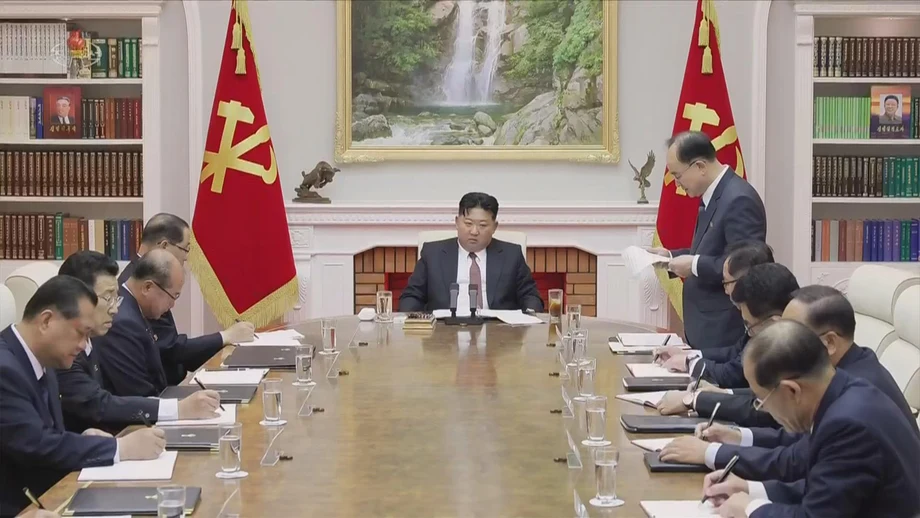
North Korea will convene the 3rd Plenary Meeting of the 9th Central Committee of the Workers' Party of Korea in late December, as Kim Jong Un presses a nuclear agenda that changes the terms of any future dialogue with the United States. The party's Political Bureau made the decision on November 27, and state media announced it on November 28. The meeting will review how party and state policies were carried out in 2026, set the work direction for 2027 and decide on issues tied to strengthening the socialist system.
Contents
- A Party Meeting With a Nuclear Message
- What Late December Is Expected to Cover
- Key Dates Behind the Announcement
- What Kim Unveiled at the Facilities
- What Experts Say the Display Means
- Why Tactical Nuclear Weapons Matter
- Was a Submarine Reactor Shown?
- Trump, the IAEA and Seoul's Response
- What Is Not Yet Known Before December
- Key Points
North Korea is governed mainly through the Workers' Party. A party congress is the formal gathering for top decisions, but it does not meet every year. During the gaps, a plenary meeting, which brings together the full Central Committee, handles major domestic and foreign policy choices. Recent North Korean leaders have used such gatherings near the end of the year to reveal the next year's priorities.
What Late December Is Expected to Cover
The Political Bureau, the party body that made the convening decision, gave the plenary a formal mandate. It did not announce an exact day, and state media gave no agenda beyond the broad tasks in the decision.
The Political Bureau said the meeting would:
Summarize the implementation status of party and state policies for 2026, establish the work direction for 2027, and decide on a series of important issues arising in consolidating and developing the socialist system.
North Korea has held similar meetings in recent years to set out economic projects, military goals and foreign policy themes. The coming session is likely to show whether Pyongyang turns the recent nuclear display into a formal line for 2027. Attention is focused on the message to the United States and South Korea, because Kim has spent the past week saying that North Korea will not return to talks about giving up its weapons.
Kim Jong Un, North Korea's leader, had already left room for diplomacy on November 22 while receiving credentials from ambassadors of 10 countries. He said:
We pursue neither hegemony nor expansion. We are willing to strengthen bonds of friendship and cooperation with all nations that respect our state sovereignty and treat us in a friendly manner.
Key Dates Behind the Announcement
The plenary announcement followed a rapid sequence of diplomacy, nuclear signaling and international concern. The main dates are:
- November 18, 2026: Rafael Grossi, director general of the International Atomic Energy Agency, told the agency's Board of Governors that an extension to the original enrichment facility at Yongbyon had been under construction since the middle of September and was externally complete by late October.
- November 19: Satellite images published by the Institute for Science and International Security showed new construction at Yongbyon.
- November 22: Kim told newly appointed ambassadors from 10 countries that North Korea seeks neither hegemony nor expansion and is willing to strengthen ties with countries that respect its sovereignty.
- November 25: Kim inspected two facilities producing material for nuclear weapons, one newly opened and one being expanded, along with an equipment base for work related to nuclear power and the Nuclear Weapons Institute. Donald Trump said in an interview that he could restart contact with Kim.
- November 26: State media released images of centrifuges, warheads and equipment that appeared linked to a submarine reactor program.
- November 28: The Workers' Party announced that the plenary meeting would be held in late December.
This sequence matters because it shows two tracks running at once. Trump kept offering a possible meeting, while Kim used state media to say that the nuclear arsenal is permanent and that North Korea is in no hurry.
What Kim Unveiled at the Facilities
Kim's November 25 visit was his fourth public visit to a nuclear facility since September 2024, after trips in September 2024, January 2025 and June 2026. An official at South Korea's unification ministry said it was the first time Kim had visited an equipment production base for nuclear power work. North Korean state media did not disclose the locations of the sites.
Kim toured a newly built base producing material for nuclear weapons, a second base being expanded, an equipment base for nuclear power work and the Nuclear Weapons Institute. He reviewed progress on the nuclear strategy plan set out at the ninth Workers' Party congress in February, when North Korea reaffirmed its status as a state with nuclear weapons under a military modernization plan covering five years.
Photographs showed Kim and senior officials walking between dense rows of machines that appeared to be centrifuges. A centrifuge spins material at high speed to separate isotopes; in this setting, the purpose is to enrich uranium so it can be used in nuclear weapons. The images also showed halls with warhead casings, some blurred. South Korean analysts assessed the newly shown enrichment site as likely a new nuclear material production facility at Yongbyon, separate from the site shown in June and the complex known as Kangson.
Kim Jong Un, North Korea's leader and chairman of its State Affairs Commission, used the visit to declare that the country's nuclear status was fixed in the constitution and beyond bargaining. State media quoted him as follows:
The status of our country as a nuclear weapons state, permanently fixed by the constitution, the supreme law, is absolutely inviolable.
Kim also said North Korea would not ask other countries to accept its status. Earlier negotiations often centered on whether Pyongyang would give up weapons in exchange for sanctions relief or security guarantees. His wording suggests he wants any future bargaining to start from a different premise. He warned that any attempt to deny or seize the constitutional status would be treated as an open declaration of war.
What Experts Say the Display Means
Park Won-gon, a professor at Ewha Womans University, reads the disclosure as an effort to make North Korea's status as a state with nuclear weapons irreversible in the eyes of the outside world. He said Pyongyang wants future talks with the United States to focus on reducing nuclear arms rather than dismantling the program. His reading is that Kim is telling Washington not to raise denuclearization if it wants a meeting.
Moon Seong Mook, an analyst at the Korea Research Institute for National Strategy based in Seoul, said Trump still holds to the US position that North Korea must denuclearize. Moon said Kim's message was to show strength and reject that agenda before any summit. Moon also said the inspection was likely a check on how well the nuclear program met state goals for the year and what targets should be set before the plenary meeting.
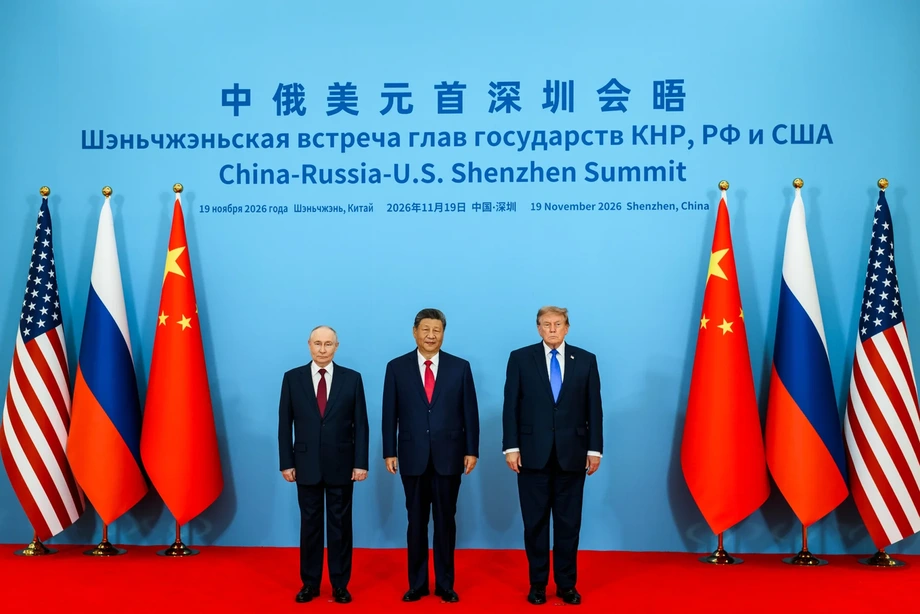
Yang Moo-jin, a chair professor at the University of North Korean Studies, said the timing was not accidental. The United States, China and Russia had issued a declaration at the APEC summit in Shenzhen that put nuclear risk reduction and nonproliferation dialogue in writing. Yang said Pyongyang disclosed a nuclear production site soon afterward to block any arrangement that would treat North Korea as a target of denuclearization in a framework led by major powers.
Hong Min, a senior research fellow at the Korea Institute for National Unification, described the North's use of strategic stability as a way of entering a concept once reserved for major powers. Strategic stability means a situation where states with nuclear weapons believe neither side gains from striking first. Hong said North Korea had long been treated as outside that relationship, but six days after the meeting of the US, Chinese and Russian leaders it placed its own nuclear posture inside the idea. The ruling party newspaper said the posture gave new stability to regional and world peace and security.
Lim Eul-chul, a professor at South Korea's Kyungnam University, said Pyongyang was raising the level of any future meeting. In his reading, denuclearization talks are over and future talks would take place only on a nuclear state versus nuclear state basis. Choi Yong-hwan, vice president of the Institute for National Security Strategy, said displaying weapons and facilities normally kept hidden was a way of saying that North Korea has made this many and can never go back. Ankit Panda, a senior fellow at the Carnegie Endowment for International Peace, said the image showed the greatest number of nuclear warhead types seen in a single North Korean image, with five separate casing designs including a very large warhead.
Why Tactical Nuclear Weapons Matter
Kim's instruction about battlefield weapons was as specific as his broader claim about nuclear statehood. He said the nuclear weapons industry should pay attention to using tactical nuclear weapons assigned to different missions across multiple domains, citing the reality of sharing a border with what he called the most hostile enemy state, a reference to South Korea.
Tactical nuclear weapons are arms intended for use on a battlefield, such as warheads for missiles with shorter ranges, artillery, mines or portable systems. Unlike weapons built to travel long distances and threaten strategic targets, they are designed for military forces in a campaign. Their smaller explosive yields can make them easier to imagine using in a crisis, which is why analysts worry about a lower threshold for use.
Hong Min said Kim's words pointed to use from land, air, sea and underwater platforms. Yang Wook, a research fellow at the Asan Institute for Policy Studies, said North Korea is developing strategic weapons to deter the United States and tactical weapons for use on the Korean Peninsula at the same time. Yang identified Hwasan-22 as the main strategic warhead and Hwasan-31 as the main tactical warhead.
State media photos showed Hwasan-31-1, Hwasan-31-2 and Hwasan-31-3, along with Hwasan-25, Hwasan-21, Hwasan-24, Hwasan-22 and Hwasan-14. Analysts identified small warheads about 50 centimeters in diameter built in variants for ballistic missiles and cruise missiles. Shin Jong-woo, secretary general of the Korea Defense and Security Forum, said the images also appeared to show peanut shaped and rugby ball shaped hydrogen bombs in the Hwasan series.
Was a Submarine Reactor Shown?
Among the equipment shown on November 25, the most consequential mystery was a set of cylindrical units beside Kim. State media called the site an equipment production base for nuclear power work. Analysts said the silver and black units could be reactor and shielding equipment for a submarine powered by a nuclear reactor.
One analysis tied the equipment to a submarine of about 8,700 tons, while another described a vessel of about 8,000 tons. State media did not confirm either figure. It also did not say whether the equipment was a small modular reactor, a compact reactor design that can produce power for a vessel without the large infrastructure of a civilian power plant.
Shin Jong-woo said North Korea aimed to launch a submarine powered by a nuclear reactor around the middle of next year and that the objects were tentatively taken to be a reactor and shielding device. The possibility of technology transfer from Russia could not be ruled out in the analyses. If North Korea can build a submarine that stays submerged for long periods, it would improve its ability to survive a first attack and strike back, an ability known as second strike.
Trump, the IAEA and Seoul's Response
Trump has repeatedly said he wants another meeting with Kim. A meeting on the sidelines of the APEC summit in Shenzhen did not happen, and North Korea did not publicly respond to the offer. Trump said Kim had not ignored him and that the timing was not right.
Donald Trump, the president of the United States, said in an interview this week that contact with Kim could resume later. He said:
No, he didn't ignore it. You know, we had many leaders there ... There'll be a time when we meet ... It was just not really the right time. It was a very busy two-day period.
Trump also said he could revive diplomacy by restarting letters exchanged with Kim during his first term, though he acknowledged that they had not corresponded recently. Kim met Trump three times during that term. Since then, Pyongyang has continued to expand its arsenal while Washington's stated policy has remained that North Korea must denuclearize. The timing also coincides with debate in Iran over nuclear deterrence after the war involving Iran, the United States and Israel.
Fissile material means material that can sustain a nuclear chain reaction and serve as the core of a nuclear weapon. North Korea can produce both enriched uranium and plutonium at Yongbyon. Estimates from weapons experts put its production at material for about six bombs a year during Trump's first term and material for about 12 to 15 bombs a year now. That is roughly twice to two and a half times the earlier pace. North Korea is believed to have material for about 50 nuclear warheads, though the secrecy of the program prevents confirmation.
Rafael Grossi, director general of the International Atomic Energy Agency, has warned that North Korea is expanding work at Yongbyon, the country's main known nuclear complex. The agency monitors nuclear programs and works to prevent civilian nuclear technology from being used for weapons. Grossi told the IAEA Board of Governors on November 18 that the extension to the original Yongbyon enrichment facility had been under construction since the middle of September and was externally complete by late October.
The ongoing expansion of the DPRK's uranium enrichment programme remains a cause for serious concern.
Satellite images published on November 19 showed new construction at Yongbyon. Analysts said the new buildings could support uranium enriched to lower levels for civilian use or uranium enriched for weapons. They considered the weapons purpose more likely because North Korea had already invested in large sites for lower enrichment work. Former South Korean Unification Minister Chung Dong-young said last year that North Korea operated four uranium enrichment facilities running every day. North Korea has not allowed the agency to fully assess the site.
Kim also declared that the international nuclear nonproliferation system had collapsed and that the danger of nuclear use was rising day by day. He accused Washington of pushing allies toward submarines powered by nuclear reactors and nuclear sharing, citing AUKUS, the security partnership of the United States, Britain and Australia. Nuclear sharing means arrangements under which one country's nuclear weapons could be made available for use by another under agreed plans. Kim said North Korea would never abuse its nuclear state status while continuing to build its arsenal.
South Korea's Ministry of National Defense said it takes Kim's comments about battlefield nuclear weapons with great seriousness. It said Pyongyang must stop justifying nuclear development and comply with United Nations Security Council resolutions that prohibit its nuclear weapons and ballistic missile programs. Chung Binna, a spokesperson for South Korea's defense ministry, said Seoul views North Korea's declaration of wider operational use of tactical nuclear weapons as grave.
Chung said South Korea would maintain military readiness through extended deterrence, the US commitment to defend an ally with the full range of its military capabilities, including nuclear weapons. She pointed to South Korea's three axis deterrence system, a plan to counter North Korean threats before, during and after an attack. It combines Kill Chain, a capability for detecting and striking threats before use; Korea Air and Missile Defense, meant to intercept incoming missiles; and Korea Massive Punishment and Retaliation, a plan for a severe response if North Korea attacks. South Korea and the United States coordinate this strategy through the Nuclear Consultative Group, whose next meeting is expected in Washington next month.
South Korea's Joint Chiefs of Staff declined to share its analysis of the facilities shown by North Korea, saying the information was confidential for South Korea and the United States. That leaves the public with images and official reactions, but no full technical assessment of the new sites.
What Is Not Yet Known Before December
Several points remain unsettled. No exact day for the plenary was given. North Korea did not say where the facilities are located, whether the cylindrical equipment was a reactor, or whether any technology came from Russia. South Korea's military withheld its technical assessment. The Nuclear Consultative Group meeting in Washington next month is the next publicly named security meeting; the plenary is due in late December.
The central political question is whether Kim uses the plenary to turn the nuclear display into a formal policy line. The evidence already points in one direction: Pyongyang is presenting its arsenal as permanent, its status as settled and any future dialogue as a negotiation between states with nuclear weapons rather than a plan to eliminate North Korea's bomb.
Key Points
- North Korea will hold the 3rd Plenary Meeting of the 9th Central Committee in late December to review 2026 policy and set direction for 2027.
- Kim Jong Un inspected nuclear material sites, an equipment base for nuclear power work and the Nuclear Weapons Institute on November 25.
- Kim said North Korea's nuclear status is fixed in the constitution and will not be put up for negotiation.
- State media showed new warheads, centrifuges and equipment that analysts linked to a submarine powered by a nuclear reactor.
- Experts said Pyongyang wants future talks about reducing nuclear arms, not denuclearization.
- The IAEA warned that North Korea is expanding enrichment work at Yongbyon, while South Korea promised stronger readiness with the United States.