A Radio Day From Earth, With No Data to Read
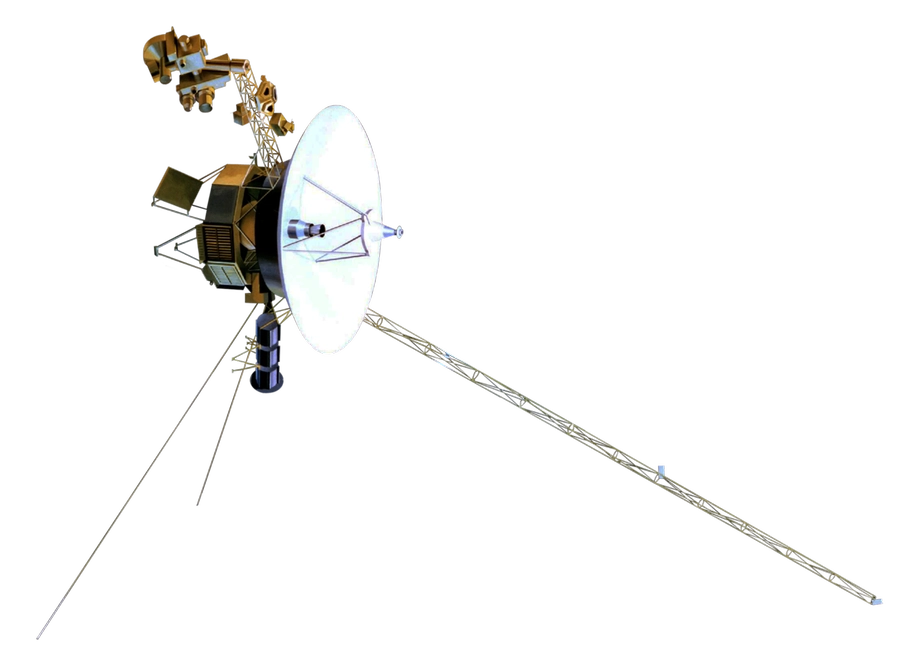
NASA's Voyager 1 crossed a threshold no spacecraft had reached before at 5:16 a.m. EST on November 18, 2026: it was one light-day from Earth, about 25.9 billion km (16.1 billion miles) away, or 173.02 astronomical units. One astronomical unit is the average distance between Earth and the Sun. The 721.9 kg craft had been travelling since September 5, 1977, for 49 years, two months and 11 days, and was moving at about 38,000 mph (61,155 km/h).
Contents
- A Radio Day From Earth, With No Data to Read
- Why one light-day is such a huge distance
- What a strong signal can and cannot say
- Why every repair takes two days
- The 2023 fault is a guide, not an answer
- A short timeline of a very long journey
- What can still be learned in interstellar space
- How a 1977 spacecraft is kept alive
- Celebration at JPL, with the fault nearby
- What comes next for the Voyagers
- Key Points
Confirmation did not arrive instantly. Because radio waves travel at the speed of light and the craft is now a full light-day away, the signal that marked the crossing reached Earth 24 hours later, at 5:16 a.m. ET on November 19. A NASA mission update on November 18 resolved the discrepancy over the receiving station: it said a Deep Space Network antenna in Canberra, Australia, locked onto Voyager 1 and received its carrier signal, rather than a ground antenna near Madrid, Spain. Mission engineers could confirm the milestone from the carrier signal and the spacecraft's known trajectory, even though the craft had stopped sending readable measurements.
That catch defined the day. Four days earlier, on November 14, Voyager 1 had slipped into an anomaly: a strong carrier signal was still arriving, but science and engineering data were not. Mission controllers could no longer check the craft's health in detail or collect readings from the thin, electrically charged gas beyond the Sun's influence. The record was historic, and the silence was real.
Why one light-day is such a huge distance
A light-day is simply how far light travels in 24 hours. Light and radio waves move at about 186,000 miles (299,000 km) per second in space, so a light-day equals about 25.9 billion km, or 25,902,068,356 km. Sunlight needs about 1.3 seconds to reach the Moon and about eight minutes to reach Earth. Sunlight takes around four hours to reach Neptune, and a signal needs about 20 more hours to travel from Neptune out to Voyager 1. For comparison, a light-year is about 5.88 trillion miles.
At Voyager 1's distance, a message from Earth takes one day to arrive and any reply takes another day to return. That makes a simple question a 48 hour exercise in patience. Asia Daily described the one light-day milestone and the rare planetary alignment that let the Voyager probes visit several outer planets while using less fuel. That alignment occurs about every 175 years. A gravity assist uses a planet's gravity and motion to change a spacecraft's path without burning much fuel.
What a strong signal can and cannot say
Voyager 1 is not silent in the radio sense. It is sending a carrier signal, the steady radio wave that normally acts as a channel for data. The carrier signal shows that the Attitude and Articulation Control computer, which keeps the antenna aimed at Earth, is still doing its job. It also shows that the transmitter is broadcasting. It does not tell engineers what the magnetometer or plasma wave instrument is measuring.
Normally, Voyager 1 sends readings in organized blocks called frames. Ground antennas must lock onto the start of each frame, a step called frame synchronization, before the data can be decoded. Without that lock, engineers can see a powerful signal but cannot pull out measurements or health updates. One way to picture it is a radio station transmitting on the correct frequency while playing no understandable audio.
Suzanne Dodd, Voyager project manager at NASA's Jet Propulsion Laboratory, said the probe was transmitting but that engineers could not decode its data:
We have an anomaly that is not something unseen before... We do have a very strong carrier signal... we're not getting the science or engineering data currently.
NASA's written statement, published at 8:37 p.m. on November 18 by the NASA Science Editorial Team, said the exact cause of the anomaly was still unknown. It said the lack of data suggested a fault in the onboard computer responsible for collecting data from the spacecraft's various subsystems, including science instruments, and putting it into the right format to be transmitted to Earth. It did not confirm that the flight data subsystem was at fault. No date was given for the return of readable data, and engineers said the diagnosis could take weeks or longer.
Why every repair takes two days
Distance turns troubleshooting into a slow conversation. A command sent from Earth now needs about 24 hours to reach Voyager 1. If the spacecraft replies, the answer needs another 24 hours to get back. Engineers cannot watch a test unfold in real time; they send instructions, wait, receive a small result and then decide what to try next.
Kareem Badaruddin, Voyager mission manager at NASA's Jet Propulsion Laboratory, described the delay by comparing it with an ordinary phone call:
Our signals to the spacecraft move at the same speed, the speed of light, but it literally takes 24 hours for them to get to it... That's how far the spacecraft is from us.
NASA listens to Voyager 1 every day and sends commands weekly, according to mission statements. The team can run scripted tests drawn from earlier fixes, but each cycle still costs about two days of signal travel. Even a one character answer takes a day to come home. Once a fault is inside a computer designed in the 1970s, the work of matching old hardware with modern diagnostics adds more time.
The 2023 fault is a guide, not an answer
Voyager 1 had the same symptom on November 14, 2023, exactly three years before the current outage. Engineers received a carrier signal with no usable science data. They traced that problem to the flight data subsystem, one of the probe's three onboard computers. The subsystem collects and packages information before it is sent to Earth.
Engineers found that a single memory chip in the flight data subsystem had failed. Removing that chip from the code path caused a cascade of problems because the remaining chips could not hold the whole program. The team divided the code into sections and made the pieces run together. Data flow returned on April 22, 2024, after months of work.
NASA has not confirmed that the 2026 fault is the same one, but the old fix is being used as a playbook. Engineers are also checking whether the new data outage is linked to a communications gap in late October 2026, when contact with Voyager 1 disappeared for about 48 hours before returning on its own.
An official NASA update published on October 29 dated the gap to October 18 and 19, when the Deep Space Network failed to detect a signal during two scheduled communications attempts 24 hours apart. The signal reappeared on October 20 before the team sent troubleshooting commands, and the spacecraft operated normally until November 14. NASA had not determined exactly what caused the incident, but engineers established that one group of thrusters went offline and their backups turned on automatically. This fault-protection response is designed to put the spacecraft into a safe, stable configuration and pause normal operations, giving engineers time to diagnose the issue and take action.
Kareem Badaruddin, Voyager mission manager, said repeated problems have become part of the job for the people flying the spacecraft:
The anomalies have become normal for us.
Kareem Badaruddin, the Voyager mission manager, added that engineers were approaching the new fault with energy:
An engineer with a problem is like a dog with a bone.
For now, the team is preserving power while it tests the suspected computer fault.
A short timeline of a very long journey
Voyager 1 began as a five year mission to study Jupiter and Saturn. It launched from Cape Canaveral, Florida, on September 5, 1977, 16 days after Voyager 2. The sister craft took a different route and later visited Uranus and Neptune, while Voyager 1 made a close pass by Saturn's moon Titan that bent its path away from the planetary realm. Together, the Voyagers studied 48 moons around the four giant planets.
- Summer 1965: Scientists identify the rare alignment of outer planets that makes a multi planet tour possible.
- September 5, 1977: Voyager 1 lifts off from Launch Complex 41 at Cape Canaveral.
- March 5, 1979: Voyager 1 flies past Jupiter, helping reveal a thin ring, moons Thebe and Metis, and volcanic activity on Io.
- November 12, 1980: Voyager 1 flies past Saturn and Titan, adding to discoveries of moons and the G ring.
- February 14, 1990: The spacecraft takes the final images used to build the Solar System family portrait.
- August 25, 2012: Voyager 1 crosses the heliopause and enters interstellar space; Voyager 2 follows in 2018.
- February 25, 2025: The Cosmic Ray System is switched off to save power.
- April 17, 2026: The Low Energy Charged Particles experiment is switched off.
- November 14, 2026: Readable science and engineering data stop arriving.
- November 18 and 19, 2026: Voyager 1 crosses one light-day, and confirmation reaches Earth a day later.
The path to this moment had been set decades earlier. Those early flybys are still the reason Voyager matters: the spacecraft returned detailed images and measurements that changed what scientists knew about the giant planets, their rings and their moons.
What can still be learned in interstellar space
Only two of Voyager 1's 10 scientific instruments are still operating: the magnetometer and the Plasma Wave Subsystem. A magnetometer measures magnetic fields. The Plasma Wave Subsystem listens for waves in plasma, a gas made of charged particles. Both instruments fit the mission now because interstellar space is thin, cold and filled with particles and fields too faint for most instruments to study well.
The spacecraft crossed the heliopause in 2012, becoming the first spacecraft to enter interstellar space. The heliopause is the outer edge of the heliosphere, the bubble of solar wind and magnetic influence created by the Sun. Think of it as the boundary between weather made by the Sun and the wider space between stars. Voyager 2 crossed that boundary in 2018, and the two probes remain the only spacecraft to measure it directly.
Linda Spilker, Voyager project scientist at NASA's Jet Propulsion Laboratory, said the probes were still changing what researchers know about this region:
The Voyagers are revolutionizing our understanding of interstellar space, a previously unexplored region outside the heliosphere. One big surprise is the extent to which our Sun continues to affect interstellar space, all the way out to Voyager 1. Where does the Sun's influence end and pristine interstellar space begin? Perhaps Voyager may endure long enough to answer that question.
Peter Delamere, a space physics professor at the University of Alaska Fairbanks, said the old measurements remain important to studies of the solar wind and the space between planets. Researchers still use Voyager data in classrooms and science projects, so a temporary data outage does not erase the value of what the spacecraft has already sent home.
The November data outage matters because it cuts off new measurements. The craft can still fly through interstellar space without sending readable data, just as a camera can keep recording with no way to play back the file. The science comes home through the radio link, and that link is now carrying only the carrier signal.
How a 1977 spacecraft is kept alive
Voyager 1 gets electricity from three radioisotope thermoelectric generators. Each uses the heat of decaying plutonium to make power, a bit like a nuclear battery that does not need sunlight. The fuel, plutonium 238, has a half-life of 87.7 years, meaning half of it decays in that span, and the hardware that turns heat into electricity also wears out. At launch, the generators supplied about 470 watts, roughly enough for a small kitchen appliance. They lose about four watts a year and now provide around 210 watts.
That shrinking budget explains why engineers switch instruments off one by one. The Cosmic Ray System was shut down on February 25, 2025, and the Low Energy Charged Particles experiment on April 17, 2026. Mission managers have said another instrument could be shut down as early as summer 2027 if the power trend continues. The generators may still provide enough power for engineering data until 2036.
In summer 2026, the team carried out a risky power swap it called the Big Bang. Engineers turned off three devices that used a lot of electricity and turned on three lower power devices. They placed the replacements around the spacecraft so fuel lines would stay warm and liquid, because frozen propellant would make it harder to point the antenna at Earth. The team had spent about a year preparing, and seven of the commands had never been used in flight.
Kareem Badaruddin, the Voyager mission manager, said the change saved far more power than expected from such a late stage in the mission:
It's going to save us 10 watts, so it bought us about two and a half years of power. To find 10 watts without having to turn off an instrument, that's just wonderful, wonderful savings.
The communications hardware itself is also old but sturdy. Voyager 1 has a 3.7 meter high gain antenna, normally sends data through Deep Space Network Channel 18 at 2.3 or 8.4 GHz, and receives commands at 2.1 GHz. If it cannot talk to Earth, a digital tape recorder can hold about 64 megabytes of data for later transmission.
Celebration at JPL, with the fault nearby
NASA marked the milestone on November 19 with an hourlong event at the Jet Propulsion Laboratory in Southern California. Panelists shared stories from the mission, the agency played a video of messages from fans, and astronaut Jessica Watkins sent a recorded tribute from the International Space Station. The host mentioned the data outage in two sentences before opening questions. Officials discussed the spacecraft's condition in detail only after a reporter asked.
Even at the celebration, the tone mixed pride with practiced concern. Kareem Badaruddin, Voyager mission manager, said the milestone was rare because no other spacecraft had made the trip:
It's never happened before, and it may never happen again...
Suzanne Dodd compared the spacecraft to an aging person who needs more time to recover, and said she expected data to return:
All of us old people have our aches and pains, and you know sometimes it takes longer to stretch out your muscles and remember things. I'm confident that it won't be too long, and it will send us data back.
The engineering task remains difficult. NASA has said the fault could take weeks or longer to understand, and the spacecraft's age leaves little spare capacity for repeated experiments.
What comes next for the Voyagers
Voyager 1 is now heading toward Gliese 445, a star more than 17 light-years away in Ursa Minor. It should pass within about 1.7 light-years of that star in roughly 40,000 years. Long before then, the spacecraft will keep carrying the Golden Record, a gold plated copper disc with images and sounds from Earth. One version of the record includes 115 pictures and greetings in 55 languages.
Voyager 2 is expected to reach one light-day in 2035, if it is still communicating by then. It has three working scientific instruments, compared with two on Voyager 1. Neither probe has a repair crew waiting at the destination. Engineers on Earth will keep sending commands, listening daily and looking for ways to trade power for a few more measurements.
Five spacecraft are on trajectories that carry them beyond the solar system: Voyager 1, Voyager 2, Pioneer 10, Pioneer 11 and New Horizons. The Pioneers stopped communicating long ago, and New Horizons is travelling through the Kuiper Belt, a ring of icy objects beyond Neptune. The Voyagers are the only ones measuring interstellar space up close.
The immediate task is narrow and urgent: make Voyager 1 send readable frames again. As of late November 2026, the team was working through tests with a two day delay between each command and reply.
Key Points
- Voyager 1 crossed one light-day from Earth on November 18, 2026, at about 25.9 billion km (16.1 billion miles).
- Confirmation reached Earth 24 hours later, but the probe had stopped sending readable data on November 14; NASA's update identified Canberra, Australia, rather than Madrid, Spain, as the receiving station.
- A strong carrier signal showed that the antenna, transmitter and pointing control still worked.
- NASA suspected a fault in the onboard computer that collects and formats science and engineering data; its written statement did not confirm the flight data subsystem as the cause.
- Only the magnetometer and Plasma Wave Subsystem remain active, while power declines by about four watts a year.
- Engineers face 48 hour waits for command replies and said diagnosis could take weeks or longer.