Ten people and a Russian operation targeted
The United States imposed sanctions on eight North Koreans, two Russians and a North Korean controlled organization operating in Russia on October 28, targeting a network accused of turning jobs at legitimate companies into funding for Pyongyang's weapons programs.
Contents
- Ten people and a Russian operation targeted
- How a legitimate job becomes a hidden revenue stream
- The Russian center and its financial intermediaries
- Why employers face more than a payroll loss
- Cryptocurrency and AI support the operation
- What the sanctions change
- A wider crackdown across several months
- Why Washington is seeking an international response
- Weapons funding and diplomacy remain connected
- Key Points
The Treasury Department's Office of Foreign Assets Control (OFAC) designated the First Financial and Technical Development Center and individuals accused of supporting fraudulent information technology employment. Six of the sanctioned people are linked to the center, according to Treasury.
The financial details show how intermediaries allegedly helped move the proceeds. Treasury accused Russian national Vitold Viktorovich Obertas of handling nearly $2 million in cryptocurrency conversions and at least $1.25 million in other currency transactions for North Korean officials since January 2025. Another Russian, Ilya Aleksandrovich Boykov, allegedly helped process cryptocurrency transactions worth $3.5 million since 2024 for a previously sanctioned North Korean entity.
Treasury says the wider operation generates hundreds of millions of dollars annually by placing North Korean technology workers inside businesses using stolen identities and false documents. The government takes most of their wages, according to the department, and uses the revenue to support weapons of mass destruction and ballistic missile programs.
How a legitimate job becomes a hidden revenue stream
North Korean workers allegedly conceal their nationality and identity to secure technology jobs with American companies and businesses in allied countries. Employers believe they are hiring ordinary applicants, while the people performing the work belong to an overseas operation directed by Pyongyang.
Remote employment creates an opening because the worker and employer may never meet in person. False documents, stolen personal details and invented professional identities can make an applicant appear to live somewhere else or have a different background.
The work itself can be real. A company may receive software or other technical services while its salary payments become revenue for the North Korean government. Treasury describes an operation involving thousands of covert technology professionals seeking remote jobs across Western and other international markets.
The mechanics were examined in August in coverage of North Korea's remote employment schemes, which described intermediaries receiving company laptops and arranging remote access. Such arrangements allow someone abroad to operate a computer physically located where the employer expects the worker to be.
That earlier coverage cited Justice Department findings that more than 80 Americans had their identities stolen for these schemes. For those people, the deception reaches beyond an unfamiliar name on a job application: their personal information becomes part of someone else's employment history and financial activity.
The Russian center and its financial intermediaries
The First Financial and Technical Development Center is a North Korean controlled entity located in Russia. Treasury says it deployed highly trained North Korean IT workers and used sophisticated cryptocurrency transactions to generate millions of dollars for the regime.
Six designated individuals are linked to the center, placing it at the heart of this sanctions action. The designation also reaches people accused of helping the wider network move money, showing that Washington is targeting both the employment operation and its financial support.
Obertas allegedly converted nearly $2 million in cryptocurrency and handled at least $1.25 million in other currency transactions since January 2025. Currency conversion matters because earnings received in one form may need to be exchanged before another person or organization can use them.
Boykov allegedly facilitated cryptocurrency transactions equivalent to $3.5 million since 2024 for a North Korean entity already under sanctions. His alleged role illustrates why Treasury is pursuing intermediaries alongside the organizations that receive the money.
The transaction figures cover different periods and activities. Treasury's broader estimate of hundreds of millions of dollars in annual revenue concerns the international IT worker operation, while these amounts describe particular intermediaries accused of helping it function.
Why employers face more than a payroll loss
Treasury says some North Korean IT workers installed malware, stole sensitive data and proprietary information, and extorted businesses after obtaining access to company networks. Malware is software designed to perform harmful or unauthorized actions. Proprietary information can include software code, designs and other material a business keeps confidential.
An employee account can provide access to systems that outsiders cannot normally reach. For an employer, the exposure can therefore extend from salary payments to stolen business information and demands for money.
Treasury Secretary Scott Bessent described the threat to businesses in a statement announcing the sanctions:
The North Korean regime continues targeting and exploiting American companies through fraudulent activities conducted by its overseas IT operatives, who weaponize sensitive data and extort businesses for substantial payments.
Bessent also said Treasury would continue using its available powers under President Donald Trump to protect American businesses and hold those responsible accountable.
The allegations connect two sources of revenue: wages earned through concealed identities and money demanded after sensitive information is taken. Both begin with access that a company has granted to someone it believes is a legitimate employee.
Cryptocurrency and AI support the operation
Treasury identified cryptocurrency, complex money laundering methods and artificial intelligence tools as parts of the networks' activities. Money laundering means moving or disguising funds to conceal where they came from or who controls them.
Cryptocurrency allows digital assets to move between accounts across borders. Intermediaries who exchange those assets or arrange transfers can help an organization collect and redistribute earnings, which explains their place among the sanctions targets.
Treasury described workers at the First Financial and Technical Development Center as using "Super Intelligence (SI) tools." Its account gave no technical detail about those tools or their particular functions in the operation.
Earlier coverage of the broader employment schemes described AI generated documents, edited images and manipulated video used to support false identities. Those methods address a practical problem for the network: making a remote applicant appear convincing through paperwork, online profiles and interviews.
What the sanctions change
OFAC's action blocks property and interests in property belonging to the designated people and organization when that property is in the United States or in the possession or control of a U.S. person. Blocking generally means the assets must be frozen rather than transferred or used.
U.S. persons are also generally prohibited from conducting transactions involving the designated parties unless OFAC authorizes them. For businesses and financial institutions subject to those rules, payments and other dealings involving the listed targets become restricted.
The action reaches beyond a worker's application or employment contract. By designating financial intermediaries and the Russian center, Treasury is seeking to restrict the organizations and services that let earnings move through the network.
The consequences are concrete for companies that encounter a designated party: a payment, business relationship or asset may fall under sanctions restrictions. The measures also put the named individuals and entity before banks and other businesses responsible for checking whom they deal with.
A wider crackdown across several months
The October action follows earlier sanctions and criminal enforcement against North Korean IT worker operations. The measures address different parts of the same problem, from people allegedly organizing employment to the computers and financial accounts used to support it.
- March 12: OFAC sanctioned six individuals and two entities over North Korean IT worker schemes connected to funding weapons programs.
- August 9: Earlier coverage described identity theft affecting more than 80 Americans and operations reaching hundreds of companies, alongside seizures of computers, web domains and cryptocurrency.
- Earlier in October: The Justice Department announced a crackdown on remote IT worker schemes affecting more than 70 American companies and generating millions of dollars allegedly connected to North Korea.
- October 28: OFAC designated another 10 individuals and one entity, including two Russian financial intermediaries and the First Financial and Technical Development Center.
The latest action lists four more individuals than the March action, increasing the number from six to 10, while designating one organization rather than two. Each action identifies a particular set of targets within the broader operation.
The Justice Department's October announcement also shows that the employment schemes reach well beyond a single business. More than 70 American companies were affected in that crackdown alone.
Why Washington is seeking an international response
Treasury said Australia and the European Union also imposed sanctions related to North Korea during October. The U.S. action focuses on people and operations based in North Korea and Russia, while the alleged employment fraud reaches companies in several countries.
The Treasury Department described the need for cooperation in its statement:
These networks permeate through the global financial system, necessitating a unified response to match the threat.
A worker can apply to a company in one country, operate from another and receive payments through intermediaries elsewhere. Restricting one part of that chain requires authorities and businesses to account for activity beyond their own borders.
North Korea's mission to the United Nations in New York did not immediately respond to a request for comment on the sanctions.
Weapons funding and diplomacy remain connected
Washington's stated purpose is to reduce the money available for North Korea's weapons of mass destruction and ballistic missile programs. The employment schemes matter to that effort because they turn ordinary commercial activity, including software work and salary payments, into income for a government facing international restrictions.
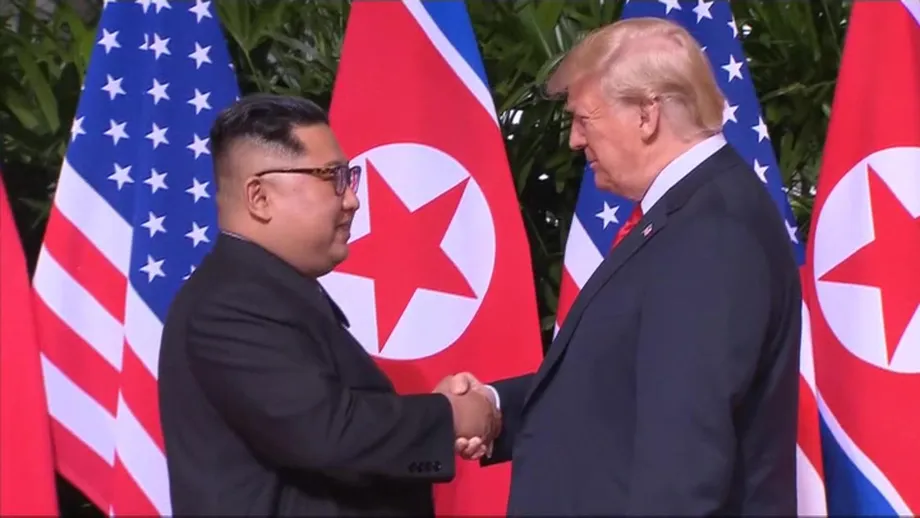
The sanctions also come as Trump has expressed interest in restarting talks with North Korea. He met Kim Jong Un in a series of summits in 2018 and 2019, but those diplomatic efforts broke down over U.S. demands that North Korea give up its nuclear weapons.
Earlier in October, Trump downplayed the prospect of another prominent meeting with Kim in China the following month. Pyongyang has shown little interest in diplomacy aimed at containing its nuclear program.
Trump has repeatedly called North Korea a "nuclear power," while his administration continues to call for denuclearization and has not formally recognized the country as a state possessing nuclear weapons. The latest sanctions continue financial pressure on the programs Washington says it wants dismantled.
Key Points
- OFAC sanctioned eight North Koreans, two Russians and the First Financial and Technical Development Center on October 28.
- Treasury says concealed North Korean IT workers obtain legitimate jobs and channel most of their wages to the regime.
- Two Russian intermediaries allegedly handled millions of dollars in cryptocurrency and other currency transactions.
- Some workers are also accused of deploying malware, stealing confidential information and extorting companies.
- The sanctions freeze covered assets and generally prohibit U.S. persons from transactions involving the designated parties without authorization.
- The action follows sanctions on March 12 and an October Justice Department crackdown affecting more than 70 American companies.