A First Train Takes Coal Around Ulaanbaatar
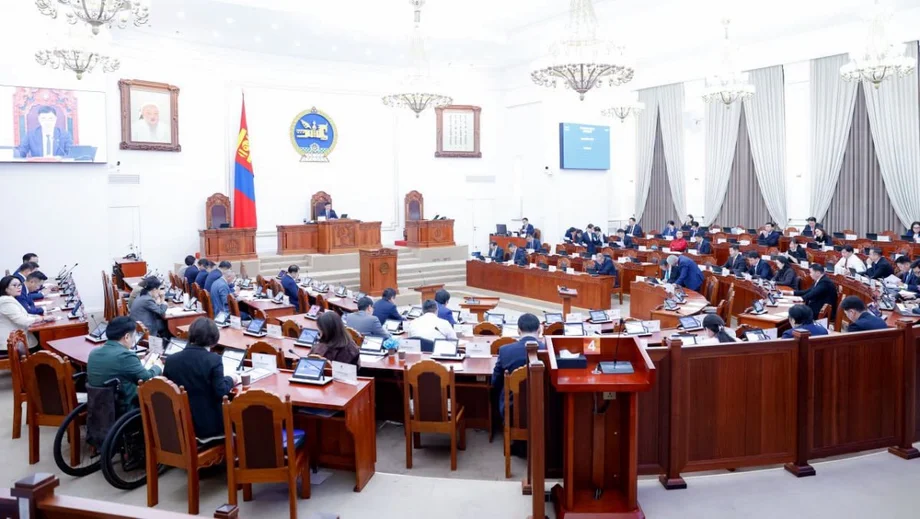
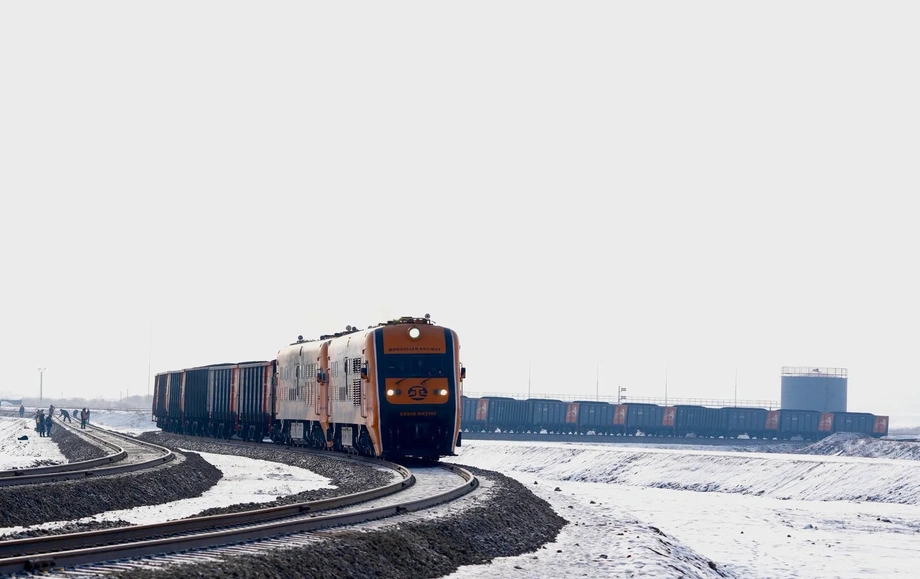
Ulaanbaatar marked the opening of a 17.4 kilometre railway link on November 28, 2026, sending the first train over a route designed to keep coal and hazardous cargo out of the city center. Prime Minister N. Uchral attended the run on the New Station to Tolgoit section, the last piece of a larger rail corridor built by Mongolian Railway, a company owned by the state.
Contents
- A First Train Takes Coal Around Ulaanbaatar
- Why the Last 17.4 Kilometres Matter
- Key Dates Behind the Rail Corridor
- What the Track Can Carry in Simple Terms
- How the Last Section Was Built
- Engineering Features Along the Wider Line
- What the Project Costs and How It Was Paid For
- The Prime Minister's Safety Message
- How Road Crossings Could Be Affected
- What Changes for Hazardous Cargo and Coal Plants
- Terminals, Tax Revenue and Open Questions
- Key Points
The new section joins the 127.1 kilometre Bagakhangai, Khoshigiiin Valley and Emeeelt line to the main track of Ulaanbaatar Railway. Once freight begins moving in full, coal arriving from Baganuur and Shivee Ovoo can travel around the capital instead of passing through dense neighborhoods. The change is intended to reduce rail traffic in the center, speed deliveries to heat and power plants, cut blocked road crossings and limit dust from coal trucks and wagons.
Why the Last 17.4 Kilometres Matter
The smaller section carries big consequences because it closes the gap between a new freight corridor and the national rail network. Without the connection, the 127.1 kilometre line would have ended at Emeeelt without giving coal trains a direct path back to the main line and the plants that need fuel.
Mongolian Railway described the route as a continuation of the Bagakhangai, Khoshigiiin Valley and Emeeelt project. Connecting it to Ulaanbaatar Railway main line allows cargo to be routed around the city. Raw coal for the capital, more than 5 million tonnes a year, can move on the outer line. Heat and power plants, which generate electricity and heat for the city, include CHP 2, CHP 3, CHP 4, Amgalan heat station and Nalaikh CHP, which together take more than 5.8 million tonnes a year for 41 boilers.
Key Dates Behind the Rail Corridor
The project moved from planning to operation in less than two years. The steps also show why the November opening was narrow in scale but important in function: it completed the link rather than starting a brand new corridor.
- January 2025: The government ordered a feasibility study for the Bagakhangai, Khoshigiiin Valley railway. A feasibility study is the technical and financial plan used to judge whether a project can be built and how much it may cost.
- August 2026: Work began on the 17.4 kilometre New Station to Tolgoit section.
- October 11, 2026: The first train ran on the earlier 127.1 kilometre Bagakhangai, Khoshigiiin Valley and Emeeelt line.
- November 28, 2026: The 17.4 kilometre section opened, and the first train ran through the completed connection.
The dated steps end at the opening, with freight movement expected to shift in stages.
What the Track Can Carry in Simple Terms
The new railway is a third class line, 1520 millimetres wide, with a 25 tonne axle load and a design capacity of 30 million tonnes a year. Rail gauge means the distance between the two rails. Mongolia uses the 1520 millimetre gauge shared with networks that grew from the former Soviet system, which helps wagons move on compatible tracks.
A 25 tonne axle load means each axle can carry up to 25 tonnes of weight on the track. That figure matters for heavy freight such as coal. The 30 million tonne annual capacity is almost five times the 6.3 million tonnes of raw coal now moved each year through the middle of Ulaanbaatar, according to project calculations.
How the Last Section Was Built
Work on the 17.4 kilometre section started in August 2026 and reached operation in three months. Crews removed the old lower and upper track structures of Ulaanbaatar Railway and rebuilt them to the approved design and technical requirements.
Thirteen national companies and more than 400 engineers, technical workers and other staff took part. The work involved 1.07 million cubic metres of earthmoving, 179.2 metres of bridge structures and five culverts, which are channels that let water pass under the railway. The pace was fast because the line followed an existing rail corridor rather than cutting a completely new path through the city.
The wider 127.1 kilometre line was a larger build. Mongolian Railway involved more than 160 national enterprises and over 4,000 engineers and technical staff. It included four stations, three junctions and bridges totaling 1,279.1 metres at eight locations.
Engineering Features Along the Wider Line
The 127.1 kilometre route leaves Bagakhangai station, passes through Khoshigiiin Valley and the Altanbulag area of Töv province, and reaches Emeeelt. It was built in difficult geography and weather in the Khangai region, where long bridges and deep cuts were needed to keep the track steady.
Engineers built a 33 metre deep cutting, a 476 metre bridge over the Tuul River and a railway bridge 22 metres high. The Emeeelt underpass has two levels, allowing road and rail traffic to pass without using the same grade. These structures help explain why the route took shape as a strategic freight corridor around densely settled parts of the capital.
The last 17.4 kilometre section does not have the same list of major structures. Its role was to connect the finished corridor to the main line and make the whole route usable for coal traffic.
What the Project Costs and How It Was Paid For
The full 143 kilometre corridor was built for 555 million US dollars in the feasibility study estimate. That figure covers the 127.1 kilometre line and the 17.4 kilometre connection, not just the section opened on November 28.
Funding came in stages from Mongolian Railway's own budget, bond issuance, the Development Bank and commercial bank loans. A bond is a loan raised from investors that the issuer promises to repay. Using several funding sources let the company spread payments across the build.
Prime Minister Uchral said the cost was below the amounts used by international organizations for similar projects. He presented the funding mix as a defining feature of the build, because the railway company used its own money first and then added debt from public and commercial sources.
The Prime Minister's Safety Message
Prime Minister N. Uchral used the opening to explain the government's decision to extend the line. He said a route ending at Khoshigiiin Valley would have left a line that stopped short of the national network. He connected that decision to safety concerns after an explosion at the Dunjingarav intersection, where lives were lost, and said hazardous freight should no longer pass through the center.
The government considered that the Bagakhangai, Khoshigiiin Valley railway could not remain a line that ended there, and decided to connect it to the Emeeelt junction and the main railway. At the Dunjingarav intersection, an explosion occurred and lives were lost. Therefore, dangerous cargo must stop being transported through the city center. The 17.4 kilometre line from Emeeelt to Tolgoit has become a coal route, making it possible to stop carrying coal for power plants through the city center again.
Uchral also instructed relevant agencies to guarantee technical and traffic safety and to organize coordinated eastbound traffic on the Bagakhangai, Khoshigiiin Valley and Emeeelt route, including the New Station to Tolgoit section. The order deals with operations after opening, including safe movements where trains join the main line.
How Road Crossings Could Be Affected
Rail freight has a direct effect on road traffic because trains must pass through crossings used by cars and trucks. When freight trains enter Ulaanbaatar rail crossings, road traffic is stopped for an average of 2 hours 24 minutes a day.
Project calculations say a gradual shift of freight to the new line could cut crossing closure time by up to 90 percent. If that target is met, the daily closure time would fall from 144 minutes to about 14 minutes. The plan also aims to ease pressure at four main rail and road intersections and 14 crossings on side lines and branch lines.
The same calculations say up to 1,800 large trucks a day could be kept out of city traffic. That matters in Ulaanbaatar, where queues near railway crossings can spread into nearby streets and slow buses, cars and emergency vehicles.
What Changes for Hazardous Cargo and Coal Plants
The safety argument rests on what the city rail line carries today. In 2024, 34 kinds of hazardous goods, totaling about 2.48 million tonnes, moved through the city center. Diesel fuel made up about half of that amount, and gasoline made up more than one third. Both are flammable products that create serious risk if a wagon is damaged or a train waits for a long time in a populated area.
Ulaanbaatar and Tolgoit stations also saw 400 to 500 wagons parked for 5 to 10 days each month. Long stationary wagon groups can sit close to neighborhoods and create safety risks. Plans for the new corridor say about 2.5 million tonnes of hazardous cargo a year will bypass the center, close to the 2024 center total of 2.48 million tonnes.
Coal is the other major part. About 6.3 million tonnes of raw coal now moves by rail through Ulaanbaatar each year. The five heat and power plants take more than 5.8 million tonnes of it for 41 boilers. Moving that supply around the city reduces train movements in dense districts and limits coal dust near settled areas.
Terminals, Tax Revenue and Open Questions
Plans for the corridor expect the freight shift to change land use as well as train routes. Thirteen freight terminals now located in the city center are to be moved. Land freed by those sites could be used for public purposes.
Two new terminals are planned on the corridor. A multimodal freight terminal, meaning a site where cargo can transfer between rail and road, is planned at kilometre 87.8. A terminal for hazardous goods is planned at kilometre 102. No construction or opening dates were given for the two new terminals or for completing the full transfer of freight from the center.
The projected tax gain is 442.2 billion tögrög over 15 years. Annual cargo is expected to reach 20 million tonnes in the first year and up to 25 million tonnes later, while the line itself was designed for 30 million tonnes a year. The next practical steps are safety checks, coordinated train movements and the gradual transfer of freight from the center to the new route.
Key Points
- The 17.4 kilometre New Station to Tolgoit section opened on November 28, 2026, with Prime Minister N. Uchral attending the first train run.
- The section completes a 143 kilometre freight corridor and links the 127.1 kilometre Bagakhangai, Khoshigiiin Valley and Emeeelt line to Ulaanbaatar Railway main line.
- The line is designed for 30 million tonnes a year, with 1520 millimetre gauge and a 25 tonne axle load.
- Project calculations say rail crossing closures could fall by up to 90 percent and up to 1,800 large trucks a day could stay off city roads.
- The route is intended to move coal and hazardous cargo around the city center, including about 2.5 million tonnes of hazardous goods a year and more than 5 million tonnes of raw coal for the capital.
- Plans include moving 13 city terminals, building two new terminals and collecting 442.2 billion tögrög in tax revenue over 15 years.