A US$8,600 decanter meets Korea's tequila boom
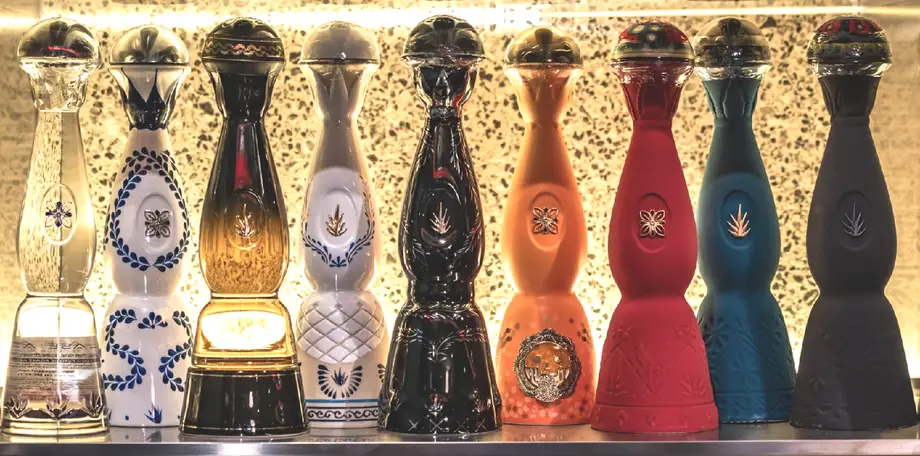
Clase Azul has put a precise price on its idea of luxury: US$8,600 plus taxes for a ceramic decanter holding one litre of extra añejo tequila. Just 300 were released on 23 November 2026 as the fifth entry in the brand's Master Artisans series. Each contains tequila aged for five years in American whiskey barrels and finished in casks that previously held Barolo red wine.
Contents
- A US$8,600 decanter meets Korea's tequila boom
- The business decision behind the luxury strategy
- Scarcity begins in the agave field
- Three days of cooking and a narrow cut of distillate
- How barrels turn time into scarcity
- Why the bottle can outlast the tequila
- Inside the fifth Master Artisans edition
- What the expansion means for Korean drinkers
- Key Points
The release extends a strategy already visible in Korea, where a bottle containing 750 millilitres can cost from about 200,000 won to 5 million won. Mixed martial arts fighter and broadcaster Choo Sung-hoon, singer Um Jung-hwa and BTS member V are among the famous drinkers associated with its popularity. Basketball star Michael Jordan has also been quoted as saying he needed 10 bottles for a company dinner. He later launched his own tequila, Cincoro.
Korea's wider market helps explain the attention. IMARC Group estimates that Korean tequila sales reached US$348.8 million in 2024, approximately 508.6 billion won. Its forecast for 2033 is US$1.0748 billion, approximately 1.5674 trillion won. That would make the market about 3.1 times its 2024 size, an increase of roughly US$726 million.
Clase Azul wants consumers to treat tequila less like a quick shot with salt and lime and more like wine or aged whisky. Its sales pitch combines aroma, food, patience, Mexican craft and containers attractive enough to keep after the last pour.
The business decision behind the luxury strategy
Clase Azul Spirits made that choice explicit in a company announcement issued on 16 October 2018. The change took effect a day earlier, ending a three year relationship with Chopin Imports and its principal, Tad Dorda. Clase Azul began operating independently so that a dedicated team could pursue growth in the United States.
Arturo Lomeli, the founder and chief executive, explained why the company wanted staff devoted exclusively to its own labels:
In order for us to continue offering one of the finest tequilas in the world to our clients old and new, we require a team solely dedicated to Clase Azul, focusing on our luxury strategy and facilitating our growth and expansion within the United States.
Juan Sanchez, the president and another owner, thanked Dorda and Chopin Imports for their work. The company then named Dana Chandler as chief sales officer and executive vice president, Lowell Supran as vice president for the Eastern Division and Joshua Scott as vice president of sales for the Central Division. It also expanded sales, marketing and executive teams in New York City, Los Angeles and Miami.
The company was founded in 1997. By 2018, its tequila range covered Plata, Reposado, Añejo and Ultra, alongside a mezcal made from Maguey cenizo in Durango. It had launched La Pinta, a pomegranate liqueur made with tequila, 21 years earlier. Korea was already listed among its markets, showing that the Korean connection preceded the latest surge in tequila's popularity.
The same announcement described Fundacion con Causa Azul, the company's nonprofit organisation, as providing education, materials and other resources to artisans with limited funding. Craft labour was therefore part of the corporate identity as well as the packaging.
Scarcity begins in the agave field
Mexican rules distinguish tequila from other agave spirits. Among more than 200 agave varieties, Blue Weber agave must supply at least 51 per cent of the sugars for a spirit to carry the tequila name. A bottle labelled 100 per cent agave goes further by excluding supplementary sugars from sources such as grain. Production is restricted to Jalisco and specified areas in four other Mexican states.
Clase Azul Korea says the brand uses only Blue Weber agave grown at the highest elevations in Jalisco. Workers cut away the fibrous leaves by hand, leaving the central heart known as the piña. The company waits six to eight years for the plants to mature and accumulate sugar, compared with the three to five years it cites for some other producers. A fresh crop cannot be rushed to maturity when demand suddenly rises.
Clase Azul puts its annual production at about 800,000 litres, while using more than 300 million litres as the comparison for large producers. On those figures, the smaller volume is less than 0.3 per cent of the larger benchmark. Limited agave supply, selective harvesting and the time needed for replacement plants all place physical restrictions on rapid expansion.
Three days of cooking and a narrow cut of distillate
Harvested piñas spend 72 hours cooking slowly in traditional stone ovens. Heat converts complex carbohydrates in the agave into sugars that yeast can ferment. Many producers instead use an autoclave, essentially a sealed vessel that cooks quickly under pressure, or a diffuser, which extracts sugars with water and mechanical processing. Clase Azul Korea says its slower, cooler cooking draws out sugar and flavour evenly and preserves the plant's sweet aroma.
Yeast provides another point of control. The company says about 80 per cent of tequila's flavour notes are influenced during fermentation. Its proprietary strain was developed after researchers examined 33 strains collected from agave fields and selected the most promising one for further work.
The fermented liquid is distilled twice in copper stills designed for the brand. Distillers separate the flowing liquid into portions often called heads, hearts and tails. The heart is the desired middle section, while the earlier and later portions carry aromas and compounds that the distiller wants to limit or remove.
Clase Azul keeps only 35 per cent of the distillate, the section it calls the Pure Heart. It contrasts that with rivals discarding 30 per cent and using 70 per cent. Company officials say the narrow selection helps remove methanol and gases and captures the portion judged to be of the highest grade. The commercial cost is straightforward: less finished spirit remains from each harvest after years of farming, cooking and fermentation.
How barrels turn time into scarcity
Clase Azul says all of its spirits mature in barrels holding 800 litres, rather than containers holding 10,000 litres that it attributes to competitors. The larger container holds 12.5 times as much by stated capacity. Using smaller vessels requires more barrels, filling, storage and handling for a given volume, while the company says the process produces a deeper white oak aroma.
Barrel time also determines the legal style. Plata is unaged, reposado spends at least two months in wood, añejo at least one year and extra añejo at least three years. Clase Azul's Reposado matures for eight months in American oak, comfortably beyond the category minimum, while its Añejo spends 25 months in American oak. Ultra receives three years in American barrels followed by two years in sherry casks, giving it five years in wood.
Some alcohol evaporates during maturation, a loss known as the angel's share. The longer a barrel rests, the less liquid may remain to bottle, while storage and labour costs continue. The resulting price reflects that shrinking inventory as well as the ceramic vessel, branding and the size of the release.
Why the bottle can outlast the tequila
Ceramic decanters replace ordinary glass throughout the brand's presentation. A more recent company account says around 2,000 of its 3,000 staff members are involved in making them, with each bottle taking between seven and 12 days. Potters use techniques passed down through generations, paint agave patterns by hand and add metal decoration. Small variations in pigment and line thickness make otherwise similar bottles visibly different.
The 2018 announcement described a smaller operation in which roughly 120 Mazahua artisans in Mexico State spent about two weeks creating each bottle. Lomeli had designed the vessels for reuse from the beginning. Labels can be removed easily, allowing an empty decanter to become a vase, candle holder, lamp or olive oil dispenser.
Limited editions add another restriction. Once the allocated quantity sells out, Clase Azul says bottles with the same design are not produced again. The container consequently carries value as a ceramic object as well as packaging, and its continued presence in a home keeps the brand visible after the tequila has gone.
Inside the fifth Master Artisans edition
Sergio Pérez Arana, a ceramicist and jeweller from Tonalá in Jalisco, designed the grey clay decanter for the newest release. Its surface carries 79 ceramic elements applied by hand, depicting plants, animals, mythical creatures and celestial symbols. His background includes rustic stoneware and silversmithing using the lost wax method, experience he combines in his ceramic work.
Pérez Arana said images of the sky guided the design and explained its contrasting symbols:
I've always enjoyed looking at the sky, watching the sun, the moon and the stars. Those moments inspire me to capture what I see and translate it into a piece.
The decanter represents duality: day and night, the sun and the moon, black and white. That's what makes it so interesting, too. There are so many elements to observe and identify.
Decorators applied more than 12,000 individual dots of raised black and white glaze to heighten the contrast between light and shadow. The stated time of about two and a half hours covers that dot work, one decorative stage within the wider process of forming, painting and finishing the vessel.
Master distiller Viridiana Tinoco created the liquid around the same contrast. It is bottled at 40 per cent alcohol by volume after five years in American whiskey barrels and its finishing period in Barolo casks. Tinoco described the intended tasting experience in her own words:
In every sip, the clarity of sunlight and the depth of shadow coexist; the brilliance of day and the introspection of night.
Clase Azul describes flavours recalling cherry preserves, peaches dried in the sun, chocolate, cinnamon and caramel. The 300 decanters were offered through Casa de los Leones in Mexico City, the brand's boutique in San José del Cabo, Clase Azul The Loft Brooklyn, Espacio Barcelona and La Tierra in Tokyo. None of those sales points is in Korea, and no Korean allocation or launch date was given.
What the expansion means for Korean drinkers
Clase Azul opened an estate covering 50 acres, about 20 hectares, in Los Altos de Jalisco earlier in 2026. It contains a new distillery, ceramics factory and brand home, and the company says its ceramic decanters are handmade there. In November, the brand also announced that it had won a fresh review in its trademark infringement case against rival producer Casa Azul Spirits, which had been contested for years.
The main dates show how production, distribution and the Korean market have developed together:
- 1997: Clase Azul Spirits was founded, with La Pinta launched around the beginning of the business.
- 15 October 2018: Independent operation from Chopin Imports took effect, with the public announcement following on 16 October.
- 2024: IMARC Group estimated Korea's tequila market at US$348.8 million.
- Earlier in 2026: The Los Altos estate opened with distilling, ceramics and visitor facilities.
- 23 November 2026: The fifth Master Artisans release arrived in an edition of 300 decanters.
- 2033: Korea's tequila market is forecast to reach US$1.0748 billion.
For Korean drinkers, the practical change is in how tequila is sold and served. Clase Azul recommends approaching it like an expensive wine: smell the aroma, taste slowly and pair it with food rather than swallowing a shot immediately. Its price bundles the waiting time in the fields, selections made during distillation, years lost partly to evaporation and the labour inside the bottle. An empty decanter reused as a vase extends that sales pitch beyond the final pour.
Key Points
- Korea's tequila market was estimated at US$348.8 million in 2024 and is forecast to reach US$1.0748 billion in 2033.
- Clase Azul bottles containing 750 millilitres can range from about 200,000 won to 5 million won in Korea.
- The fifth Master Artisans edition costs US$8,600 plus taxes and is limited to 300 decanters, each holding one litre.
- The brand cites six to eight years for agave growth, 72 hours of oven cooking and retention of only 35 per cent of the distillate.
- Reposado matures for eight months, Añejo for 25 months and Ultra for five years across American oak and sherry casks.
- The newest ceramic design has 79 decorative elements and more than 12,000 glaze dots, but no Korean allocation or launch date was announced.