Hanwha Ocean Leaves Buan Consortium
Hanwha Ocean, listed as 042660.KS, confirmed on November 25, 2026, that it will not participate in the 800 MW Southwest Offshore Wind Expansion Complex 1 project off Buan County in Jeonbuk Province. The South Korean shipbuilder made the final decision in a regulatory disclosure after a review of the relevant conditions. The project is estimated at KRW 6 trillion, about $4.1 billion, up from an initial KRW 4.8 trillion, and it is a central part of Jeonbuk Province's 2.4 GW offshore wind plan.
Contents
- Hanwha Ocean Leaves Buan Consortium
- What the Buan Wind Farm Will Include
- Who Stays in the KHNP Consortium
- A Timeline of the Decision
- Hanwha Says the Exit Is Limited
- Why Rising Costs Matter
- Jeonbuk Expects Continuation, With a Delay
- Permitting Law Puts Buan in Spotlight
- The Grid and the Installation Fleet
- South Korea's Wind Targets Face a Tight Clock
- What Happens Next for Buan
- Key Points
The company was part of a consortium led by Korea Hydro & Nuclear Power, or KHNP, that was named preferred bidder in June 2026. Hanwha Ocean did not give a specific reason for leaving, and it did not officially link the cost increase to its decision. Its exit leaves KHNP and the remaining partners to redistribute investment shares and duties before the project can move into its next formal stage.
Capacity figures can sound abstract, so the scale is easier to picture this way: 800 MW is the power the wind farm is designed to deliver at full output. Actual generation rises and falls with the wind, but the design size tells readers how large the scheme is compared with other power projects.
The timing matters. Construction is targeted to begin in the second half of 2028, and completion is planned for 2030. Any change in the consortium now affects the ownership map, the engineering work and the financing plan well before turbines are ordered and installed.
What the Buan Wind Farm Will Include
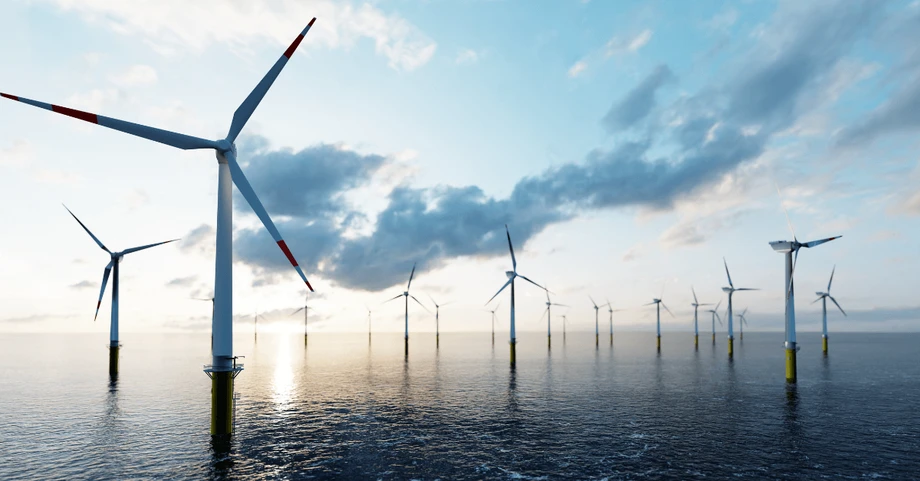
The Buan project is the first phase of Jeonbuk's southwest offshore wind expansion. Most descriptions put the wider scheme at 2.4 GW, while another figure used for the cluster was 2.5 GW. The chosen area lies in waters off Buan County, where the province sees suitable depth and good wind speeds. Those conditions make the site attractive for large turbines, but they also require heavy ports, vessels and grid work.
The farm is expected to use fixed foundation technology, meaning turbines stand on structures anchored to the seabed rather than floating. In the southwest Korean sea, jacket foundations, steel frames with three or four legs, have been treated as a strong fit because they spread loads well in soft seabed soils. At modern turbine sizes of 12 to 15 MW each, 800 MW would require roughly 53 to 67 turbines.
A 15 MW turbine in about 40 meters of water can need a monopile around 10 meters wide, 90 meters long and about 1,850 tonnes. Jacket structures use more steel per unit in some conditions, but they distribute force through several legs. Each turbine produces electricity that is gathered by submarine cables at an offshore substation, raised in voltage and sent through an export cable to an onshore substation linked to the national grid.
The initial cost estimate was about KRW 4.8 trillion. The estimate later rose to about KRW 6 trillion as equipment and construction prices climbed. The increase of KRW 1.2 trillion is one quarter of the original figure, a jump large enough to make partners revisit financing, returns and risk.
Who Stays in the KHNP Consortium
KHNP remains the lead company. The other participants after Hanwha Ocean's exit are KEPCO Engineering and Construction, Korea East-West Power, KEPCO KPS, Doosan Enerbility, IBK Financial Group, KB Financial Group, Samil C&S and Joongang Ocean Heavy Industry. Financial participants were named as groups in several references and as asset management arms in others, including IBK Asset Management and KB Asset Management.
Before the withdrawal, the consortium had 10 companies spanning power generation, engineering, equipment, finance and maritime work. It was chosen after assessment of public interest, project execution capability and regional co-prosperity, a term that here means plans to share benefits with local communities. KEPCO E&C was to invest equity in a special purpose company, the separate company created to own, finance and run one project, and take part in EPC, the design, procurement and construction stage.
The tender required public institutions to hold at least 50% of project equity, with stricter wording putting the floor above 50%. That rule was meant to keep public control and stability in a project using public resources and coastal space. KHNP, Korea East-West Power, KEPCO KPS and KEPCO E&C gave the group a strong public core even before Hanwha Ocean's departure.
A Timeline of the Decision
The preferred bidder announcement was made on June 29, 2026, by KHNP and KEPCO E&C; provincial records put the selection on June 25, 2026. The group was expected to sign an implementation agreement with Jeonbuk Province by the end of August 2026, then move into permitting and project development.
- February 28, 2025: South Korea's National Assembly passed the Special Act on Offshore Wind Farm Promotion.
- March 26, 2026: the law entered into force.
- June 25 and June 29, 2026: Jeonbuk selected the KHNP consortium, and project companies announced the preferred bidder result.
- July 10, August 7 and November 6, 2026: Hanwha Ocean filed disclosures saying its project amount and contract terms were not fixed.
- November 25, 2026: Hanwha Ocean filed its final decision not to participate through the Financial Supervisory Service's electronic disclosure system, often called DART.
- Second half of 2028 and 2030: current construction start and completion targets.
The disclosure trail shows why the exit is a withdrawal rather than the end of a signed construction contract. Hanwha Ocean had repeatedly said its role and financial terms were unsettled. By late November, the review had produced a final decision.
Hanwha Ocean also said the project amount and detailed contract conditions had never been fixed. That matters because a company can leave a bid stage without cancelling a construction contract that was never signed.
Hanwha Says the Exit Is Limited
Hanwha Ocean said the withdrawal would not create separate execution costs or a penalty. The company explained that consortium members divided roles while drafting the bid, so it had not spent money on a fixed scope that now needs unwinding.
The company put its position plainly in response to questions about the financial consequences. It said the decision applied to the Buan project alone and that its wider offshore wind strategy remained in place.
The decision not to participate is limited to this project only. There is no change to our offshore wind investment policy.
Hanwha Ocean's own statement said the KHNP consortium had been selected as preferred bidder, but that a full review led to a final decision to stay out. It did not name cost as the reason.
The consortium led by Korea Hydro & Nuclear Power, in which we were participating, was selected as preferred bidder, but after comprehensively reviewing all related matters, we have made a final decision not to participate in this project.
Hanwha Ocean remains active elsewhere. It is the developer and EPC lead for the 390 MW Shinan Ui offshore wind project off Uido in Shinan County, Jeonnam. The December 2025 EPC contract with Hyundai E&C was worth KRW 2.64 trillion in total, including KRW 1.9716 trillion for Hanwha Ocean. Construction began in July 2026, with completion targeted for 2029.
The exit also sits inside a wider Hanwha effort to screen investments and consolidate units. Hanwha Aerospace ended talks on November 24 to buy a stake in Lion Robotics, a quadruped robot developer founded in 2023 by KAIST professor Hwangbo Je-min, after valuation gaps widened. Hanwha Solutions plans to absorb Hanwha Urban Development on January 31, 2027. The group also has a KRW 10 trillion first phase spending plan for a defense artificial intelligence data center in Changwon.
Why Rising Costs Matter
The Buan estimate rose from KRW 4.8 trillion to about KRW 6 trillion because of higher equipment prices and construction costs. Cost drivers on a project like this include turbines, foundations, offshore installation, grid connections and marine infrastructure. Permitting and grid arrangements also affect financing because delays keep capital tied up before electricity is sold.
Offshore wind needs heavy spending before any power reaches the grid. Ships must carry and install huge turbine parts, cables must be laid on the seabed, and substations must be built both at sea and on land. When the estimate grows by KRW 1.2 trillion, each partner has to decide whether its expected return still justifies the risk.
Hanwha Ocean did not officially cite the cost increase when it withdrew. The timing placed the rise beside the decision, but the company's stated explanation was only that it had reviewed the relevant matters. The remaining partners must now decide whether to absorb the higher figure, change the scope or bring in another participant.
Jeonbuk Expects Continuation, With a Delay
Jeonbuk Province treated the withdrawal as a change inside the consortium, not the loss of the lead bidder. A Jeonbuk Province official said Hanwha Ocean was one participant, not the representative company, and that an individual participant's exit could be handled through internal equity adjustment. The province also viewed the site as a strong one because water depth and wind speeds were suitable.
Hanwha Ocean's non-participation will cause no problem in project progress. We plan to proceed as originally scheduled.
The province also gave a more practical schedule warning. Final selection of the project operator and the implementation agreement signing planned for early December will slip because participants need equity adjustments and internal board approvals. No revised date was announced. An earlier withdrawal by Korea Western Power as a lead company from an offshore wind project required a new selection process, but Jeonbuk said this case was different.
Hanwha Ocean had been assigned the EPC field. Jeonbuk said that role could be filled by adding a participant to the consortium or by holding a later tender for that work. That option gives the remaining partners a route to keep KHNP as lead while replacing the shipbuilder's tasks.
Permitting Law Puts Buan in Spotlight
The Buan tender is an early test of South Korea's Special Act on Offshore Wind Farm Promotion. The law passed the National Assembly on February 28, 2025, was promulgated on March 25, 2025, and entered into force on March 26, 2026. It created a single window permitting process in designated offshore wind zones, allowing up to 28 development licenses and permits to be handled together after approval of one implementation plan.
Before the act, developers generally sought approvals in sequence from separate agencies, a process that often took seven to nine years from the start of development to a ready to build stage. The law also placed an Offshore Wind Power Committee under the Prime Minister's Office to coordinate agencies. That structure matters because offshore wind projects can stall when military, fisheries, environment and grid approvals move at different speeds.
Before the withdrawal, KHNP President Kim Hoe-cheon, who took office in March 2026, said the selection recognized the company's renewable energy development work and public role. He said KHNP would work with Jeonbuk, local communities and partners to carry out the national policy and build a project that would help industry and the regional economy.
This selection is a meaningful achievement recognizing KHNP's renewable energy project development capability and public character. We will work closely with Jeonbuk Province, local communities and participating companies, carry out the government's offshore wind policy without disruption, and make this a model project that develops the domestic wind industry and revitalizes the regional economy.
KEPCO E&C President Kim Tae-gyun said the result confirmed the engineering capacity his company had built in offshore wind. KEPCO E&C planned to take equity in the project company and join the design, procurement and construction work, including efforts to standardize offshore wind design and strengthen the domestic supply chain.
This selection is another case confirming our engineering capability in offshore wind. We will carry out the project stably and contribute to strengthening the domestic offshore wind industry and advancing energy transition policy.
Those statements were made while the consortium was expanding. Hanwha Ocean's exit now shows how a preferred bidder can change before the formal project company and implementation agreement are complete.
The Grid and the Installation Fleet
The electricity from Buan must travel a long way from the southwest coast to demand centers such as Seoul and its metropolitan area of about 26 million people. KEPCO has been planning high voltage direct current backbone infrastructure to move gigawatt scale offshore wind power north. A direct current line is useful for long distance transmission because it can carry large amounts of power with lower losses over distance.
KEPCO's chief executive has described the transmission challenge in plain terms. He said grid reinforcement cannot be done quickly, which means wind farms and transmission lines have to be planned together.
Transmission lines cannot be reinforced in a short period of time.
The Special Act includes early grid planning, but building transmission infrastructure still takes years. If Buan reaches its 2028 construction target, the grid work needed to carry its output has to be ready on a matching timetable.
Installation capacity is another pressure point. A wind turbine installation vessel carries, lifts and fixes large turbine parts at sea. Hanwha Ocean is building one after a KRW 768.7 billion contract with an affiliate in February 2026 and a KRW 126 billion investment in a vessel operating company in July. About KRW 800 billion has been described as the investment figure. The vessel is due for delivery in the first half of 2028 and is planned for Shinan Ui first.
Government goals call for four vessels able to install turbines of 15 MW class or more by 2030. One vessel brought from China by KCH Energy is complete and another is under construction, while a vessel once exported to Denmark is being considered for return to Korea. Korean built vessels can cost KRW 700 billion or more, compared with KRW 400 billion to KRW 500 billion for Chinese built vessels, and charter rates may be 30% to 50% lower. KEPCO stopped a feasibility study for its own vessel on October 29, 2026, after supply competition changed.
An unnamed offshore wind industry participant described the coming contest for installation work. The point was that vessel owners need a steady pipeline, because one large vessel can handle around 700 MW of turbine installation a year and needs about 1 GW of work to stay well used.
The next three years are the biggest test. Even if a power purchase agreement is signed, prices and interest rates can make a project uneconomic. If the ministry's 4 GW target produces 2.5 GW of real work, that would still be a solid result.
After Shinan Ui, Hanwha Ocean has not disclosed where its vessel will work or what operating revenue it expects. Taean offshore wind at 504 MW and Wando Geumil at 600 MW are possible later projects, but their turbine installation schedules could overlap or slip.
South Korea's Wind Targets Face a Tight Clock
South Korea still relies heavily on coal and nuclear power, and the government is pushing offshore wind to cut emissions. The country had about 0.2 GW of installed offshore wind capacity in early 2025, roughly 1% of the 14.3 GW target in the 11th Basic Plan on Electricity Supply and Demand. That plan also aimed for 53% carbon free capacity by 2030 and 70.7% by 2038.
A revised framework from December 2025, developed under a task force led by the Ministry of Climate, Energy and Environment, set a more operational 2030 milestone of 10.5 GW installed or under construction, with 4 GW of annual additions and 25 GW by 2035. Later project materials used 12 GW as the 2030 figure. A separate December 2025 onshore wind strategy set a target of at least 6 GW onshore by 2030.
The scale is steep. The global offshore wind industry took about three decades from the first commercial farm in Denmark in 1991 to roughly 64 GW worldwide in 2022. South Korea is trying to add more than 10 GW within seven years. China is the only country building offshore wind at anything close to that pace, with a level of government led industrial mobilization that has not been repeated elsewhere.
The Global Wind Energy Council warned that only about one third of anticipated offshore wind installations for 2023 to 2027 was likely to occur on schedule. South Korea's market has also seen foreign developers pull back. Corio Generation shut its standalone operations in April 2026, Shell withdrew from Korean projects, and the 532 MW Anma project was denied a military permit after construction had begun. Supply contracts worth more than $110 million were cancelled, and the majority shareholder sought a buyer.
The Special Act was designed to bring military and other approvals into an earlier, coordinated process, but it has not yet been tested at full scale on a project the size of Buan. Hanwha Ocean's exit adds a company level decision to a sector already dealing with permitting, local acceptance, cost and grid constraints.
What Happens Next for Buan
The remaining partners now have three immediate tasks. They must rework equity shares, complete internal approvals and decide who will take the EPC role Hanwha Ocean had been expected to fill. KHNP stays at the center of the bid, and Jeonbuk has said the project can continue through changes inside the consortium.
The public ownership rule still shapes any replacement. A new participant would need to fit the 50% or more public institution requirement, or the existing public bodies would need to adjust their stakes. The implementation agreement with Jeonbuk is the next formal gate, because it starts the permitting and development phase. Construction in the second half of 2028 and completion in 2030 remain the stated targets.
Key Points
- Hanwha Ocean filed a final decision on November 25, 2026, not to join the 800 MW Buan offshore wind project.
- The project is estimated at KRW 6 trillion, about $4.1 billion, up from KRW 4.8 trillion.
- KHNP remains lead of the consortium, with eight other companies after Hanwha Ocean's exit.
- Jeonbuk Province says the project can continue, but operator selection and the implementation agreement schedule will slip.
- Hanwha Ocean says there is no penalty, its wider offshore wind policy is unchanged, and its Shinan Ui project and installation vessel plan continue.
- South Korea's offshore wind targets remain ambitious, with 0.2 GW installed in early 2025 against a 14.3 GW 2030 plan figure and a later 10.5 GW milestone.