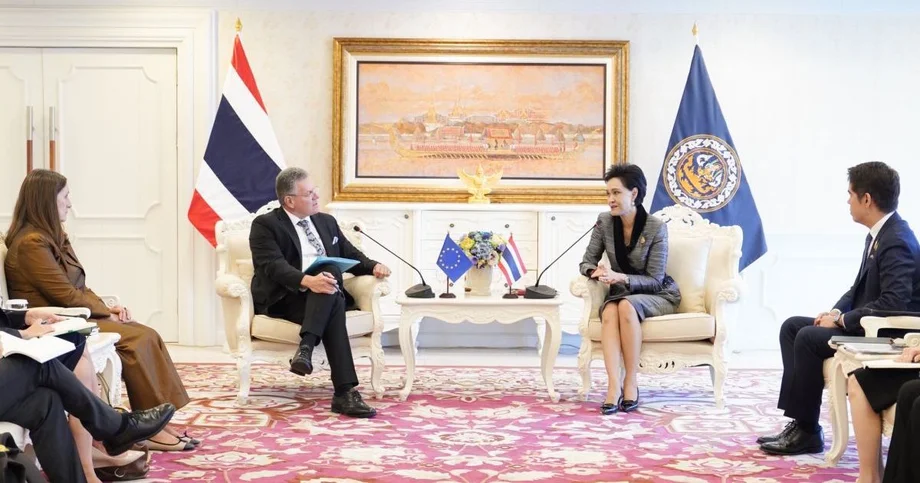
Negotiators enter the final stretch
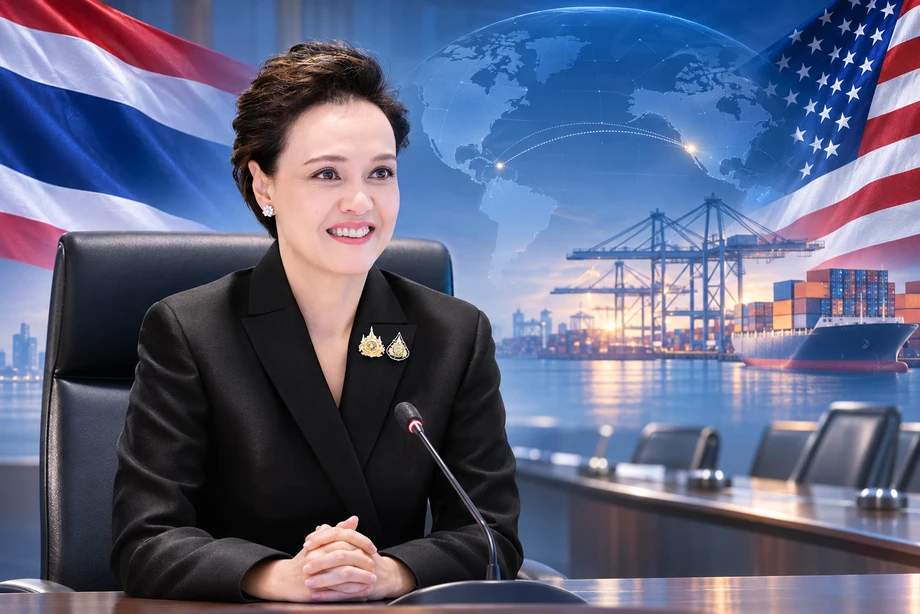
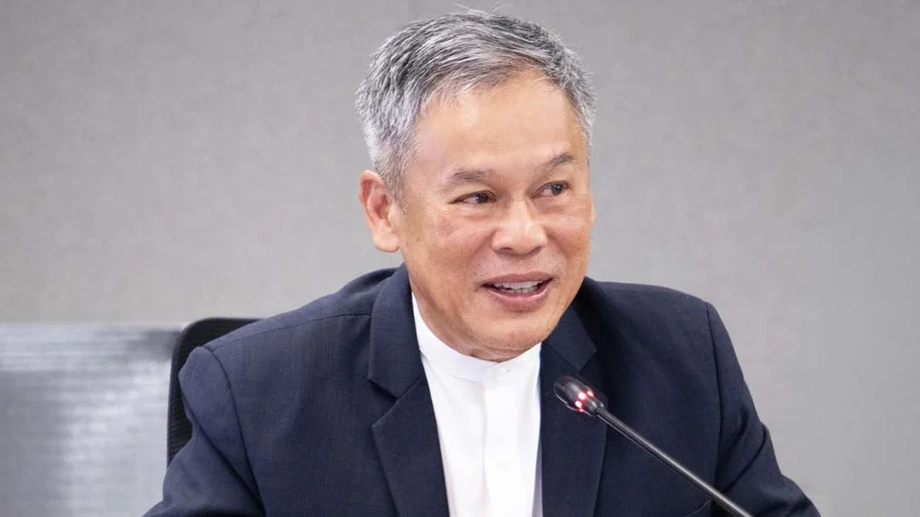
On 27 November 2026, Deputy Prime Minister and Commerce Minister Suphajee Suthumpun received Maroš Šefčovič, the European Commissioner for Trade and Economic Security, at Thailand's Ministry of Commerce. Thai Trade Representative Veeraphong Prapa joined the meeting. They reviewed the Thailand EU free trade agreement, known as the FTA, and discussed how to finish talks by the end of 2026. Suphajee said Thailand needs to expand its markets and diversify trade as geopolitical conditions shift. The EU is Thailand's fourth largest trading partner, after China, the United States and Japan, and accounts for more than 7 percent of Thailand's trade.
Contents
- Negotiators enter the final stretch
- How far have the talks come?
- A timeline of the push for a deal
- What Suphajee and Šefčovič discussed
- Why agriculture and fisheries are central for Thailand
- Why government procurement is a sensitive issue
- The trade numbers behind the urgency
- What the agreement could change
- What is still undecided
- Key Points
An FTA is a deal that cuts or removes tariffs, the taxes charged when goods cross borders. For ordinary buyers, lower tariffs can mean a better chance that Thai farm goods, processed foods and factory products reach European shelves at a competitive price. For companies, the deal can also set rules for services, investment and government buying. Suphajee said the goal is an agreement that creates trade and investment chances and delivers practical benefits to people and businesses on both sides.
How far have the talks come?
The Ministry of Commerce said in the ministry's report that the ninth round of talks ran from 22 to 30 June 2026 in Brussels. Negotiators settled four more chapters in that round, bringing the total to 15 of 24 chapters. The ministry described that as about two thirds of the agreement. Nine chapters remain, including the politically sensitive market access issues.
The four newly settled chapters cover competition and subsidies, enterprises owned by the state, dispute settlement and the management of the agreement. Competition rules aim to keep business conduct fair; subsidy rules seek clear conditions for public support to companies. Rules for enterprises owned by the state are meant to make sure those firms act commercially and do not discriminate against competitors. Dispute settlement sets a process when one side believes the other has broken the deal.
Negotiators also closed three annexes and one protocol. The annexes concern export duties, import and export monopolies, and motor vehicles under the chapter on technical barriers to trade. Technical barriers are rules such as product standards and approval steps that can slow trade even when tariffs are low. The mutual assistance protocol covers help between customs authorities.
A timeline of the push for a deal
The 27 November meeting capped a series of talks and planned milestones. The dates show how both sides moved from technical chapters toward political decisions.
- 22 to 30 June 2026: The ninth negotiating round took place in Brussels, where four chapters, three annexes and one customs protocol were settled.
- 24 June 2026: Suphajee and Veeraphong held high level talks in Brussels with Šefčovič and Christophe Hansen, the European Commissioner for Agriculture and Food.
- Before late September 2026: The official update said Šefčovič would visit Thailand ahead of the tenth round to press for progress.
- Late September 2026: Thailand was set to host the tenth negotiating round, according to that update.
- 27 November 2026: Šefčovič visited Thailand and met Suphajee at the Ministry of Commerce to review remaining issues and restate the year end goal.
The 27 November meeting came after that planned September window, and no revised round date was given.
What Suphajee and Šefčovič discussed
The meeting at the Ministry of Commerce focused on keeping the negotiations on schedule. Suphajee and Šefčovič reviewed progress, exchanged ways to move the talks forward and discussed the remaining policy issues. Both sides repeated their aim of concluding the FTA in 2026.
Suphajee said the faster progress followed strong political backing from the 24 June Brussels talks. The deputy prime minister and commerce minister described the message given to negotiators after she met Šefčovič, Hansen and Veeraphong:
I was informed by the head of the Thai negotiating team that this round made a lot of progress because it received political support from high level discussions between the two sides on 24 June 2026 in Brussels, where I and the Thai Trade Representative, Mr Veeraphong Prapa, held talks with the European Commissioner for Trade and Economic Security, Mr Maros Sefcovic, and with the European Commissioner for Agriculture and Food, Mr Christophe Hansen. The ministers on both sides confirmed their shared intention to accelerate the Thailand EU FTA negotiations so they can be concluded soon, and instructed the heads of the negotiating teams to quickly prepare a joint work plan and discuss outstanding issues closely.
In plain terms, the political level told negotiators to turn broad agreement into a work plan. That matters because trade deals often stall when officials wait for instructions on sensitive issues such as farm access or public purchasing.
Why agriculture and fisheries are central for Thailand
Thailand told the EU that market access for goods it prioritises matters most, especially agricultural and fishery products. In simple terms, Thailand wants fewer barriers for rice, seafood and other farm based goods, along with processed foods and industrial products, when they enter the EU. Suphajee said lower tariff costs would help Thai exporters compete more strongly.
The EU wants wider access for services and investment, and it wants Thailand to open government procurement. Government procurement means the buying done by public agencies with public money, from machinery and construction work to services. Opening that market would be new for Thailand under an FTA. Suphajee said Thailand must study the move carefully because its level of development differs from the EU's and small and medium sized enterprises, or SMEs, need support.
She asked both sides to show flexibility and find answers to the outstanding issues. The aim, she said, is a balanced deal with clear benefits for businesses and citizens. No tariff schedule, quota level or contract value limit for public buying was published in the 27 November account.
Why government procurement is a sensitive issue
Government procurement can sound technical, but it affects real spending. It covers how ministries, agencies and state bodies buy equipment, building work and services. If foreign companies gain access, they can bid for those contracts. That can bring competition and lower prices, but it can also change the chances available to local firms.
Thailand has not opened government procurement in an FTA before, according to the 27 November statement. That is why Suphajee linked the issue to the need to protect Thai operators, especially SMEs. She did not give details of which agencies or contract values would be covered, and no agreement on that point was announced.
Services and investment raise another set of questions. A services chapter can affect firms such as logistics companies, banks, consultants and telecom operators, even when no physical goods cross the border. An investment chapter can set protections for companies that build or buy assets in the other market. The EU has said it wants rules that make business expansion easier, while Thailand wants space to support local businesses.
The trade numbers behind the urgency
The Ministry of Commerce said in its 2026 material that EU trade in 2025 reached 45,033.47 million US dollars, up 3.44 percent from 2024. Thai exports to the EU were 26,449.08 million dollars, up 9.27 percent. Imports from the EU were 18,584.39 million dollars, down 3.86 percent. Thailand's surplus was 7,864.69 million dollars, equal to about 42 percent of the value of its imports from the EU.
Suphajee's 28 November statement gave 45,081 million dollars in total trade, up 3.55 percent; exports of 26,491 million dollars, up 9.45 percent; imports of 18,590 million dollars, down 3.83 percent; and a surplus of 7,901 million dollars. Both sets show the same broad picture: Thai sales to the EU were rising while Thai purchases from the EU were falling.
The main Thai exports to the EU were computers, parts and equipment; gems and jewellery; air conditioners and parts; rubber products; and electrical transformers and parts. The main imports from the EU were machinery and parts; medical and pharmaceutical products; chemicals; electrical machinery and parts; and scientific and medical instruments. These categories help explain why both sides are pressing for access. Thailand sees opportunity in electronics, gems, rubber and processed goods, while the EU has strong suppliers in machinery, medicines and high precision equipment.
The EU's place as the fourth largest partner matters because it gives Thailand a major market beyond China, the United States and Japan. Suphajee said trade diversification is needed as geopolitical conditions shift.
What the agreement could change
A completed FTA could give Thai farmers, food makers and industrial producers lower tariffs in the EU. That would make their prices easier to match against competitors from other countries. SMEs could gain a wider route to European consumers, because common rules on standards, customs help and dispute settlement reduce uncertainty.
EU companies could gain more room in Thai services, investment and procurement markets. Suphajee said greater EU investment in industries with potential would support jobs, income and long term economic growth. For shoppers and smaller firms, the effect would depend on the final market access lists and on how support for Thai businesses is designed.
The remaining issues also include energy and raw materials, digital trade, intellectual property, laws and regulations, anti fraud rules and final provisions. Intellectual property means rights over inventions, brands and creative work. Digital trade rules can cover data and online services. Suphajee said some issues, including anti fraud rules and final provisions, are close to agreement, while market access talks are still being worked through in detail.
What is still undecided
The open parts of the deal decide the real world impact. Those include which farm and fishery goods receive better entry to the EU, how far services and investment open, and whether Thailand will allow foreign bids for public contracts.
Suphajee said both sides need to show flexibility. The Ministry of Commerce, through the Department of International Trade Negotiations, plans to run a working group chaired by her to settle outstanding points with relevant agencies. Negotiators also plan talks between rounds at team head and working group level, along with ministerial discussions.
The next date given was the tenth round in late September 2026 in Thailand, with Šefčovič expected before it. The 27 November meeting confirmed continued political support but did not announce a signing date or a date for entry into force, meaning when the deal would start to apply. Until the text is finished, the exact benefits for each product and company remain open.
Key Points
- Suphajee Suthumpun met Maroš Šefčovič on 27 November 2026 to push for a Thailand EU FTA by the end of 2026.
- The ninth round in Brussels settled 15 of 24 chapters, with four chapters, three annexes and one customs protocol closed in June.
- Thailand wants better access for farm and fishery goods, while the EU wants more open services, investment and government procurement.
- In 2025, the EU was Thailand's fourth largest trading partner, with official trade worth 45,033.47 million US dollars.
- Thailand had a trade surplus of 7,864.69 million US dollars with the EU in 2025.
- Negotiators plan more talks through a working group before the agreement can be signed.