Inside Thailand's push for fairer supermarket rules
Thailand's Trade Competition Commission is building a code of practice for modern wholesale and retail businesses after two days of talks with the people who fill the supply chain: manufacturers, suppliers, franchise operators, store operators, local shops and government agencies. The discussions took place on Nov. 19 and 20, 2026 (2569 in the Thai calendar).
Contents
- Inside Thailand's push for fairer supermarket rules
- Who led the talks and when they happened
- Why a concentrated market draws scrutiny
- What suppliers say the costs hide
- How promotions and shelf space affect the shopping trip
- House brands and the question of ownership
- Why the watchdog wants rules before disputes
- What the compliance checklist would do
- Why Phetchaburi and Lampang matter
- What the rules could change for small businesses
- What shoppers may notice
- What happens before a final code
- Key Points
The commission statement says the market at issue is worth about 4.38 trillion baht ($128 billion). That covers modern wholesale and retail businesses, the organized stores and distributors that buy from suppliers and sell to shoppers through large store networks and franchise systems. The watchdog wants rules on entry fees, gross profit charges, marketing costs, promotional spending, house brands, product placement and access to shelves.
For a small producer, the issue is practical. A new fee, a higher charge or a demand to pay for promotion can change whether a product earns money. The commission wants trading terms written more clearly so large retailers and small suppliers can both plan their businesses.
Who led the talks and when they happened
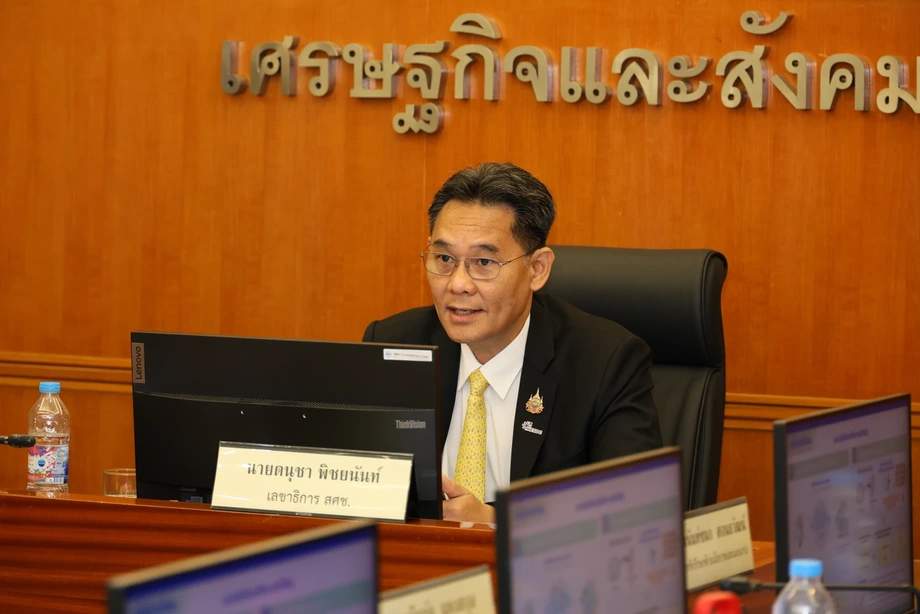
Pol Lt Col Thongchak Rakchakul, the commission's vice chairman, also written as Thongsak Raksakul in English, led the sessions with a subcommittee. Dr Pattama Theerawisitkul, also written Patthama Thianwisitsakul, joined him from the commission. The talks used a focus group format, a guided discussion where each side can explain the same problem from its own position.
- Nov. 19 and 20, 2026 (2569 in the Thai calendar): focus groups with manufacturers, suppliers, franchise operators, local shops, modern wholesale and retail operators, and government agencies.
- Nov. 21, 08:06: an office notice set out the study and the planned fair trade code.
- Nov. 22, 19:34: a Thai statement was published with a press release attached. One related page was dated Nov. 24.
The Thai statement, with its attached press release, framed the work as a way to reduce unequal bargaining power and risk between trading partners. The commission wants the final guidelines to support transparent trade, community responsibility and lasting growth for both large and small businesses.
Why a concentrated market draws scrutiny
The commission describes the modern wholesale and retail market as highly concentrated. In simple words, a few large operators hold a great deal of influence over how goods reach shoppers. When those operators expand, they can shape prices, contract terms, shelf access and the ability of smaller firms to adapt.
Bargaining power means the ability to win better terms in a deal. A large store chain can often negotiate harder than a small supplier because the chain controls access to many customers. Suppliers with less power may accept costs they cannot easily pass on, especially when they need shelf space to survive.
The impact reaches beyond suppliers. Local shops, community businesses and franchisees may face stronger competition when large operators open more branches. The commission's pilot study will look at those pressures in specific provinces rather than only at national market figures.
What suppliers say the costs hide
Suppliers told the talks that putting a product into modern trade can bring several charges at once. They named entry fees, gross profit charges, service fees, marketing costs and promotion expenses. Gross profit charge, often shortened to GP, is a charge linked to the margin a supplier gives up on sales.
One complaint focused on repeated increases. Suppliers said charges had risen several times without a clear explanation of the rules or the calculation method. A product can also be treated as new after a packaging change or relaunch. That creates a new stock keeping unit (SKU), a code used to track each product version, and can trigger another entry fee.
Modern trade operators gave their own explanation. They said entry fees pay for managing a new product from review to shelf arrangement and distribution, with limited selling space. They said standard operating procedures exist. The commission noted that suppliers had received only basic explanations and that details should be made clearer in the proposed code.
The statement gave no fee schedule. That means the drafting work must define what clear criteria look like in practice, including when a repackaged product counts as new and what a supplier is told before paying.
How promotions and shelf space affect the shopping trip
Promotions and product placement formed another major topic. Product placement means where a product sits in a store and how much space it receives. For a supplier, a good position can mean more attention from shoppers. For a retailer, shelf space is limited and must be allocated somehow.
Suppliers said marketing costs and sales promotion expenses can reduce profit margins. Small and medium sized enterprises (SMEs) face a harder problem because they may have less room to raise selling prices without losing customers.
Modern trade operators said promotions follow annual plans, extra campaigns, contracts and sales area management. They said partners assess the plans before deciding whether to join, and participation is voluntary. Details such as price, product position and contract conditions are agreed between the parties, according to their explanation to the commission.
The draft code is expected to turn these practices into clearer written expectations. For shoppers, the結果 may be felt through which products appear on shelves, which offers run and how local products compete with bigger brands.
House brands and the question of ownership
A house brand is a product sold under a store's own label. A retailer may choose a supplier with the right ability and develop a product with that supplier through negotiation. The commission said this can create opportunity, especially for producers able to make goods for a large store network.
The concerns sit around control. Suppliers and local product makers raised questions about products sold only through exclusive channels and about intellectual property rights, meaning who owns the design, recipe, brand or other creation behind the product. The commission said those details need review case by case.
Modern trade operators said they support small producers and community enterprises with knowledge, management tools, value adding and dedicated sales areas. In their telling, those steps help small sellers reach more customers.
The commission's statement puts that support in business terms. A healthy supply chain needs small businesses earning income and profit, not just receiving charity style community projects. Large retailers and small producers can grow together when the rules make the deal fair and understandable.
Why the watchdog wants rules before disputes
Pol Lt Col Thongchak Rakchakul, the commission vice chairman also written as Thongsak Raksakul, said the old approach came after a problem had happened. He said it placed a heavy burden of proof on the side challenging conduct and could be avoided through standard contracts. He argued for rules that set expectations earlier.
Old rules or regulation came after the event, placed a high burden of proof and were avoided through standard contracts.
A code of practice is a set of recommended rules for how businesses should behave. In this case, it would set out what fair dealing means between modern retailers and their trading partners before a dispute reaches an enforcement process. The commission wants it based on honesty, transparency, fairness and responsibility to the community economy, society and the public.
The official also pointed to monitoring and evaluation. A code that can be tracked and reviewed gives the commission a way to see whether the rules change behavior, rather than waiting for complaints to arrive.
What the compliance checklist would do
The Office of the Trade Competition Commission, modern trade operators and other stakeholders support using a Compliance Checklist. A compliance checklist is a tool that helps a business check its own conduct against legal and ethical requirements, step by step.
The proposed checklist would encourage companies to assess their behavior under competition law and the fair trade practices being drafted. It would give them a systematic way to review contracts, fees, promotions and other conduct before problems grow.
The commission's aim is preventive supervision. That means setting clear standards in advance, giving businesses a way to follow them and creating a record that can be checked later. In a market worth 4.38 trillion baht, small changes in contract wording or fee policy can affect many suppliers.
Why Phetchaburi and Lampang matter
The commission plans field studies in Phetchaburi and Lampang provinces. There, it will assess competition conditions and effects on small businesses and consumers. The aim is to understand how modern trade expansion affects local shops, community businesses and franchisees in real places.
The study will use geographic information system data, often shortened to GIS. A GIS stores information by location on maps. It can help regulators compare store expansion, local trading patterns and effects on communities across a province.
The notice did not say why those two provinces were selected. It also gave no date for field visits, a draft code, a vote or a final rule. The next concrete step is to collect local evidence and feed it into the proposed guidelines.
What the rules could change for small businesses
For suppliers, clearer rules could mean knowing why a fee is charged, how it is calculated and when a product is treated as new. That matters for SMEs with limited cash. A repeated charge after repackaging can hurt a producer that has already spent money changing the product.
For community producers, dedicated sales areas, management tools and value adding support can open doors to larger customer bases. The commission wants that support tied to real income and profit, so small firms become stronger parts of the supply chain.
The statement also stresses coexistence with local economies. When a large chain expands, community shops and franchisees can face pressure. Fair trade rules would not stop growth, but they would ask large operators to consider how growth affects the businesses around them.
What shoppers may notice
Shoppers are part of the pilot study because retail rules shape the choices people see every day. Supplier costs, product placement and promotions all influence what reaches shelves. Local shops also matter to consumers because they provide nearby access to goods and play a role in community life.
House brands can add choice, but exclusive channels can change which producers reach customers. A small local product may gain a dedicated sales area, or it may struggle if shelf access depends on costs it cannot carry. The commission's study is designed to examine those effects in Phetchaburi and Lampang.
The consumer part of the work will look at effects on both local businesses and shoppers. The result could shape how modern retailers compete, how often promotions appear and how easily local products reach a wider market.
What happens before a final code
The process now moves from consultation to evidence gathering. The commission will study competition conditions, collect GIS based local data, assess effects in the pilot provinces and develop proposals for fair trade guidelines. The Compliance Checklist will be considered alongside the code.
The main issue remains balance. Thailand's modern wholesale and retail sector is large, concentrated and still expanding. The commission is trying to write rules that keep that growth while making fees, contracts, promotions, house brands and market access easier to understand for the smaller businesses that depend on it.
Key Points
- Thailand's Trade Competition Commission is drafting a code of practice for modern wholesale and retail businesses.
- The market under study is worth about 4.38 trillion baht ($128 billion).
- Focus groups were held on Nov. 19 and 20, 2026 (2569 in the Thai calendar).
- Suppliers raised concerns about entry fees, gross profit charges, marketing costs, promotions, product placement and house brands.
- Modern trade operators said fees cover new product management and that promotion participation is voluntary.
- Pilot studies will take place in Phetchaburi and Lampang using geographic information system data.
- A Compliance Checklist is being considered to help businesses review their own conduct.
- No date was given for field visits, a draft code, a vote or a final rule.