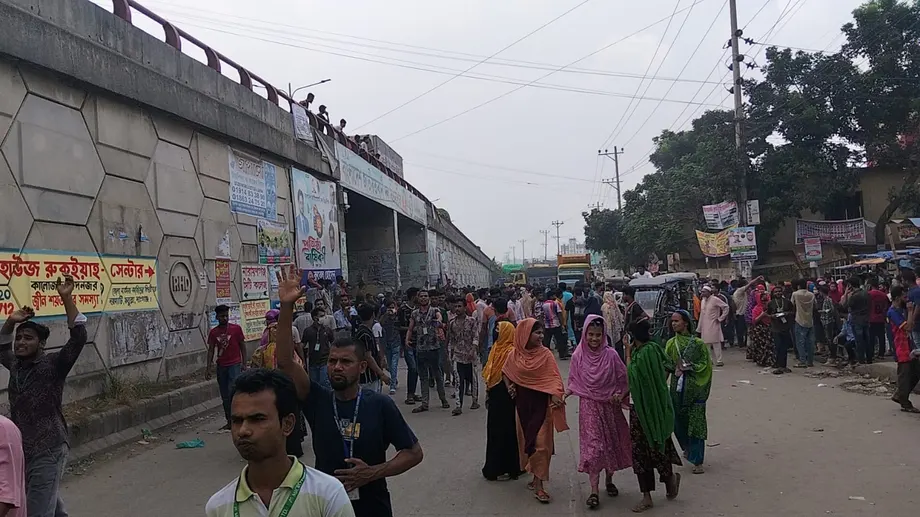
A 4am vote, then blockades by breakfast
Bangladesh's ready-made garment workers will be paid a minimum of Tk17,000 a month from December after the Minimum Wage Board settled the figure by a vote shortly after 4am on 25 November, closing almost 12 hours of talks at its office in Segunbagicha, Dhaka. Four of the board's six members backed the employers' number. The other two voted for the Tk18,000 that the workers' representatives put forward as their last offer.
Contents
- A 4am vote, then blockades by breakfast
- What each grade will take home
- The smallest percentage rise since 1986
- From Tk15,700 and Tk32,000 to Tk17,000 and Tk18,000
- Workers accept, with reservations
- In Gazipur, highways blocked and four factories attacked
- Tear gas, border guards and shuttered factories
- Rights groups say the number falls short of a living wage
- What Tk17,000 means for a household, a factory and a price tag
- A permanent wage council proposed
- What comes next
- Key Points
The raise adds Tk4,500 to the Tk12,500 set in 2023, an increase of 36 percent, and lifts entry level monthly pay to about $139 at an exchange rate of Tk122 to the dollar, against about $102 now. The labour and employment ministry must approve the figure, and employers' representatives said they would pay it from December.
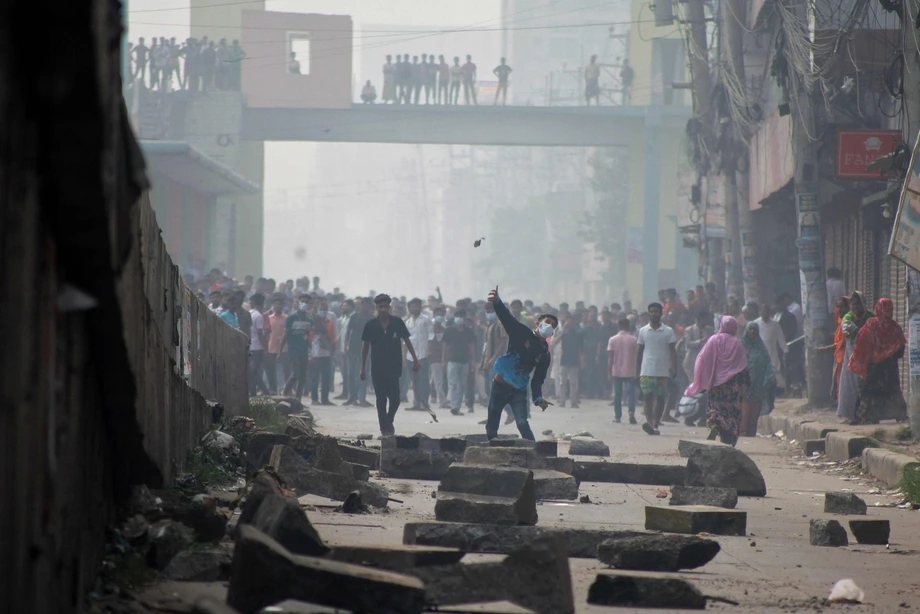
Discontent did not wait for the paperwork. From about 8:30am, workers blocked stretches of the Dhaka-Tangail and Dhaka-Mymensingh highways at Naojor, Chhoydana, Bhogra Bypass, Chandana Chowrasta, Salna, Bhabanipur and Bagher Bazar in Gazipur, with further protests in Savar and Ashulia. Police fired tear gas shells and sound grenades at several points to clear the roads. Four factories in Sreepur were attacked and vandalised, at least 20 factories in Gazipur declared holidays that morning, and more than 100 leaders of labour organisations held a demonstration and human chain outside the wage board office demanding a minimum of Tk30,000.
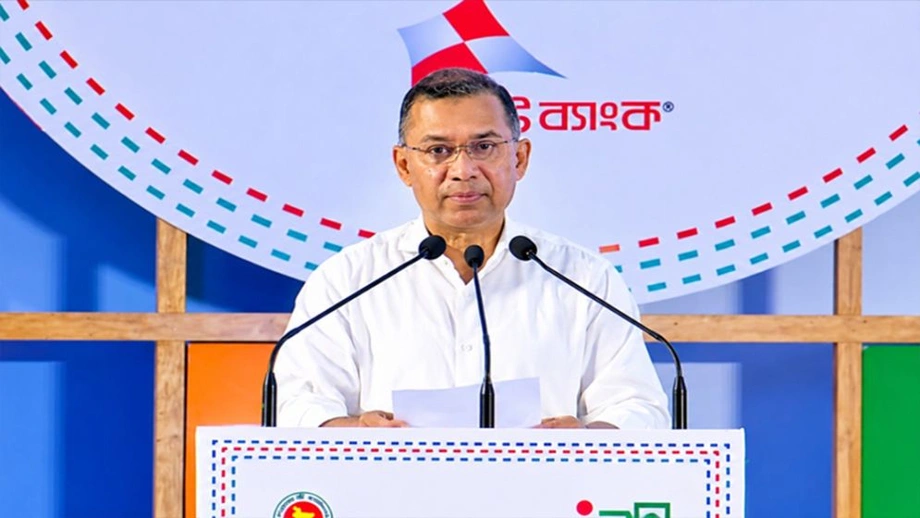
Syed Azad Subhani, the board's chairman, told journalists the decision had come in 20 days, faster than any previous board, and called it a historic milestone. He did not explain why the talks had stayed deadlocked for so long, and said he would not disclose where negotiations had stalled.
What each grade will take home
The new structure covers four grades and lifts pay by between 36 and 43 percent. Grade 4, the bottom rung, takes in helpers, thread cutters and line assistants and moves to Tk17,000 from Tk12,500, up 36 percent. Grade 3, which includes junior operators, experienced helpers, folders, packers and tagging staff, goes to Tk19,200, a rise of 41.70 percent. Grade 2, covering sewing, cutting, finishing and quality control operators, is set at Tk20,000, up 40.11 percent. Grade 1, for senior operators, pattern makers, sample makers, screen printers and senior dyeing operators, rises 43 percent to Tk21,500.
The announced numbers are gross monthly pay. How much of each is basic wage and how much is made up of allowances will only be clear when the draft gazette is published, and that gap has become one of the reasons the protests have continued.
What has been announced is the gross salary. We will not know how much has been set as basic pay or for other allowances until the draft gazette is published. Workers are in the same position. As a result, they remain confused and uncertain.
Khairul Mamun Mintu, law and collective bargaining secretary of the Bangladesh Garment and Sweater Workers Trade Union Centre, said the award could not broadly be called bad, but it had failed to meet the expectations of many workers. He said his organisation would ask the government to reassess it under the legal provision that allows a review.
The smallest percentage rise since 1986
Thirty six percent is the weakest percentage increase in the sector since the first wage structure was drawn up in 1986, when the floor was Tk627. Every revision since then has been larger, in percentage terms, than the one agreed this week.
- 1986: Tk627, the first minimum wage for the sector
- 1994: Tk930, an increase of 48.3 percent
- 2006: Tk1,662.50, up 79 percent
- 2010: Tk3,000, up 80.5 percent
- 2013: Tk5,300, up 76.7 percent, after the Rana Plaza collapse, worker protests and international criticism
- 2018: Tk8,000, up 51 percent
- 2023: Tk12,500, up 56.25 percent
- 2026: Tk17,000, up 36 percent
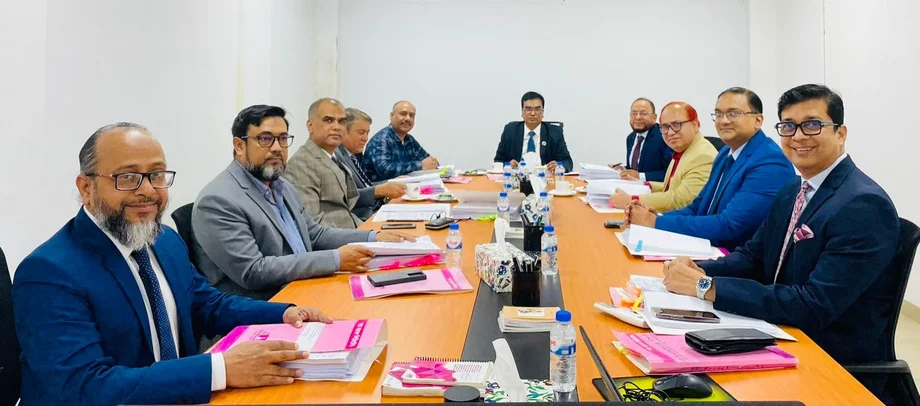
The interval between revisions has also narrowed. The law once required a fresh look every five years; an amendment to the labour law cut the gap to three, which is why the board was convened three years after the last settlement. The present six member board was formed on 1 November and finished on 25 November. Members included the chairman, a neutral member, two representatives for employers, two for workers, and permanent members from each side. The Bangladesh Garment Manufacturers and Exporters Association president and an additional senior secretary joined as experts for the employers, and the general secretary of the Bangladesh Free Garment Workers Union Federation joined for the workers.
From Tk15,700 and Tk32,000 to Tk17,000 and Tk18,000
The numbers moved a long way in four sittings, and the last night moved fastest of all.
- Mid October: garment workers begin protests, initially demanding a minimum of Tk30,000
- 1 November: the government forms the wage board under Syed Azad Subhani
- 9 November: at the second meeting, workers' representatives formally propose Tk32,000
- 23 November: employers open at Tk15,000, workers cut their demand to Tk25,000, employers raise the offer to Tk15,500 while workers come down to Tk22,000, and employers close the session at Tk15,700. The meeting ends at 8:30pm without agreement
- 24 November: the fourth meeting starts at 3:15pm. Employers climb to Tk17,000 in four steps, workers fall to Tk19,000 and then submit Tk18,500 and Tk18,000
- Shortly after 1am on 25 November: with neither side moving further, the chairman calls a vote. It ends 4-2 for Tk17,000, and the result is announced after 4am
The distance between the two sides was widest on grade rates. At Monday's session, according to the Prime Minister's labour and employment adviser Mahdi Amin, workers had asked for Tk35,000 for Grade 1, Tk30,000 for Grade 2, Tk27,000 for Grade 3 and Tk22,000 for Grade 4, while employers offered Tk18,828, Tk17,887, Tk16,996 and Tk15,700 for the same grades.
During the discussions, I spoke separately at times with the employers' side and at times with the workers' side, and even created opportunities for employers and workers to hold separate talks between themselves.
That was Subhani's account of how he handled the deadlock, given to journalists before the final session ended. Mahdi Amin had said earlier that the government hoped a settlement would take in inflation, workers' living costs, industrial capacity, wages in other sectors and the wage structures of competing exporting countries.
Workers accept, with reservations
Babul Akter, the workers' representative on the board and general secretary of the Bangladesh Garment and Industrial Workers Federation, said the outcome satisfied nobody but had to be lived with. He noted that wages rose by Tk4,500 over the previous five years, and that the latest Tk4,500 has arrived within three years.
We are not satisfied with the wages that have been announced. But since the decision has been made, we have to accept it, even if we do not want to.
Our demand should have been for a fair wage that allows workers to make a living. But unfortunately, we have to settle for the announced minimum wage.
Akter called for the new rates to be applied quickly, urged workers to return to their machines, and asked that future demands be pursued in talks between the two sides rather than on the streets. He also asked that workers not be harassed, saying the board would appeal to the government to withdraw cases filed against workers and to release those arrested. Asked about people who join protests at the urging of others, he said anyone taking part in illegal activity would have to answer for it, and that the government would investigate under the country's laws.
On the factory floor, reactions were mixed. A Grade 1 worker at Hamim Group said the increase was larger than the one in 2023, and that her pay had risen from Tk15,350 to Tk21,500. She said the gain would only hold if the government controlled house rents and kept commodity prices at a tolerable level. A male worker at Knit Asia said he could not expect to get everything he wanted, and that he could no longer afford to stay idle with a family to support. Others said they were provisionally satisfied but wanted to know the basic pay split, and one said he had expected at least Tk18,000.
In Gazipur, highways blocked and four factories attacked
The sharpest scenes on the morning of the announcement came from Gazipur, where the wage decision landed as a provocation rather than a settlement. Traffic on several sections of both highways was at a standstill well past 10am, and several vehicles were vandalised. Solaiman Hossain, a bus passenger trying to reach Dhaka on urgent business, said he had been stuck at Kodda on the Dhaka-Tangail highway for more than an hour with no idea when traffic would move. Jasim Uddin, caught near Chowrasta on the Dhaka-Mymensingh highway, questioned the tactic: "Workers should pursue their demands at the factories. Why should they take to the roads?"
In Sreepur, four factories were attacked between 8:00am and 8:30am in the Dakshin Bhangnahati and Keowa Purbakhanda areas. They were Hams Garments Ltd., Dhaka Garments and Washing Ltd. and Luxma Inner Wear Ltd. in Dakshin Bhangnahati village, and Crystal Martin Apparels Ltd. in Keowa Purbakhanda village. A witness, Ariful Islam, said more than 100 workers gathered in front of Hams Garments carrying sticks and blunt objects, forced open the main gate and vandalised the administrative building, while another group damaged the gates of the two neighbouring factories. Habibur Rahman, an official at Hams Garments, confirmed that a group had entered the premises and caused damage, and that the sister concern next door was hit too. Mazharul Islam, officer in charge of Sreepur police station, said officers had received reports and were on their way, and would give details once there.
Amzad Hossain, superintendent of Gazipur industrial police, said demonstrations had begun in several areas in the morning and that tear gas shells were fired in a number of places to disperse the crowds.
Tear gas, border guards and shuttered factories
The unrest spread across the industrial belt through the day. Police used sound grenades as well as tear shells in Savar, Ashulia and Gazipur, and one police officer was injured in a clash. At Gazipura on the Dhaka-Mymensingh highway, protesters pulled furniture out of a police box and set it on fire; Arifur Rahman, officer in charge of Tongi west police station, said the blaze was brought under control before officers chased the crowd off the road. Eighteen platoons of Border Guard Bangladesh were deployed in Savar, Ashulia and Gazipur, with police, the Rapid Action Battalion and Ansar members also on the ground.
Factory gates closed in waves. The Bangladesh Garment Manufacturers and Exporters Association said production was suspended at 481 factories in Savar, Gazipur, Mirpur and other areas on 24 November. Industrial police in Gazipur counted holidays at 70 factories around Bhogra Bypass, Chowrasta and Konabari, with 32 factories shut indefinitely; another count the same day put at least 35 factories closed indefinitely and about 50 on leave. In Ashulia, 24 factories declared holidays, seven saw work stoppages, and 20 were closed under Section 13(1) of the Bangladesh Labour Act.
Mohammad Jahangir Alam, additional superintendent of police for Dhaka district, told reporters the crowds were no longer made up only of garment workers. He said outsiders had joined the movement with the aim of destabilising the sector, without naming anyone.
Rights groups say the number falls short of a living wage
Amnesty International's South Asia office said in a post on X that the rise from Tk12,500 was a step in the right direction but that the rate should be revised to reflect the actual cost of living. The group noted that Tk17,000 sits far below the Tk32,000 that workers' representatives first sought, at a time when food, rent, transport and healthcare costs continue to climb.
Workers must be able to earn a living wage that ensures a decent standard of living for themselves and their families.
The Clean Clothes Campaign, a coalition of labour unions and non governmental organisations, called the decision disappointing. Its living wage coordinator, Anne Bienias, said the figure showed how far factory owners and the government lag behind prices.
Back in 2018, trade unions already campaigned for a minimum wage of Tk16,000 and inflation has been over 5.5% consistently since then.
The coalition asked international brands that source from Bangladesh to oppose violence against workers, to make sure nobody is blacklisted or dismissed for joining the protests, and to press for the release of those detained. It continues to argue for Tk32,000 as a minimum liveable wage.
What Tk17,000 means for a household, a factory and a price tag
Work on the living wage gap for Bangladeshi garment workers gives a measure of how far the new rate travels. Rubaiyat Sarwar, a trustee of the Panam Institute, compared the old and new minimums with an internationally used living wage benchmark. At Tk12,500, workers without overtime earned 56 percent of a living wage, and 69 percent once overtime was counted. At Tk17,000, the share reaches 76 percent without overtime and 100 percent with it, meaning the floor is reached only by workers who put in extra hours.
Factory owners describe a bill they cannot absorb quietly. Faisal Samad, a BGMEA director, said the December change adds Tk20 lakh to Tk25 lakh a month in wage costs at a small factory, Tk1 crore to Tk1.5 crore at some units and Tk4 crore to Tk5 crore at large ones. M A Razzaq, chairman of the Research and Policy Integration for Development, said his organisation calculated that export prices would need to rise 4 to 5 percent for the industry to carry Tk17,000, and that the increase would have to be negotiated with buyers abroad.
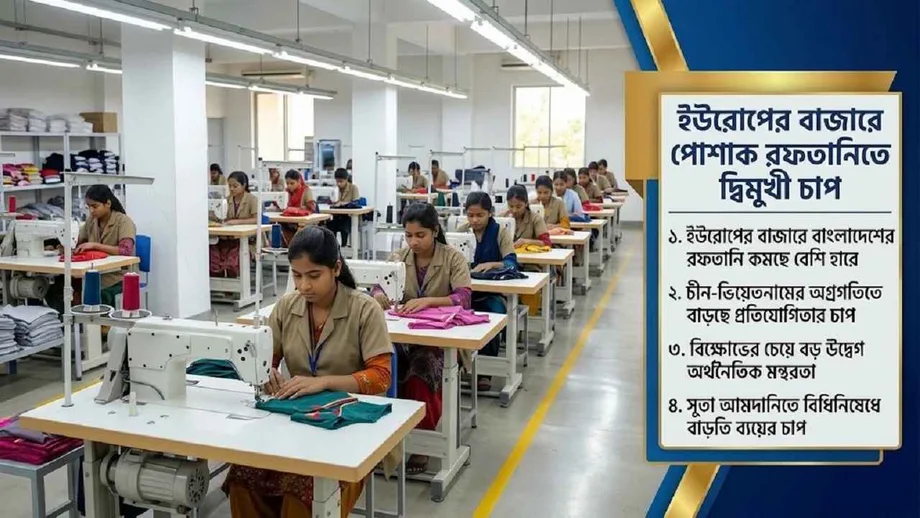
The stakes for the national economy are large. The garment industry directly employs about four million people and accounts for about 80 percent of exports. In the fiscal year 2025-26, ready-made garments made up 80.62 percent of merchandise exports, down from 81.49 percent a year earlier, according to BGMEA figures. The association estimates the recent unrest cost the industry about $428 million, with orders worth $254 million moving to other countries. Rubana Huq, a former BGMEA president, said some factories stayed shut for 20 to 23 days during the unrest while owners still had to meet full wage payments, and that no one has explained where the extra money for the new rate will come from while foreign buyers hold prices down.
Household costs have been addressed separately from wages. The government has been preparing the Tk30 rice plan, which would sell up to 10 kilograms of rice a month to each garment worker through open trucks, with no launch date announced.
A permanent wage council proposed
Rubana Huq used a discussion on workers' wages and industry survival on 25 November to propose a standing wage council, made up of entrepreneurs and researchers, that would adjust pay in an ongoing process instead of reopening the whole question every few years. She said it was a serious weakness that no one had identified who keeps sending workers onto the streets, and that the sector had been pushed so far that returning it to a normal path now looks nearly impossible. She said factories exporting under $50 million a year account for 51 percent of the country's garment exports, and their closure would cut deep into the trade.
Nazneen Ahmed, executive director of the Centre for Policy Dialogue, said the board should have been formed much earlier: announced on 1 November and finished by 25 November, it left no time to head off the unrest, and it produced a number both sides dislike. She backed an annual adjustment tied to a fixed formula. Shihab Uddin Chowdhury, a BGMEA vice president, said existing wages, bank interest and other costs had already left the industry in a fragile state, and that owners would try to carry the new burden, though he questioned how long it could last. Firoz Ahmed, a writer and analyst, said regular adjustments inside a predictable process would free the country from a culture of repeated shutdowns and violence.
What comes next
The labour ministry holds the last word. It can raise the rates before issuing the official notification, as a previous government did during an earlier revision, so the Tk17,000 floor is not final until that notification appears. No date has been given for the gazette, which is also the document that will show the basic pay and allowance split.
Unions intend to test the review provision once the gazette is out. Workers are due to draw the new salaries in January under the December pay structure, and the board and the government have said the wage structure will be reassessed every three years from now on.
Key Points
- The Minimum Wage Board fixed the garment minimum at Tk17,000 a month by a 4-2 vote after talks ended shortly after 4am on 25 November
- The rate is Tk4,500, or 36 percent, above Tk12,500 and takes effect in December, subject to labour ministry approval, with salaries paid in January
- Grade rates rise to Tk19,200, Tk20,000 and Tk21,500, increases of 41.70, 40.11 and 43 percent
- Workers opened at Tk32,000 and closed at Tk18,000; employers opened at Tk15,700 and closed at Tk17,000
- Protests continued on 25 November with highway blockades in Gazipur, tear gas and sound grenades, four factories vandalised in Sreepur and dozens of factories closed
- Production was suspended at 481 factories on 24 November, and BGMEA estimates unrest losses at about $428 million with $254 million in orders moved abroad
- Amnesty International and the Clean Clothes Campaign said Tk17,000 falls short of a living wage and urged a revision towards Tk32,000
- Thirty six percent is the smallest percentage increase since the first garment wage was set at Tk627 in 1986
- Factory owners say the new rate adds Tk20 lakh to Tk5 crore a month in wage costs depending on size, and garment prices would need to rise 4 to 5 percent