A life that stretched from Curzon to Bangladesh
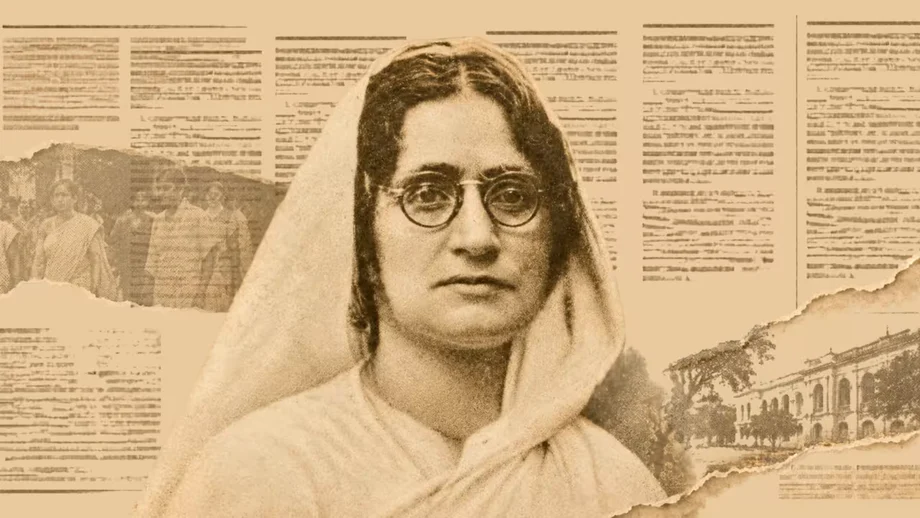
Ashalata Sen's public life stretched from a poem written at the age of ten against Lord Curzon's plan to divide Bengal in 1904 to a demonstration outside the White House in 1971, when she was 77 and Bangladesh was fighting for independence. She witnessed two partitions of Bengal, the end of British colonial rule and the birth of Bangladesh. Through every upheaval, she pursued one question: what would national freedom mean for women still constrained by social rules and economic dependence?
Contents
- A life that stretched from Curzon to Bangladesh
- Widowhood, weaving and a new public role
- Gandaria's schools, workshops and associations
- The salt protest that filled Coronation Park
- Village women take the lead
- The 1932 crackdown and imprisonment
- Writing women back into history
- Why she stayed in East Bengal
- Rebuilding the Samiti after Partition
- Washington, Dhaka and the final literary years
- A life in dates
- What survived her
- Key Points
She was born on 5 February 1894 in Noakhali. Her father, Bagalamohan Dasgupta, was a lawyer at the Noakhali Judge's Court, and her mother was Manodasundari Dasgupta. The family's ancestral home was in Bidgaon, Bikrampur. Ashalata grew up reading Bengali newspapers at four and composing poetry at about nine, but the women around her supplied some of her most lasting lessons in determination.
Her maternal grandmother, Nabashashi Devi, had learned to read and write secretly after marriage. She hid her notebook in the bushes of the family garden, where her husband's brother left corrections and fresh exercises. Despite the restrictions placed upon her, she acquired considerable knowledge of Bengali and Sanskrit and eventually wrote a philosophical work. Ashalata's mother had ranked first in successive classes at Eden School in Dhaka before marriage at the age of ten ended her schooling. Her autobiographical Janaika Grihabadhur Diary recorded both her academic promise and the demands that later absorbed her life.
Nabashashi introduced Ashalata to the histories of the Rajputs, Marathas and Sikhs, the resistance of Tikendrajit of Manipur, and the lives of the Italian revolutionaries Mazzini and Garibaldi. Bankim Chandra Chattopadhyay's Anandamath and Swami Vivekananda's writings further shaped her political outlook. At ten, she wrote nationalist verses against the proposed partition, and her work appeared in Antahpur magazine. Her first collection, Uchchhvas, was published in Noakhali when she was eleven and a half.
After Bengal was partitioned in October 1905, Nabashashi and other women formed associations and opened Swadeshi stores in Bikrampur. Swadeshi, meaning reliance on one's own country, encouraged local production and the boycott of foreign goods. While secretly sheltering revolutionary activists, Nabashashi sent her granddaughter from house to house collecting women's pledges to boycott imports. Those visits gave Ashalata her first practical education in political organisation. Relatives also brought her into contact with the revolutionary Anushilan Samiti.
Widowhood, weaving and a new public role
At twelve, Ashalata married Satyaranjan Sen and later moved to Shillong. His death in 1916 left her a widow with a son, Samaranjan Sen, who was five months old and affectionately known as Sadhan. She returned to East Bengal, cared for her son and elderly father-in-law, Rajkumar Sen, and observed strict Hindu customs of widowhood. During this period she wrote poems about bereavement, worked on a biography of Florence Nightingale and prepared a retelling of Savitri in English.
Gandhi's Noncooperation Movement inspired her to establish Shilpashram at her Gandaria residence in 1921, with help from her father-in-law. The workshop had three looms fitted with flying shuttles. Neighbours came to watch women weaving khadi, cloth spun and woven by hand, giving Ashalata an audience for arguments in favour of indigenous production and a boycott of imported cloth. Among her trainees was Malati Sengupta, whom she accompanied to Faridpur to learn weaving. Back in Dhaka, they worked with scarce thread and yarn of uneven quality.
In 1922, Ashalata represented Dhaka district at the Gaya session of the Indian National Congress. Her writing carried the same message as her organising. In the introduction to her Bengali biography of Florence Nightingale, dated that year, she urged women to accept responsibilities beyond the household. She cited Prophet Muhammad's teaching about removing an obstacle from a public path to show that even a modest act of service could benefit society.
Gandaria's schools, workshops and associations
In 1924, Ashalata founded the Gandaria Mahila Samiti with Sarma Gupta and Saryubala Gupta. Members carried khadi from door to door, sold it and organised annual handicraft exhibitions. Their Gandhimandap displayed pictures and statues illustrating the principle of nonviolence from the Buddha to Gandhi. Ashalata joined the All India Spinners' Association in 1925 and promoted khadi in surrounding villages. Two years later, with assistance from Rajkumar Sen and Dhirendranath Dasgupta, she established Kalyan Kutir Ashram. It offered shelter, education and vocational and political training, while students helped meet its expenses by producing and selling khadi.
After attending the Calcutta Congress session in 1928, she established Juran Shiksha Mandir with Sarma Gupta in 1929. The school stood in a predominantly Namasudra village near Gandaria, serving a community subjected to caste discrimination. Ashalata and Sarma used magic lanterns, an early form of image projection, to promote education, social dignity and Gandhi's ideas. Her commitment to nonviolence did not sever her personal ties with revolutionaries. She remained in contact with Nepal Nag and Bangeshwar Roy and sustained a lasting friendship with Leela Nag.
The salt protest that filled Coronation Park
On 22 March 1930, as Gandhi's Salt Satyagraha gathered momentum, Ashalata and her colleagues formed the Satyagrahi Sevikadal in Dhaka, a corps of volunteers for civil resistance. On 13 April, she travelled to Noakhali with Sarma Gupta and Ushabala Guha to defy the British salt law. Colonial control over salt production and taxation made the public manufacture of salt a direct challenge to official authority.
The women brought salt water back to Dhaka, lit a stove at Coronation Park beside the Buriganga River and produced salt in an earthen vessel. Thousands gathered to watch. People competed to buy the salt made in defiance of the law, although purchasing it could also expose them to arrest. The demonstration turned an everyday cooking ingredient into a public argument about who had the right to govern.
Ashalata subsequently travelled through Sylhet, Mymensingh, Jamalpur and Chandpur to build support for civil disobedience. In Bikrampur, women who had initially welcomed nationalist volunteers with garlands began collecting donations, addressing meetings and organising processions themselves. Her approach treated rural women as potential leaders rather than spectators awaiting instructions from urban activists.
Village women take the lead
In November and December 1930, the campaign expanded to a boycott of union boards and the chowkidari tax, a levy associated with maintaining the village watch system. In Paikpara, women including Birja Basu and Kiranbala Rudra secured the resignation of local officials and forced the union court to close before travelling to Dhipur to continue the campaign. In Haldia, women sat spinning yarn at a court entrance, preventing its president, dafadar and chowkidar from entering.
Ashalata documented these activities in Bikrampurer Nari-Andolan, meaning Women's Movement in Bikrampur, published in 1931 in Jayashree. The Bengali periodical provided space for women's literary and political expression. That year she also founded the Bikrampur Rashtriya Mahila Sangha, which developed branches across the region.
In August 1931, she established the Narikarmi Shiksha Kendra in Dhaka, modelled on a women's training centre in Contai, Midnapore. Approximately 50 women from Dhaka, Bikrampur and Sylhet received instruction in Gandhian and Congress principles under Nibaran Chandra Dasgupta. Cloth production, education and political training were parts of the same practical programme: women needed skills, income and organisation if independence was to alter their daily lives.
The 1932 crackdown and imprisonment
Gandhi's arrest on 4 January 1932 brought a harsher official response. The authorities declared the Gandaria Mahila Samiti illegal and locked up Kalyan Kutir. Ashalata continued organising women who defied restrictions on public gatherings under Section 144, a legal provision used to prohibit assemblies. She also established the Nashankar Mahila Shibir with local activists.
Between January and early March, she campaigned in 61 villages and towns, sometimes addressing meetings in four or five villages in a day. She reportedly walked 15 to 20 miles daily, roughly 24 to 32 kilometres. The Satyagrahi Sevikadal extended the movement to 135 villages across Dhaka district. Officials confiscated the possessions of villagers who refused to pay the chowkidari tax, while police baton charges injured 17 women.
One group led by Surbala Sen was detained and kept moving through rural fields for two days and nights before being abandoned on a deserted riverbank in winter. Despite hunger and exhaustion, the women found shelter, returned to the movement and eventually faced imprisonment. The campaign also received quiet cooperation from village dafadars, many of them Muslim. Some listened to nationalist speeches before reporting the meetings to police, timing their departure so that gatherings ended before officers arrived.
Ashalata was arrested in March 1932 and remained imprisoned until September 1933 following convictions in two cases. At Berhampur jail, she taught younger prisoners, collected their personal histories and met the freedom fighter Matangini Hazra. Her prison poems later formed part of Bidyut, a collection confiscated by the colonial government. She subsequently served for several years as vice-president of the Dhaka District Congress Committee.
Writing women back into history
In 1938, Ashalata published another essay in Jayashree examining women's place in Bengal's history. Rather than dwell on familiar mythological heroines such as Sita and Savitri, she drew on inscriptions, coins, literature and regional traditions. Her subjects included Rani Bhabani, Rani Rashmoni, the poet Chandrabati and the Sanskrit scholars Anandamayi and Vaijayanti Devi. She urged historians to recover contributions that conventional accounts had neglected.
The following year, accompanied by Hemangini Devi and Indumati Guha Thakurta, she toured Dinajpur, Bogra, Rajshahi, Pabna, Rangpur and Gaibandha, helping establish Congress women's organisations. Public work was also changing her private habits. She had worn a veil and had required even her young son to change his clothes after eating fish or meat. Eating prison food and accepting hospitality in Muslim households during village campaigns gradually loosened these orthodox rules of widowhood.
During the Quit India Movement in 1942, she was arrested again while presiding over a protest meeting at Taltala Ghat in Bikrampur after police fired on demonstrators. Following her release, she undertook relief work during the Bengal famine of 1943, assisting affected communities in Dhaka and neighbouring villages until the end of 1944.
Why she stayed in East Bengal
In 1946, Ashalata was elected unopposed as a Congress candidate from Dhaka to the Bengal Legislative Assembly. After communal violence engulfed Noakhali that November, she met Gandhi and then worked to restore unity between Hindus and Muslims in Bikrampur. The second partition of Bengal was especially painful for a woman whose political life had begun in opposition to the first. Following Gandhi's advice, she remained in East Bengal after 1947.
In early 1948, after a Congress conference in Mymensingh, she spent about three weeks travelling by boat through Narayanganj and Bikrampur. At meetings along the way, she addressed the consequences of Partition for local communities. Migration had already begun to weaken the associations and personal networks she had spent decades building.
In the East Bengal Legislative Assembly, she supported joint electorates, under which voters of different religions participate together, rather than separate electoral arrangements based on religion. She also supported recognition of Bengali language rights. During a provincial budget discussion, she argued that tax revenue and foreign exchange earned by East Bengal should be used for the province's benefit.
Pakistani authorities suspected Ashalata and her son Samaranjan, an economist educated at the London School of Economics, of encouraging discontent over economic relations between East and West Pakistan. Facing political pressure, Samaranjan eventually left East Bengal. His mother remained, continued her legislative work and served as a member of the Dhaka University Court.
Rebuilding the Samiti after Partition
On 15 July 1950, Ashalata re-established the Gandaria Mahila Samiti at her residence at 7 Dinanath Sen Road. Partition-related migration had depleted the association, and she initially encountered resistance as she went from house to house recruiting members. Women who joined the renewed effort included Lutfunnesa Chowdhury, Hemangini Devi, Hasina Banu and Zebownesa Chowdhury.
A free school for girls opened that November. Members visited poor neighbourhoods to enrol children whose families could not afford schooling. Students received books, slates, pencils and other materials, and the association arranged milk for them. Within two or three years, the school had expanded to classes through the fifth grade.
After her legislative term ended in 1954, Ashalata concentrated on social welfare. The Samiti expanded vocational training in sewing, embroidery, pottery and weaving. It also provided healthcare, maintained a library and produced a handwritten annual magazine called Agradoot. An organisation initially dominated by Hindu women gradually became an important centre of Muslim women's participation and leadership, giving its work a broader social base than it had possessed before Partition.
Washington, Dhaka and the final literary years
A serious illness took Ashalata to India for treatment in 1965. The war between India and Pakistan that year prevented her return to Dhaka, and she later spent part of her life with her son's family in Washington, DC. Distance did not end her political involvement. During Bangladesh's Liberation War in 1971, the 77-year-old joined a protest outside the White House in support of an independent Bangladesh.
After independence, she spoke at an Ekushey February gathering, the annual commemoration associated with the Bengali language movement, and visited Dhaka with her family in 1972. At a gathering in Delhi that year, Bangladesh's finance minister, Tajuddin Ahmad, recalled her political leadership, her involvement in the struggle for Bengali language rights and her contributions to the advancement of rural women.
Literature occupied more of her later years. Having previously translated a summary of the Yuddha Kanda, she completed a Bengali verse rendering of an abridged version of Valmiki's Ramayana in seven books, published in 1977. Her other books included Utsa and Chhotoder Chhada alongside Uchchhvas and Bidyut.
Ashalata died on 13 February 1986 at her son's residence in New Delhi, aged 92. Volumes of her poetry, songs and children's rhymes appeared in 1988. An edition of her autobiography, Sekaler Kotha, followed in 1990, preserving her own account of a life lived across colonial India, Pakistan and independent Bangladesh.
A life in dates
- 5 February 1894: Ashalata Sen was born in Noakhali.
- 1904 and 1905: She protested against Bengal's partition and joined Swadeshi activity.
- 1921 to 1929: She founded Shilpashram, the Gandaria Mahila Samiti, Kalyan Kutir Ashram and Juran Shiksha Mandir.
- 13 April 1930: Her party defied the salt law, followed by the public production of salt at Coronation Park.
- March 1932 to September 1933: She remained imprisoned after convictions in two cases.
- 1946: She entered the Bengal Legislative Assembly without opposition.
- 15 July 1950: She re-established the Gandaria Mahila Samiti in Dhaka.
- 1971: She demonstrated outside the White House for Bangladesh's independence.
- 13 February 1986: She died in New Delhi, eight days after her 92nd birthday.
What survived her
The Gandaria Mahila Samiti outlived its founder. Its primary school was taken over by the government in 1974, while later initiatives included adult education, loans without interest, shelter and legal assistance for abused women. Ashalata's son donated Tk 50,000 towards establishing the Ashalata Sen Gold Medal for contributions to social welfare.
Her legacy therefore rests in more than elections, arrests or public speeches. It survives in the women who learned to weave, teach, organise meetings and lead associations. The borders around Ashalata changed repeatedly, but her measure of freedom remained practical: a woman needed the ability to learn, earn, speak and act in public. Political independence could create a new state; her institutions were intended to make that independence meaningful inside ordinary homes.
Key Points
- Ashalata Sen was born on 5 February 1894 and began protesting against Bengal's partition at the age of ten.
- She connected khadi production, education and political training through institutions in Gandaria and rural Bengal.
- Her 1930 salt protest in Dhaka drew thousands, and her village organising continued despite imprisonment and police repression.
- Elected to the Bengal Legislative Assembly in 1946, she later supported joint electorates, Bengali language rights and East Bengal's economic interests.
- She rebuilt the Gandaria Mahila Samiti in 1950 and expanded its educational and welfare work after leaving the legislature.
- At 77, she protested outside the White House for Bangladesh's independence.
- She died in New Delhi on 13 February 1986, while her schools, writings and women's association carried her work forward.