An anniversary promise in Parliament
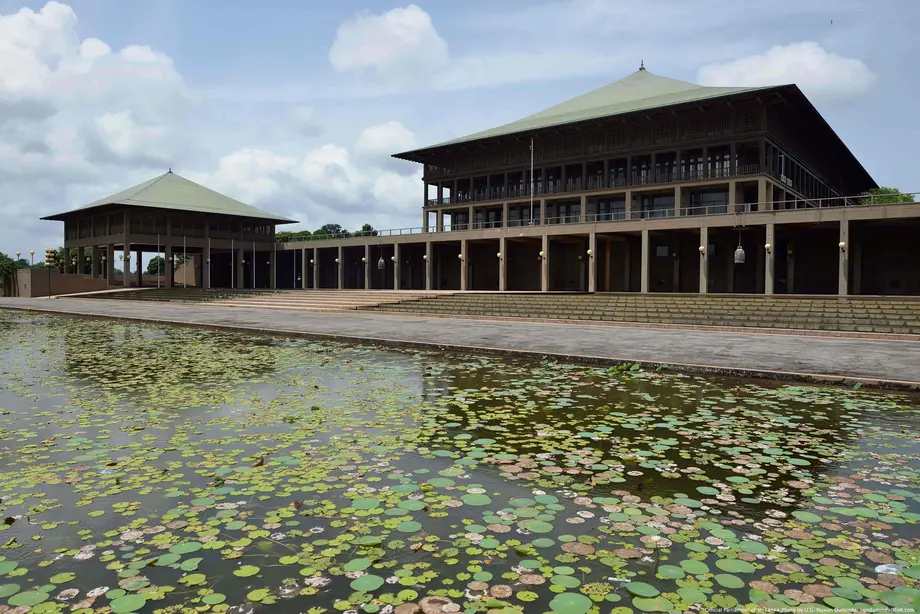
Sri Lanka's government has promised to accelerate every remaining Cyclone Ditwah reconstruction project, one year after a storm that killed hundreds of people and damaged homes, roads, farms and public services across the island. Bimal Rathnayake, Minister of Transport, Highways and Urban Development and Leader of the House, made the pledge in Parliament on Friday, 27 November 2026.
Contents
- An anniversary promise in Parliament
- What the government has allocated
- How Ditwah overwhelmed the island
- How the state organised the response
- Relief, loans and compensation rules
- What has reached families after one year
- Why faster spending has become the central test
- International financing targets roads, farms and safer homes
- Badulla commemoration puts lives before concrete
- The opposition demands disaster resilience
- The humanitarian response closes with unmet needs still visible
- What to Know
Rathnayake paid tribute to those who died and expressed sympathy to families who lost relatives, homes, property and livelihoods. He also thanked residents, the armed forces, police, Civil Defence personnel, disaster management officials, health workers, volunteers, private companies, foreign governments and Sri Lankans living abroad for their rescue and relief work.
Parliament observed silence for the victims as it marked the anniversary. Anniversary figures put the death toll at more than 650, with around 173 people missing; the final humanitarian response count listed 680 deaths and 154 missing.
Rathnayake told Parliament that the government intended to complete the outstanding rehabilitation work as quickly as possible.
We assure that the Ditwah rehabilitation work will be expedited and completed as soon as possible.
What the government has allocated
Three sums form the core of Rathnayake's announcement. About Rs. 29.537 billion has been allocated for direct grants and compensation, covering daily needs, deaths and injuries, damaged crops, fishing equipment and assistance to restart small businesses. Another Rs. 49.08 billion has been assigned through the housing authorities for new houses, repairs and the relocation of families from dangerous areas.
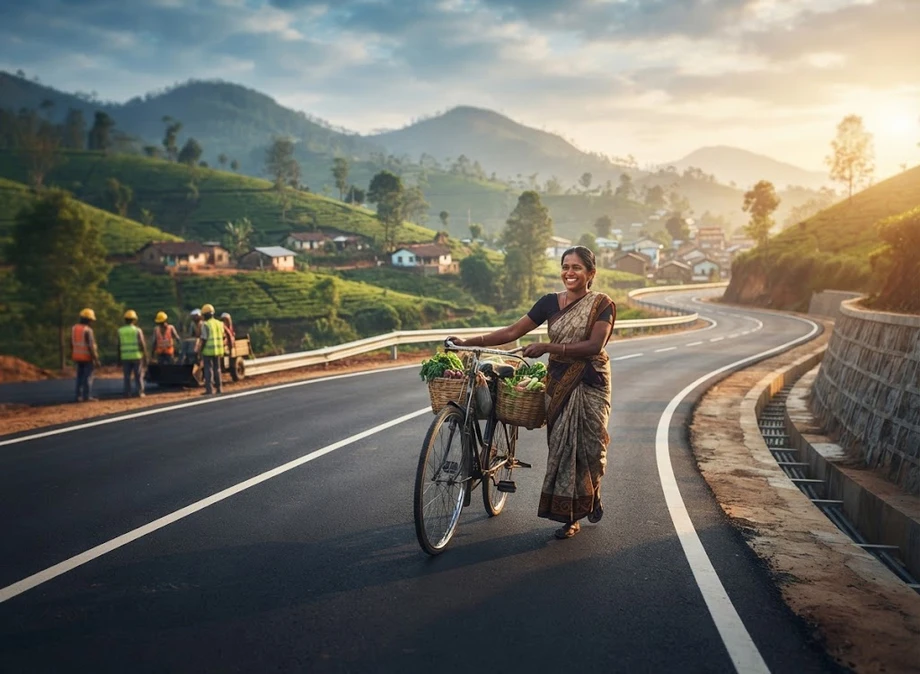
A further Rs. 125 billion is intended for a special programme to restore damaged roads and safety structures. Rathnayake said cyclone damage to roads, bridges, culverts and urban infrastructure extended across 23 districts. Work includes temporary and permanent repairs to roads broken by landslides, damaged bridges, retaining walls and systems designed to keep unstable slopes in place.
His written anniversary statement described full restoration over the coming three years, with Cabinet approval for the special programme. Accounts of his parliamentary exchange with the opposition described a two-year transport reconstruction programme that had already begun. He did not announce completion dates for individual roads, bridges or housing settlements.
The housing programme is still moving families away from locations considered unsafe. For readers, that means reconstruction is not simply a matter of repairing a building where it stood. Some households need land, basic services and a new home in a safer place before they can resume ordinary life.
How Ditwah overwhelmed the island
Rathnayake's statement remembered 27 November 2025 as the day Ditwah struck. The government's legal and administrative review and the Asian Development Bank both record landfall on 28 November. The weather system began as an area of low pressure south of Sri Lanka on 26 November before intensifying, with another reconstruction of events describing a deep depression off Hambantota and Pottuvil that night.
Rainfall reached 540 millimetres within 24 hours in some places. To put that in perspective, more than half a metre of rain fell in a single day, producing floods and landslides that cut roads and isolated communities. All 25 districts experienced effects, 22 were described as severely affected in the ADB assessment and anniversary accounts, and Rathnayake placed transport damage in 23 districts.
The World Bank's damage estimate reached US$4.1 billion, approximately 4 percent of Sri Lanka's gross domestic product in 2024. Infrastructure represented 42 percent of the damage, residential buildings 24 percent, agriculture 20 percent and other buildings 14 percent. More than 55,000 houses were destroyed or severely damaged, infrastructure losses exceeded US$1.7 billion and agricultural damage surpassed US$800 million.
The number of people counted as affected also varies by assessment. The World Bank road financing assessment referred to nearly two million people across all 25 districts, while Plantations and Community Infrastructure Minister Samantha Vidyarathna told the national commemoration that nearly three million people were directly affected.
How the state organised the response
The Law and Society Trust's government measures review records the creation of a national funding and coordination structure during December 2025 and January 2026. Cabinet approved the Rebuilding Sri Lanka Fund on 1 December 2025 as a statutory fund under the Presidential Secretariat. It can receive local and foreign donations in a separate account, with a management committee drawn from the public and private sectors responsible for priorities, allocations, disbursements and auditing.
Gazette Extraordinary No. 2469/09, issued on 31 December 2025 under Article 33 of the Constitution, established the Presidential Task Force for Rebuilding Sri Lanka. Prime Minister Harini Amarasuriya chairs it, and Rathnayake is among its ministerial members. Its duties include setting policy, resolving coordination problems between ministries, guiding major funding choices and supervising recovery programmes. G. M. R. D. Aponsu was appointed convener and secretary.
Eight specialist committees cover needs assessment, public infrastructure, housing, local economies and livelihoods, social infrastructure, finance, data systems and public communication. This arrangement is intended to prevent housing, transport, agriculture and other agencies from working in isolation when the same community needs several kinds of assistance.
- 21 November 2025: The government recognised this date as the start of the disaster period for emergency relief.
- 1 December 2025: Cabinet approved the Rebuilding Sri Lanka Fund and its management arrangements.
- 31 December 2025: The presidential gazette formally created the national task force.
- 9 January 2026: PROJECT 5M began in Anuradhapura with compensation for destroyed houses and ceremonies starting new construction.
- 13 January 2026: President Anura Kumara Dissanayake launched the national Rebuilding Sri Lanka programme in Colombo.
- 26 January 2026: The fund had raised Rs. 5,942,467,000 and US$9,982,703.
Officials estimated that Ditwah would require 20,000 to 25,000 new homes beyond the nearly 31,000 houses already planned under the 2026 national housing programme. Counted together, that pointed to a potential housing workload of roughly 51,000 to 56,000 homes.
Relief, loans and compensation rules
Weekly dry ration assistance rose from a range of Rs. 1,800 to Rs. 3,600 for each family to Rs. 2,100 to Rs. 10,500, depending on household size. Cabinet also approved Rs. 550 million in additional emergency relief provisions. A donor forum on 3 December brought together diplomatic missions, development partners and financial institutions, jointly led by the Treasury Secretary and the Central Bank Governor.
The RE-MSME PLUS loan scheme was approved on 10 December for micro, small and medium enterprises, with about 130,000 entrepreneurs expected to benefit. Its expansion on 29 December included medium and large enterprises and came with a Rs. 5 billion allocation. Loans carry annual interest of 3 percent, repayment over three years and a grace period of six months. Maximum amounts are Rs. 250,000 for micro enterprises, Rs. 1 million for small enterprises and Rs. 25 million for medium and large enterprises.
Families whose houses were fully destroyed can receive reconstruction grants of up to Rs. 5 million. Houses with structural damage exceeding 65 percent, or certified unsafe by the National Building Research Organisation, can also qualify. That technical assessment matters because a building still standing may be too dangerous to occupy.
Agricultural instructions include compensation ceilings of Rs. 200,000 for each crossbred cow and Rs. 50,000 for each local cow, subject to limits for each holding. Pigs, goats and sheep have indicative ceilings of Rs. 20,000 an animal, while poultry rates vary by type. Crop grants are assessed by hectare and crop loss, and fisheries assistance covers registered boats, nets, equipment, ponds, hatcheries and aquaculture facilities. The Agricultural and Agrarian Insurance Board handles insured crop claims, while local field checks can establish eligibility for humanitarian assistance to unregistered farmers and small producers.
International emergency measures included an estimated World Bank envelope of US$92 million to US$112 million, a US$3 million Asian Development Bank grant and a United Nations Humanitarian Priorities Plan seeking US$35.3 million. The UN plan targeted about 658,000 vulnerable people from December 2025 to April 2026, while the Central Emergency Response Fund supplied US$4.5 million for food, shelter, water, sanitation and hygiene.
What has reached families after one year
Relief payments have moved faster than permanent housing. Authorities report that nearly 99 percent of the promised Rs. 25,000 and Rs. 50,000 allowances were disbursed. The monthly Rs. 25,000 rental allowance for families awaiting permanent housing reached nearly 94 percent of recipients, and almost every affected schoolchild received the Rs. 15,000 allowance for educational materials and essentials.
Housing figures show the remaining task more starkly. Officials identified 29,983 families for resettlement, spent more than Rs. 2.7 billion on housing assistance and completed full payments for 9,931 homes. By the anniversary, 1,615 families had been permanently resettled. That equals about 5.4 percent of the 29,983 families identified for resettlement, although other families have received payments or repairs without being counted as permanently resettled.
Compensation had been issued for 63 percent of 100,771 partially damaged houses. On the railway network, trains had resumed as far as Peradeniya, while work continued on damaged stretches between Peradeniya, Kandy and Gampola. The National Building Research Organisation continues to assess unstable and high-risk locations before major rebuilding proceeds.
Why faster spending has become the central test
Only about Rs. 40 billion of a Rs. 500 billion reconstruction allocation had been disbursed by the middle of 2026, leaving nearly Rs. 460 billion unused. When only 8 percent was spent, the slow release of money contributed to a rare budget surplus even while communities waited for repairs.
The World Bank's October 2026 update attributed the shortfall to weaknesses in project selection, procurement and implementation capacity rather than a lack of financing. In practical terms, an allocation does not repair a road until engineers prepare a viable project, contracts are awarded and agencies can carry out the work. Sri Lanka recorded a Rs. 9.5 billion budget surplus in the first half of 2026, compared with a Rs. 406 billion deficit in the same period of 2025, but that stronger balance did not itself demonstrate faster reconstruction.
The recovery was already colliding with debt, fuel and external economic pressures in Sri Lanka's triple crisis. Those pressures made delays especially costly for households whose farms and businesses depended on restored transport and irrigation.
President Dissanayake responded in his 12 November budget speech by proposing Rs. 260 billion for reconstruction in 2027. Under the 2027 reconstruction allocation, Rs. 90 billion is intended for housing, Rs. 90 billion for roads, railways and bridges, and Rs. 21 billion for irrigation and related agricultural infrastructure. Unspent money would be carried forward through a fresh supplementary estimate, which is the parliamentary mechanism for authorising expenditure beyond the original budget. The proposal raised the projected deficit from 3.8 percent to 4.5 percent of gross domestic product, with financing expected from the government's cash buffer.
The institutional review records an initial Rs. 500 billion supplementary estimate followed by parliamentary approval of a revised Rs. 1,000 billion estimate after updated damage and needs assessments. Later budget statements continued to refer to the Rs. 500 billion allocation and its unused balance. The precise accounting relationship between the approved estimates and the money carried forward has not been publicly clarified.
International financing targets roads, farms and safer homes
World Bank financing of US$110 million is intended to repair and reconstruct about 600 kilometres of roads through the International Development Association's Crisis Response Window, an emergency financing route for countries served by the association. The roads were selected for their importance in reconnecting communities with markets, schools and healthcare.
The transport sector sustained about US$973 million in damage, with recovery needs estimated at US$1.31 billion. Nearly 2,000 kilometres of provincial roads, more than 3,500 kilometres of rural roads and close to 700 bridges were damaged. The new operation extends the Inclusive Connectivity and Development Project by three years and takes total World Bank transport connectivity investment under that project to US$610 million.
More than 830,000 people are expected to benefit directly, including about 22,000 tea, vegetable and paddy farmers. Reconstruction and maintenance are expected to create around 5,671 new or improved jobs. Better drainage, landslide protection and stronger engineering are intended to keep roads open during severe weather rather than simply restore their previous condition.
Gevorg Sargsyan, World Bank Group Country Manager for Sri Lanka, connected the engineering work to household incomes and access to services.
This is about more than fixing roads. It is about restoring livelihoods, reconnecting farmers to markets and families to essential services, and ensuring that the infrastructure rebuilt today is resilient enough to withstand future shocks.
On 1 July 2026, the Asian Development Bank approved a $200 million emergency package. It consists of a US$100 million regular loan, a US$100 million concessional loan, which provides financing on easier terms, and a US$500,000 technical assistance grant for implementation and quality assurance.
The Post-Cyclone Ditwah Reconstruction and Livelihood Support Project will finance roads, irrigation tanks and canals, dam safety planning, assistance to smallholder paddy farmers and housing rebuilt by families through grants paid in stages as construction progress is verified. Government agencies responsible for transport, irrigation, agriculture and disaster recovery will implement it, supported by consultants and regular ADB review missions.
Shannon Cowlin, ADB Country Director for Sri Lanka, described the pressure the disaster added to communities already facing economic difficulty.
Cyclone Ditwah caused widespread damage to infrastructure, housing, and livelihoods across Sri Lanka, placing additional strain on communities already facing significant economic challenges.
Cowlin said the assistance would restore essential services, support households and farmers, and rebuild infrastructure to standards better able to withstand climate extremes.
Badulla commemoration puts lives before concrete
Prime Minister Harini Amarasuriya joined the national commemoration programme on 26 November at Muthiyangana Raja Maha Vihara in Badulla. The Uva Provincial Council and the Badulla and Monaragala District Secretariats organised the event, which included an all-night Pirith ceremony for the dead and missing. The Prime Minister laid floral tributes and issued a commemorative stamp.
She praised residents who travelled from less affected districts to places including Kandy, Badulla and Puttalam, as well as public officials, security personnel, volunteers and religious leaders. Her address defined recovery as more than physical construction.
Rebuilding a country after a disaster does not mean merely reconstructing destroyed buildings, roads, and bridges. Strengthening shattered human lives, supporting families who have lost loved ones, rebuilding lost livelihoods, ensuring the continuity of children's education, and guaranteeing people a safe future where they do not have to face such a disaster again are also our responsibilities.
Amarasuriya promised continued support without division by ethnicity, religion or province. Samantha Vidyarathna recalled that the President summoned government and opposition MPs on 26 November 2025, suspended parliamentary sittings and asked legislators to conduct relief work in their areas. He urged everyone involved to resolve to address basic problems and rebuild lives with greater dedication before the second anniversary.
The opposition demands disaster resilience
Opposition Leader Sajith Premadasa told Parliament that reconstruction and compensation remained incomplete despite money having been allocated. He cited Rs. 50 billion provided through a supplementary estimate the previous year and argued that Sri Lanka needed to reduce disaster damage before it occurs rather than concentrate on relief afterwards.
It was proven that Sri Lanka's disaster management system has failed. This was proven during the cyclone disaster of last year. What is needed for Sri Lanka is a shift from a disaster relief focus to a disaster resilience focus.
For the reconstruction programme, resilience has concrete meanings: stronger early warning systems, restrictions on building in unstable locations, improved drainage, slope protection, safer irrigation structures and houses constructed in less dangerous places. Rathnayake said Ditwah had taught a strong lesson about climate change and pledged to strengthen early warning systems while finishing the outstanding work.
The humanitarian response closes with unmet needs still visible
World Vision's emergency and recovery operation reached 237,980 people, including 123,000 children, across 31 locations in 23 districts. More than US$9 million supported food, clean water, hygiene and dignity supplies, protection services, cash vouchers, mental health assistance and repairs to water and sanitation systems. Its final operational figures also recorded more than 233,000 people displaced and over 273,000 acres of paddy destroyed.
Lakshigadevi, a 40-year-old woman from Nuwara Eliya, described what food assistance meant while she was staying with relatives without a home or income.
That support came at the right time. It helped me feed my children when I had nothing. I already felt like a burden by staying at my relative's house and I was in a state of desperation to provide for my children on my own. The food supplies lasted our family for more than three months, with no home and no income this was a blessing for us.
Sanjeevani Ariyadasa, the Grama Niladhari of Ganga Ihala Korale, explained how a relatively small water project benefited a much larger group.
World Vision supported us by renovating wells, water tanks and pipelines when water had become very scarce after the disaster. From the renovation of just 12 wells, around 150 families benefited from it.
Donors and partners included the United States Government, Australian Aid, the World Food Programme, World Vision Singapore and Taiwan, the Government of Hong Kong, the Canada Humanitarian Coalition and local contributors. The response concludes on 30 November 2026, with preparedness, child protection and support for recovery and resettlement continuing.
What to Know
- Bimal Rathnayake promised Parliament on 27 November 2026 that remaining Ditwah reconstruction work would be accelerated.
- The allocations he announced include Rs. 125 billion for transport infrastructure, Rs. 49.08 billion for housing and Rs. 29.537 billion for relief and compensation.
- Cyclone Ditwah caused more than 650 reported deaths, while the World Bank estimated damage at US$4.1 billion.
- Only 1,615 families had been permanently resettled by the anniversary, out of 29,983 identified for resettlement.
- About Rs. 40 billion of a Rs. 500 billion allocation had been spent by the middle of 2026; a further Rs. 260 billion has been proposed for 2027.
- World Bank financing targets about 600 kilometres of roads, while the ADB has approved US$200 million for infrastructure, farming livelihoods and housing.
- The opposition is demanding a shift from emergency relief towards disaster resilience, including stronger preparation for future floods and landslides.