A DNA Deletion That Helps Males and Harms Females
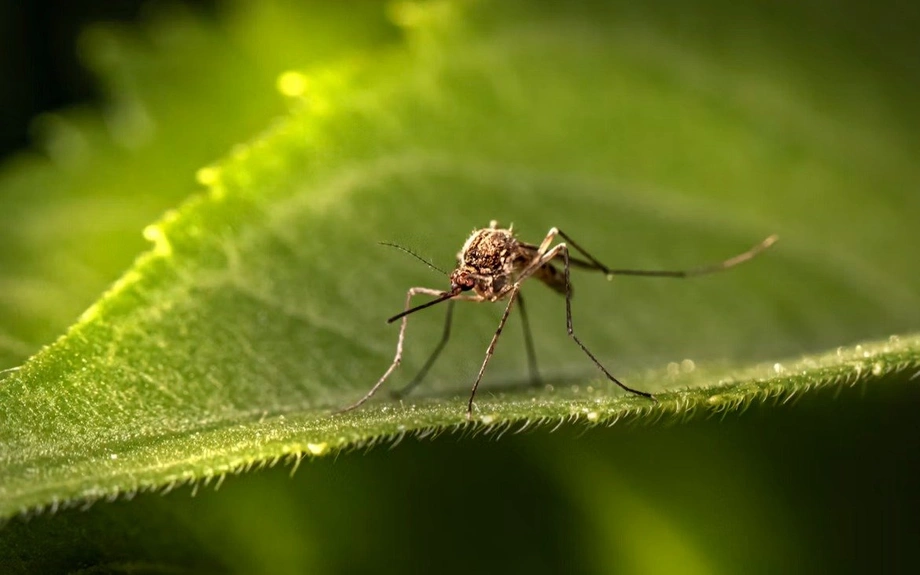
A naturally occurring deletion in a mosquito gene gives males a large mating advantage in hot weather while making females easier for malaria parasites to infect. Males carrying one copy of the variant achieved roughly 3.6 to 4.7 times the mating success of unaltered males at high temperatures. Females carrying the same deletion developed heavier parasite infections, including larger numbers of the parasite stage that can enter people through a mosquito bite.
Contents
- A DNA Deletion That Helps Males and Harms Females
- How Three Years at 32°C Changed a Laboratory Population
- Why Males Become More Competitive in the Heat
- Why the Same Variant Benefits the Parasite in Females
- A Mosquito Well Suited to Hot, Urban Places
- From Djibouti to Cities Across Africa
- The Malaria Toll and Why China Is Watching
- What Genetic Surveillance Could Add
- Key Points
The study, published in Cell on November 19, 2026, examined Anopheles stephensi, a malaria vector that thrives in cities and has spread across Africa since its detection in Djibouti in 2012. Researchers at the Center for Excellence in Molecular Plant Sciences, part of the Chinese Academy of Sciences, worked with colleagues at Shanghai Normal University. Wang Sibao and Zhan Shuai of the center and Liu Jingnan of the university were corresponding authors. Wang Guandong, Sun Peilu, Yang Bingchen and Wang Yiguan shared first authorship.
The variant, named tim-5kb, is a deletion spanning about 5 kilobases in a gene called timeless. A kilobase represents 1,000 units of DNA sequence, so the missing section contains roughly 5,000 DNA letters. Timeless is part of the circadian clock, the internal timing system that helps an insect organize daily activity, rest and other biological processes. The findings connect that clock with energy use, courtship chemistry and immunity, offering a biological explanation for how warming could favor both the mosquito's reproduction and its potential to transmit malaria.
How Three Years at 32°C Changed a Laboratory Population
The research team began with a Dutch laboratory strain of Anopheles stephensi and maintained separate populations at high and normal rearing temperatures. The hot population lived at 32°C for three years, covering about 80 mosquito generations. Comparing genomes across the populations revealed that the tim-5kb deletion had become much more common in the heat. Its frequency reached 28.65%, against 2.08% in the control population, nearly 14 times the control frequency.
The deletion was already present before the heat experiment. The scientists also found it at low frequencies in other laboratory colonies, indicating that sustained warmth favored an existing variant rather than creating a new one. Additional sequencing, genome reassembly and PCR checks supported the result. PCR is a laboratory technique that copies selected sections of DNA so researchers can inspect them and verify that an apparent genetic change is real.
Mating experiments under outdoor conditions provided another test. Where the average daily maximum temperature was about 32°C, the frequency of the deletion and of mosquitoes carrying one copy increased across three consecutive generations. The increases exceeded expectations from neutral genetic drift, which means random changes in gene frequencies as some individuals happen to leave more descendants than others. The clearest reproductive results concerned heterozygous males, meaning mosquitoes with one altered copy of timeless and one unaltered copy.
Why Males Become More Competitive in the Heat
In hot conditions, heterozygous males maintained relatively stable expression of another clock gene called period, often shortened to per. The researchers traced a chain of effects from PER, the protein associated with that gene, to two traits that matter during mating: the energy needed for flight and the chemical signals used to attract a mate.
PER increased expression of AKH1, a gene involved in releasing stored energy. That process supports flight activity, giving males more capacity to take part in mating swarms. PER also increased expression of FAR3 and FAR5, genes involved in producing heptacosane. Heptacosane is a hydrocarbon that acts as a sex pheromone, a chemical signal used in courtship and mating communication. Greater production increased the males' attractiveness in the experiments.
Direct competition tests confirmed the reproductive advantage. The team used fluorescently labeled sperm to distinguish the reproductive success of competing males. The benefit was much less evident at standard temperatures, tying the strong mating advantage to heat. This temperature dependence helps explain why the variant became more common during years of warm rearing rather than simply spreading under every condition.
Why the Same Variant Benefits the Parasite in Females
Female mosquitoes present the other half of the story. Only females take the blood meals needed for egg production, and an infected female can pass malaria parasites to a person while feeding. Heterozygous females carrying tim-5kb had higher infection rates and more parasites in their midguts than females without the deletion.
The researchers counted oocysts, structures in which parasites develop and multiply inside the mosquito's midgut. Infected heterozygous females also carried more sporozoites in their salivary glands. Sporozoites are the parasite stage injected with saliva during a bite, so their abundance is directly relevant to transmission potential.
Two immune genes, LRIM15 and PGRP-LD, had reduced expression in these females. Functional experiments showed that lowering either gene increased parasite burdens. The same deletion therefore acts through different biological routes in the two sexes: it improves energy use, flight and courtship signaling in males, while weakening part of the antimalarial immune response in females. As heat favors the variant through male reproduction, female descendants can inherit the greater susceptibility that comes with it.
A Mosquito Well Suited to Hot, Urban Places
Anopheles stephensi is native to South Asia and parts of the Arabian Peninsula and can transmit both Plasmodium falciparum and Plasmodium vivax, two important malaria parasites. Unlike major African vectors that are more often associated with rural settings, including Anopheles gambiae, Anopheles funestus and Anopheles arabiensis, it readily breeds in water storage containers and other small water bodies found around cities.
Its estimated thermal range is also broad. Its lower tolerance limit is about 3.4°C below estimates for other Anopheles species, while its upper limit is about 3.4°C higher. Across those two endpoints, the difference amounts to 6.8°C. Earlier work also found a wider suitable temperature range for malaria parasite transmission by Anopheles stephensi than by Anopheles gambiae.
Global average temperature has risen by about 1.2°C since the Industrial Revolution. Urban heat can add another local challenge because buildings, roads and other hard surfaces retain warmth, creating what scientists call an urban heat island. Anopheles stephensi can survive extreme dry season temperatures when transmission would usually decline. Its tolerance of heat, combined with its use of containers around homes, gives it opportunities in places where malaria control has often concentrated on rural mosquito populations.
From Djibouti to Cities Across Africa
The mosquito's African expansion has been rapid enough to prompt a strategic plan from the World Health Organization aimed at limiting further spread. The plan calls for urgent, coordinated control across Africa. Historically, malaria on the continent has been predominantly rural, but urban cases have increased in recent years. Researchers consider the spread of a vector adapted to cities a possible contributor and an added complication for predicting where and when transmission will occur.
- 2012: Anopheles stephensi was detected in Djibouti and was considered an important contributor to the city's resurgence of malaria.
- 2012 to 2026: The species was subsequently reported in Ethiopia, Sudan, Somalia, Eritrea, Kenya, Ghana and Nigeria.
- November 19, 2026: The Cell study identified a genetic mechanism that may help explain its success under urban heat.
The detections in Ghana and Nigeria extended concern beyond the Horn of Africa and East Africa. Wang has warned that further expansion within Africa, and potentially onto other continents, remains possible, although no timetable for such movement has been established.
The Malaria Toll and Why China Is Watching
Malaria caused an estimated 282 million cases and 610,000 deaths worldwide in 2024. Those figures explain why even a change in mosquito infection rates draws attention. Transmission depends on many factors, including housing, bed nets, medicines, rainfall, temperature and access to health care, but a mosquito that reproduces successfully in heat and carries more parasites can make control more demanding.
China received World Health Organization certification as malaria free in 2021. That recognition concerns the interruption of local transmission; imported infections can still arrive when travelers contract malaria abroad. China reported 4,314 imported cases in 2025, an increase of 36% from 2024. Of these, 2,829 involved Plasmodium falciparum, accounting for 65.6%. Twenty-seven provinces reported a combined 131 severe cases, and 11 people died.
Anopheles stephensi also has distribution records in China, including Yunnan, Guizhou, Sichuan, Tibet, Guangdong, Guangxi, Hainan and Fujian. Wang's team pointed to growing trade, travel and movement of people between China, Southeast Asia and Africa as reasons to keep watching imported malaria and the insects capable of transmitting it. The concern is the protection of China's elimination achievement, alongside the much larger continuing burden in Africa.
What Genetic Surveillance Could Add
The findings give surveillance programs another characteristic to consider alongside maps of where the mosquito lives. Two populations in similar places could differ in their reproductive response to heat and in their susceptibility to malaria parasites if their timeless genes differ. The researchers argue that tracking genetic variation should accompany monitoring of geographic spread, particularly as temperatures rise.
Wang Sibao, a professor at the Center for Excellence in Molecular Plant Sciences and a corresponding author of the paper, described the value of the work for assessing transmission risks and directing control.
The study offers new insight into how climate change can shape the evolution of disease vectors and provides a scientific basis for assessing transmission risks and targeting surveillance and control efforts.
Wild mosquito genomes provided a further reason for attention. The team detected a natural premature stop mutation with effects equivalent to the tim-5kb deletion. This kind of mutation ends the gene's protein instructions early. Tests showed similar biological effects, suggesting that laboratory findings have a relevant counterpart in natural populations.
The next research priorities include searching for other variants that affect heat tolerance, such as single nucleotide variants, which change one DNA letter, and copy number variants, which alter how many copies of a DNA section are present. Field studies will also be needed to measure how common these changes become and how they interact with local temperatures and malaria control. The experiments quantified mating and infection in mosquitoes; they did not estimate how many additional human cases the variant might cause or predict when it will reach a particular frequency in Africa.
Key Points
- A deletion in the timeless clock gene gave male Anopheles stephensi 3.6 to 4.7 times the mating success of unaltered males in heat.
- After three years and about 80 generations at 32°C, the variant's frequency was 28.65%, compared with 2.08% in the control population.
- The variant supported male energy use, flight and production of the mating chemical heptacosane.
- Females carrying it had weaker expression of the immune genes LRIM15 and PGRP-LD and heavier malaria parasite infections.
- Anopheles stephensi breeds in urban water containers, tolerates a broad temperature range and has spread from Djibouti to several other African countries since 2012.
- Researchers recommend adding genetic monitoring to geographic surveillance, while the variant's effect on human case numbers remains unquantified.