What changed at Malaysia's first 5G network
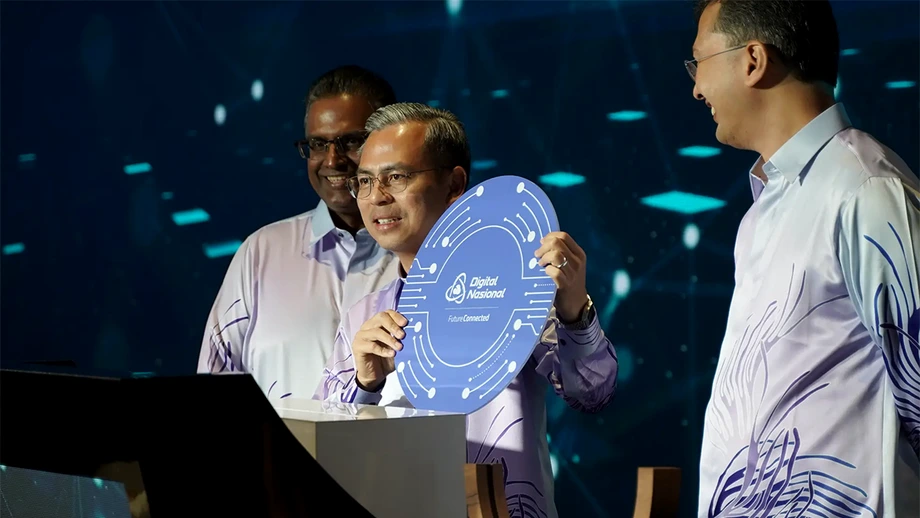
KUALA LUMPUR, Nov 28: Five years after launching Malaysia's first 5G network, Digital Nasional Bhd is expanding its capacity after completing a RM5.2 billion Syndicated Islamic Term Financing. In a DNB statement dated 1 October 2026, the company said the financing included the refinancing of its Government Guarantee Revolving Credit Facility (GGRCF), which expired on 29 September 2026. The financing is aimed at upgrades that DNB says are needed because actual demand is ahead of the levels its shareholders projected.
Contents
- What changed at Malaysia's first 5G network
- Why the new spectrum matters
- A timeline of the ownership shift
- What the put option actually did
- Who controls DNB now
- Why shareholders added another RM202 million each
- How much money has gone into the first network
- Why Malaysia is keeping two 5G networks
- What investors are watching
- What customers and businesses may notice
- Key Points
DNB chief executive officer Datuk Azman Ismail said the company is well placed to help Malaysia's next phase of digital transformation. He pointed to 200MHz of contiguous spectrum in the 3,300MHz to 3,500MHz range, the largest holding of its kind in Malaysia. For ordinary users, that means the network has a large, continuous set of radio frequencies to carry mobile data, especially in busy areas where many devices compete for space.
Why the new spectrum matters
Spectrum is the invisible radio space that phones and networks use to send and receive signals. A contiguous block is one continuous stretch of that space, which is easier for equipment to manage than several small pieces. DNB's 200MHz block sits in a middle range of 5G frequencies, a balance between coverage and speed.
The capacity push began after the Malaysian Communications and Multimedia Commission (MCMC) issued a 15-year Spectrum Assignment converting DNB's entire 240MHz holding, effective 1 October 2026. The assignment included the full 100MHz of the 3.3GHz to 3.4GHz (F0) block. That block replaced spectrum previously allocated to U Mobile Sdn Bhd after U Mobile was named builder of Malaysia's second 5G network. Capacity, in simple terms, is how much traffic a network can handle at one time. More spectrum gives DNB more room to carry data as usage rises.
Malaysia operates a dual wholesale 5G model. DNB runs one national wholesale network and sells access to mobile operators, while U Mobile is building the second. Wholesale means the network company provides the infrastructure and operators package services for customers.
A timeline of the ownership shift
The RM5.2 billion financing is tied to a wider move that takes DNB from a government backed beginning toward private control. The steps stretch across more than two years.
- 28 June 2024: The Shareholders Agreement was signed.
- 13 May 2025: That agreement was varied.
- May 2025: U Mobile exited DNB after being selected to build the second 5G network.
- 1 December 2025: Minister of Finance Inc, or MoF Inc, issued a put option notice to exit its DNB stake.
- 2 December 2025: Maxis and CelcomDigi confirmed receipt of the notice in filings to Bursa Malaysia.
- 6 March 2026: CelcomDigi and Maxis announced completion of their cash payments under the put option.
- 29 April 2026: CelcomDigi and Maxis each announced an additional RM202 million shareholder advance.
- 12 November 2026: The government reaffirmed the dual network policy at a cybersecurity event in Kuala Lumpur.
- 28 November: DNB's capacity financing and demand growth were disclosed.
The put option was required to be completed within two months of the notice, around 1 February 2026. The payment announcements came on 6 March 2026, and the announcements did not give the exact settlement date. Earlier guidance put completion of the government's equity exit at early in the fourth quarter of 2026; the exact completion date was not given.
What the put option actually did
A put option is a contract that gives a shareholder the right to require another shareholder to buy its stake. MoF Inc used that right under the Shareholders Agreement dated 28 June 2024, as varied on 13 May 2025. This was a contractual exit, not a simple open market sale of shares.
Under the notice, CelcomDigi, Maxis Broadband and YTL Power each had to pay RM327,872,640.28. Across the three payments, the stated amount comes to RM983,617,920.84 before other assumed items. CelcomDigi said it also took on RM161,172,639.95 of MoF Inc's loan, accrued interest and additional shareholder advances. Maxis said its wholly owned unit, Maxis Broadband, paid the same cash amount.
Before U Mobile's exit, the three telcos each held 19.44 percent of DNB's issued share capital and shareholder advance, while MoF Inc held 41.67 percent. Under the structure disclosed in December 2025, the full exercise leaves CelcomDigi, Maxis and YTL Power holding DNB in equal one third portions.
Who controls DNB now
MoF Inc still holds a special golden share in DNB. The government has said the share exists to safeguard national interest. The rights attached to that share were not set out in detail, but MoF Inc no longer has any funding obligations as the equity exit moves toward completion.
By 29 April 2026, filings described MoF Inc as excluded from DNB's funding structure after exercising the put option. That leaves the three private sector shareholders carrying the next stage of investment. The listed companies' announcements point to a company whose day to day financing now sits mainly with CelcomDigi, Maxis and YTL Power, rather than with the government.
The ownership change matters because DNB is no longer just a state backed rollout vehicle. It is becoming a shared infrastructure business owned by the operators that use it. That gives the shareholders more influence over spending, while the golden share keeps a defined government role in national interest matters.
Why shareholders added another RM202 million each
CelcomDigi and Maxis each extended an additional RM202 million shareholder advance to DNB on 29 April 2026. The money was meant for two near term needs: upfront spectrum fees tied to spectrum acceptance and working capital, which is the cash a company needs for daily operations.
CelcomDigi, one of DNB's three operator shareholders, said in a filing that the advance had a specific purpose. Its wording was:
The additional shareholder advance will be utilised by DNB to pay upfront spectrum fees as part of the spectrum acceptance and to meet its working capital requirements.
A shareholder advance is money provided by owners rather than a normal bank loan. In this case, the advances carry no interest, are not repayable on demand and give one vote per ringgit advanced. CelcomDigi's total advances to DNB reached RM551.9 million after the latest injection.
Assuming equal contributions from CelcomDigi, Maxis and YTL Power, each has an effective 22.94 percent interest based on share capital and advances. Both listed companies said the additional advances were not expected to have a material effect on earnings, net assets or gearing for the financial year ending 2026.
How much money has gone into the first network
Digital Minister Gobind Singh Deo disclosed that the government put RM950 million into DNB. That figure comprises RM500 million of equity in 2021 and a RM450 million shareholder loan in May 2023. By late 2024, DNB had spent RM5 billion developing and implementing the first 5G network.
The rollout was also funded through private borrowings, including loans guaranteed by the government. Against that background, the RM5.2 billion Syndicated Islamic Term Financing, which refinanced the government-guaranteed facility, is about 5.5 times the government's original RM950 million contribution. The shift is from public seed funding and a government-guaranteed facility to a larger long-term financing base.
DNB's recent third quarter results did not yet include the company's losses, but they did point to funding support from the mobile network operator shareholders. For investors, that support is useful context because capacity upgrades require spending before all of the revenue benefits appear.
Why Malaysia is keeping two 5G networks
Communications Minister Fahmi Fadzil said the government will maintain the dual 5G network policy. He spoke after launching the Nexsec 2026 cybersecurity event at the Malaysia International Trade and Exhibition Centre in Kuala Lumpur. He said the policy gives users confidence to communicate securely using technology from providers they prefer, and allows one network to act as a backup for the other.
If anything happens to one network, the second network can be activated.
Fahmi said he had asked both network operators to discuss how users could continue receiving services through an alternative network during disruptions. DNB uses Ericsson equipment, while U Mobile uses technology from Huawei and ZTE. On 12 November 2026, EuroCham Malaysia said clarity and consistency in 5G policy could lift foreign investor confidence in long term business decisions. Its chief executive officer, Kati Ferry, said Malaysia's use of both Western and Chinese technologies gave the country a competitive advantage and let companies choose networks suited to their operational needs.
The supplier split is now a policy issue as well as a technical choice. If future purchasing makes the two networks more alike, the backup arrangement would have less technological variety. No decision changing the current supplier split was announced.
What investors are watching
Shares in CelcomDigi, Maxis and YTL Power have been among the market's weaker performers this year. That makes the cost and timing of DNB funding a live issue for shareholders. The Employees Provident Fund, which has 18 million members, also has exposure: it held 13.62 percent of Maxis as of 20 November and 10.73 percent of CelcomDigi as of 10 November, according to stock exchange filings.
CelcomDigi said the put option payment was not expected to have a material effect on its earnings, net assets or gearing. Its board audit committee and board, excluding interested directors, said the payment was in the company's best interest, fair and reasonable, and not detrimental to minority shareholders. Maxis made the same cash payment through Maxis Broadband.
The ownership story also overlaps with revived merger talks between Maxis and U Mobile. Maxis had asked banks and law firms for advisory proposals, while U Mobile's owners may seek RM10 billion or more. Maxis was valued at about RM28.3 billion and CelcomDigi at about RM29 billion, so a combination could create Malaysia's largest wireless operator by market value. No transaction structure, agreed price or timetable was announced.
Any merger would place one of DNB's owners and the builder of the second 5G network inside the same corporate story. For now, customers would see no service change from a negotiation alone. Any change would depend on what the companies agree and then implement.
What customers and businesses may notice
DNB has not said exactly when the capacity upgrades will be finished. The practical aim is to give businesses and mobile operators more headroom on the first 5G network as demand rises. For customers, better capacity can show up as steadier service during busy periods, although the effect depends on where they are and which operator provides their service.
The dual network policy adds another layer. Fahmi's instruction for the two operators to plan alternative service during disruptions means customers could, in principle, remain connected through the other network if one fails. The details of that fallback arrangement were not given, so the immediate change is that the operators now have a clear policy direction to work from.
The wider shift is that Malaysia's first 5G network is moving from a government led build out to a privately funded infrastructure asset. CelcomDigi, Maxis and YTL Power now carry most of the financial responsibility, MoF Inc keeps a golden share, and U Mobile remains the second network builder. That structure will shape how quickly DNB expands, how it buys equipment and how the two networks back each other up.
Key Points
- DNB completed a RM5.2 billion Syndicated Islamic Term Financing that refinanced its Government Guarantee Revolving Credit Facility, with the capacity push aimed at demand that exceeded earlier projections.
- DNB has 200MHz of contiguous spectrum in the 3,300MHz to 3,500MHz range after MCMC issued a Spectrum Assignment for its entire 240MHz holding, including the full 100MHz of the 3.3GHz to 3.4GHz (F0) block that replaced spectrum previously allocated to U Mobile.
- MoF Inc exercised a put option; CelcomDigi and Maxis each paid RM327,872,640.28, while the full structure leaves the three private shareholders with equal one third stakes.
- MoF Inc retains a special golden share to safeguard national interest but no longer has funding obligations; the equity exit was earlier guided for early in the fourth quarter of 2026.
- CelcomDigi and Maxis each added RM202 million in shareholder advances for spectrum fees and working capital, with one vote per ringgit advanced.
- Malaysia will keep two 5G networks; DNB uses Ericsson equipment, while U Mobile uses Huawei and ZTE technology.
- The Employees Provident Fund holds 13.62 percent of Maxis and 10.73 percent of CelcomDigi, while revived Maxis and U Mobile merger talks have no announced deal terms.