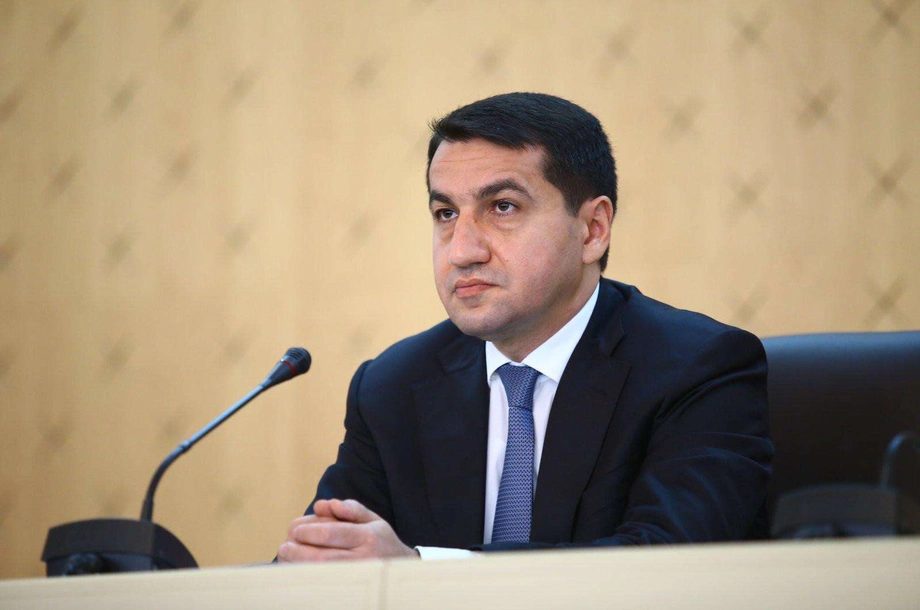
A new era announced in Abu Dhabi
Hikmet Hajiyev, assistant to Azerbaijani President Ilham Aliyev and head of the presidential foreign policy department, says the conflict with Armenia is over. He delivered that message after Aliyev and Armenian Prime Minister Nikol Pashinyan met in Abu Dhabi on a Wednesday morning, before receiving the Zayed Award for Human Fraternity 2026. Hajiyev described their talks as constructive and said the next stage would include trade, expanded transport links and bilateral cooperation intended to strengthen trust.
Contents
- A new era announced in Abu Dhabi
- What Washington settled, and what remains open
- Cargo is crossing Azerbaijan, but Armenian exports are not
- TRIPP moves from a political promise to technical planning
- Why Armenia's draft constitution decides the next diplomatic step
- Dilijan brings officials and civil society into direct contact
- Hajiyev's wider argument about how peace was achieved
- What changes now
- Key Points
Hajiyev, who was part of the Azerbaijani delegation alongside Deputy Prime Minister Shahin Mustafayev, Foreign Minister Jeyhun Bayramov and presidential envoy Elchin Amirbayov, gave his clearest description of Baku's position after the meeting.
Azerbaijan and Armenia have entered a new era of peace. For Azerbaijan, the conflict is over. We are learning to live in peace and are moving in that direction.
Sheikh Mohamed bin Zayed Al Nahyan presented the award to Aliyev and Pashinyan for the peace agreement they had initialled. Named after the late founder of the United Arab Emirates, Sheikh Zayed bin Sultan Al Nahyan, the prize was launched in 2019 and had previously recognised 19 laureates from 19 countries, including Pope Francis and United Nations Secretary-General António Guterres. Afghan girls' education advocate Zarqa Yaftali also received the 2026 award.
Aliyev used the ceremony to describe how recently the two countries had been at war and how unfamiliar peaceful relations still felt after the collapse of the Soviet Union and the outbreak of the Nagorno-Karabakh conflict.
We were at war for more than 30 years. Now we have lived in peace for six months.
Pashinyan said the ceremony confirmed that both countries had turned the page of conflict, calling the award an achievement belonging to their peoples. Both leaders thanked US President Donald Trump for his role in the Washington peace summit, and Pashinyan said he hoped Trump would receive the Nobel Peace Prize. Their language was warmer than the legal position: the peace treaty remains initialled but unsigned, and Armenia's constitution has become the central remaining dispute.
What Washington settled, and what remains open
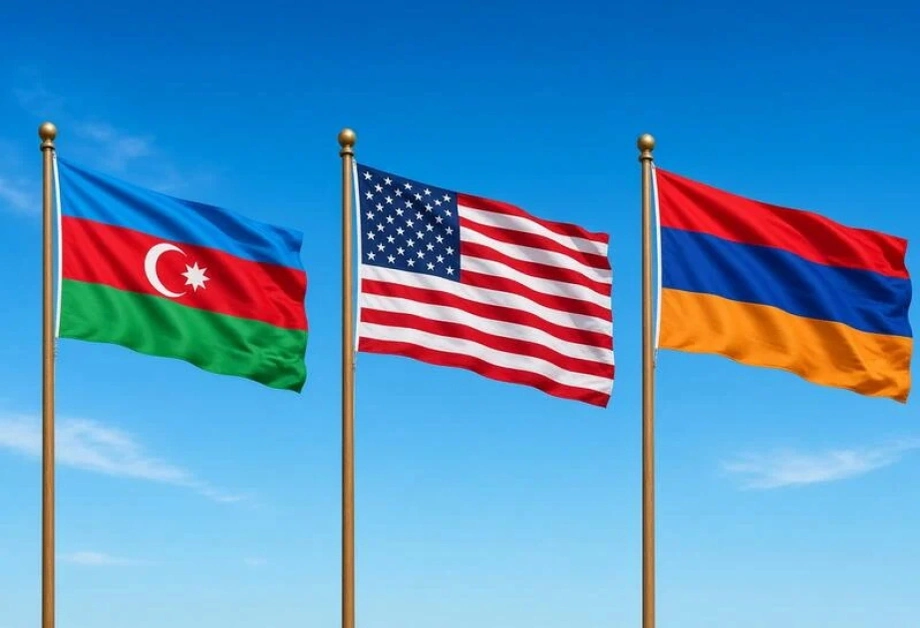
Aliyev, Pashinyan and Trump signed a Joint Declaration in Washington on 8 August 2025, where the agreed text of the Armenian and Azerbaijani peace agreement was also initialled. Initialling authenticates the wording that negotiators have accepted. Formal signature and ratification through domestic procedures are separate steps, and no date for a signing ceremony has been announced.
The diplomacy follows the Second Karabakh War in 2020 and Azerbaijan's military offensive in September 2023, after which Baku regained full control of Nagorno-Karabakh and the region's ethnic Armenian population left. The region is internationally recognised as part of Azerbaijan. In 2022, Baku proposed principles centred on mutual recognition of sovereignty and territorial integrity, renunciation of territorial claims, border delimitation and regional transport connections.
The Washington meeting accelerated several processes that have since moved at different speeds:
- 8 August 2025: The Joint Declaration was signed, the treaty text was initialled and agreement was reached on the Trump Route for International Peace and Prosperity.
- Late 2025: Grain and other goods from third countries began crossing Azerbaijan on their way to Armenia, while Azerbaijani petroleum products entered the Armenian market.
- 2026 in Abu Dhabi: Aliyev and Pashinyan discussed trade and the route's implementation before receiving the Zayed Award.
- 14 June 2026: Hajiyev made his first working visit to Armenia for talks in Dilijan with Armenian Security Council Secretary Armen Grigoryan.
- September 2026: Civil society meetings stopped amid a dispute over Azerbaijani visits by foreign diplomats to Ağdərə and Kəlbəcər.
- 6 and 12 November 2026: Technical planning groups for the transport route began work, followed by talks between Aliyev and Pashinyan in Dublin.
- 23 to 27 November 2026: Armenia published a draft constitution, preparatory construction was announced in Syunik Province and civil society talks resumed in Dilijan.
Diplomats are therefore working on two tracks. One concerns the legal completion of the treaty. The other concerns cargo, energy, borders, transport and direct contact between the two societies. The second track has produced the most visible results so far.
Cargo is crossing Azerbaijan, but Armenian exports are not
Officials put a figure on the practical change at the Dublin meeting on 12 November 2026. Approximately 105,000 tonnes of cargo had been transported to Armenia through Azerbaijani territory since November 2025. Baku had lifted restrictions on goods destined for Armenia during 2025, allowing both transit shipments and its own petroleum exports to develop.
The nearly identical statements issued after the Abu Dhabi meeting said the two societies were witnessing real benefits from peace. They welcomed the start of bilateral trade and the transit of grain and other goods through Azerbaijan, while agreeing to examine further economic cooperation. The leaders also discussed implementation of the Trump Route and welcomed reciprocal visits by civil society representatives.
Trade remains uneven. Armenia has begun buying Azerbaijani fuel, and the two governments have exchanged lists of goods that could be traded. Armenia had not exported any goods to Azerbaijan by the time of the Abu Dhabi meeting. Azerbaijan has consequently become both a transit territory and a supplier for Armenia, while Armenian producers have yet to establish sales in the opposite direction.
The Dublin agenda extended beyond cargo. Aliyev and Pashinyan discussed connecting their electricity grids, managing rivers that cross the border, bilateral trade and border delimitation. Electricity interconnection would require technical coordination between national power systems, while shared river management concerns water use and infrastructure along territory divided by an international boundary. These discussions show how the peace agenda has moved into services and resources that directly affect households, farms and businesses.
TRIPP moves from a political promise to technical planning
The Trump Route for International Peace and Prosperity (TRIPP) would connect mainland Azerbaijan with its Nakhchivan exclave through Armenian territory. An exclave is territory separated from the main part of a country. The route could also provide access towards Türkiye and add new connections to the wider transport network between Central Asia and Europe.
Opening such a connection was included in Paragraph 9 of the Trilateral Statement of 10 November 2020. The Washington Joint Declaration supplied a new framework in 2025. A subsequent agreement between the United States and Armenia established a TRIPP Development Company, with the United States holding 74 percent and Armenia 26 percent. The financial plans also include the Trans-Caspian Enterprise Fund, initially capitalized with $201 million in US government funding.
On 6 November 2026, officials Brendan Hanrahan, Elnur Mammadov and Vahan Kostanyan agreed to create two trilateral planning groups, covering transport and electricity transmission. An announcement on 23 November said preparatory construction had begun in Armenia's southern Syunik Province. The project is being discussed as more than a railway and road: its framework also includes power transmission, pipelines and communications infrastructure.
Armenian Foreign Minister Ararat Mirzoyan has argued that TRIPP could start first, before the peace treaty is signed, because both governments accept the initialled text and are no longer fighting. Opposition politician Narek Karapetyan has countered that Azerbaijan could receive its route while postponing the treaty and without providing the reciprocal access Armenia seeks.
No opening date has been given. Construction, border controls, customs procedures, competitive tariffs and dependable freight services still have to be arranged. A World Bank report published on 28 September 2026 illustrates the possible scale of wider regional investment: strategic spending on the Trans-Caspian Transport Corridor could more than triple trade volumes and halve travel times by 2040. That projection covers the broader corridor system within which TRIPP could create additional links.
Why Armenia's draft constitution decides the next diplomatic step
Armenia's current constitution refers in its preamble to the Declaration of Independence adopted on 23 August 1990. That declaration draws on a decision of 1 December 1989 concerning reunification of the Armenian Soviet Socialist Republic and Azerbaijan's Karabakh region. Baku regards this chain of references as a territorial claim. Armenian officials have argued that the existing constitution is not a legal obstacle and that the treaty itself already requires both countries to respect territorial integrity and abandon territorial claims.
The draft constitution published by the Armenian government on 23 November 2026 removes the preamble's reference to the 1990 declaration. It also proposes reducing the charter from 220 articles to 89. Pashinyan presented the document within his concept of Real Armenia, which prioritises the sovereignty, security and development of the existing state over historical territorial aspirations.
In a televised address, Pashinyan questioned established narratives about the conflict's origins and argued that confrontation had weakened Armenia, encouraged emigration and helped corruption and oligarchic rule. He pledged to resign if voters rejected the proposed constitution and described his personal commitment in direct terms.
I am staking all of my political, personal and moral credibility on this issue.
Azerbaijani Foreign Minister Jeyhun Bayramov welcomed the apparent absence of territorial claims in the draft on 23 November, while saying the timing of constitutional reform was Armenia's internal affair. He reiterated that resolving the issue would leave no further obstacle to signature. Four days later, Nizami Safarov of the Azerbaijani parliament's Committee on Legal Policy and State-Building called removal of the declaration reference the only outstanding precondition. Speaking at a plenary session on 27 November, he also said the side defeated in the Second Karabakh War needed to draw conclusions from the new regional realities.
Publication alone does not bring the charter into force. Article 202 requires support from at least two thirds of parliament before a new constitution can be submitted to a referendum. That means 70 votes in a parliament with 105 seats. Pashinyan's Civil Contract party holds 64, leaving it in need of at least six opposition lawmakers. The main opposition parties had rejected the draft, and no referendum date had been set. Alen Simonyan said the text had been opened for public discussion so citizens could submit proposals.
Other peace settlements have also involved constitutional change. Ireland replaced the territorial claim in Articles 2 and 3 of its constitution following the 1998 Good Friday Agreement, using the principle of consent instead. Under the 2018 Prespa Agreement, North Macedonia amended its constitution and changed its official name to address Greece's concerns.
Dilijan brings officials and civil society into direct contact
Hajiyev's meeting with Armen Grigoryan in Dilijan on 14 June 2026 was his first working visit to Armenia and the second visit there by a senior Azerbaijani official since the Washington agreement was initialled. Their statements stressed sustained bilateral dialogue and measures to build confidence between the two civil societies. They agreed to maintain contacts between working officials and hold the next meeting in Azerbaijan.
Before that trip, the most senior reciprocal exchanges involved Armenian Deputy Prime Minister Mher Grigoryan and Azerbaijani Deputy Prime Minister Shahin Mustafayev. Each chairs his country's border delimitation commission, the body responsible for turning the agreed boundary into a precisely defined line on the ground.
A separate civil society channel, known as Peace Bridge, began after the Washington summit. Two meetings took place in 2025 and three in 2026. Contacts stopped after tensions in September 2026, when Azerbaijani officials took foreign diplomats to Ağdərə and Kəlbəcər. Yerevan criticised Hajiyev for showing exhibits at a temple to the diplomats, while Baku called the criticism unfounded and interference in its internal affairs.
The fifth Peace Bridge meeting restarted the dialogue on 26 November and ran for two days in Dilijan. About 60 representatives of non-governmental organisations, media, universities and research centres took part. The Azerbaijani delegation entered Armenia through a delimited section of the border, and participants met Simonyan. They created six working committees covering the economy and infrastructure; humanitarian and social affairs; the environment; media; education, public narratives and young people; and political and geopolitical issues.
Simonyan subsequently announced plans to visit Azerbaijan in early December for discussions on technical matters and bilateral cooperation. He said the meeting would take place outside Baku and identified Ganja as a possible venue. No precise date or final location was announced. The visit would reciprocate Hajiyev's June trip, although Grigoryan was Armenia's Security Council secretary at the time of that earlier meeting.
Hajiyev's wider argument about how peace was achieved
Hajiyev used a more restrained formulation at the 13th Global Baku Forum on 12 March 2026, saying Armenia and Azerbaijan were working on the parameters of a future peace agenda. He spoke during a panel titled Crisis of Multilateralism: Rethinking Global Cooperation and connected the Armenian talks to his broader criticism of international institutions.
He called the OSCE Minsk Group a complete diplomatic failure in Azerbaijan's case and described the Organization for Security and Co-operation in Europe as one of the unsuccessful projects in Euro-Atlantic peace and security. The Minsk Group had for years served as the main international format for mediating the Karabakh conflict. Hajiyev said Azerbaijan had instead resolved the conflict through military and political means and that real peace now existed in the region.
His alternative was diplomacy organised by middle powers, states that seek to shape international outcomes without being global superpowers. He described coalitions of willing countries and variable geometry, meaning that different partners join different initiatives according to the subject. Azerbaijan, Australia and Türkiye, for example, could cooperate on a particular issue without sharing the same region.
Hajiyev cited Azerbaijan's work in the Organization of Turkic States, its recent accession to the Developing Eight Organization for Economic Cooperation and its admission as a full member of the Central Asia Consultative Forum the previous year. He also mentioned climate diplomacy with Ethiopia, engagement with the United Nations climate conference agenda and energy cooperation along the route from the Caspian Sea to the Adriatic Sea. In his account, the Armenian peace process reflects the same preference for direct agreements and practical projects over waiting for a large institution to act.
What changes now
Armenian lawmakers, TRIPP planners and the two foreign policy teams now hold the next decisions. Armenia must complete public debate, clear the parliamentary threshold and hold a referendum before the proposed constitution can take effect. Azerbaijan then has to decide on signature, followed by the domestic ratification needed for the treaty to enter into force.
Pashinyan has set a 2031 treaty target for signature and ratification, but the two governments have not announced a joint timetable. TRIPP also lacks an opening date, and the technical groups have not published a complete schedule for construction, customs arrangements or electricity connections.
For residents, the completed changes are visible but limited: cargo crosses Azerbaijan into Armenia, Azerbaijani fuel is being purchased and direct public dialogue has resumed. Armenian exports to Azerbaijan, connected power grids and an operational TRIPP route remain unfinished. The immediate markers of progress will be Simonyan's planned visit, a possible referendum date, the first Armenian export to Azerbaijan and a signed treaty.
Key Points
- Hikmet Hajiyev says Azerbaijan's conflict with Armenia is over and that both countries are learning to live in peace.
- The peace treaty was initialled in Washington on 8 August 2025 but remains unsigned, with no signing date announced.
- Officials reported about 105,000 tonnes of cargo transported to Armenia through Azerbaijan between November 2025 and 12 November 2026.
- Armenia buys Azerbaijani fuel but has not yet exported goods to Azerbaijan.
- TRIPP planning has begun, with US and Armenian ownership stakes of 74 percent and 26 percent in its development company, but no opening date has been set.
- Armenia's draft constitution removes the independence declaration reference opposed by Baku; approval still requires parliamentary support and a referendum.
- Official and civil society dialogue resumed in Dilijan, and Armenian Security Council Secretary Alen Simonyan plans a reciprocal visit to Azerbaijan outside Baku.