Why Chattogram Needs Another Container Terminal
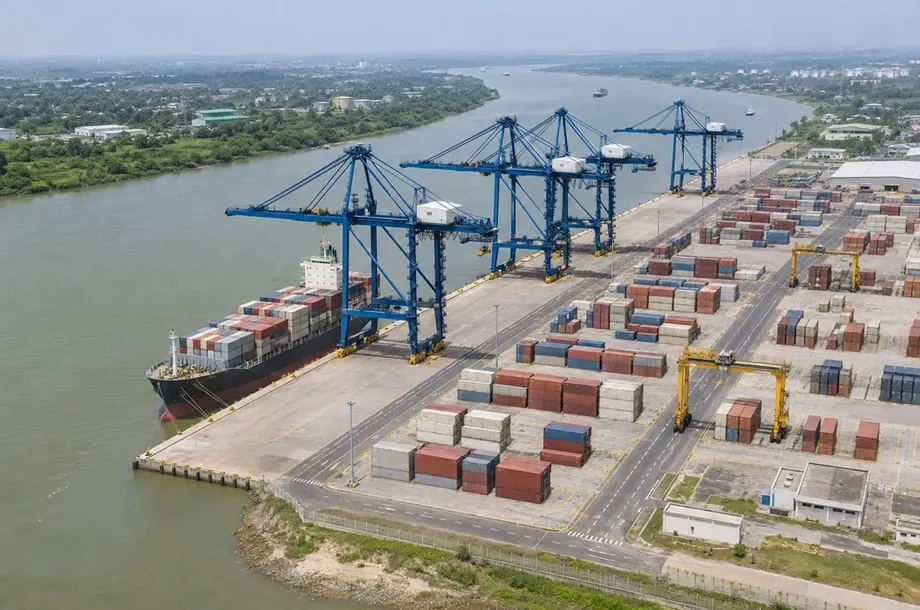
APM Terminals says construction of the Laldia Container Terminal will start by February 2027 and the facility will be fully operational in 2030. The terminal profile from APM Terminals puts the investment at $760 million and the planned capacity at 900,000 TEUs a year. A TEU is a unit equal to one standard container about 20 feet long. The same profile says the terminal will handle vessels of up to 6,000 TEUs, with a 613 metre quay, a 10.5 metre draft, seven quayside cranes, 32 eRTGs and 41 eTTs, electric yard cranes and electric terminal tractors that move containers on land. APM Terminals is developing the project with the Chittagong Port Authority and QNS Container Services Ltd.
Contents
- Why Chattogram Needs Another Container Terminal
- What the Contract Says, and What It Costs
- How Much Capacity Will Chattogram Gain?
- What Changes for Garment Shipments?
- The Money Behind the Berths
- Jobs, Technology and the Green Claim
- Who Backs the Deal, and Who Wants More Answers
- What Happens Between Now and 2030?
- Key Points
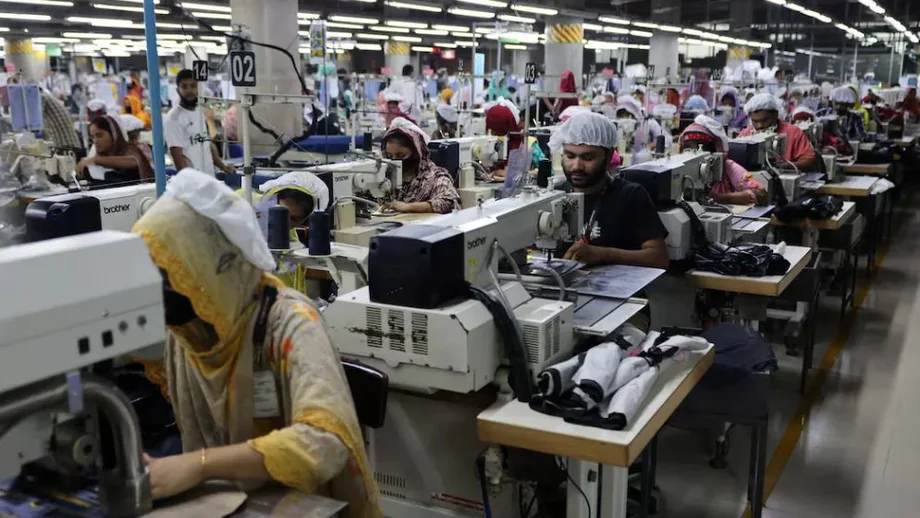
The plan arrives after EU apparel market share fell in the first eight months of 2026, with Eurostat figures showing Bangladesh's clothing exports to the bloc down 11.67 percent to €11.93 billion and its share slipping from 21.54 percent to 19.78 percent. Garment buyers judge suppliers on price, but also on whether containers reach shelves on time. Trade preferences for least developed countries, known as LDC preferences, can lower duties for Bangladesh, while proposed United States duties could change the final landed price. No rate or start date was given for those proposed duties.
Port reliability has also become a labour issue. In November 2026, workers halted two terminals in a stoppage lasting about five hours over unpaid wages and benefits, affecting seven vessels. The dispute came as port management arrangements were changing. Laldia is therefore being watched not only as a construction project, but as a test of whether Bangladesh can make its main trade gateway faster and more predictable.
What the Contract Says, and What It Costs
The PPP Authority project statement, published by Bangladesh's Public Private Partnership Authority, says the letter of award was handed to APM Terminals and QNS Container Services Ltd on 17 November 2025 at The Intercontinental Dhaka. The concession runs for 30 years with an extension tied to performance indicators. A detailed version of the terms counts three construction years plus 30 operating years, with 15 more years possible. The Chittagong Port Authority keeps ownership of the port, while APM Terminals and its local partner design, finance, build, operate and manage the terminal.
Under the published terms, the port authority will receive Tk 250 crore, or 2.5 billion taka, upfront. Half is due when the agreement takes effect 90 days after signing and half when operations begin. The foreign company and QNS will form a local project company during that period. The two public investment numbers are not the same. The terminal profile from APM Terminals states $760 million, while the PPP Authority statement describes about $550 million in foreign direct investment, called the largest European equity investment in Bangladesh. The official statement says the terminal is being financed through private equity with no debt burden on the government.
How Much Capacity Will Chattogram Gain?
The PPP Authority says the terminal will add more than 800,000 TEUs a year, lifting Chattogram's container capacity by 44 percent. APM Terminals lists 900,000 TEUs in its 2030 profile. The plan has also been described as adding about one quarter to current port capacity. APM Terminals' 900,000 TEU figure is 100,000 TEUs above the government figure of more than 800,000 TEUs. Vessels of 6,000 TEUs would be about twice the size of those the port can handle now. Draft matters here because it is the depth of water a ship needs to pass safely. A 10.5 metre draft allows larger vessels than before, but shallow channels still limit how big those vessels can be.
The PPP statement says the terminal will support around the clock operations and night navigation, meaning ships can move and berth after dark. It says this will be available for vessels within permissible length and draft. At New Mooring Container Terminal, vessels currently take three to four days to clear, compared with about one day at neighbouring ports. Ashik Chowdhury, executive chairman of the Bangladesh Investment Development Authority, has cited Vietnam's Cai Mep port as 7th globally and Chattogram as 334th. Those rankings help explain why port speed has become a business issue, not only a transport issue.
What Changes for Garment Shipments?
For an exporter, a berth is only one part of the journey. Containers must move through the yard, pass customs checks and reach a ship without missing a buyer's delivery window. Rear Admiral S. M. Moniruzzaman, chairman of the Chittagong Port Authority, said the terminal was arriving as the existing port faced a shortage of both space and speed. He described the project as a way to protect delivery schedules for higher value goods.
This terminal is coming at the moment when we are really hungry of capacity and hungry of efficiency.
M. Sakhawat Hossain, adviser to the Ministry of Shipping, said congestion and long waiting times had held back the port. He said the new terminal should ease pressure on existing berths and make shipping plans more reliable for exporters.
The new Laldia terminal will help decongest the port, allow larger vessels to call, and improve predictability for exporters.
Sourcing teams should keep existing lead time assumptions until the terminal opens, because capacity for larger vessels is unlikely before then. Programmes where speed matters should continue using current transit and customs clearance timelines. Buyers focused on price should compare port charges, labour costs and tariff access, meaning the duty treatment a shipment receives in its destination market, alongside factory prices. Exporters and importers should also keep paperwork accurate, because small documentation errors can create clearance delays and extra costs even after a modern terminal opens.
The Money Behind the Berths
Port charges sit at the centre of the deal. The published terms set a charge of $21 per container up to 800,000 TEUs and $23 per container from 800,001 to 900,000 TEUs. A third price band applies above 900,000 TEUs, but its rate was not disclosed. If the terminal handled the full 900,000 TEU profile, the 100,000 TEUs in the second band would bring $2 more each than the first band, or $2 million more in total. From the third year, APM Terminals must handle or pay for 640,000 TEUs, equal to 80 percent of 800,000, at $21 per TEU. That guarantee gives the port a minimum payment even if cargo volumes fall short.
An escrow account, a protected bank account where revenue is deposited and paid out in order of priority, was not included in the published deal because the port is paid a fixed dollar amount per container rather than a share of all terminal revenue. If port service charges rise, APM Terminals must give the port a share of the extra revenue, although that percentage was not made public. APM Terminals will also dredge the area in front of its jetties at its own cost. Compensation clauses cover disruption from strikes, blockades and changes in law, but the payout formulas were not disclosed.
Jobs, Technology and the Green Claim
The project is expected to create 500 to 700 direct formal jobs, plus several thousand indirect jobs in construction, trucking, warehousing, freight forwarding and small businesses. APM Terminals plans training in equipment maintenance, digital terminal systems and environmental standards, and experienced staff from other terminals are expected to help transfer operating methods. The project includes LEAN and FLOW practices, approaches used in port operations to remove wasted steps and keep cargo moving.
The terminal is also being presented as a greener port. APM Terminals lists electric cargo handling equipment, solar power generation and infrastructure ready for shore power, which lets ships use electricity instead of running auxiliary engines at berth. A Chittagong Port Authority release in November 2026 said Denmark's State Secretary for International Partnerships, Elsebeth Søndergaard Krone, visited the site with Ambassador Christian Brix Møller and adviser Milan K Jha. CPA chairman Rear Admiral S. M. Moniruzzaman received her, and QNS Group managing director Esfarul Qayyum Khan, project director Marco de Castro and chief executive Romesh David were present. The release described the project as South Asia's first Green Gateway. Denmark's embassy has linked it to the European Union's Global Gateway initiative, and the official PPP statement says the project supports Bangladesh's climate commitments under the Paris Agreement.
Who Backs the Deal, and Who Wants More Answers
Keith Svendsen, chief executive of APM Terminals, said the project would let the company support Bangladesh manufacturers and traders while building a safer terminal and skilled jobs. He presented the investment as a longer term commitment to the country.
This greenfield project enables us to play an active role supporting the growth of the local manufacturers, exporters, importers, and the broader Bangladeshi economy.
Mahmud Hasan Khan, president of the Bangladesh Garment Manufacturers and Exporters Association, welcomed foreign investment and said the appointed operators were known globally for efficiency. He said higher efficiency should lower logistics costs for the country's largest export sector.
It is not expected that these global operators would charge a higher tariff so that the cost rises.
Syed M Arif, chairman of the Bangladesh Shipping Agents Association, said efficiency should improve whether operators are local or foreign. Amir Humayun Mahmud Chowdhury, convener of Chattogram Port Users' Forum, welcomed APM Terminals for Laldia while asking for transparency over the New Mooring Container Terminal arrangement and protection for existing workers.
Critics include Sramik-Karmachari Oikya Parishad, Jatiyatabadi Sramik Dal, Jamaat-e-Islami and Hefazat-e-Islam. They question why an interim authority with a short mandate made concessions running for decades, and they object to deals arranged between governments instead of competitive tenders. Some also demand a halt to the proposed lease of New Mooring Container Terminal to DP World. Humayun Kabir of Jatiyatabadi Sramik Dal argues that foreign management may suit new projects such as Laldia, but not an existing terminal built with port authority funds and equipment worth around Tk 2,000 crore. Mustafizur Rahman of the Centre for Policy Dialogue and M Masrur Reaz of Policy Exchange Bangladesh have asked for more transparency, competitive processes and arrangements with a fixed duration that build local capacity so Bangladeshis can eventually take over operations.
What Happens Between Now and 2030?
Several clocks are running at once. The construction target, completion target and full operations date are close, but they are not identical. The clearest sequence is:
- 17 November 2025: The concession deal was signed at The Intercontinental Dhaka and the letter of award was handed over.
- 90 days after signing: The agreement was due to take effect after procedural work and formation of the project company.
- February 2027: Full scale construction was scheduled to begin.
- Three construction years: The detailed contract terms allow three years for building the terminal.
- 2029: A CPA linked update set completion for that year.
- 2030: APM Terminals says the terminal will be fully operational, and the PPP statement says it will be commissioned by then.
Logistics providers should align investments in depots and feeder networks with those milestones. Savings on feeder services are more likely after operations begin, when larger vessels can call and containers may spend less time waiting for onward movement. Exporters should not plan around lower transit times until the terminal is actually handling cargo. Details still outside the public version of the deal include the third price band, compensation formulas, the exact share of extra charges paid to the port and the amount of resettlement support for people evicted from the 49 acre Laldia char site. The support programme was described as at least $15 million, or Tk 184 crore, but the exact amount was not confirmed.
Key Points
- APM Terminals plans to build the Laldia Container Terminal at Chattogram with the port authority and QNS Container Services Ltd.
- The investment is stated as $760 million by APM Terminals and about $550 million in foreign direct investment by the PPP Authority.
- Planned capacity is 900,000 TEUs a year in the APM profile, while the government statement says more than 800,000 TEUs and a 44 percent capacity increase.
- The terminal is due to be fully operational in 2030, with construction targeted to begin by February 2027 and completion targeted for 2029.
- Apparel exporters could gain from faster and more predictable shipping, but lead time assumptions should remain unchanged until the terminal opens.
- The project faces debate over transparency, public disclosure of contract terms, worker protections, resettlement support and the long concession period.