What Changed in Baku
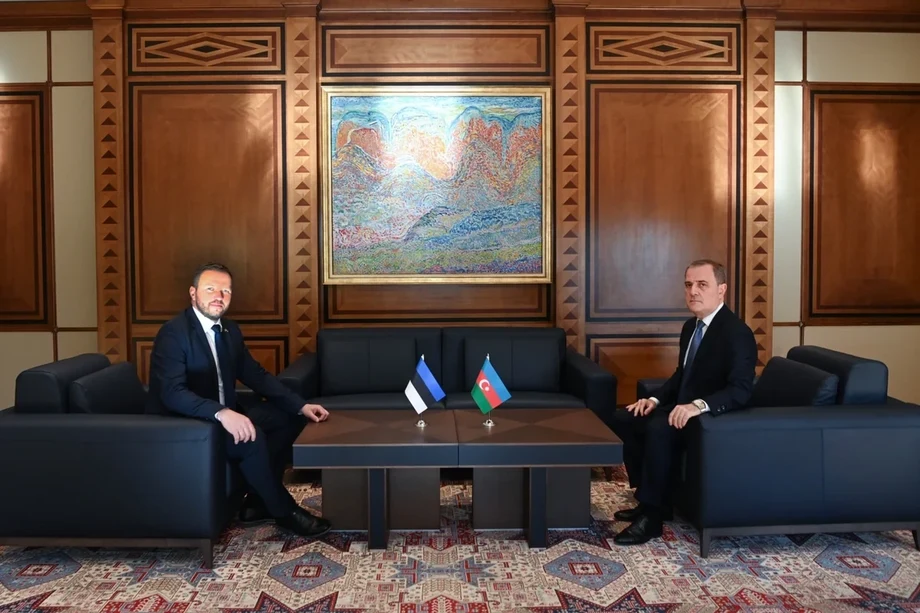
Jeyhun Bayramov, Azerbaijan's foreign minister, and Margus Tsahkna, his Estonian counterpart, met in Baku on November 27, 2026, with a message that went beyond ceremonial diplomacy. Azerbaijan and Estonia already have 16 bilateral documents in force, Bayramov said, and they are working on eight more. The new papers are expected to take effect in the near future, giving companies and institutions a clearer set of rules for trade, investment, transport, education and technology.
Contents
- What Changed in Baku
- A New Embassy on the Map
- What the Eight Documents Could Change
- Trade Figures and the Limits of the Relationship
- Energy Security and the European Union
- The Middle Corridor and the Road to Central Asia
- Digital Government as a Shared Language
- Students, Visas and University Ties
- Security Views and Wider European Goals
- Timeline of Recent Steps
- Key Points
A bilateral document can be a treaty, protocol, memorandum or other formal agreement signed by two governments. For ordinary businesses, such papers matter because they set out who is allowed to do what, which standards apply and how disputes or permits are handled. Bayramov did not name the eight documents or give a date for their entry into force, so their exact content remains unknown for now.
The two sides also put numbers on a relationship that is still modest. Bayramov put Azerbaijani investment in Estonia at $32 million and Estonian investment in Azerbaijan at $25 million. The same figures were also given as $32 million in Azerbaijani exports to Estonia last year and $25 million in imports from Estonia. He described about $32 million in bilateral trade turnover, the total value of goods moving in both directions, as unsatisfactory compared with the potential he sees.
Bayramov also pointed to strong recent momentum in ties. The language from both ministers suggests that the embassy and the documents are meant to reinforce each other: a permanent mission gives officials a place to work daily, while agreements give their work a formal structure.
A New Embassy on the Map
Estonia officially opened its embassy in Azerbaijan on November 27, the same day as the joint briefing. Tsahkna called the opening a considered decision rooted in a long history of relations, personal ties and shared challenges. He said it shows a commitment that will last for years, not just a diplomatic flourish.
Tsahkna also met President Ilham Aliyev in the morning. The Estonian minister said the two countries see many issues in the same way, especially on security, and he described concern about the state of global security.
Tsahkna, Estonia's foreign minister, explained that his meeting with the Azerbaijani president covered a broad agenda and that both sides voiced worry about worldwide security.
We discussed a wide range of issues and expressed our concern regarding global security.
The embassy gives Estonia a permanent channel in Baku. For Azerbaijani firms, that can mean easier access to a European Union and NATO member with strong experience in digital public services. For Estonian companies, it creates a local point of contact for a country sitting between the Caspian Sea, the South Caucasus and routes towards Central Asia. Tsahkna said bilateral ties have strengthened across all areas over the past year.
What the Eight Documents Could Change
The legal framework is small enough that eight additional documents could make a noticeable difference. If the papers cover areas raised at the briefing, such as trade, education, energy, transport and innovation, they could help firms understand customs steps, professional qualifications, investment rules and research links before they commit money.
That matters because the current business base is real but limited. Bayramov said 72 Estonian companies are registered in Azerbaijan and 48 are actively operating. That means about two out of three registered companies are doing business, a useful foundation for expansion but also a sign that roughly one third are not active.
Officials also said cooperation is practical rather than abstract. Tsahkna pointed to the meeting of the Intergovernmental Commission in Tallinn earlier in November, where private companies and state institutions discussed defined shared interests. Bayramov said that commission covered trade, education, energy, transport and innovation, with renewable energy singled out as especially promising.
Bayramov, Azerbaijan's foreign minister, described the commission as a detailed working session and said renewable energy was a particularly promising area for cooperation.
Extensive and detailed discussions were held at the meeting of the Intergovernmental Commission. Issues of cooperation in trade, education, energy, transport and innovation were discussed. Renewable energy was highlighted as a particularly promising area for developing cooperation.
Trade Figures and the Limits of the Relationship
Bayramov's assessment was blunt. He called the volume of trade with Estonia unsatisfactory when measured against the potential he sees. That wording matters because it comes from the minister responsible for foreign policy, not from a company trying to attract business.
Trade turnover means the combined value of goods sold across borders. The figures were presented in different forms, as investment flows and as last year's exports and imports. In either form, they show a base that officials want to enlarge rather than a relationship already operating at scale.
Baku and Tallinn are now trying to move from small flows to repeatable projects. Eight new documents could make that easier by reducing uncertainty. An investment agreement, for example, can spell out how a company is treated if rules change, while a transport agreement can clarify paperwork for goods moving through ports and railways. Potential areas include manufacturing, agriculture, technology, logistics and financial services, with agricultural products, processed food, industrial materials and technology services among the goods and services that could gain from stronger promotion in the Baltic region.
A larger trade base would make the embassy more useful because each new agreement would have companies ready to use it. Regular business forums and investment conferences could help firms identify partners in these sectors and turn political contact into contracts.
Energy Security and the European Union
Energy is one of the clearest reasons Estonia wants a deeper relationship. Bayramov told the briefing that he gave Tsahkna a detailed account of Azerbaijan's strategic cooperation with the European Union and of Baku's role in European energy security. That conversation matters because energy security means having reliable supplies at prices and routes that do not break down in a crisis.
Azerbaijan's exports were centred on oil for decades, Bayramov said. He added that gas supplies joined that picture at the end of 2020 and have been growing since.
Bayramov, Azerbaijan's foreign minister, explained how the country's energy mix has changed in recent years.
Since the end of 2020, these have been supplemented by gas supplies, whose volumes are increasing.
The ministers also discussed alternative and green energy projects backed by the European Union and involving several member states, Azerbaijan and other countries in the region. Green energy means power from sources such as wind and solar, and alternative energy in this context refers to projects that reduce reliance on older fossil fuel systems. Bayramov said those projects were part of the wider dialogue, not a separate announcement of a new plant or contract.
The Middle Corridor and the Road to Central Asia
Transport connectivity was another major subject. Bayramov described Azerbaijan's special role on the East West route known as the Middle Corridor, a trade path linking China and Central Asia with Europe through the Caspian Sea and the South Caucasus. In simple terms, it is one way to move goods between Asia and Europe without relying only on routes through Russia or long sea journeys around other continents.
Bayramov said Azerbaijan is taking practical steps to raise its capacity along that route, including through transport links and port infrastructure. He also said such work is of interest to European Union member states because it affects how quickly and safely goods can move.
Tsahkna, Estonia's foreign minister, said Estonia wants to learn from Azerbaijan's energy experience and explore opportunities created by changes in global trade. He put trade corridors, energy and investment at the centre of that interest.
Trade corridors, energy, and investment are important to us.
Estonia brings Baltic Sea ports and logistics experience, while Azerbaijan offers the Port of Baku and links towards the Caspian and Central Asia. The two sides did not announce a specific corridor project, but their ministers placed the route in the same conversation as investment, digitalisation and European cooperation.
Cooperation in port management, digital cargo tracking, customs procedures and multimodal transport could make those routes more efficient. For businesses, that means less time guessing how goods move and more confidence about costs, paperwork and delivery times.
Digital Government as a Shared Language
Digitalisation may be the easiest area to turn diplomatic language into practical work. Estonia is known for electronic identification, digital signatures, online public administration and cybersecurity. These are the building blocks of digital government, which means letting people and companies deal with the state online instead of through paper forms and office visits.
Azerbaijan has its own base for such work, including the ASAN Service model and the expansion of electronic government platforms. The embassy opening puts attention on deeper integration of government databases, stronger cybersecurity and more room for technology businesses to compete and grow.
Estonian experience could be useful in digital identity management, secure data exchange and financial technology. The appeal for Azerbaijan goes beyond better public services. It includes joint projects that support technology transfer, local startups and skilled professionals who can build a technology sector able to sell services beyond the domestic market.
Azerbaijani firms could seek partners in Estonia's technology oriented business environment, while Estonian investors could look at Azerbaijan's digital services market and industrial modernisation programmes. The two governments are also discussing artificial intelligence, as Tsahkna named it as an area of interest alongside digitalisation and the defense industry.
University ties can support that work. Student and research links give both countries a pool of people who understand the other market, an advantage when companies need staff who can work across languages, rules and business habits.
Students, Visas and University Ties
Education is already changing faster than trade. The number of Azerbaijani students at Estonian universities rose from about 30 five years ago to about 200, almost a sevenfold increase. Five Estonian universities have cooperation agreements with Azerbaijani universities, creating a network that can support joint research, professional training and stronger links between classrooms and employers.
Tsahkna, Estonia's foreign minister, said Estonia wants simpler travel rules for Azerbaijani citizens and more people moving in both directions. He described Azerbaijan as a strategic partner of the European Union and linked visa liberalisation with trade, energy and people to people ties.
The EU views Azerbaijan as a strategic partner and seeks to develop cooperation in trade, energy and other areas. I would like Estonia to support visa liberalisation between the European Union and Azerbaijan. We are interested in seeing more Azerbaijani students come to study at Estonian universities and more Estonian residents visit Baku and your beautiful country.
Tsahkna also spoke of warm relations and thanked the Azerbaijani side for its hospitality. Visa liberalisation means easing the paperwork and cost of short trips. It would not automatically give the right to live or work in another place, but it can make conferences, study visits, tourism and business meetings easier.
University ties matter because Azerbaijan is seeking workers and founders for information technology, engineering, finance and innovation. Estonia gains students who may later build links between the two economies, and Azerbaijan gains graduates familiar with European standards and academic networks.
The ministers did not announce a new visa timetable at the briefing. For now, the visa comments signal political support rather than a change travellers can use immediately.
Security Views and Wider European Goals
Security and European policy connect the relationship to a wider map. Estonia is a member of the European Union and NATO, so its contacts with Baku also link Azerbaijan to Northern European discussions about stability, trade routes and energy. Tsahkna said the two countries hold similar positions on security issues and share common challenges.
Tsahkna, Estonia's foreign minister, said Azerbaijan and Estonia face many of the same global problems and should keep working together on initiatives.
Both regions must understand that we need to work together. We face the same global challenges, and we share common interests. We will continue to put forward initiatives on these matters.
The Estonian minister also placed the relationship inside a broader European commercial picture. He noted that the European Union is developing ties with India, Central American countries and other partners, including in free trade, and said those processes affect the world economy. Estonia wants cooperation with Azerbaijan both directly and through European Union frameworks, with interest in artificial intelligence and the defense industry alongside trade and energy.
Tsahkna said Estonia is ready to use the opportunities that come with European Union membership. That matters for Azerbaijan because EU rules and standards often shape access to European markets, and a closer link with an EU member can help companies understand those requirements.
Timeline of Recent Steps
Several dates frame the current push:
- Over the past five years, Azerbaijani students at Estonian universities increased from about 30 to about 200.
- Since the end of 2020, Azerbaijani gas supplies have been added to a relationship long centred on oil, with volumes increasing.
- In November 2026, the Intergovernmental Commission met in Tallinn and discussed trade, education, energy, transport and innovation.
- On November 27, 2026, Estonia opened its embassy in Baku, Tsahkna met President Aliyev, and the foreign ministers held their joint briefing.
- In the near future, the eight new bilateral documents are expected to enter into force.
Key Points
- Azerbaijan and Estonia have 16 bilateral documents and are working on eight more.
- The new documents are expected to take effect in the near future.
- Bayramov gave $32 million and $25 million figures both for investment flows and for last year's exports and imports.
- He called trade turnover unsatisfactory compared with what he sees as the relationship's potential.
- Of 72 Estonian companies registered in Azerbaijan, 48 are actively operating.
- Estonia opened its embassy in Baku on November 27, 2026.
- Both sides highlighted energy security, the Middle Corridor, green energy, digitalisation, education and visa liberalisation.