Why Pangilinan Is Asking for a Nationwide Declaration Now
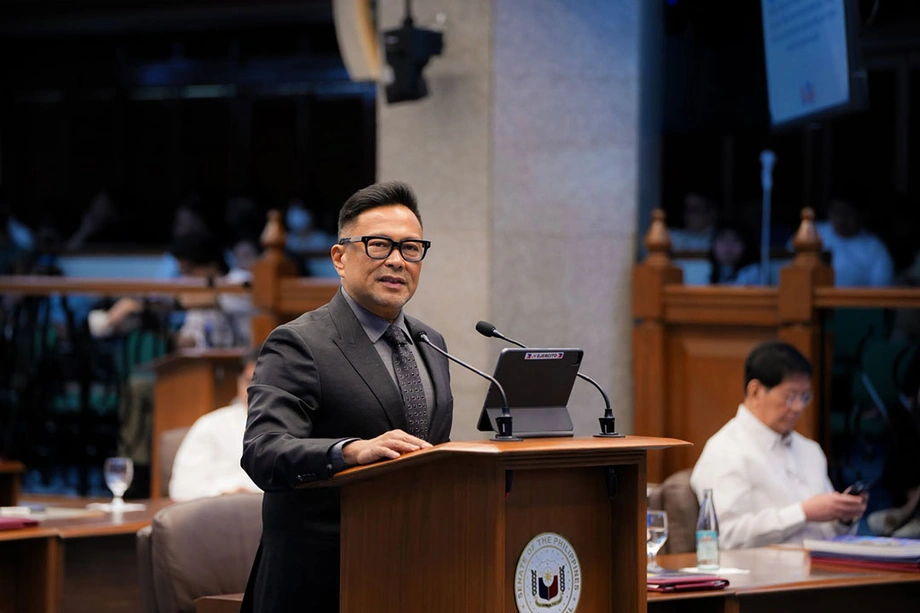
During the Senate's November 27, 2026 deliberations on the Department of Agriculture's proposed P203.56 billion budget for 2027, Senator Francis Kiko Pangilinan renewed his demand that President Ferdinand Marcos Jr. declare a national state of calamity over El Niño. Pangilinan, the Senate sponsor of the DA budget, said the current aid plan leaves a wide gap between the number of people at risk and the number who would receive direct cash.
Contents
- Why Pangilinan Is Asking for a Nationwide Declaration Now
- How Much Help the Current Budget Can Deliver
- Why a State of Calamity Matters in Plain Terms
- What the Drought Has Already Damaged
- Key Dates in the Escalating Response
- Why Water and Irrigation Are at the Center of the Fight
- What the Senate Added to the 2027 Agriculture Budget
- Who Is Pushing the Declaration, and Who Is Holding Back
- How Aid Will Reach the Right Farmers and Fisherfolk
- What Past Super El Niños Show
- Key Points
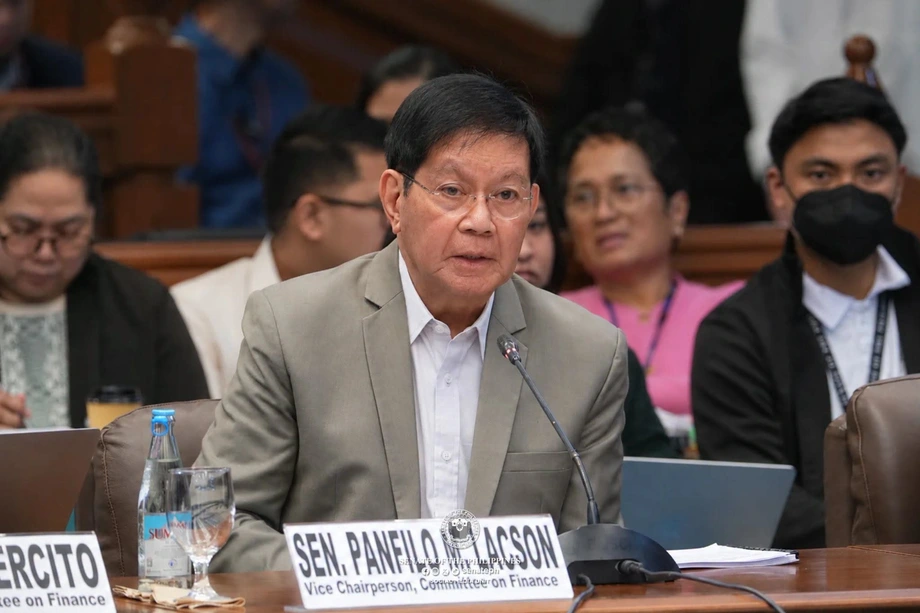
Senator Risa Hontiveros cited an estimated 4.3 million farmers and fisherfolk who could be affected. Pangilinan said a P5 billion allocation would give P3,000 each to about 1.67 million of them. That works out to about 39 percent of the 4.3 million estimate. The DA's worst case projection put 4.6 million of about 10.4 million farmers and fisherfolk at risk, which would make the same list about 36 percent.
Senator Francis Kiko Pangilinan, the Senate sponsor of the DA budget, said the executive branch should treat the dry spell as a national emergency and unlock support before damage grows. He has pressed the issue since the October 21 hearing on the same budget, when he pointed to drought damage in five regions.
We are calling on the President to declare that state of national emergency calamity
Pangilinan said Malacañang's answer had been "not yet". He said the administration seemed to be waiting for the right time, but that the right time should come soon. No date was given for a decision.
How Much Help the Current Budget Can Deliver
The budget numbers explain the urgency. The DA and its attached agencies asked for P203.56 billion for 2027. Under the proposed Presidential Assistance for Farmers and Fisherfolk Program, or PAFFP, the Senate plenary debate reduced direct cash assistance to P5 billion from an original P10 billion. Pangilinan said that amount can cover 1.67 million people at P3,000 each, leaving many others outside the direct aid list.
The DA has been linking other programs to fill the space. Pangilinan named the Department of Labor and Employment's Tulong Panghanapbuhay sa Ating Disadvantaged/Displaced Workers program, known as TUPAD, and the Department of Social Welfare and Development's Assistance to Individuals in Crisis Situation, or AICS. PhilHealth's Yaman ng Kalusugan Program, or YAKAP, can also support health needs. Pangilinan cited an additional P6 billion from the Rice Competitiveness Enhancement Fund for rice farmers, while budget documents in the debate used P7 billion for the same support.
Pangilinan called those programs additional support rather than a full answer. "These are additional sources of cash assistance," he said. He said the existing funding still falls short of the needs of everyone who could be affected.
Why a State of Calamity Matters in Plain Terms
A state of calamity is a formal decision that lets government use emergency powers and funds. Under Republic Act 10121, the Philippine Disaster Risk Reduction and Management Act of 2010, and Republic Act 12287, the Declaration of State of Imminent Disaster Act, the President may declare a state of calamity or imminent disaster in affected areas. That can allow fund reprogramming, price ceilings on basic necessities and loans with no interest for affected people. A price ceiling sets the highest price allowed for a basic item, which can slow sharp increases during a shortage.
Money is the main reason Pangilinan is pushing the declaration. He put the calamity or disaster fund at about P112 billion as of November 2026. The resolution signed by 20 senators described about P112 billion as aggregate national resources for the rest of 2026, including about P39 billion for the disaster fund. The national disaster fund proposal for 2027 set a separate figure of P45.67 billion, up from P39.82 billion in the 2026 budget.
Pangilinan pointed to the 2014 to 2015 cocolisap infestation as a precedent. The pest affected about two million coconut trees in CALABARZON and threatened to spread to Bicol. A state of calamity declared under former President Benigno Aquino III unlocked about P500 million in support, and authorities contained the crisis within six months.
Agriculture Secretary Francisco Tiu Laurel Jr., whose department would be central to any response, backed the call. He said forecasts pointed to a stronger dry spell and said the government should act early.
I agree that declaring a state of calamity would be a good idea because all indications point to a Super El Niño. Everyone around the world is saying this, so we had better act fast.
What the Drought Has Already Damaged
The damage has moved from forecast to loss. Pangilinan cited DA data showing P6.87 billion in agricultural losses as of September 26 across Region 1 (Ilocos), Region 2 (Cagayan Valley), Region 5 (Bicol), Calabarzon and Soccsksargen. Senate Resolution 765 cited 249,028 hectares affected, equal to 43 percent of the losses recorded during the 2023 to 2024 El Niño episode. The National Disaster Risk Reduction and Management Council, or NDRRMC, put nationwide losses at P5.5 billion in its tally, while the DA figure cited by Pangilinan and the Senate resolution was P6.87 billion.
Pangilinan said the September figure did not yet reflect the full impact. A wider damage assessment on October 21 put losses at P8.57 billion across 14 regions, affecting 288,058 farmers and 291,154 hectares. That assessment also raised the expected palay loss to one million metric tons. Palay is rice before milling.
Pangilinan's earlier estimate was 700,000 metric tons of palay in the second half of 2027, enough to cover the annual rice requirements of about 3.6 million Filipinos. The government rice reserve was put at seven to nine days of supply, below a target of 15 days, while total stocks in homes, businesses and warehouses equaled about 75 days. The difference matters because emergency distribution depends on rice the government can directly move, not only on rice held by private groups.
Key Dates in the Escalating Response
The response has unfolded over several months, with local declarations appearing before the national call gained momentum.
- September 26, 2026: DA data cited by Pangilinan recorded P6.87 billion in agricultural losses and 249,028 hectares affected.
- October 6: At least 106 cities and municipalities in Cagayan Valley, Caraga, Bicol, Calabarzon and Soccsksargen had declared local states of calamity, affecting about 388,375 people.
- October 21: Pangilinan urged the government to consider a national state of calamity during a Senate hearing on the DA's 2027 budget.
- November 9: Twenty senators filed Senate Resolution 765, urging a state of calamity or imminent disaster in areas affected or threatened by El Niño.
- November 10: Malacañang ruled out a nationwide declaration, saying the government was meeting the needs of affected communities.
- November 12 and 23: Isabela's provincial board approved a one year state of calamity on November 12, and Governor Rodolfo Albano III concurred. The declaration was released to the media on November 23 after P2.881 billion in crop losses since July.
- November 17: Bohol declared a provincewide state of calamity after losses exceeded P360 million. Catanauan in Quezon declared calamity status after about P147 million in damage.
- November 27: Pangilinan renewed the national call during the Senate's deliberations on the P203.56 billion DA budget request.
Local declarations already let provincial and municipal governments use disaster funds. The national declaration being sought would widen the response and give agencies a stronger basis for coordinated action.
Why Water and Irrigation Are at the Center of the Fight
Pangilinan, as the DA budget sponsor, said water should define the 2027 spending plan rather than sit behind emergency payouts. He argued that irrigation and storage decide whether farmers can plant, protect crops and avoid repeated losses.
The center of the 2027 DA budget should be water and irrigation
The Philippine Atmospheric, Geophysical and Astronomical Services Administration, or PAGASA, has warned that a strong to very strong El Niño could peak before the end of 2026 and persist through the first half of 2027. Up to 85 provinces may face drought through February 2027. Drought develops when rainfall stays low for months, leaving soil, rivers and reservoirs short of water. PAGASA has also warned that short periods of heavy rain may still affect western parts of the country, so communities need both drought planning and drainage readiness.
President Ferdinand Marcos Jr. said the Philippines was better prepared than during the 2024 drought, citing higher dam water levels and expanded irrigation. "As of the moment, we are already feeling its effects, and temperatures are rising. They say this will continue until next year," Marcos said. He said 3,000 solar pump irrigation systems had been completed nationwide and about 70 percent of irrigable land now receives irrigation. The two sites of the Tugbong project will irrigate 115 hectares and could let farmers move from two planting seasons a year to three. Marcos said solar pumps could replace diesel pumping costs of about P20,000 per season. The NIA-Magat River Integrated Irrigation System also reported that 31,000 hectares of irrigated rice fields in Isabela were facing delays because of limited water.
What the Senate Added to the 2027 Agriculture Budget
The spending plan before the Senate has several versions. The DA and attached agencies asked for P203.56 billion. The Senate proposal cited during deliberations was P175.04 billion, below the House approved P182.47 billion and P40.65 billion, or 18.8 percent, under this year's P215.69 billion. Pangilinan said the reduction came largely from roads linking farms to markets, which fell from around P33 billion to P16 billion, not from El Niño funding.
Pangilinan said El Niño funds reached P69.63 billion under the proposed DA budget, or 34.2 percent of the agency's plan. That pool could rise to P100.03 billion if P30.4 billion in unreleased 2026 funds is used. The Senate restored the Philippine Crop Insurance Corporation's allocation to P6.5 billion after the House version cut it to P4.5 billion. The DA Quick Response Fund was raised from P1 billion to P2 billion. The NIA Quick Response Fund was raised to P2.7 billion from P1.7 billion in the DA budget plan, while the NIA budget hearing described the previous year's allocation as P300 million.
Other additions included P3.49 billion for rice support services, mostly fertilizer assistance, P500 million for small scale irrigation, P350 million for the Sugar Regulatory Administration to fight pests and ease El Niño damage to sugarcane, and P207 million for cloud seeding. Pangilinan said P3.7 billion of the DA's P8.7 billion supplemental request had been accommodated in the Senate committee report.
Agrarian reform and irrigation programs form a second layer of support. Pangilinan, who also sponsored the Department of Agrarian Reform and NIA budgets, said DAR recorded 432,000 agrarian reform beneficiaries from July 2022 to October 2026. DAR allocated P600 million this year for its Quick Response Fund, P949 million for the Climate Resilient Farm Productivity Support program covering 579 communities, P219 million for livelihood support in disaster areas and P730 million for major crop productivity. Senator Raffy Tulfo questioned allegedly defective solar pumps in Santa Cruz, Laguna, and cited a watchdog claim that NIA charged P30,000 for pumps costing around P7,000. Pangilinan said the charge included piping, panels, accessories, inverters and mounting structures.
Who Is Pushing the Declaration, and Who Is Holding Back
The push is broader than Pangilinan alone. Senate Resolution 765 was signed by Senators Francis Pangilinan, Win Gatchalian, Vicente Sotto III, Imee Marcos, Robin Padilla, Juan Miguel Zubiri, Paolo Benigno Aquino IV, Risa Hontiveros, JV Ejercito, Lito Lapid, Joel Villanueva, Erwin Tulfo, Raffy Tulfo, Panfilo Lacson, Francis Escudero, Alan Peter Cayetano, Pia Cayetano, Bong Go, Camille Villar and Mark Villar. The senators asked the Department of Budget and Management and other agencies to identify funds available for El Niño response and to send periodic reports to the Senate on fund use, aid delivery and price monitoring.
Malacañang has not moved to a national declaration. Palace press officer Claire Castro said on November 10 that the administration saw no immediate need because it was meeting the needs of affected communities. Pangilinan said the Palace response was "not yet". No response from Malacañang had been received as of posting. Pangilinan offered his office's help in persuading the President, and Tiu Laurel agreed that a declaration was needed to close the funding shortfall.
Christopher Morales, the DA undersecretary for rice industry development, said a declaration would give the agency room to plan and act before drought reaches more farms.
This will allow us to anticipate risks, minimize potential damage, and respond swiftly to areas threatened by the impacts of Super El Niño.
How Aid Will Reach the Right Farmers and Fisherfolk
Senator Risa Hontiveros, who questioned the DA allocation during the same Senate deliberations, pressed for an answer on whether the money could last until the dry spell eases. She asked Pangilinan directly about the budget's reach.
How will you make it last until the El Niño phenomenon subsides in 2027? Will the allocation be enough to cover our needs to get through El Niño?
Pangilinan answered a separate question about bad targeting from the original hearing by saying the DA cleans the Registry System for Basic Sectors in Agriculture, or RSBSA, every week. The RSBSA is the government registry used to identify farmers and fisherfolk for support. Regular cleaning is meant to remove duplicate names, wrong entries and people who do not qualify.
The Senate resolution said government assistance had reached 2.53 million of the DA's 11.12 million targeted beneficiaries, or 22.8 percent. The NDRRMC reported P39.06 million in assistance to 24,618 families out of 35,893 identified as needing aid. It also reported 39 forest fires in Caraga and disrupted water supplies in at least four areas. Those figures show why Pangilinan and Tiu Laurel want a declaration that can speed up delivery, not only create another funding line.
What Past Super El Niños Show
The past Super El Niños identified by scientists were 1982 to 1983, 1997 to 1998 and 2015 to 2016. A very strong El Niño generally means the Relative Oceanic Niño Index, or RONI, reaches 2.0°C or higher for five consecutive overlapping periods of three months. The index measures how warm the central and eastern equatorial Pacific is compared with the wider tropics. That ocean warmth shifts winds and rain, which is why a distant patch of sea can change Philippine harvests.
The 1982 to 1983 event peaked at plus 2.4°C on the RONI and caused about $450 million in Philippine losses, including 450,000 hectares of affected farmland. The 1997 to 1998 event peaked at plus 2.3°C and brought drought to 68 percent of the country, with about $87 million in agricultural losses. The 2015 to 2016 event also peaked at plus 2.3°C, caused P10 billion in crop damage, destroyed 1.48 million metric tons of crops and affected more than 400,000 farming households and 556,000 hectares. Nine of 25 dams dried up, and fish catches fell by 23 percent. A 2017 United Nations report estimated total losses as high as $11 billion and linked the hardship to the April 1, 2016 Kidapawan protests, where two protesters died, two police officers were seriously wounded and 179 farmers and police officers were injured, according to the Commission on Human Rights.
The 2026 to 2027 event is being watched against that record. A November 2026 advisory from the National Oceanic and Atmospheric Administration's Climate Prediction Center gave a 60 percent chance that RONI reaches 2.5°C or more from October through December and from November through January. PAGASA expects drought to begin by late November and continue until March 2027. The choice facing officials is whether to move money and water support now or wait until crop losses and household needs rise further.
Key Points
The central facts are these.
- Pangilinan renewed his call on November 27, 2026, during Senate deliberations on the DA's proposed P203.56 billion budget for 2027.
- A P5 billion aid plan would give P3,000 each to 1.67 million farmers and fisherfolk, short of the 4.3 million cited by Hontiveros and the DA's 4.6 million worst case projection.
- Pangilinan put the calamity fund at about P112 billion, while Malacañang's response to a national declaration has been "not yet".
- Agricultural losses cited by Pangilinan reached P6.87 billion as of September 26 across five regions, and later figures placed losses higher.
- Twenty senators filed Senate Resolution 765, and Agriculture Secretary Francisco Tiu Laurel Jr. backed the declaration.
- Local states of calamity have already been declared in many areas, including Isabela, Bohol and Catanauan.
- The Senate added funding for crop insurance, quick response funds, irrigation, fertilizer, cloud seeding and farm support, but Pangilinan said direct aid still has gaps.