A Campaign Built Beside a Courtroom
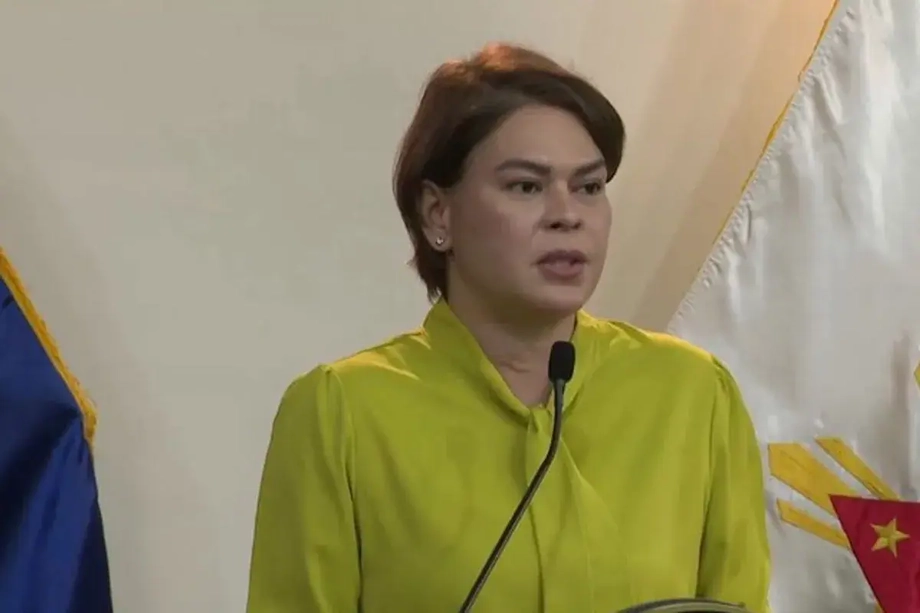
Vice President Sara Duterte said on Friday, November 27, 2026, that she will accept the Senate impeachment court's verdict, even as she prepares for a 2028 presidential run that a guilty verdict would end. Her statement placed two deadlines side by side: a Senate decision expected in December and an election still years away but already taking shape in her office.
Contents
- A Campaign Built Beside a Courtroom
- What Duterte Says She Is Preparing For
- What Senators Are Being Asked to Decide
- How Two Impeachment Fights Led Here
- When the Senate Could Vote
- The 2028 Campaign Taking Shape
- The Hague Trial and the Family's Costs
- A Political Rivalry With National Stakes
- What Remains Undecided
- Key Points
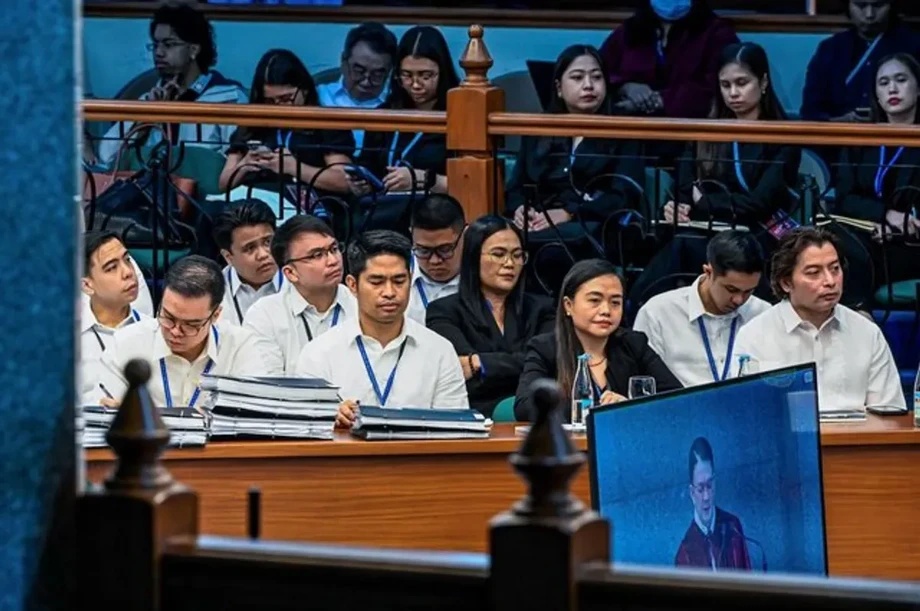
Duterte spoke at a press conference as her trial narrowed to one allegation, unexplained wealth. House prosecutors withdrew three other impeachment articles to seek a quicker finish before national attention turns to the 2028 election. She denies wrongdoing and calls the case political harassment.
Sara Duterte ruled out resignation as the case advanced, telling reporters that stepping aside would betray the 32.2 million people who voted for her in 2022. Her position now is the same: she wants the verdict, not a retreat, and she wants a campaign structure ready if the verdict clears her.
For voters, the issue is direct. A conviction would remove the vice president from office and permanently bar her from elected office. An acquittal would let her continue her present work and keep her presidential bid alive. The Senate's decision will also determine whether the Office of the Vice President keeps its staff and its current offices.
What Duterte Says She Is Preparing For
Duterte, the vice president, said her team has planned for both outcomes. She explained the choice in direct terms.
We will accept whatever it is that the judgement of the Senate Impeachment Court will give for the impeachment trial. We will all have to live with the consequences of this.
She said an acquittal would let the Office of the Vice President continue current programs. She said a guilty verdict would put about 300 employees, and the families who depend on them, at risk because their jobs are linked to her term. The office is also preparing for a possible move, although it wants to keep its present office, which once served as her campaign headquarters.
Duterte said planning had to happen before the verdict arrived. She said she has considered the penalty of perpetual disqualification from running for any public office. In her view, waiting for the decision and then thinking about a response would be too late.
She also described an acquittal as only a temporary opening. She said another impeachment attempt could still be filed within the remaining year of her term and suggested her opponents had other ways to attack her, even joking about being sent to Pluto or underground. Her question was what removal from office would do to the people and programs around her.
What Senators Are Being Asked to Decide
Impeachment is the constitutional process for charging and removing certain senior officials. The House of Representatives brings the charges, while senators sit as judges. In Duterte's case, the House adopted articles on May 11, 2026, and the Senate convened as an impeachment court on May 18. The trial began on July 6.
The remaining article concerns alleged unexplained wealth. The P817 million allegation is the central financial claim now before the court. Forensic accountant Alexander Cabrera estimated at least ₱817,874,867 in alleged undeclared assets and unexplained wealth from 2022 to 2025, and said further review of liabilities could lift the estimate to about ₱1.5 billion. Duterte disputes the estimate.
A Statement of Assets, Liabilities and Net Worth, commonly called a SALN, is the document an official files to list what they own, what they owe and the balance between those amounts. Prosecutors argue that Duterte personally prepared, signed and filed her asset declarations and that gaps in those records need explanation. Her defense has presented property and corporate records as its answer.
Other evidence includes records from the Anti Money Laundering Council, the government body that tracks financial transactions. It reported 630 covered transaction reports and 33 suspicious transaction reports worth ₱6,771,227,712.55 from 2006 to 2025. BIR Commissioner Charlito Mendoza invoked Section 270 of the National Internal Revenue Code to keep tax records sealed. The Cale88 financial dispute also drew attention because records cited in court showed about ₱776 million in cash inflows to the banana chips company against ₱208 million in declared sales, a gap of about ₱568 million using the figures cited by prosecutors.
How Two Impeachment Fights Led Here
The current trial is the second impeachment fight against Duterte. The first ended without a Senate verdict after the Supreme Court nullified the case. The legal path includes several turning points, and the timeline below shows how complaints, rulings and votes led to the Senate case now nearing a decision.
- December 2024: Three impeachment complaints were filed against Duterte, setting off the constitutional rule that bars repeated impeachment proceedings within one year after a complaint has been initiated.
- February 5, 2025: The House impeached Duterte with support from 215 members. The Senate received the articles but later returned them to the House.
- July 25, 2025: The Supreme Court nullified the first case in Duterte v. House of Representatives, G.R. No. 278353, ruling that the one year ban had already been triggered by the late 2024 complaints. The ruling also said due process applies during House stages of impeachment.
- January 28, 2026: The Supreme Court denied reconsideration with finality. It said the 10 session days should be counted from the filing and endorsement of the first complaint on December 2, 2024, a calculation that places the end of the ban on January 15, 2026. The July ruling had put the earliest new filing date at February 6, 2026.
- February 18, 2026: Duterte announced her presidential campaign for 2028.
- April 29, 2026: The House Committee on Justice, chaired by Gerville Luistro, voted 53 to 0 to find probable cause. The committee report won approval 55 to 0 on May 4.
- May 11, 2026: The House adopted House Resolution No. 989 by 257 to 25, with nine members present and 27 not voting. The 257 votes in favor amounted to about 81 percent of the 318 member chamber.
- May 18, 2026: The Senate convened as an impeachment court. The trial proper began on July 6.
- October 13, 2026: Prosecutors withdrew three articles, leaving the wealth allegation as the sole issue for the verdict.
- November 27, 2026: Duterte said she would accept the verdict, would not resign and was preparing for a possible 2028 campaign.
- November 30, 2026: The ICC trial of her father, Rodrigo Duterte, is set to begin in The Hague.
The first case included allegations about confidential funds, unexplained wealth, asset declarations and threats. The second case consolidated four complaints and originally covered betrayal of public trust, culpable violation of the Constitution, graft and corruption, and bribery. Senators will now vote only on the remaining wealth article.
When the Senate Could Vote
The December verdict timetable has become the practical clock for the case. The court scheduled hearings from December 1 to December 4, with possible additional dates from December 7 to December 11. A fuller calendar put defense evidence on December 1 through December 4, formal offers of evidence on December 9 through December 11, oral arguments on December 14 and a roll call vote from December 16 to December 18.
Senate leaders have said they want the trial finished before the holiday break, while keeping room for extra time if the defense presentation runs long. Congress is due to adjourn on December 18. Prosecutors have said they want a decision before attention shifts fully to the 2028 election.
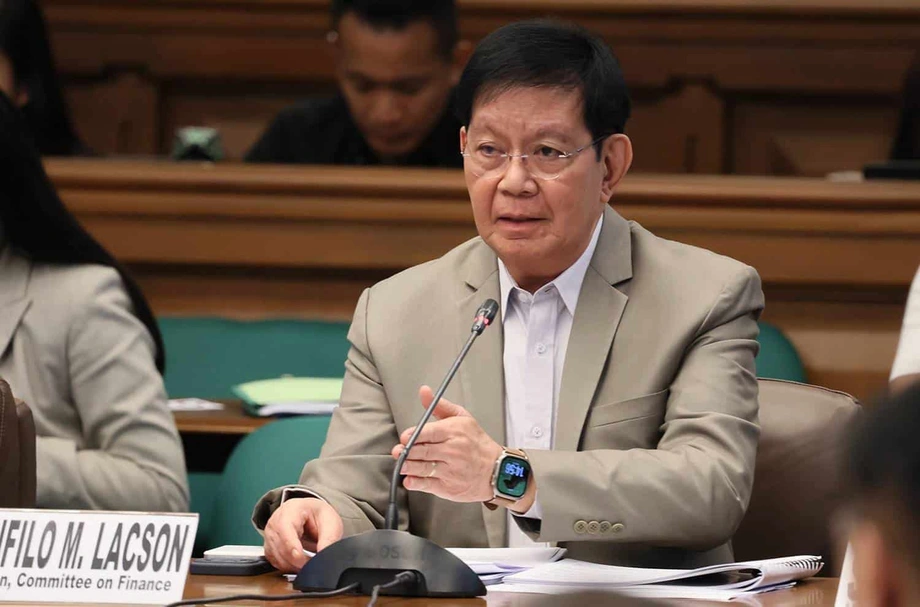
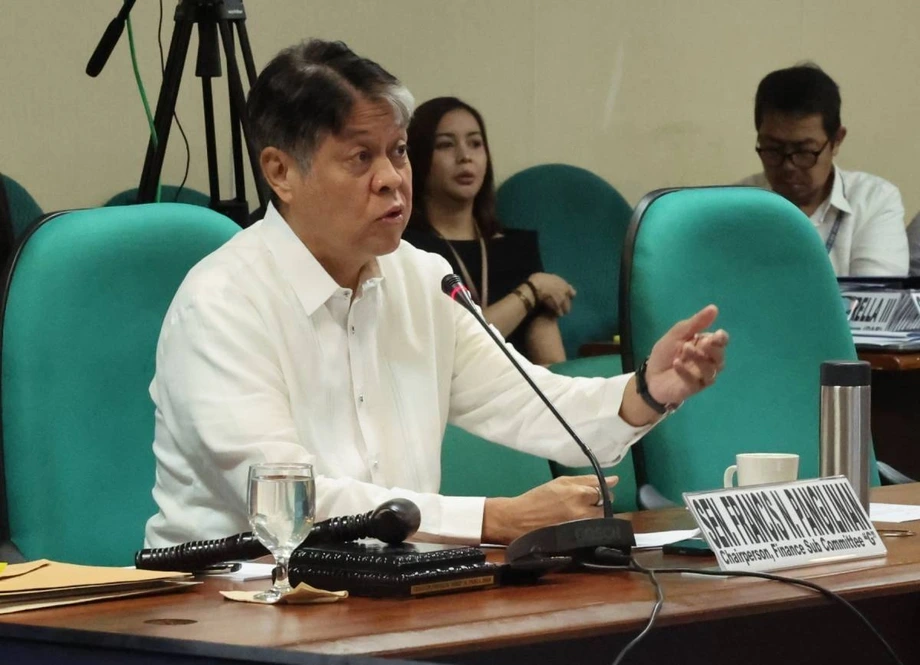
The number of votes needed for conviction has been a live issue. Earlier in the trial, the threshold was contested between 14 votes based on the current impeachment court calculation and 16 votes based on the Senate's full membership. By November 27, the figure being used was 14 because four senators were absent, including two in jail, one in hiding and one on extended medical furlough abroad.
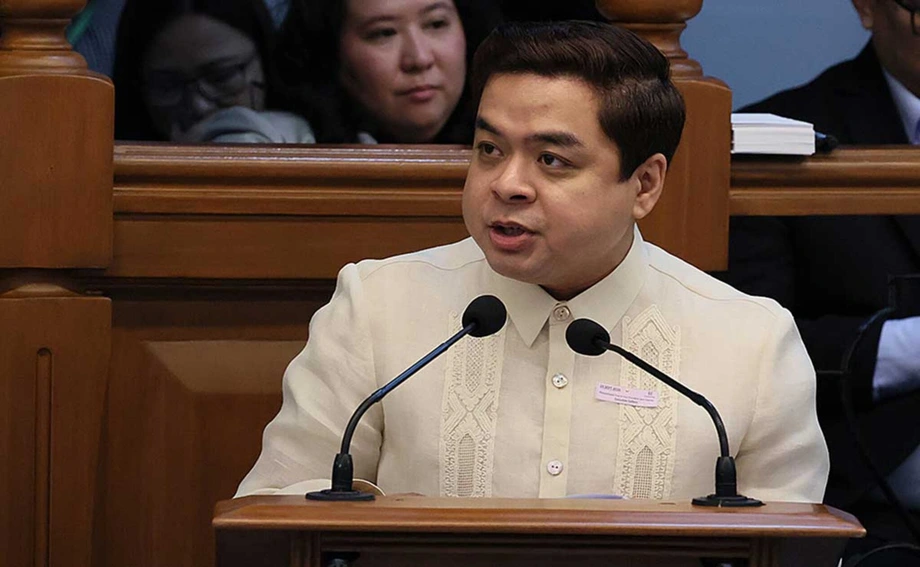
Duterte's lawyer, Michael Poa, said the defense would keep its planned strategy despite Senator Raffy Tulfo urging her to appear before the court. Duterte said she had repeatedly asked Poa to let her act as her own lawyer.
The 2028 Campaign Taking Shape
Duterte announced her intention to run in a livestreamed address in Manila on February 18, 2026, months before official filing of candidacies starts in October 2027. She framed the decision as a duty that had taken decades to accept.
I am Sara Duterte, and I am running for president in the Philippines.
She also said it took 47 years to understand that her life was never meant to be only hers. She asked forgiveness for supporting President Ferdinand Marcos Jr. in 2022 and pointed to rising prices, weak food security and gaps in health care. Independent surveys continue to place her near the front of the 2028 field. Marcos cannot seek another term.
Duterte, the vice president, said on November 27 that she is building a legal team and an information technology team for the campaign. An automated election system uses machines to count and transmit votes, and her team says it will monitor that process to guard against cheating. Commission on Elections Chairman George Garcia said the poll body shares her stated concern about election fraud and vote buying.
She said the ground network has been stable since 2016 and can be activated, but the legal and technology teams are the immediate priority. Her camp has spoken with election lawyers, some of whom have committed to join. She said the campaign on the ground has not yet begun in full.
Duterte also said she will not campaign for Senate candidates in 2028. She cited her experience in 2019 and 2022, when she said she felt forced to endorse people she did not like or believe in. She said she could win without allies in the Senate.
Sara Duterte, the vice president, said a running mate would be useful only if that person could be trusted. She described her standard in blunt terms.
First, they won't impeach you; second, they won't kill you; third, he or she will not poison you somewhere when you're sitting next to each other.
She has approached one potential running mate, but that person has not decided. Duterte referred to the person as he before correcting herself to he or she. She did not identify the person.
The Hague Trial and the Family's Costs
Rodrigo Duterte, the former president, is accused of crimes against humanity over killings linked to his drug war. His trial at the International Criminal Court opens on November 30 in The Hague. Prosecutors accuse him of funding and arming execution squads that killed as many as 30,000 people. The charges cover murder and attempted murder from 2011 to 2018, while accounts of the killings also extend to 2019.
The ICC is a court created in 2002 to prosecute war crimes, crimes against humanity, genocide and aggression when national courts are unwilling or unable to act. It has 125 member states. The United States never joined, and the Philippines announced its withdrawal in March 2018 after the court began a preliminary investigation into drug war killings. Rodrigo Duterte was arrested in Manila in March 2025 and taken to The Hague.
The former president, 81, is expected to plead not guilty. Witnesses are expected to testify after the opening, and more than 500 alleged victims are represented in court. He is the first Asian former leader and only the second former national ruler to appear before the court for acts allegedly committed in office. Laurent Gbagbo of Ivory Coast, the other former ruler, was acquitted in 2019.
Sara Duterte will not travel to The Hague because in person visitations are not allowed during trial proceedings and she views the trip as a waste of money. She said it would be unfair to require her father to sit in court for up to eight hours a day and hopes his defense team can again ask the ICC to allow remote attendance.
Duterte has repeatedly linked her case and her father's case to the 2028 election. She explained her view to reporters in these words.
I still believe that it's about the 2028 elections, whether there will be elections or there will be no elections. It's about the change of leadership, if there will ever be a change of leadership.
She said the ICC wants to make a statement through her father's case and named China, Russia and the United States as countries that view the court as political. Echoing US President Donald Trump, who imposed sanctions on the ICC in October, she said she does not expect a fair trial there. Supporters of the former president have described his arrest as a kidnapping.
The legal battles have also created personal debt. Duterte said she borrowed ₱5 million from two individuals in 2025, a figure reflected in her SALN, to pay for trips to The Hague, work with her father's ICC defense team and preparation for her own impeachment case. She said professional fees for her father's lawyers were the hardest cost and that she still owes lawyers money. She plans to sell properties and expects expenses this year to exceed last year's.
A Political Rivalry With National Stakes
Duterte and Marcos were once powerful allies. They ran on a joint ticket in 2022 and won by a wide margin. Their partnership later collapsed, and she resigned from his cabinet. Their rivalry now shapes the impeachment trial, the ICC case and the race to succeed him.
Duterte has accused the Marcos administration of targeting her family and damaging her name. Malacañang dismissed her criticism and urged her to seek forgiveness for killings during her father's presidency. The president's spokesperson warned voters about supporting a 'Manchurian candidate,' a phrase suggesting a leader controlled by another country, in a reference to the Duterte family's ties with China. Marcos has said the impeachment is a legislative matter.
House prosecutors are also looking beyond the trial. Lorna Patajo-Kapunan, a House private prosecutor, said Duterte's camp was preparing an alternative candidate if a conviction blocks her.
We are hearing that they have already conceded and are preparing Baste.
Kapunan was referring to Davao City Mayor Sebastian Duterte. She also mentioned former presidential legal counsel Salvador Panelo, Senator Christopher Go and Senator Robinhood Padilla as possible figures in a Duterte aligned field. No formal presidential or vice presidential tickets involving them have been announced. PDP-Laban has threatened to blacklist representatives who voted to impeach her.
Political scientist Cleve Arguelles of WR Numero Research said Duterte's early campaign announcement was meant to steady her political camp as legal risk rose.
When legal risk rises, so does the temptation to defect early to save one's own skin.
Marcos faces his own political pressure. He cannot run again under the Constitution's single term rule, and his administration has faced a corruption dispute over allegedly misspent flood relief funds. He has pledged zero tolerance for corruption and said those found to have misused funds will face jail.
What Remains Undecided
The identity of Duterte's prospective running mate remains unnamed, and that person's decision is pending. Duterte also gave no definite answer on whether she will attend the Senate reading of the verdict, saying her location in December could matter because of Davao thanksgiving activities. No formal replacement ticket has been announced, and no date has been given for any property sale she mentioned to cover debts.
The next known dates are clear. Rodrigo Duterte's ICC trial begins on November 30. The Senate impeachment court resumes on December 1, with hearing dates through December 4 and possible dates through December 11. Oral arguments are set for December 14, and the target roll call runs from December 16 to December 18. Official filing for the 2028 election starts in October 2027.
Duterte's separate criminal case, containing three counts of grave threats linked to statements about Marcos, the First Lady and a former House speaker, remains part of the wider political conflict. She denies wrongdoing. The Senate verdict will decide the immediate question: whether she remains in office and eligible to pursue the presidency.
Key Points
- Duterte says she will accept the Senate verdict but will not resign.
- A conviction would remove her from office and bar her from elected office, ending her 2028 bid.
- Prosecutors narrowed the case to unexplained wealth, with the central estimate near ₱817.9 million.
- The Senate calendar points to December, with a target roll call from December 16 to December 18.
- Duterte is building a 2028 campaign team while ruling out Senate endorsements and leaving her running mate unnamed.
- Her father's ICC trial opens November 30, and she says the cases are tied to the 2028 leadership contest.