A Calm Message on a Contested Frontier
Senior Colonel Chen Xi, spokesperson for China's Ministry of National Defence, told a press briefing on November 26 that the border between China and India remained generally stable. In the same briefing, he repeated Beijing's claim to Arunachal Pradesh, calling it Zangnan, or South Tibet, and saying China does not recognise the Indian state.
Contents
- A Calm Message on a Contested Frontier
- What the Generals Discussed
- Why Stable Does Not Settle the Map
- The Places at the Centre of the Standoff
- A Phrase With a Long Memory
- Why Tawang Matters Beyond the Map
- Passports, Visas and the Claim in Daily Life
- The Border Fits Into a Wider Security Picture
- Roads, Winter and the Test on the Ground
- Trade and Public Mood Pull in Different Directions
- What Still Needs to Happen on the Ground
- Key Points
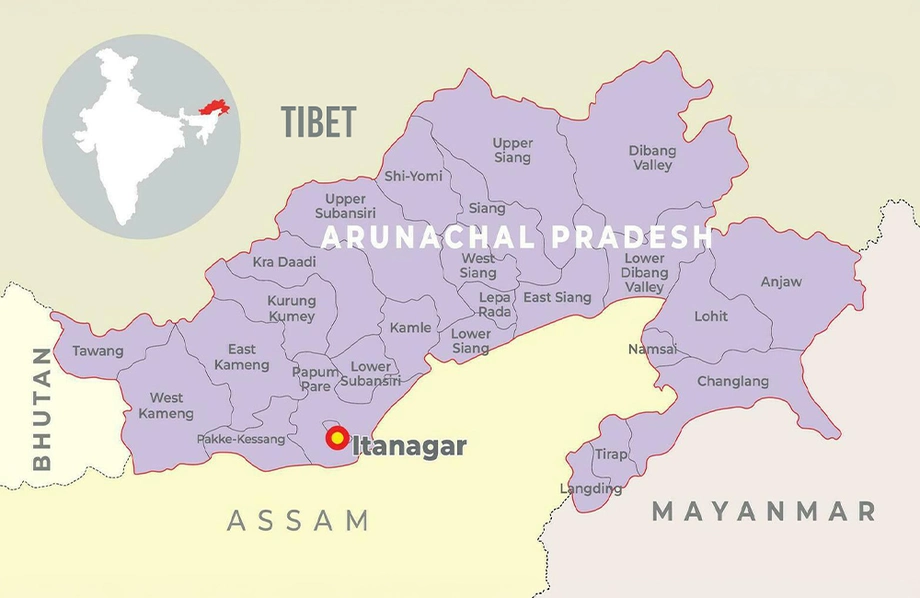
Chen was answering questions about recent military talks after reports of aggressive Chinese activity along the Line of Actual Control, or LAC, in Arunachal Pradesh, especially in Upper Subansiri. The talks began on November 8 and lasted nearly 10 days. Indian officials said the round was led by Lieutenant General Girish Kalia, commander of the Indian Army's III Corps, with an official from India's Ministry of External Affairs present. Defence sources put the closing date at November 24, while a CNAWS assessment dates the conclusion to November 22.
Chen, speaking as China's defence ministry spokesperson, used reassuring language about the frontier and then restated the territorial claim. He said:
At present, the situation in the border areas between China and India remains generally stable. Zangnan region is China's territory. China does not recognise the so-called Arunachal Pradesh illegally set up by India.
India rejects that position. New Delhi says Arunachal Pradesh is an integral and inalienable part of India. The competing statements show the central feature of the dispute: the two governments are talking more, but they still disagree on who owns the ground their soldiers patrol.
What the Generals Discussed
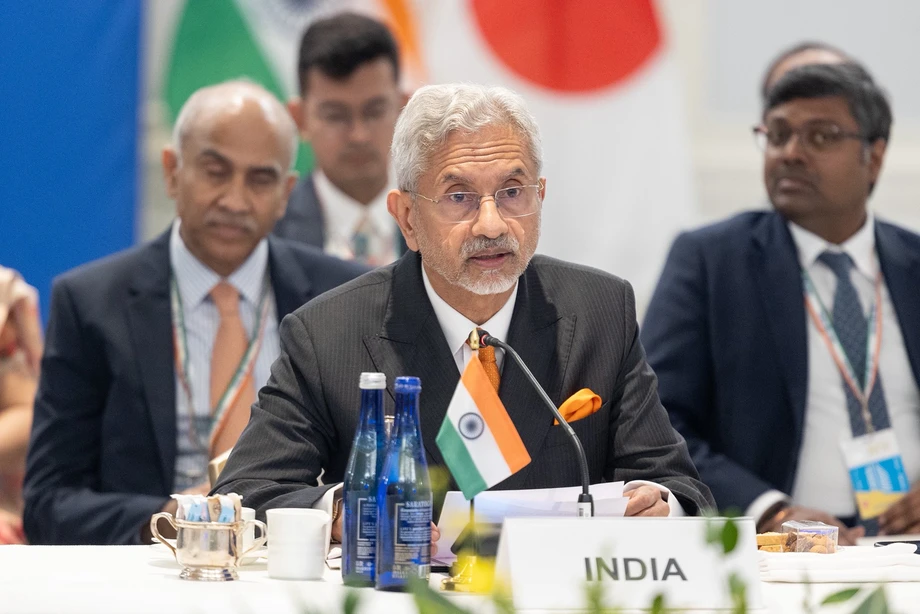
India's Ministry of External Affairs confirmed the meeting on November 25. Randhir Jaiswal, the ministry's spokesperson, told reporters that the two armies meet regularly through agreed military and diplomatic channels. He described the meeting as a way to improve border management and lower the chance of escalation.
India and China engage regularly through diplomatic and military mechanisms and you are well aware of those mechanisms. A meeting of the senior military commanders was held in the eastern sector recently. Discussions between the two sides focused on improving border management as well as addressing outstanding issues along the LAC.
The focus was practical: how patrols should behave when they meet, how commanders should talk quickly when tension rises, and how to keep a local incident from growing. The talks came before winter, when snow, landslides and poor road access make both patrolling and rescue work harder in the eastern Himalaya.
This was the second Corps Commander round in the Arunachal sector. The first was held on September 6 and 7 at the Wacha Damai meeting point in the Kibithoo sector, after tension in Taksing, Upper Subansiri. In August, National Security Advisor Ajit Doval and Chinese Foreign Minister Wang Yi held the 25th round of special representatives talks in Beijing. Special representatives are senior officials tasked with negotiating the boundary dispute.
That August meeting produced eight points of agreement, including two more meeting points for senior military talks and two more military hotlines in the eastern and middle sectors. A hotline is a direct phone link meant to reduce delay when commanders need to clarify a patrol or confrontation. No public disengagement agreement, troop movement details or restoration of earlier patrol patterns were announced after the November talks, and no date was given for putting any new steps in place.
Why Stable Does Not Settle the Map
The LAC is the line that each side treats as the limit of its actual control. It is not a border agreed by both countries. India and China even disagree on where parts of the LAC lie, which means patrols can enter areas the other side claims. This is why a phrase such as generally stable can sit beside reports of confrontation.
India treats the 1914 McMahon Line as its border with China in Arunachal Pradesh. Beijing rejects it because it was agreed between British India and Tibet, which was not under Chinese control at the time. China's claim also rests on its view that Tibet has been part of China since ancient times and on the 1954 trade agreement with India, which carried the Panchsheel principles of peaceful coexistence. Those principles did not survive the 1962 war between the two countries, which India regards as Chinese aggression.
Qian Feng, director of the Research Department at Tsinghua University's National Strategy Institute, said dialogue had become a shared understanding for both sides. He described the existing meeting mechanisms as a pressure valve, meaning a way to release tension before it turns into a larger crisis. That description fits the pattern: the meetings continue even while the territorial claims remain unchanged.
The Places at the Centre of the Standoff
The newest tension is tied to Taksing and nearby areas in Upper Subansiri, a remote district of mountains, rivers and thin road links. A four member fact finding team from the People's Party of Arunachal Pradesh visited the area. Kaling Jerang, the party's vice president, said Indian forces cannot patrol Taksing from April to October because of flash floods, heavy rain and landslides, while Chinese forces remain active in the same period.
Jerang said residents told the team that Indian forces abandoned a patrol point called Shera 5 after a confrontation with China's People's Liberation Army in 2023. The Nah Welfare Society, a local tribal body, wrote to officials saying Chinese encroachment had increased with the aim of occupying as much land as possible. Local people also spoke of losing ancestral hunting grounds.
Jerang said the reports from residents were clear. He said:
The ground reports of these intrusions are irrefutable. These encroachments are not new or sudden, but expanded over the years gradually, while the BJP governments in New Delhi and in the state have turned their back on the people at the border.
The Indian Army said media reports of encroachment were incorrect and without basis. Jaiswal was less direct. He said India has told China that border issues are among the most serious matters in the relationship, and that the state of border affairs affects the wider relationship. Guo Jiakun, a Chinese Foreign Ministry spokesperson, said the border situation was generally stable and cited the 36th meeting of the China India Border Affairs mechanism, where both sides agreed to keep diplomatic and military channels open.
A Phrase With a Long Memory
Generally stable has appeared before difficult moments. In December 2022, Beijing used the phrase days after troops clashed at Tawang in Arunachal Pradesh and injured soldiers on both sides. In August 2026, after a face off near Taksing, Guo again said the situation was stable and declined to comment on reports of stepped up military activity.
Names on maps have also become part of the contest. In April 2026, India rejected a Chinese renaming exercise. On August 7, India's Ministry of Home Affairs announced standard names for 27 places and geographical features on Survey of India maps, including several near the border. China rejected those names and repeated its claim to Zangnan.
BR Deepak, a professor of Chinese studies at Jawaharlal Nehru University, said the two sides do not agree on the LAC in several places, allowing patrols from both countries to enter areas claimed by the other. Praveen Donthi, a senior analyst at the International Crisis Group, said China has used the border dispute as a pressure point and has sent mixed signals to India.
Why Tawang Matters Beyond the Map
Tawang is the most sensitive part of Arunachal Pradesh for Beijing. The Lowy Institute analysis says it was the first piece of land China claimed before extending the claim to the whole state. Tawang is home to a major Tibetan Buddhist monastery and is the birthplace of the sixth Dalai Lama.
That religious link matters in Chinese politics. Beijing fears Tibetan uprisings and wants control over the selection of the next Dalai Lama, a process known as reincarnation. The Lowy Institute analysis connects the Arunachal claim with China's effort to bring Tibetan Buddhism under tighter state control, including its choice of its own Panchen Lama. India hosts the Dalai Lama in Dharamsala, and Beijing has also pressed Tibetan communities in Nepal.
The same analysis says China has renamed places in Arunachal Pradesh, painted Chinese characters on stones in remote areas and challenged neighbours whose textbooks show the state as part of India. India also requires special permits for many visitors to the state, reflecting its strategic sensitivity.
Passports, Visas and the Claim in Daily Life
The territorial dispute is not limited to soldiers and maps. The Shanghai passport dispute showed how it can reach an ordinary traveller. Prema Thongdok, an Indian citizen born in Arunachal Pradesh, was held for about 18 hours at Shanghai Pudong Airport after Chinese officers said her Indian passport was invalid because it listed Arunachal Pradesh as her birthplace. She was travelling from London to Japan and said officers told her she was Chinese rather than Indian.
Mao Ning, a Chinese Foreign Ministry spokesperson, said Zangnan is China's territory and that China has never recognised the so-called Arunachal Pradesh. India lodged a strong protest and said residents of Arunachal Pradesh have the right to travel on Indian passports.
The Observer Research Foundation analysis places the Shanghai episode in a long pattern. In the late 1980s, Arunachal Chief Minister Gegong Apang and assembly speaker T.L. Rajkumar were denied visas on the grounds that they did not need them because China considered them Chinese citizens. In 2007, four members of a 48 person Indian delegation had invitations withdrawn, and an Indian civil servant, Ganesh Koyu, was denied a visa for a study tour involving 100 officials.
A stapled visa is a visa stitched or pasted onto a separate paper instead of stamped in a passport. China has used stapled visas for people from Arunachal Pradesh, including a weightlifting coach and athlete in January 2011, members of a karate team in June 2011 and three wushu players before the 2023 World University Games in Chengdu. India withdrew from those games over the visas. Such steps are small compared with a military standoff, but they send a political message about sovereignty.
The Border Fits Into a Wider Security Picture
Chen also used the briefing to criticise Japan after the India Japan 2+2 dialogue, a meeting of foreign and defence ministers from the two countries. India and Japan agreed to deepen cooperation in missile technology, maritime security and defence industry work. They are also discussing joint naval shipbuilding and design, and Japanese forces may conduct live fire training at Indian firing ranges for the first time.
Chen accused Japan of accelerating remilitarisation and urged other countries to be vigilant. His remarks showed how the Arunachal dispute sits alongside wider concerns about military partnerships in Asia.
Jaiswal also addressed a report that Chinese satellite data may have helped Pakistan track Indian troop movements during Operation Sindoor. He said India had seen media reports and would follow developments bearing on its security interests. A congressional assessment published in November said China supplied 81 percent of Pakistan's arms imports between 2020 and 2024 and has used military pressure, economic pressure and maritime surveillance to constrain India.
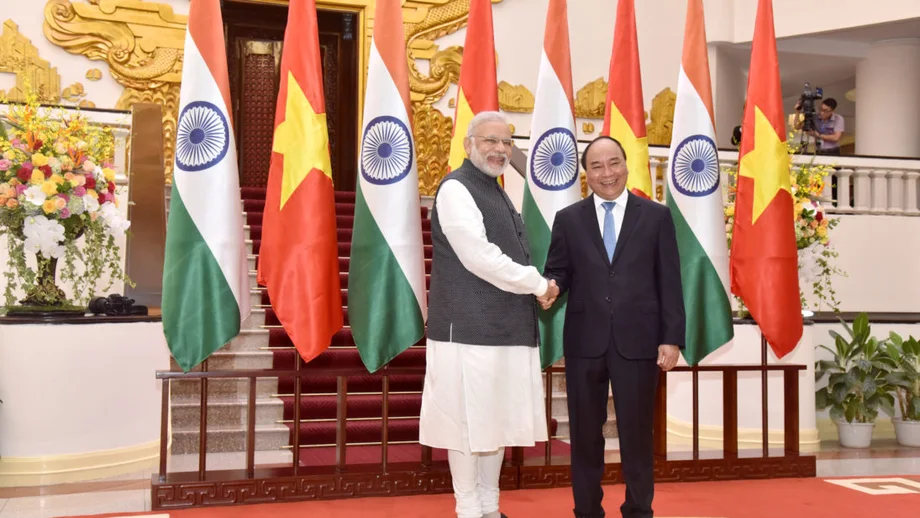
Eastern Ladakh remains heavily armed. Nearly 50,000 Indian Army troops are deployed there, with a similar number on the Chinese side, according to officials. The October 2024 disengagement agreement at Depsang and Demchok removed the last friction points there. Prime Minister Narendra Modi and President Xi Jinping met in Kazan soon after, in Tianjin for the Shanghai Cooperation Organisation summit in August 2025 and in New Delhi on the sidelines of the BRICS summit in September. Modi has said relations should be guided by mutual respect, mutual sensitivity and mutual interest.
Roads, Winter and the Test on the Ground
Infrastructure shapes what armies can do in the Himalaya. A CNAWS assessment says India has at least seven road links planned or under development near Taksing, with one completed as of October 2026. China has built roads, bridges, military support facilities, telecommunications links and border settlements across the Tibetan plateau, improving its ability to sustain troops near the frontier.
Winter reduces movement on both sides. Snow and landslides can make patrols harder, so a quiet period may reflect weather as much as diplomacy. The real test will come when conditions improve and patrols resume. The CNAWS assessment also describes grey zone competition, meaning actions that press a territorial claim without open warfare. Patrolling, road building, place names and administrative steps can all be part of that competition.
India has also watched talks between Bhutan and China over their own boundary. The Bhutan China talks matter to New Delhi because Doklam lies near the narrow Siliguri Corridor, the land route linking India's northeastern states with the rest of the country. Strains in Bhutan can therefore affect India's eastern frontier planning.
Trade and Public Mood Pull in Different Directions
Economic ties have grown even as border tensions persist. According to the Indian Embassy in Beijing, goods trade reached $151.1 billion in the 2025 to 2026 financial year, more than double the $71.45 billion recorded in 2016 to 2017. Indian imports from China rose to $131.63 billion from $61.28 billion over the same period. This trade gives both governments a reason to avoid a rupture.
Public opinion in India moves the other way. The Observer Research Foundation analysis cited a 2024 survey in which Indians viewed China as the country's biggest challenge. A 2023 survey found that 67 percent of Indians held an unfavourable view of China. Incidents involving Indian citizens from Arunachal Pradesh, even at an airport, can therefore shrink the space for compromise.
Local communities add another layer. The People's Party fact finding team said people near Taksing were angry about losing ancestral hunting grounds. Border roads, telecom links, schools and health services can strengthen civilian life in remote areas, but they also help the state maintain a lasting presence in disputed terrain.
What Still Needs to Happen on the Ground
The next test is not another statement in Beijing or New Delhi. It is whether patrols follow the agreed rules when they meet. India has said the LAC gets disturbed from time to time when Chinese forces diverge from established patrolling patterns. China says its patrols are normal and in line with existing agreements.
No new protocol has been published, no troop repositioning has been disclosed and no date has been set for implementation. The August agreement added communication tools, and the November talks focused on using them. Whether winter calm becomes a longer pause will depend on what happens once the mountain trails open again.
Key Points
- China's defence ministry said on November 26 that the border with India was generally stable while repeating that Arunachal Pradesh is Chinese territory called Zangnan.
- India and China held nearly 10 days of Corps Commander talks in the Arunachal sector after tension in Upper Subansiri; sources differ on whether they ended on November 22 or November 24.
- India said the talks focused on border management and LAC issues; China said both sides were implementing earlier consensus through military and diplomatic channels.
- Beijing rejects the 1914 McMahon Line, while India says Arunachal Pradesh is an integral and inalienable part of the country.
- Tawang matters because of its Tibetan Buddhist monastery, its link to the sixth Dalai Lama and Beijing's concern over the next reincarnation.
- China has used passports, stapled visas and place names to press its claim, including the 18 hour detention of an Indian citizen in Shanghai.
- No public disengagement agreement or patrol restoration plan was announced after the November talks.