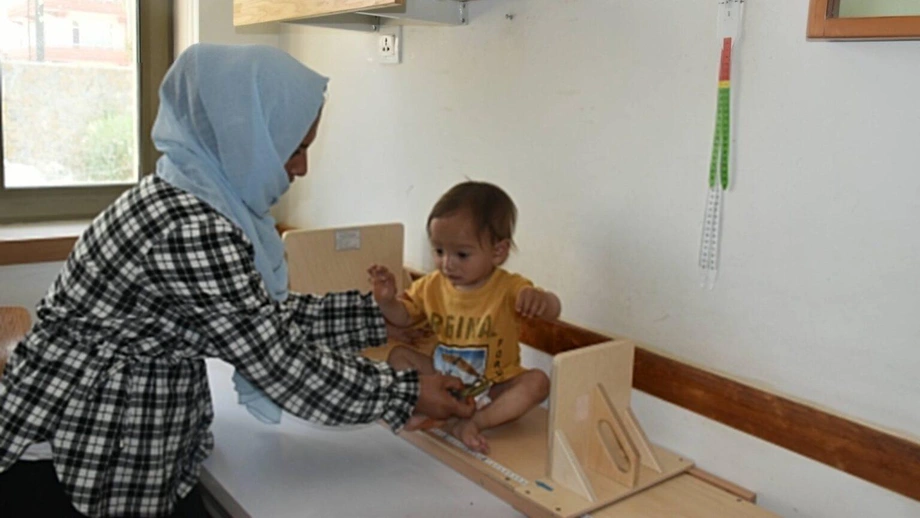
A Rise That Outlasted the Hunger Season
Doctors Without Borders said its treatment centres in Herat, Helmand and Kandahar admitted 8,487 children with severe acute malnutrition between January and August 2026, up from 6,618 in the same eight months of 2025. The increase works out at 28.24 percent, the medical charity said in a statement published on 19 November 2026, and it covers only the three provinces where it runs these inpatient feeding centres.
Contents
- A Rise That Outlasted the Hunger Season
- Where the Numbers Rose Fastest
- Mothers Who Cannot Afford Sugar for the Tea
- A Daughter Admitted Three Times
- 295 Clinics Shut and 19 Percent of the Money
- Four Million Children on the 2027 Horizon
- When a Male Doctor Cannot Treat a Woman
- An Institutional System, Not Isolated Acts
- How the Pressures Reach the Same Child
- How the Crisis Unfolded
- What Is Not Yet Known
- Key Points
Severe acute malnutrition is the most dangerous form of hunger in a child. The child becomes far too thin for their height, the body starts to draw on its own tissue, and an ordinary infection such as diarrhoea can become fatal. Admission to one of these centres means a child is sick enough to be kept in for therapeutic feeding, often with medical complications that need treating at the same time.
The charity said the count stayed high even after Afghanistan's usual peak malnutrition season had passed. Its teams continued to see unusually high numbers of severely malnourished children in Helmand and Herat after August, when admissions would normally begin to fall.
Ana Banda, MSF's medical coordinator in Afghanistan, said the pattern at the centres was one of children coming back again and again.
We are seeing mothers in therapeutic feeding centres who bring their malnourished children two or three times for treatments," Banda said. "We can treat children for severe acute malnutrition, but when they return home, many families are still facing the same difficulties.
Where the Numbers Rose Fastest
Helmand accounted for 3,972 of the 8,487 admissions, Herat for 2,993 and Kandahar for 1,522. Compared with the same months of 2025, admissions rose 38 percent in Helmand, 17 percent in Herat and 27.5 percent in Kandahar, so the province with the largest caseload also recorded the steepest jump. Helmand alone made up about 47 percent of the children treated.
The youngest patients drove part of the rise. Admissions of infants under six months old climbed 31.5 percent, and those babies accounted for between 26.5 percent and 35.7 percent of admissions across the three provinces. A baby that young depends almost entirely on the health of the mother and on her milk. MSF warned that poor nutrition during pregnancy raises the risk of low birth weight, which leaves an infant more vulnerable to malnutrition and illness in the months that follow.
That link between a mother's diet and a child's first months runs through much of what the charity reported. A woman who eats too little during pregnancy is more likely to give birth to a small baby, and a small baby is more likely to need treatment before its first birthday.
Mothers Who Cannot Afford Sugar for the Tea
In Kandahar, Nazia, a mother of five who is pregnant with her sixth child, brought her son Ahmad to a treatment centre after he developed severe acute malnutrition and diarrhoea. Ahmad is 18 months old and had been weak and underweight since birth. Unable to breastfeed him and short of food for herself, Nazia fed him bread soaked in tea or bean soup.
"I could not even afford sugar for the tea," she said.
After six days of treatment, Ahmad's condition was improving. Nazia said she feared her next child would face the same difficulties.
We do not have proper food at home," she said. "In the past, my husband used to go out to work, and he would bring something to eat. Now he leaves for two or three weeks looking for work but comes home empty-handed.
Her account describes a household where income has become unpredictable rather than absent. The family has not lost its home or been displaced, yet the food it can buy varies from week to week, and a child's nutrition follows that rhythm.
A Daughter Admitted Three Times
In neighbouring Helmand, Parwana, a mother of seven who is eight months pregnant, has brought her daughter Robina, who is five, to the therapeutic feeding centre at Boost Hospital three times for severe acute malnutrition and related medical complications. She has already lost another child to malnutrition.
"I cannot afford to get food for my children, and now I am worried about the baby I am expecting," she said.
MSF said children recovering from severe acute malnutrition often need outpatient care after their medical complications have stabilised. Poverty, long distances to health facilities, restrictions on movement and shortages of nutritional supplies can stop families from completing that treatment. Interrupted care raises the risk that malnutrition returns, and a weakened immune system leaves a child more open to infection.
295 Clinics Shut and 19 Percent of the Money
Behind the admissions sits a health system that is shrinking. MSF said 295 health facilities across Afghanistan suspended operations or closed because of cuts in financial assistance, affecting 2.17 million people. Its admission figures cover January to August 2026, while the closure count runs from January to June. Of the facilities affected, 19 were in Herat, 24 in Helmand and 29 in Kandahar, which puts 53 of them in the last two provinces.
The money has not kept pace with the need. According to World Health Organization data cited by MSF, only 19 percent of the funding required for Afghanistan's humanitarian health response had been secured by June 2026. That leaves four fifths of the response unfunded eight months into the year.
A closure moves several things at once. Staff are lost, vaccine and nutrition stocks stop arriving, and a family that once walked to a clinic must now pay for transport it cannot afford. The charity said the closures placed further pressure on a health system that was already struggling to meet widespread needs, and that its own centres were absorbing children who would otherwise have been treated closer to home.
Four Million Children on the 2027 Horizon
An October 2026 analysis by the Integrated Food Security Phase Classification, the system used by UN agencies and aid groups to grade food crises by severity, projected that 4.04 million Afghan children between six months and five years old will need treatment for acute malnutrition in 2027. Nearly 1.1 million of them are expected to suffer severe acute malnutrition, 16 percent more than in 2026, and a further 1.27 million pregnant and breastfeeding women will need nutritional treatment.
Those projections land on a country where hunger is already wide. The IPC snapshot published on 15 October 2026 projected 19.2 million people, 38 percent of the population, facing crisis levels of hunger or worse over the winter, with five million in Emergency conditions between November 2026 and April 2027. That was the backdrop to the winter hunger outlook, which also found roughly one third of nutrition treatment sites closed or suspended.
The response is running behind the need. In August 2026, UNICEF and its partners screened 1.3 million children and admitted 111,099 for treatment, including 58,891 with severe wasting, against an annual target of 1,304,000. Cumulative admissions from January through August reached 633,332, or about 48.6 percent of that target. Those figures sit behind August's treatment numbers, which recorded a month of heavy activity alongside serious shortages of the specialised foods used to treat wasting.
When a Male Doctor Cannot Treat a Woman
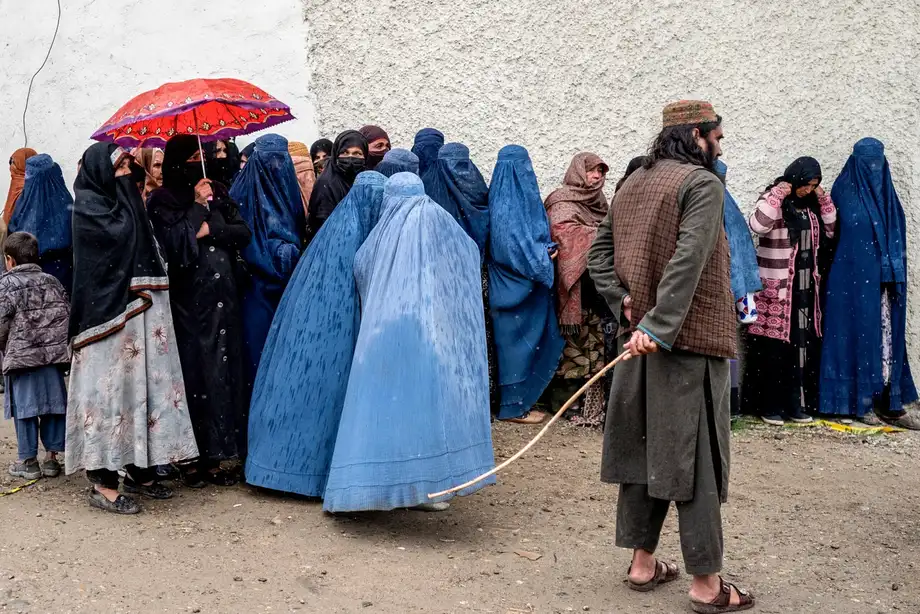
Aid cuts are only one barrier to care. The UN Assistance Mission in Afghanistan reported in September 2025 that inspectors from the Taliban's Ministry for the Promotion of Virtue and Prevention of Vice were further restricting women's access to health care through the enforcement of regulations and decrees. In many parts of the country, male doctors are no longer allowed to treat women. A woman from Kunar province described suffering several miscarriages without being able to reach medical care.
Susan Ferguson, the UN's Special Representative in Afghanistan, called the situation "the world's worst women's rights crisis" and said Afghan women were "fighting for their very survival". Cuts in aid funding, she said, had forced humanitarian organisations to make "impossible decisions about which women and girls can receive support and which have to be turned away".
Tamana Zaryab Paryani, 28, a women's rights activist and one of the best known voices against the Taliban, put the calculation more bluntly.
"If a pregnant woman dies because male doctors are not allowed to treat her, her husband can marry another, younger woman. That is how the Taliban think," she said.
Since returning to power in 2021, the Taliban have issued more than 100 decrees restricting the lives of women and girls, barring them from secondary school and from university and limiting their work outside the home. Around 2.6 million girls are excluded from secondary education, and UN Women warns this is likely to lead to more girls married off early and to a rise in deaths during childbirth. Afghanistan has about 45 million people, a median age of about 17 and 42 percent of its population under 15, so every year of exclusion adds to a very large group of young people.
An Institutional System, Not Isolated Acts
Haroon Mutasem, a professor of international criminal law at the American University of Afghanistan and a research fellow at Humboldt University in Berlin, argues that the restrictions amount to more than a series of separate wrongs.
"This is not just about individual acts of persecution, but about an institutionalised system of oppression and domination of one gender group by another. They have established a system that considers women as secondary and defines a life for them as raising kids, working at home, and also actually satisfying the sexual desires of their men," he said.
Mutasem said what is happening goes beyond gender-based persecution as already defined under the Rome Statute of the International Criminal Court. A failure to respond, he argued, could undermine the universal validity of human and women's rights, and other authoritarian governments and extremist movements could adopt similar practices.
How the Pressures Reach the Same Child
A malnourished child in Afghanistan is usually reached by several problems at once. A household short of money buys cheaper and less varied food. A clinic that was once a short walk away has shut, so an illness that would have been treated becomes the diarrhoea that tips a child into severe acute malnutrition. A mother who cannot see a doctor during pregnancy gives birth to a smaller baby, who starts life more vulnerable. Treatment pulls the child back from the edge, and the same conditions send them back.
MSF called on international donors, health authorities and humanitarian organisations to prioritise funding for nutrition programmes and essential health services.
As more children require treatment, maintaining access to nutritional and essential healthcare services is critical," Banda said. "But hospital care alone is not enough to ensure a lasting recovery, particularly when families continue to struggle to access sufficient food.
How the Crisis Unfolded
- 2021: the Taliban return to power and begin issuing decrees that restrict women and girls.
- September 2025: UN monitors report that morality police inspectors are further limiting women's access to health care.
- January to August 2025: 6,618 children admitted to MSF-supported centres in Herat, Helmand and Kandahar.
- June 2026: only 19 percent of the funding required for the humanitarian health response is secured.
- 15 October 2026: the IPC projects 19.2 million people facing crisis hunger over the winter.
- October 2026: an IPC analysis projects 4.04 million children needing acute malnutrition treatment in 2027.
- 19 November 2026: MSF reports 8,487 admissions for January to August, a rise of 28.24 percent.
What Is Not Yet Known
The 8,487 figure counts admissions at three provinces' MSF-supported centres, not every malnourished child in Afghanistan, and no nationwide admission total for the same eight months was given. The 2027 numbers measure projected need rather than children already treated. MSF did not give an age or sex breakdown beyond the share of infants under six months, and it did not name the 295 facilities that closed.
The next signal will come from the winter. Hunger typically deepens between November and April as farm work and incomes fall, and the IPC expects acute malnutrition to worsen again between April and July 2027, when disease, poor diets and reduced access to health care combine. The funding gap reported for June has no scheduled date for closing.
Key Points
- MSF-supported centres in Herat, Helmand and Kandahar admitted 8,487 children with severe acute malnutrition from January to August 2026, up 28.24 percent from 6,618 a year earlier.
- Admissions rose 38 percent in Helmand, 27.5 percent in Kandahar and 17 percent in Herat, with Helmand taking about 47 percent of the caseload.
- Infants under six months made up between 26.5 percent and 35.7 percent of admissions, and their numbers rose 31.5 percent.
- 295 health facilities suspended operations or closed, affecting 2.17 million people, including 53 in Helmand and Kandahar combined.
- Only 19 percent of the funding needed for the humanitarian health response had been secured by June 2026, according to WHO data cited by MSF.
- The IPC projects 4.04 million children aged six months to five years will need acute malnutrition treatment in 2027, including nearly 1.1 million with severe acute malnutrition.
- Restrictions on male doctors treating women, and 2.6 million girls out of secondary school, add to the pressure on mothers and infants.